A country without sirens blaring and other road abuses may be a mirage with politics complicating efforts to secure compliance, ENIOLA DANIEL writes.
A year after the House of Representatives in 2024 took steps to curb the abuse of sirens on the country’s roads, the problem persists.
The House urged the Federal Road Safety Commission (FRSC) and the Nigeria Police to enforce the law on the use of sirens on Nigerian roads and clamp down on those who are not entitled to it for necessary sanctions to serve as deterrents.
The move has not deterred the abuse or reduced the number of persons engaging in the act.
While serving as the Governor of Lagos State, Babatunde Fashola took a strong stance against the misuse of sirens, implementing the ban strictly. Fashola ceased using a siren and extended the prohibition to include his commissioners, top government officials and even bullion vans. The measure created a more orderly and civil atmosphere on Lagos roads.
But two years into the administration of Akinwumi Ambode, the use of sirens became rampant even amongst unofficial persons.
As provided in Section 154(1) of the National Road Traffic Regulations, the use of sirens, flashers and beacon lights on public roads is restricted to specific government officials and emergency vehicles. The President, Vice President, Senate President, Speaker of the House, Chief Justice, Deputy Senate President, Deputy Speaker, state governors and deputy governors are authorised to use sirens.
Additionally, military and paramilitary agencies, police, fire services and ambulances are permitted to use sirens during emergencies or rescue operations.
But, businessmen, celebrities, commercial bus drivers and even bikers are known to have historically used sirens to navigate Lagos roads.
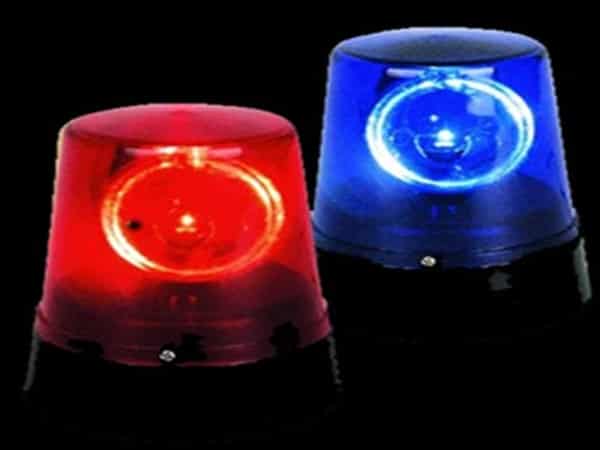
Sirens are primarily used to alert people to approaching emergency vehicles or dangerous situations, like severe weather conditions and as a crucial tool for emergency services like ambulances, fire trucks and police cars to navigate traffic and quickly respond to emergencies.
Sirens are also used by authorised government officials to signify their status or to clear a path through traffic, where lies the abuse by private citizens who move with police escort, armed with a long, flexible whip, typically made of cow skin or horse tail, to scare other road users off their paths.
Sirens have increasingly become tools for harassment, intimidation, and, in some cases, the infliction of harm on innocent road users.
The violation of the law not only disrupts traffic flow but also creates an environment of fear, undermining the original intent behind the use of sirens.
Section 155(1) of the National Road Traffic Regulations provides that any driver or person having control of a vehicle who knowingly and without reasonable excuse obstructs a vehicle authorised to use sirens, flashers, or beacon light commits an offence and shall be liable on conviction to a fine of N2,000 or six months imprisonment or both.
Enforcing siren laws in Nigeria faces numerous challenges. One of the main issues is the lack of political will by relevant enforcement agencies, who are known to also contribute to the misuse.
There is also a lack of public awareness regarding siren laws, experts have said.
When asked about the arrest of offenders in Lagos and the prosecution, the Spokesperson of the Lagos State Police Command, Benjamin Hundeyin, said: “There have been arrests, but the statistics are not available.
There is a law against the use of sirens by those not entitled to their use.”
When asked about the police officers who regularly blare sirens even when they are not in an emergency, he said: “Siren is not created to intimidate; it is to create an awareness that an emergency or a distressed call is being responded to and that people should make way.”