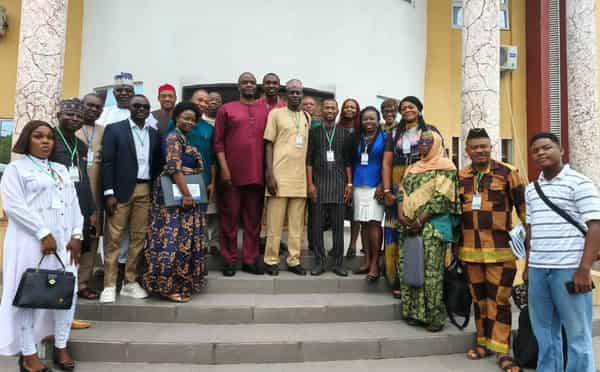
SCHOLARS at the 26th international conference of the African Council for Communication Education (ACCE) Nigeria chapter have stressed need to reflect on values of African Indigenous Knowledge system (IKS), which is often undervalued, ignored, misunderstood, underused, disdained, and disregarded by scholars and the practitioners including those in communication and media.
Themed, ‘Communication and Indigenous Knowledge Systems in the era of AI, big data and cultural transformation,’ the conference held at the University of Calabar, Cross Rivers State.
National President of ACCE-Nigeria, Prof. Abdullahi Bashir, observed communication scholarship and practice are largely seen and interpreted mainly in the light of western ideas, theories, behaviours, assumptions, narratives, languages, and overall, cultures which relate to African indigenous knowledge in an asymmetrical manner, rather than in symmetrical relationship.
Saying the nation’s indigenous cultures are very rich in ideas, theories, materials and practices, he noted numerous societies in Asia, for instance, have incorporated their indigenous knowledge in sciences, humanities, technologies, communication, and other human endeavors.
In conclusion, he stated, “within communication scholarship, we note the contribution African ethno-communicologists and journalists using indigenous languages and strategies to communicate, among others. However, IKS in Africa is still in a marginal state. Despite this, in recent years, IKS in Africa is experiencing a renaissance in the light of global technological developments and occurrences like – the rise of social media, AI, Big Data, climate change, Covid-19 and other global health challenges, global economic crises and upheavals, political polarisations, discriminations, wars/insecurities, etc.
Therefore, as communication scholars and as practitioners, we need to review, revive and strengthen our IKS to serve us well.’
In a communique, the participants resolved that, communication scholars and practitioners should revive and strengthen Africa’s Indigenous Knowledge Systems to preserve and sustain African culture for future generations; although AI has transformed the knowledge industry, it has not obliterated indigenous practices in Africa; therefore, AI should be used to preserve and promote indigenous knowledge systems; African scholars should intensify research in Indigenous Knowledge Systems, document and publish their findings to expand the data base of AI in the field of traditional communication in particular and culture in general.
Other recommendations include, scholars must apply editorial control on AI generated content through age-long tradition of fact-checking; since AI is a product of human construct, academics should watch out for bias, sentiments and misleading tendencies, especially when portraying cultures, religions and ethnic groups; universities and research institutes should develop interdisciplinary curricula that embed indigenous philosophies, languages and epistemologies into AI and media studies programmes; collaborative partnerships between local communities, universities and technology industries should be institutionalised to translate indigenous epistemologies into applied AI design.