

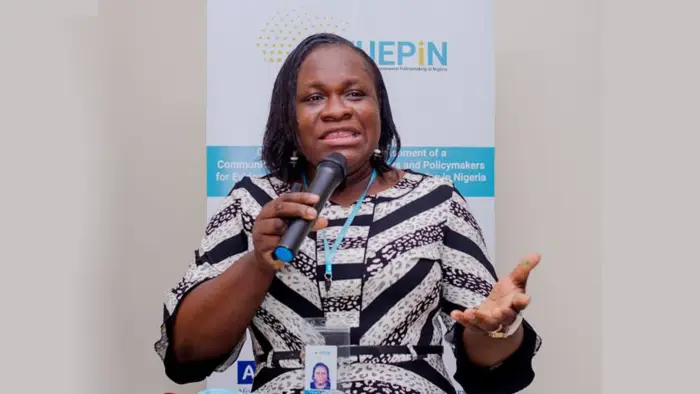
THE Founder and Lead of Evidence Use in Environmental Policymaking in Nigeria (EUEPiN), Dr. Temitope Sogbanmu, has stressed the urgent need for timely, evidence based data and robust cross sector collaboration to mitigate the worsening impacts of climate change on Nigeria’s fragile health system.
Speaking during a presentation on the Vulnerability and Adaptation Assessment Report in Abuja, Sogbanmu highlighted that climate change remains a growing, cross sectoral threat requiring real time data to drive effective policies, protect vulnerable populations, and empower grassroots communities.
She noted that the adverse effects of climate change, such as severe heatwaves and coastal flooding, disproportionately affect the most at-risk demographics.
While emphasising the critical need for gender mainstreaming in climate action, she identified women, children, the elderly, and immunocompromised individuals as those bearing the heaviest brunt.
Referencing finding by EUEPiN, she said “Reports project worsening health impacts, and all of us can agree with that.
“These worst-hit impacts are the target scenarios projected by the International Panel on Climate Change (IPCC). The projections are getting much worse, and those mostly affected are the vulnerable populations.”
To effectively tackle these challenges, she advocated a climate resilient, evidence informed health sector guided by current realities rather than outdated statistics.
“It needs to be guided by timely data. Data of 20 years ago is no longer relevant because the realities, seasons, indices, and environments have changed,” she explained.
Highlighting regional risks, Sogbanmu pointed out that the North-West and North-East geopolitical zones are the most susceptible to climate shocks, while coastal areas in the South face existential threats from rising sea levels.
She lamented that these crises present severe weaknesses for Nigeria’s overstretched health sector which is currently grappling with a brain drain of medical professionals.
Gender Expert on the LEEPS (Learning together to advance Evidence and Equity on Policymaking to achieve the Sustainable Development Goals) Project at Makerere University Kampala, Dr Anna Ninsiima, spoke on the intersection of climate change, gender equity, and reproductive health.
Ninsiima illustrated how climate induced water scarcity directly hampers menstrual hygiene, particularly the washing of reusable pads, leading to severe health complications and increased school dropouts among adolescent girls.

She lamented that some young girls are forced into early marriages, early pregnancies, or transactional sex simply to afford sanitary products, warning that developmental policies ignoring these grassroots realities are ultimately bound to fail.
“We are giving them education, but we are not addressing the underlying issues. We must ask ourselves whether we can put ourselves in the shoes of people who go through such circumstances when making policies,” Ninsiima stated.
Urging stakeholders to actively mainstream gender into evidence informed policymaking, Ninsiima noted that true equity requires understanding community level challenges.
