 Follow Us on Google News
 Follow Us on Google Discover
ON April 15, 2013, the world glimpsed on the horror of terrorism, as two bombs went off at the finish line of the Boston Marathon, killing three people and injuring an estimated 264. The scene was chaos, so to say. The bombers — Dzhokhar Tsarnaev, 19, and Tamerlan Tsarnaevhad (26) — vanished. However, within a few hours, their faces were visible on TV screens around the world. Every move they made, as they delivered their deadly packages had been scanned and stored by surveillance camera. Their quick capture was a triumph for law enforcement.
Juxtapose this scenario with the October 2, 2015, twin-bomb that rocked Abuja. Nine days after, nobody has been paraded for the twin bomb that detonated in Kuje and Nyanya in Abuja. No Boko Haram suspect has been caught or arrested, as the case maybe.
The sect has been responsible for a lot of deaths. It has assassinated a host of public officers, blown up hundreds of Nigerians and claimed responsibility for the bombing of the United Nations building, different churches and mosques.
Today, technology has taken over security and military intelligence. What many nations lack in in military might, they have made up in intelligence gathering. Not for Nigeria.
Apparently disturbed by the incessant bombings in the North East and the recent Kuje/Nyanya blasts in Abuja, members of the House of representatives, last week re-opened the Abuja, Lagos Close Circuit Television Cameras, CCTVs contracts allegedly awarded to ZTE Communications for over N76b.
The contract was allegedly awarded at the cost of $470m (N76b) by the late Umar Musa Yar’Adua’s administration.
Since the emergence of President Buhari, there had been renewed onslaught by the deadly sect Boko Haram. In fact, in his first 39 days in office, suicide bombers and gunmen in some states in the Northern part of the country had killed no fewer than 535 innocent people. This is an average of 14 plus per day.
Observers looking to see whether Buhari has fully taken the reins after his predecessor, Goodluck Jonathan’s bungling of Boko Haram war are giving up hope. With trips to Chad, Niger, USA, France, Benin, Great Britain, Cameroun and hosting of multilateral security meetings of countries threatened by insurgence, more deaths are being recorded on a daily basis.
In a sweeping shakeup of the nation’s security sector, President Muhammadu Buhari approved the appointment of new service chiefs and a National Security Adviser, Maj.Gen. Babagana Monguno (retd.). The appointment of new service chiefs was part of the government’s strategies to crush the Boko Haram insurgency.
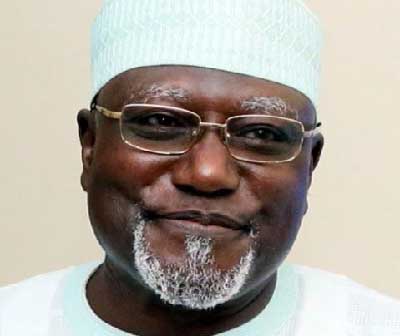
Buhari had earlier sacked the service chiefs and the NSA he inherited from ex-President Goodluck Jonathan. He had similarly sacked the former Director-General of the Department of State Services, Ita Ekpenyong, and immediately announced Lawal Musa Daura as the replacement.
With an apparently inexhaustible supply of suicide bombers — young girls and boys — a need to rejig the country’s security network becomes the challenge.
Only recently, the Peoples Democratic Party (PDP) urged president Buhari to reorganise and overhaul the DSS and other intelligence agencies in order to improve and redirect their performance.
The PDP members are not the only one numbed by the sudden sedation of the security and intelligence system, key components of President Muhammadu Buhari’s change mantra.
With the country stalled in partisan gridlock, and seemingly helpless in the face of Boko Haram insurgency, kidnapping, a new past time of demented and semi-demented lucre-chasing youths there is urgent need to retool.
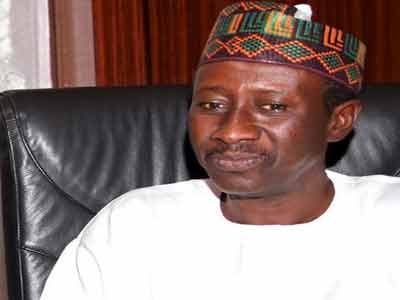 Experts say there is need to reform the country’s security network, as what the DSS does now, many say, is to go after political party offices (Lagos APC during GEJ), going after INEC/Tribunal and doing things that are not intelligent in the least. Some DSS operatives have lost their lives chasing petrol thiefs, instead of giving intelligence to others. We have seen DSS and Police operating at cross-purpose.
On September 3, the Department of State Services (DSS) invaded the Akwa Ibom State Government House in commando-like style, ransacked it, intimidated and harassed occupants, claiming to be searching for bombs and documents.
Security sources say much more need to be done on intelligence gathering and communication. Since 2009, when Boko Haram rose in the rank of terrorist pantheon, only recently, swearing allegiance to ISIS, the country’s security network has been unable to decode the organisation.
Afamefune Okika, managing director of Afamos Security Company, a private security surveillance company with headquarters in Lagos, told The Guardian that it was high time intelligence agencies and the Federal government deployed technology to tackle insecurity.
According to him, “the whole security apparatus in the country is completely muddled.”
He continued, “DSS naturally are not supposed to be seen like the ordinary people. But these days, they wear all forms of camouflages, walk round the street freely with their tags. In America, you will hardly notice an intelligence official, if the person didn’t reveal his or her identity. I think the way they are going about it calls for caution.”
Okika said, “this is why some of us are calling for a total restructuring of all the security apparatus in this country, total restructuring of the Nigerian Police Force, DSS, and even the military intelligence all of them falls within. Even if you check the excesses of some of these Nigerian police and DSS officials at times, some of the encouragement comes from the government of the day. If the government were not encouraging them, their wrong doings would stop.”
Retired Assistant Inspector General of Police, Donald Iroham, also called on president Buhari to champion installation of CCTV cameras in every city in Nigeria. He also recommends a National Data Base, where all Nigerians are registered with their bio data stored for reference.
“In Nigeria, we have a lot of problems with intelligence gathering. If there is bomb blast in Abuja, I can bet you that there would be traffic gridlock in many areas of the city as a reactive measure. Soon after a week or two, the noose on the city would be untied and it is business as usual until the next bomb blast,” he said.
Experts say that though there has been appreciable utilisation of intelligence in support of security operations in Nigeria, however, the effectiveness of the intelligence have been constrained by a number of factors, such as the lack of technological platform and the low level of ICT, amongst others.
They also observe that the absence of an integrated ICT and up-to-date technology platform has made real time intelligence unattainable while the analytical skills of personnel were also affected.
The prospect of intelligence effectively supporting security operations would be dependent on its successfully enhancing intelligence collection and manpower capabilities.
The challenges affecting the efficacy of the intelligence were the lack of real time intelligence, lack of analytical skills and absence of ICT. Other challenges are the lack of adequate funding, non-synergy in intelligence efforts and inadequate manpower.
Consequently, in order for intelligence to effectively support security operations, government needed to adopt strategies that would ensure the provision of real time intelligence and adequate analytical skills, while the necessary ICT facilities, integrated communication system and technical intelligence collection systems are to be put in place.

