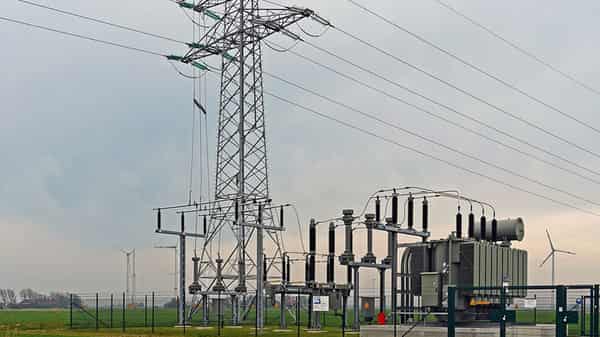
Nigeria’s electricity sector continues to operate well below its potential, with fresh data showing that almost 60 per cent of installed generation capacity was idle in July 2025.
Despite a slight month-on-month improvement in plant availability, the gap between installed capacity and output remains dismal, underlining persistent operational and financial challen- ges in the power sector.
The Nigerian Electricity Regulatory Commission’s (NERC) performance factsheet for July revealed plant availability factor of 41 per cent, up by two percentage points compared to June.
Average available capacity stood at 5,577 MW, representing 41 per cent of the country’s total installed capacity of 13,625 MW. In practical terms, this means that over half of the grid’s generation assets were not operational for significant periods last month.
Coming amidst poor plant maintenance due to rising indebtedness by Federal Government, gas constrained and load offtake, average hourly generation reached 4,340 MWh/h, a marginal 0.3 per cent increase from June, while the average load factor declined by three percentage points to 78 per cent, suggesting that even the capacity brought online was not being maximised.
Grid stability indicators revealed mixed performance. Actual grid frequency fluctuated between 50.64 Hz and 49.42 Hz, breaching the upper and lower limits of 50.25 Hz and 49.75 Hz.
Voltage levels averaged 347.87 kV at the upper bound, one per cent above the maximum limit of 346.50 kV, while the lower bound fell to 301.10 kV—four per cent below the threshold of 313.50 kV.
The largest energy producers during the month included Egbin one, with a plant availability factor of 54 per cent (717 MW) and a load factor of 93 per cent; Delta one, also at 54 per cent availability (482 MW) with an 86 per cent load factor; and Kainji one, with 47 per cent availability (360 MW) and a high load factor of 98 per cent. Jebba one, with 77 per cent availability, delivered a 93 per cent load factor, while Shiroro one maintained 58 per cent availability and a 67 per cent load factor.
In contrast, several other plants performed far below expectations. Olorunsogo two, with an installed capacity of 750 MW, had an average available capacity of only 42 MW, equivalent to six per cent availability, and a load factor of 57 per cent. Afam one recorded zero per cent availability, generating just 0.14 MWh/h.
Sapele Steam one managed only three per cent availability but operated at a full 100 per cent load factor during the periods it was active. Geregu one and Geregu two recorded availability factors of 53 per cent and 50 per cent respectively, but their load factors varied widely at 65 per cent and 22 per cent.
Some plants, including Rivers one, Omoku one and several smaller stations, contributed no generation to the grid during the month. Overall, the grid’s total installed capacity remained at 13,625 MW, with average available capacity at 5,577 MW and average hourly generation at 4,340 MWh/h.
The figures shows the structural issues in Nigeria’s electricity supply industry, where ageing infrastructure, inadequate maintenance, gas supply constraints, and financial liquidity problems continue to undermine output. The high proportion of idle capacity not only limits supply to households and businesses but also dampens investor confidence in the sector’s prospects.
In a related development, the federal government has initiated steps to address the N4 trillion debt owed to Power Generation Companies (Gencos), a major source of operational strain for the industry. The Gencos have repeatedly warned that the unpaid obligations were threatening their ability to maintain and operate plants, with some already reducing output or shutting down units.
Finance and Economy Minister, Wale Edun disclosed after Wednesday’s Federal Executive Council meeting that a refinancing plan is being prepared to settle the outstanding debts.
The proposal, which may involve issuing a bond to raise funds for repayment, would be implemented by the Debt Management Office and other financial experts.
The minister indicated that while the financing plan had not been fully approved by the Council, its implementation had begun, with the first phase expected to conclude within three to four weeks.
The debt settlement plan comes amid broader government efforts to improve electricity supply and stimulate industrial growth.
However, sector analysts warn that without parallel reforms to address gas supply bottlenecks, market liquidity, and transmission constraints, improved debt repayment alone may not translate into sustained increases in generation or grid stability.
With demand for electricity consistently outstripping supply, and more than half of installed capacity idle, July’s figures highlight the scale of the challenge facing Nigeria’s power sector. Without urgent measures to restore plant reliability and strengthen grid operations, the gap between potential and actual performance is likely to persist.