When Yusuf Tuggar, Nigeria’s Foreign Minister, a seasoned diplomat with unimpeachable credentials recently told a global audience on Piers Morgan’s YouTube show that 177 Christians were killed over five years, he may have believed he was offering a measured, fact-based correction to the much higher numbers circulating in the media. Instead, he made a historic admission: the Nigerian state has long known that citizens are being executed because of their identity and has failed to stop it. Under international law, that admission is not trivial.
Knowledge triggers obligation. Once a state acknowledges targeted executions, no matter how small the number may seem, its duty to protect becomes immediate.
Even using the government’s own number, the alarm should have been sounded years ago long before the current administration assumed office. A steady rate of 35 executions every year translates to a Christian executed every 10 days. International law is clear: the duty to act begins the moment a pattern of targeted executions becomes apparent. By the end of the first year, the state had enough evidence to intervene. By year two, the pattern was unmistakable. By year three, the executions met global thresholds for atrocity risk. A flat line of death is still a line of death, and five consecutive years of silence turn a failure of protection into the beginnings of complicity. Taking decisive action years ago would also have prevented the deaths of thousands of innocent peace-loving Muslims and traditional believers. Tragically, the courage to act was missing.
Had the Foreign Minister provided a yearly breakdown, we could model the curve precisely. If one instead models the nature of Nigeria’s past cycles of mass executions over the past several decades, the trend becomes exponential: approximately 56% annual growth, with a doubling time of 18 months. At that trajectory, Nigeria could face 1,500 such executions per year within a decade, and more than 100,000 per year within twenty.
Independent data tell a far more devastating story. Open Doors reports several thousand Christian deaths annually between 2019 and 2023. And to be clear, thousands of innocent and peace-loving Muslims and minority communities have also been killed in similarly targeted executions. Even if we restrict ourselves to the government’s number, the pattern remains alarming and this is where math and statistics, core components of STEMM education, become indispensable.
It is important to note that none of these conclusions depend on the number of Christians in Nigeria’s population. Under international law, the size of a group is irrelevant; what matters is the pattern of identity-based targeting and the state’s failure to protect. This is why the current quibbling in the Nigerian press over whether a genocide is occurring entirely misses the point. Some argue that because different armed groups, Fulani militias, Boko Haram, ISWAP, bandit networks, and local militias attack for different reasons, the executions cannot form a unified pattern. But this fundamentally misunderstands atrocity analysis. Multiple perpetrators simply mean that the terror ecosystem has widened; the “flat line of death” is the problem, not who pulled the trigger.
A Christian executed every 10 days, churches burned, and communities repeatedly attacked is not rhetoric, it is direct targeting. Tragically, some prominent Christian leaders and governors have publicly denied that anything approaching genocide is occurring in their own communities, but denial cannot change the facts. Different motives do not matter when the effect is systematic execution of a protected group.
History is clear: the Holocaust claimed Jewish, Roma, disabled, Polish, and Russian civilians; ISIS massacred Yazidis, Christians, Shia Muslims, and Sunni Muslims who opposed them; and in Rwanda, Hutu extremists killed both Tutsi and Hutu moderates. Genocide does not require perpetrators to exclusively target one population. Nor do attacks on Muslims or the burning of mosques weaken the case they strengthen it, revealing a state-wide inability to protect any of its citizens. Whether or not one uses the word ‘genocide,’ the pattern meets multiple international thresholds for atrocity risk, and the duty to respond remains the same.
A state that cannot read data cannot read danger. Nigeria’s longstanding failure to invest in STEMM education and statistical capacity has left it blind to patterns that were visible socially and morally since the 1980s. With even basic mathematical competence, every administration from 1983 onward would have recognized that these targeted executions follow predictable, escalating cycles. Nigeria cannot now hide behind claims of ignorance.
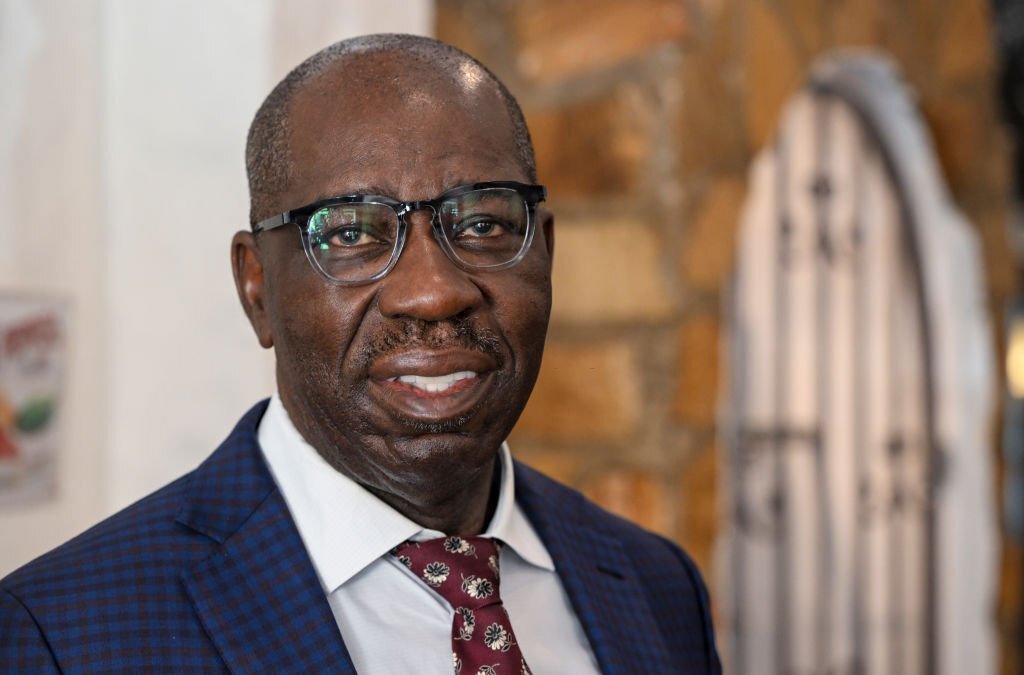
What makes the government’s position so troubling is the institutional response to it. When Nigeria’s Attorney-General, Lateef Fagbemi, an eminent legal mind and, by all accounts, a conscientious public servant publicly minimized the targeted execution of Christians, his remarks unintentionally signaled a broader issue: a lack of coordinated, data-informed engagement with the crisis. This should not be interpreted as a personal failing of one official, but as evidence of a systemic challenge within the machinery of governance. A President depends on honest intelligence, accurate analysis, and principled advice. When those systems falter whether through caution, misjudgment, inadequate information, or a desire to project stability the entire government’s ability to act decisively is weakened.
The Nigerian people did not suffer in silence by choice.
For decades, they cried out for help from church pews and mosque courtyards across the country. Their warnings were ignored, their testimonies dismissed, and in many cases, their voices were silenced through intimidation or force. Clergy who spoke truth were targeted by government officials and their spokespersons.
Bishop Wilfred Anagbe, whose Catholic diocese in Benue State in the middle belt suffered brutal attacks from Islamist terrorists, testified before the U.S. Congress earlier this year. For speaking out, he has faced repeated threats from radical Islamists.
Another courageous witness, Reverend Ezekiel Dachomo, performed more than 70 mass burials, including one for up to 500 Christians executed in a single night. He pleaded for international help even appealing directly to President Donald J. Trump. He went on international television to say what Nigerian officials refused to say at home.
It is one of the profound embarrassments of modern African governance that global awareness of these executions did not come from the African Union, ECOWAS, or the Commonwealth but from US comedian, Bill Maher, who asked the moral questions presidents and diplomats refused to confront. When satirists must do the work of statesmen, the international order is broken.
Some in Nigeria’s political class may quietly welcome the fact that the Tinubu administration is receiving a flagellation and the brunt of public scrutiny. In the words of the late Ayinla Omowura “ Àwa kì í ṣe olódì wọn”, we are not their enemies. However, this moment calls for something deeper than political point-scoring. The reality is that successive generations of leaders across parties and administrations have struggled to confront this crisis as well as others with the urgency it deserves. Many of those now seeking power have long operated within a political culture that has not prioritized the protection of vulnerable communities. This is not about individuals, but about a system that has too often failed the people it was meant to serve. This has been written for posterity, for the dead and for the living.
As the country evaluates its future leaders, let this op-ed serve as a reminder of the standard to which all public officials must be held. We cannot continue like this. When the system cannot save its own people, the responsibility shifts to those outside it who are willing to act.
It should now be clear to all that the government needs immediate assistance to stop these targeted executions. It is unable to do so on its own. Collaboration with the United States government must be taken seriously. A go-it-alone approach is precisely what brought us to this terrible place. Now is the time to degrade the capabilities of these Islamist terrorists and, in so doing, save the lives of many innocent Nigerians.
We must also acknowledge those outside Nigeria who did not stay silent: President Donald J. Trump, who confronted Nigerian officials directly; Pope Francis, who has consistently highlighted global religious persecution. They spoke when African leaders and international bodies chose silence.
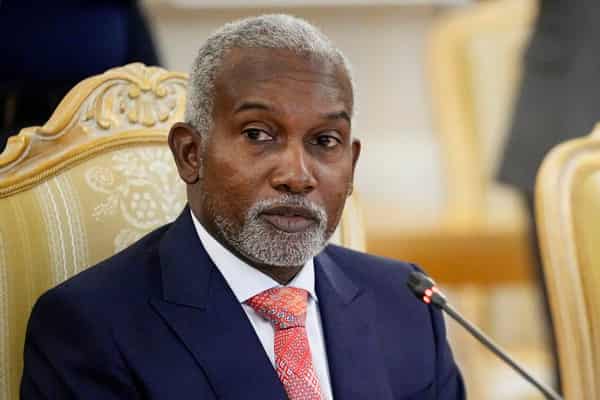
This raises an unavoidable question: can the current leadership of the African Union be trusted to confront atrocity crimes with the seriousness they demand? Their credibility was damaged when it mattered most, when lives were at stake and moral clarity was required. It was widely reported in the press that the African Union Commission Chairperson, Mahmoud Ali Youssouf dismissed the crisis without full knowledge of the facts. In the reporting by The Straits Times he stated “What’s going on in northern part of Nigeria has nothing to do with the kind of atrocities we see in Sudan or in some part of eastern DRC,” Mahmoud Ali Youssouf told reporters at the United Nations in New York, referring to Democratic Republic of Congo.
“Think twice before… making such statements,” he said. “The first victims of Boko Haram are Muslims, not Christians.” With his unguarded statements, he chose sides by diminishing the deaths of Christians; he failed the victims, failed the region, and failed the very principles the African Union was created to uphold. Institutions that cannot stand firm in the face of mass suffering must be renewed; those who minimized or denied the danger should be replaced with leaders who understand the weight of their responsibility and the sanctity of every human life. And now the world itself cannot remain silent. Once a government publicly acknowledges targeted executions, the United Nations is obligated to investigate and respond. The International Court of Justice must examine Nigeria’s compliance with the Genocide Convention. The International Criminal Court must assess potential crimes against humanity, including failure to prevent and failure to punish. And the African Union especially given its earlier denial must act under the Responsibility to Protect (RtoP).
Silence is no longer neutrality. Silence is complicity. And so, the question before the world is no longer “How many died?” or “Is this genocide?” The defining question for Nigeria and for the international community is: Now that we all know, what are we going to do?
Mathematics and statistical modeling have exposed what the dead have been trying to tell us for decades: Nigeria has become an execution field. A pattern of systematic execution has emerged. Nigeria cannot survive the next doubling of violence. Neither can the world.
This is a clarion call to the international community and to all people of conscience:
• To the United States: impose targeted sanctions on Nigerian government officials who have failed in their duty to protect citizens. A clear message must be sent.
• To the United Nations Secretary-General: open an immediate investigation and archive all statements made by Nigerian officials, past and present.
• To the International Court of Justice: examine Nigeria’s compliance with the Genocide Convention.
• To the International Criminal Court: initiate a preliminary inquiry into crimes against humanity and state complicity.
The blood of every innocent Nigerian who has suffered targeted execution, whether Christian, Muslim, or traditional believer is calling from the grave. With these ongoing killings, Nigeria has lost and continues to lose far too many good people.
The time to act is the moment we know. And now the Nigerian government has made the entire world know about these targeted executions. The dead now know that we know, and they are the ones seeking justice. We can no longer unsee the deaths. We can no longer pretend they do not exist.
Written by Adeboye Adewoye.