 Follow Us on Google News
 Follow Us on Google Discover
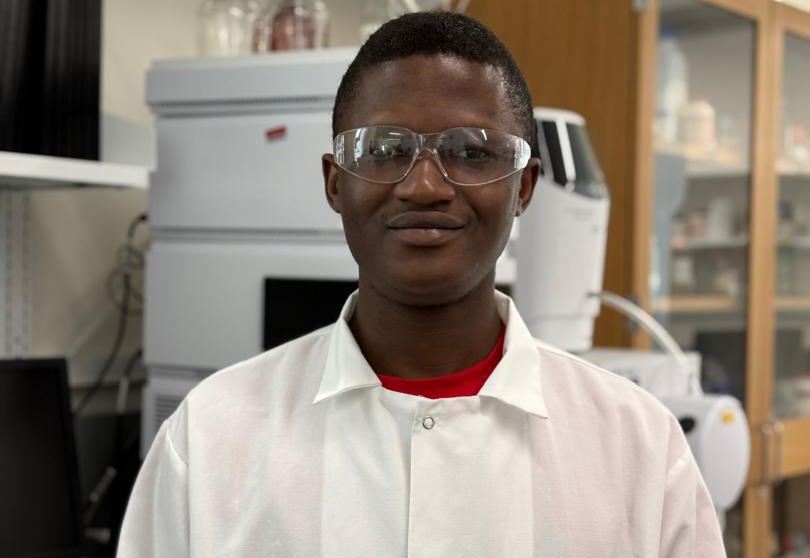 Shekari Abednego, a researcher and lecturer in the Department of Biotechnology, Kaduna State University, advocated for transformative changes in Nigeria’s pharmaceutical sector. With a commitment to tackling public health challenges, Abednego’s research focuses on developing small drug molecules for the treatment of diseases like cancer, malaria and diabetes. Besides fostering novel drug development, his research focuses on identifying potential drug targets for these diseases.
[ad]
At the International Conference on Science and Innovation for Sustainable Development held in April 2024 at Landmark University, Abednego presented a visionary paper that underscored Nigeria’s untapped potential for pharmaceutical innovation. His research identifies potential insecticidal target that could be harnessed to develop novel insecticidal against malaria vector. During his presentation, Abednego highlighted critical barriers – such as inadequate infrastructure and funding – that hinder the nation’s progress in drug discovery and development.
“In a country grappling with both infectious disease and a surge in non-communicable illness, it is imperative to establish dedicated research institutions that prioritize drug discovery,” Abednego urged during his presentation. “Dependence on imported medicines, despite our intellectual capacity to innovate locally, is unsustainable.”
In 2021, Abednego was awarded the Covenant Applied Informatics and Communication Africa Centre of Excellence Scholarship, funded by the World Bank Africa Centre Excellence-IMPACT project. This prestigious scholarship provided funding for his master’s degree and research, enabling him to contribute to drug discovery. Through this support, he was able to integrate computational techniques into drug discovery, bridging the gap between theoretical research and real-world pharmaceutical applications.
As an expert in bioinformatics and medicinal chemistry, Abednego highlighted the significance of bioinformatics tools, including molecular docking, dynamic simulations, and protein modeling, in accelerating the drug discovery process. His work emphasizes the need for computational techniques to design and optimize drug molecules before synthesis, enhancing efficiency and reducing costs.
[ad]
A central theme of his research involves the exploration of protein interaction networks to uncover potential targets for insecticide-resistant malaria vectors. “Our findings have the potential to drive the development of innovative insecticides,” Abednego explained. “However, without adequate funding and research infrastructure, these advancements might remain theoretical rather than practical.”
Collaboration emerged as a key strategy in his paper. Abednego called for stronger partnerships between universities and pharmaceutical companies, advocating for interdisciplinary teamwork among chemists, biochemists, molecular biologists, and computational scientists. “No single researcher or discipline can achieve success in isolation,” he emphasized.
In addition to urging academic-industry collaboration, Abednego appealed to policymakers to invest in Nigeria’s pharmaceutical sector. He proposed the establishment of funding schemes and policies that incentivize research-driven startups. “A proactive government intervention is essential,” he noted. “Without it, groundbreaking discoveries risk being neglected.”

He also stressed the importance of integrating computational research into academic curricula, ensuring that Nigerian students gain hands-on experience with modern drug development tools. “The future of science lies in equipping the next generation with practical skills,” Abednego advised. “Moving beyond theoretical knowledge to real-world applications is non-negotiable.”
Despite the formidable challenges, Abednego remains optimistic about Nigeria’s potential to become a global hub for pharmaceutical research and innovation. “Our country is rich with talent and expertise,” he remarked. “The challenge now lies in transforming our research into tangible societal impacts.”
His presentation sparked thought-provoking discussions among researchers, industry leaders, and policymakers, reinforcing the need for immediate action. Attendees resonated with his vision of a self-reliant pharmaceutical sector that not only addresses pressing health concerns but also fosters economic growth through local drug production.
As global advancements in personalized medicine and targeted therapeutics continue to accelerate, Abednego’s insights serve as a timely call to action. Nigeria, he believes, has the intellectual resources and determination to make significant contributions to global healthcare – provided there is a collective commitment to invest in and prioritize research-driven innovation.
[ad]

