 Follow Us on Google News
 Follow Us on Google Discover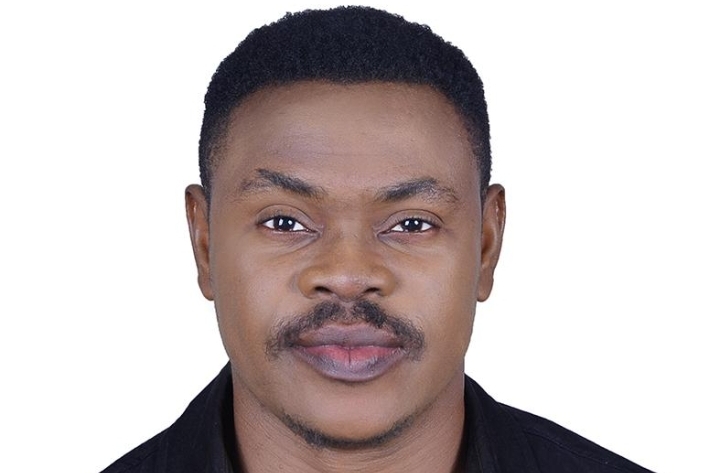
As Nigeria contends with the overlapping crises of public health emergencies, forced displacement, poverty, and the deepening impacts of climate change, one issue continues to quietly shape the lives of millions, water security.
While much public discourse revolves around subsidy reforms, inflation, and insecurity, in rural communities stretching from Adikpo to Ogoja, Jos to Toto, the most pressing daily question remains: “Will there be water today?”
“Water is not just a basic human need. It is the beginning of everything, health, agriculture, dignity,” says Aminorishe Israel Oghenemarho, an environmental health specialist and applied hydrobiologist who has spent the last decade at the intersection of WASH, humanitarian aid, and sustainable development across Nigeria.
His work has taken him into communities where taps have long gone dry and boreholes have collapsed under pressure.
The stories are often the same, long treks for unsafe water, broken infrastructure, and the spread of waterborne diseases.

Nigeria’s water access crisis is acute. According to joint WHO and UNICEF data, only 14% of the country’s population has access to safely managed drinking water.
For millions in rural areas, especially in conflict-affected and displacement-prone regions, the burden of fetching water falls on women and children who walk several kilometers daily to access sources that are often polluted or non-functional.
As the climate crisis accelerates and rainfall patterns become increasingly erratic, the problem is deepening.
Aquifers are drying, shallow wells are turning brackish, and once-reliable springs are vanishing.
Oghenemarho, who earned a Master’s degree with Distinction in Applied Hydrobiology from the Federal University of Technology, Minna, has worked with several major humanitarian and development organizations.
From 2017 to 2022, he led WASH projects with Norwegian Church Aid, Catholic Relief Services (CRS), Save the Children, and the UNHCR, operating in over 20 local government areas across Benue, Nasarawa, Cross River, and Plateau States.
During this period, he oversaw the drilling and rehabilitation of more than 30 boreholes, providing clean water access to over 100,000 people, many of them refugees or internally displaced persons.
In congested settlements like Ogoja and Adikpo, he not only supervised infrastructure rehabilitation but also worked with communities to establish Water User Committees, train sanitation volunteers, and create localized water management plans that prioritize ownership and sustainability.
To him, the challenge is far more than infrastructure. “You can drill a borehole, but if no one knows how to maintain it, it won’t last. Our goal was never just to install taps, it was to empower communities to manage their own water resources,” he reflects.
He has also piloted the use of bio-based filtration methods using sustainable, locally sourced materials and organisms such as rotifers to support eco-friendly water purification systems, a method he is now exploring further for scale-up.
The impact of water insecurity in Nigeria goes beyond dry taps. The World Bank estimates that Nigeria loses over $1.3 billion annually due to poor sanitation and lack of clean water.
In displacement settings and fragile zones, unsafe water is linked to cholera outbreaks, high rates of malnutrition, and disruptions in schooling, particularly for girls who miss school due to water-fetching duties.
In recent years, flooding has further complicated access, damaging infrastructure and displacing thousands more into makeshift shelters where clean water is a luxury.
Oghenemarho believes water access should now be recognized as a national security issue. “You can’t stabilize a region, fight epidemics, or strengthen health systems if communities don’t have clean water. The first line of defense against disease is a working tap,” he insists.
His current work is focused on developing scalable, data-driven systems to monitor water quality and infrastructure in real-time.
He is also leading local research into PFAS contamination, an emerging water threat known as “forever chemicals.”
Though underreported in Nigeria, he warns of the long-term consequences of unchecked industrial pollution, especially in urban fringes where waste regulation is weak.
His experience on the field, including drilling 15 boreholes in refugee camps in Cross River, constructing over 1,000 latrines, and coordinating hygiene education for tens of thousands of households, has taught him that building resilience requires a multi-dimensional approach such as technical, social, and political.
He is now pushing for policy changes that would improve budgetary allocations for borehole maintenance, enforce water safety standards, and decentralize water governance so that local governments and communities have the tools they need to maintain systems long after external donors exit.
The National WASH Action Plan, launched in 2018, provided a foundation, but its implementation remains patchy and overly dependent on federal coordination.
For voices like Oghenemarho’s, the path forward is clear: treat water as a national strategic asset. “You can’t build a strong economy on dry wells. You can’t build peace in a thirsty village,” he warns.
As Nigeria navigates the uncertainties of the coming decade, including rising temperatures, population growth, and increasing displacement, the quiet fight for water security may prove to be its most defining battle.
And in that fight, professionals like Oghenemarho are not just engineers or field officers, they are the architects of survival.

