 Follow Us on Google News


 Follow Us on Google Discover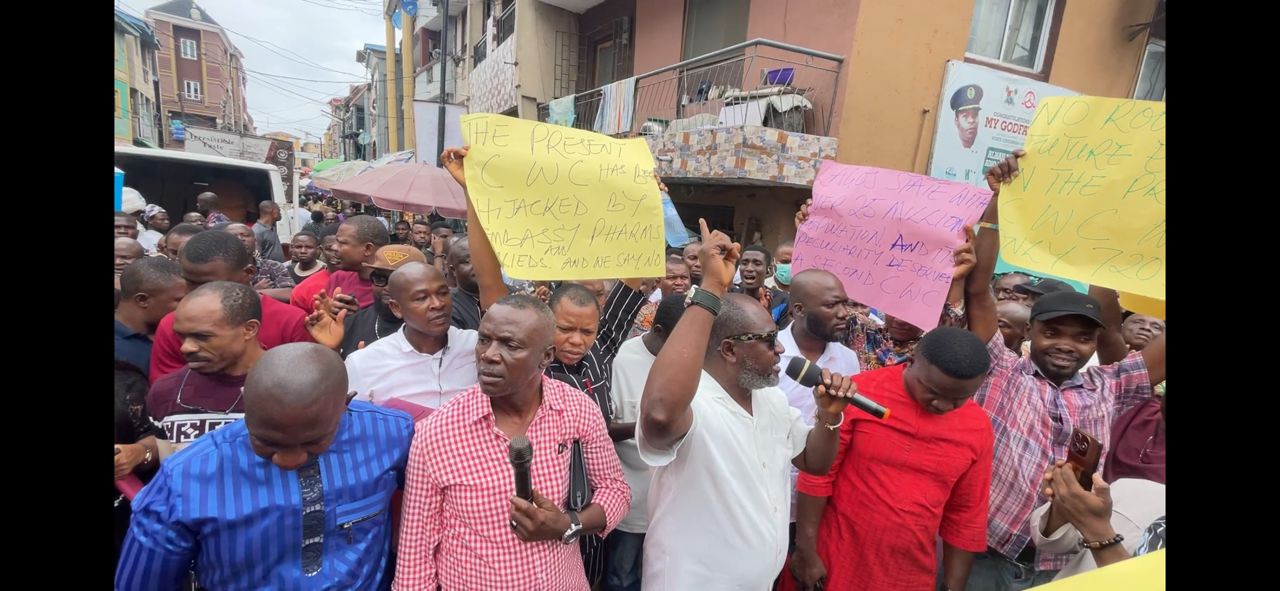
• NAPPMED warns against supply crisis, drug shortages
• Seeks FG intervention as CWC shop prices hit N93.5m
Tension is mounting in Lagos State’s pharmaceutical supply chain, as over 3,000 medicine marketers under the umbrella of the National Association of Patent and Proprietary Medicine Dealers (NAPPMED), Liberation Zone, Lagos Island, have raised the alarm over alleged hijack and monopolisation of the Coordinated Wholesale Centre (CWC) by a select group of non-pharmaceutical actors and corporate interests.
The controversy surrounds the CWC located at Ijora Badia, Lagos, a facility initially designed to centralise and sanitise drug distribution in Nigeria’s busiest state. While the centre was envisioned as a regulated hub for wholesale pharmaceutical activity, stakeholders now claim it has been taken over by private interests, shutting out people who laid its financial and operational foundation.
The association called for government intervention and establishment of a second wholesale centre, as inaction could deepen proliferation of counterfeit drugs and public health risks across the state and beyond.
Speaking during a press conference, the Chairman of NAPPMED Liberation Zone, Mr Osita Nwajide, disclosed that over 920 members of the association that contributed funds ranging from N100,000 to N1 million each, to purchase the land and initiate the development of the wholesale centre more than a decade ago, have been shortchanged.
He noted that their contributions exceeded N300 million in value and were made with the expectation that they would become direct beneficiaries of the completed project.

However, Nwajide alleged that those hopes have been dashed as the ownership of the project has gradually slipped into the hands of a limited circle of investors and companies, who now control the shop allocations, pricing, and access.
He explained that the cost of securing a shop unit at the CWC has reportedly skyrocketed to N93.5 million for outright ownership, a figure that places participation well beyond the reach of most original contributors.
They argued that their exclusion is not only financial but also spatial. With the current centre limited to just 720 shops, there is simply no room for the estimated 3,000 medicine dealers operating within the Lagos Island axis.
According to Nwajide, the restricted access threatens to collapse the drug supply chain, particularly for underserved communities that rely on smaller medicine outlets.
A founding member of Lagos State Medicine Dealers Association (LSMDA) and one of the original planners of the CWC, Dr Gabriel Onyejamwa, revealed that the land title, initially held in trust for the dealers, was later transferred to a company under questionable circumstances.
He also noted that attempts to engage the current management structure have been futile, and many longtime members are now completely cut out of decision-making processes.
The LSMDA’s Board of Trustees urged the federal and state government, as well as the Pharmaceutical Council of Nigeria (PSN) and the National Agency for Food and Drug Administration and Control (NAFDAC) to take urgent steps to approve a second CWC in the state and correct the imbalance. The proposed centre, they argue, should be inclusive, affordable, and strategically located with capacity for over 3,000 traders.
They also recommend that shop rental costs be capped at affordable monthly rates, to allow for broader participation among low- and mid-income operators. In addition, they called for transparent regulatory oversight of any future projects to prevent similar abuses.
NAPPMED members insist that the current system is not sustainable. With Lagos serving as a critical node in Nigeria’s pharmaceutical supply chain, they warned that excluding legitimate traders from the formal distribution network could lead to dire consequences, including the proliferation of counterfeit drugs, widening health inequities, and the re-emergence of informal and unregulated drug markets.
According to Onyejamwa, if the situation is left unchecked, the exclusion of medicine dealers from CWC operations could destabilise the objective the reform was meant to achieve. He emphasised that equitable drug distribution is a matter of public health and national security, not a commodity to be auctioned to the highest bidder.

