 Follow Us on Google News
 Follow Us on Google Discover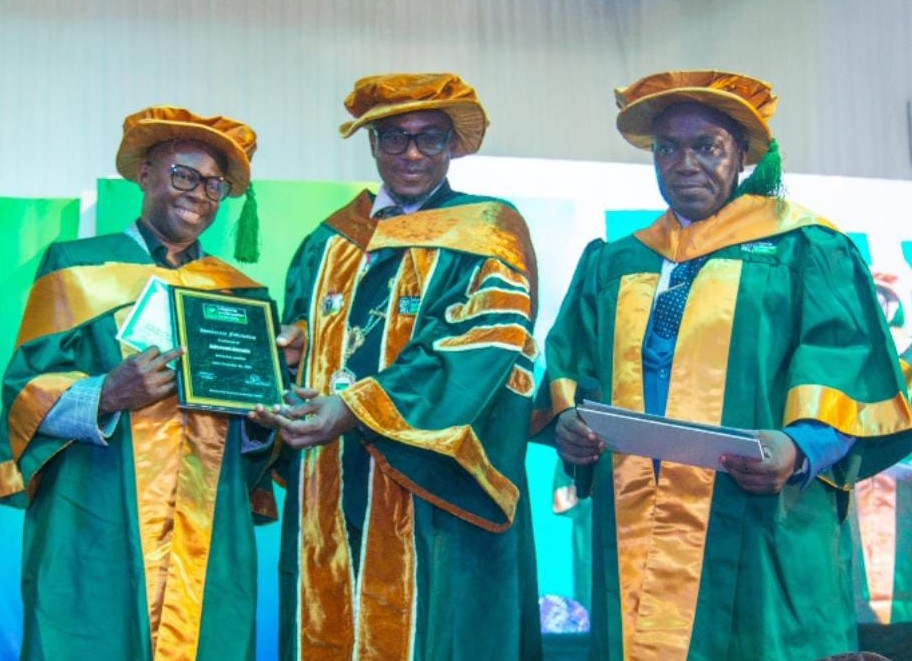
When ‘DeRemi Atanda was recently conferred as a Fellow of the Nigeria Computer Society (NCS), the honour was much more than a personal accomplishment.
It was an honour for a professional whose work has significantly impacted the digital infrastructure of Nigeria, fintech innovation, financial inclusion, and national development.
The NCS Fellowship, a recognition for those whose work has made contributions to the computing and technology landscape in the country, is one of the few awards that the career of Atanda defines with impressive precision.
Atanda, with almost 30 years’ experience, has played a key role in developing some of the most transformational technology and public financial management systems in Nigeria.
His career is an illustration of the idea that innovation does not necessarily need to be disruptive or noisy; it can sometimes be the gradual, methodical building of platforms, policies, teams, and systems that build a digital backbone in a nation without much noise.
When the President of NCS, Dr Muhammad Sirajo Aliyu, remarked during the conferment ceremony that, “Each of these awards represents the core values of our Association: excellence, integrity, innovation, and impact. They remind us of why we strive, why we collaborate, and why we persist in our endeavours to advance knowledge, uplift one another, and create a better world,” ‘DeRemi immediately comes to mind.

On a career of enduring impact, Atanda has a career history in the fields of operations, strategy, enterprise systems, transformation in the public sector, ecosystem development, and technology governance.
He was making underlying digital reforms that even today influence the economic and social dimensions of Nigeria before he became a visible industry leader.
He was instrumental in the implementation of the World Bank-funded Integrated Payroll and Personnel Information System (IPPIS) that created the first biometrics-based centralised civil servant database in Nigeria and allowed the processing of salaries, pensions, and taxes automatically.
He also worked towards the development of the Treasury Single Account, which is among the largest systems of financial management of a country in Africa.
These iconic projects are a symbol of his leadership philosophy: nation-building based on technology, transparency, efficiency, and accountability at scale.
It is a recurring theme in the career of Atanda: taking complex technological ideas and bringing them to reality in systems that can have real and quantifiable influence.
His work has always been able to strike the right balance between innovation and governance so that technology cannot only be a tool of private enterprise but also for the general overall good.
Yet, no professional journey is built in isolation. Behind every durable career lies not only ambition and competence but also mentorship.
For Atanda, that guidance came from Dr John Obaro, Group Managing Director of SystemSpecs Holdings and the founder whose vision created one of Nigeria’s most important financial technology platforms.
Before Atanda was a recipient of this fellowship distinction, he was a beneficiary of one of the most enduringly influential examples of institutional mentoring, which saw Obaro carefully school Atanda in a philosophy of patience, systems thinking, and national relevance.
Obaro’s mentorship shepherded Atanda from his early career professional roles and executive responsibilities through to the boardroom.
It saw Obaro hardwire into his mentee a belief that technology should be the plumbing for society and not its end goal.
The lesson in Atanda’s story for leadership development is that ecosystemic mentoring in institutions matters. It has the power to shape careers that can, in turn, make a difference. It is also a reminder that some of the best leadership is not necessarily made but rather raised in ecosystems that prize vision and trust in equal measure to their fetish for technology and innovation.
On ecosystem leadership and recognition, the impact of Atanda is recognised by many people in the industry.
He was appointed to the Governing Council of the Fintech Association of Nigeria as a member in 2025 and made Chairman of the Coordination Committee of the Fintech CEOs and Founders Forums, making him at the centre of strategic partnerships among leaders in the fintech sector.
To these accolades can be added his NCS Fellowship and a career that is a perfect blend of technical, policy, and thought leadership. He is seen as one of the reliable sources of information on youth development, ethical innovations, national progress, and the digital economy of Africa in the future.
He has spoken on highly ranked platforms like TEDx and the African Business Forum of Stanford University.
He goes further into serving as a board member in banks, fintechs, NGOs, and associations, which further secures his ability to serve as a mediating factor between policy and innovation and enterprise change. This depth of interest reveals his belief that technology should be integrated in all spheres of national life: the financial system, education, state, and business.
Through leadership as a managing director, Remita Payment Services Limited has grown to become one of the longest-standing fintech brands in Nigeria. It has been a reliable service to millions of individuals and organisations. Remita has grown even more under his custodianship as a convenient payment system that allows all people and businesses to transact without hassle. But Remita is not the only aspect of his broad legacy.
It is difficult to say which of his alumni communities would be proudest of Atanda. Would it be the Federal Government College, Ogbomosho, where he spent his formative years; the University of Ibadan, where he studied Physics; his MBA cohort at the Lagos Business School; or perhaps his colleagues from the executive programmes at Stanford University and Pan-Atlantic University, which strengthened his analytical and leadership capabilities?
Whichever it is, each institution can lay claim to having shaped a professional whose accomplishments continue to reflect its finest values.
This training as a scientist, as a businessman, and also as someone exposed to the world has given him an eye that looks in a different way, one with technical insight and strategic vision. It is an outlook that has helped him sail through the challenges of digitising the Nigerian economy whilst keeping a watch on the world market and prospects.
Outside the corporate and policy world, Atanda has strong interests in youth development and mentorship. He has also led students and young professionals in different programmes, and he is a supporter of start-ups and emerging entrepreneurs.
His belief in developing the new generation is a manifestation of a grander purpose: Nigeria will not be built upon systems and platforms but on people who can innovate and advance.
He also stresses the need to be patient, resilient, and ethically clear in leadership, which he says young professionals should adopt in order to create institutions that survive. His mentorship approach is both practical and inspirational, which includes technical advice and personal motivation.
While the NCS Fellowship conferment is a remarkable milestone, it only represents another well-earned feather in the hat of a remarkable leader. It affirms his role as a steward of Nigeria’s technological future, having advanced public financial management, strengthened the fintech sector, and expanded digital access for millions.
This honour comes at a pivotal moment, as Nigeria’s fast-growing digital economy demands leaders of technical expertise, ethical integrity, and national insight.
The achievement upholds Atanda’s lifelong goal of using technology, teamwork, and inclusive innovation to create a more powerful and just Africa.
His legacy is still unfolding, defined not by noise but by thoughtful leadership and systems that endure.

