 Follow Us on Google News
 Follow Us on Google Discover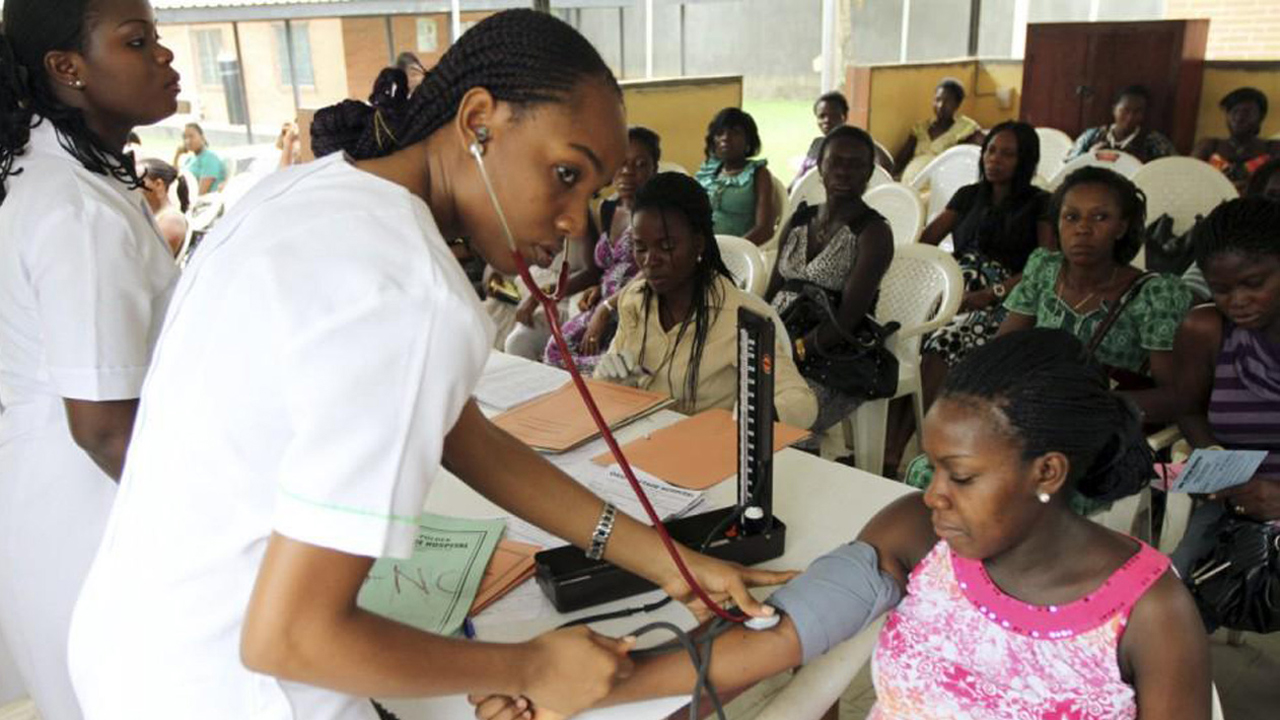
Nigeria stands at a critical juncture in its healthcare journey, facing a profound paradox that demands immediate attention. While economic growth dominates national discourse in urban centres, approximately 46 per cent of our population residing in rural and hard to reach areas continues to experience severe healthcare deprivation. This disparity stems not merely from infrastructural deficits but from deeply entrenched socioeconomic barriers and a critical shortage of qualified health professionals. The situation represents more than a service gap. It constitutes a full-blown national crisis that fundamentally undermines both our human capital development and economic prosperity.
The statistics paint a sobering picture of our current reality. Nigeria continues to bear one of the world’s heaviest burdens of maternal mortality, with rates (512 deaths per 100,000 live births) that remain unacceptably high despite global efforts. Compounding this challenge, non-communicable diseases now account for nearly 30 per cent of all deaths nationwide, placing unprecedented strain on our already fragile secondary and tertiary healthcare facilities.
The very institutions designed to protect our citizens’ health, our primary healthcare centres, often find themselves overwhelmed by this triple burden of disease, leaving millions vulnerable and underserved. Our national commitment to achieving universal health coverage by 2030 appears increasingly distant without a fundamental reimagining of our approach to frontline care. The time has come to shift resources and focus from centralised, expensive hospital-based interventions to decentralised, community-focused primary healthcare solutions.
Framing the opportunity- CHWs as the missing link
The solution to this systemic crisis does not lie in constructing another multibillion-naira specialist hospital in urban centres. Rather, the answer can be found within our communities themselves, embodied in the often-overlooked potential of Community Health Workers (CHWs). These dedicated individuals represent the most cost-effective, culturally appropriate, and readily scalable solution to Nigeria’s healthcare access crisis. While the indispensable role of doctors and nurses remains unquestioned, their concentration in urban areas and professional limitations prevent them from adequately serving rural populations.
CHWs, by contrast, emerge from and remain embedded within the communities they serve. They possess intimate knowledge of local languages, understand complex community dynamics, and demonstrate unique capability in navigating the intricate social determinants of health, including poverty, gender norms, and cultural beliefs, that often prevent families from seeking or adhering to medical care. Essentially, they constitute the vital human infrastructure that transforms health policy from an abstract concept to tangible service.
Evidence of impact- What research reveals
A review of existing research and evidence from successful programmes globally confirms that strategic investment in community health workers represents the most impactful intervention for systemic healthcare transformation. This is particularly compelling when presenting the case to sceptical financial decision makers, as the most persuasive arguments extend beyond clinical outcomes to encompass significant economic benefits.

The economic argument for CHWs empowerment begins with recognising the substantial cost of inaction. The most glaring inefficiency in Nigeria’s health system remains the collapse of primary care, which forces patients to bypass local health centres and present at expensive secondary and tertiary facilities with complications that should have been managed at the community level. Consider that a straightforward malaria case requiring minimal intervention at a primary centre can escalate into a life-threatening emergency demanding costly hospitalisation.
CHWs effectively interrupt this destructive trajectory through their capacity to manage common illnesses, promote family planning initiatives, ensure complete childhood immunisation, and provide essential follow-up care for chronic conditions. In maternal healthcare, their role in facilitating antenatal visits and promoting skilled birth attendance directly reduces the incidence of expensive emergency interventions and preventable tragedies.
The return on investment narrative presents an equally compelling economic case. International evidence consistently demonstrates that every dollar invested in well-structured CHW programmes can yield returns of up to ten dollars through multiple channels. These include averted healthcare costs, reduced hospital admissions, and enhanced workforce productivity and school attendance.
For budget planners and finance ministers, this transforms community health worker investment from mere social spending to strategic capital allocation in national health security and economic development. Furthermore, a properly supported community health worker network serves as an early warning system for disease outbreaks, enabling rapid containment and preventing the massive economic disruption that inevitably follows epidemics.
Beyond the economic calculus lies the invaluable element of trust. Research consistently shows that community health workers deliver more than just medical services. They build enduring relationships within their communities. They represent the only healthcare workforce capable of overcoming the deep-seated scepticism that often results from decades of unfulfilled government promises regarding healthcare delivery. This hard-earned trust makes them uniquely effective in addressing Nigeria’s complex disease burden, as they can drive behavioural change and health education at the grassroots level in ways that conventional medical approaches cannot replicate.
Challenges: Barriers slowing progress, framed as opportunities for smart reform
Despite their demonstrated potential and global recognition, evidenced by successful implementation in countries like Ethiopia and Brazil, Nigeria’s CHW continues to operate far below its capacity. This underperformance reflects not individual failure but systemic deficiencies that we must reconceptualise as opportunities for transformative reform.
The foremost opportunity lies in professionalising the CHW workforce. Currently, many CHWs operate as temporary volunteers or informal workers, lacking formal contracts, consistent remuneration, and clear career progression pathways. This professional ambiguity fuels high turnover rates and represents a continuous drain on training resources. The solution requires institutionalising the community health worker role as a dignified, professional career choice complete with formal certification, performance-linked incentives, and structured advancement opportunities.
This includes appropriate task shifting, which means delegating specific basic medical responsibilities to enable more efficient use of higher-level medical personnel while ensuring that most routine primary healthcare needs can be addressed within the community itself.
Digital innovation presents another significant opportunity for enhancement. The current reliance on paper-based systems and limited management capacity at primary healthcare levels severely constrains CHW effectiveness. Strategic investment in user-friendly digital tools for data collection, patient tracking, inventory management, and remote mentorship can dramatically improve operational efficiency and accountability. Imagine primary healthcare managers being able to instantly identify communities with declining immunisation rates or dwindling drug supplies, enabling proactive resource allocation and preventing stockouts that compromise care quality.
Sustainable financing constitutes the third critical opportunity. The prevailing dependence on short-term, project-based donor funding creates inherent instability in Community Health Worker programmes. The transition to reliable, government-led financing with dedicated budget lines integrated into national and state health budgets would reposition CHWs as fundamental components of our primary healthcare architecture rather than temporary interventions.
Solutions / blueprint for change: Practical recommendations
Transforming these opportunities into reality requires a coordinated, multi sectoral approach with clearly defined responsibilities for each stakeholder group.
For policymakers at federal and state levels, leadership must translate into concrete action. This entails mandating and funding the professionalisation of the community health worker workforce through standardised national policies that establish formal accreditation processes and ensure consistent, performance-based remuneration. Concurrently, prioritising investment in digital health infrastructure for primary care will enable data driven decision making and optimise resource allocation.
The private sector possesses crucial expertise and resources that can accelerate this transformation. Beyond traditional corporate social responsibility, businesses should embrace health system strengthening as strategic investment. Support for high quality training academies, development of sustainable digital solutions, and active advocacy for supportive policies represent impactful contributions. A healthier population directly benefits business through expanded consumer markets and more productive workforces, making this engagement mutually beneficial.
Civil society organisations and media outlets play indispensable roles as amplifiers and accountability mechanisms. By championing community health worker success stories, they can build essential public support, while simultaneously scrutinising government and private sector commitments to ensure promises materialise into tangible community benefits.
Leadership and commitment: The foundation’s role
The Aig-Imoukhuede Foundation remains steadfast in its commitment to this transformative agenda. Through our Adopt-A-Healthcare Facility Programme, which revitalises primary health centres, and the AIG Public Leaders Programme, which cultivates a new generation of public health leaders, we work systematically to create enabling environments where CHWs can thrive. We believe strongly in evidence-based advocacy to ensure the CHW model becomes permanently institutionalised rather than temporarily implemented, and we actively promote multi sectoral partnerships that are necessary for sustainable health system transformation.
Conclusion: Reasserting urgency and hope
The evidence is unequivocal. Empowering our community health workers represents not merely a complementary initiative but the central strategy for building a resilient, equitable, and efficient healthcare system in Nigeria. Nwanya, is Health Philanthropy Team Lead at the Aig-Imoukhuede Foundation. He is a public health professional focused on evidence-based strategies for strengthening health systems and achieving universal health coverage.
It offers the most direct pathway to reducing maternal and child mortality, managing the growing burden of non-communicable diseases, and securing our nation’s economic future.
The choice before us as a nation could not be clearer. We can perpetuate a fragmented system that consistently fails its most vulnerable citizens, or we can collectively decide to strategically invest in our most promising healthcare asset. Let us choose to professionalise, equip, and champion our Community Health Workers. Let us recognise them as the true backbone of a healthier, more prosperous Nigeria. The moment for decisive action has arrived.

