 Follow Us on Google News
 Follow Us on Google Discover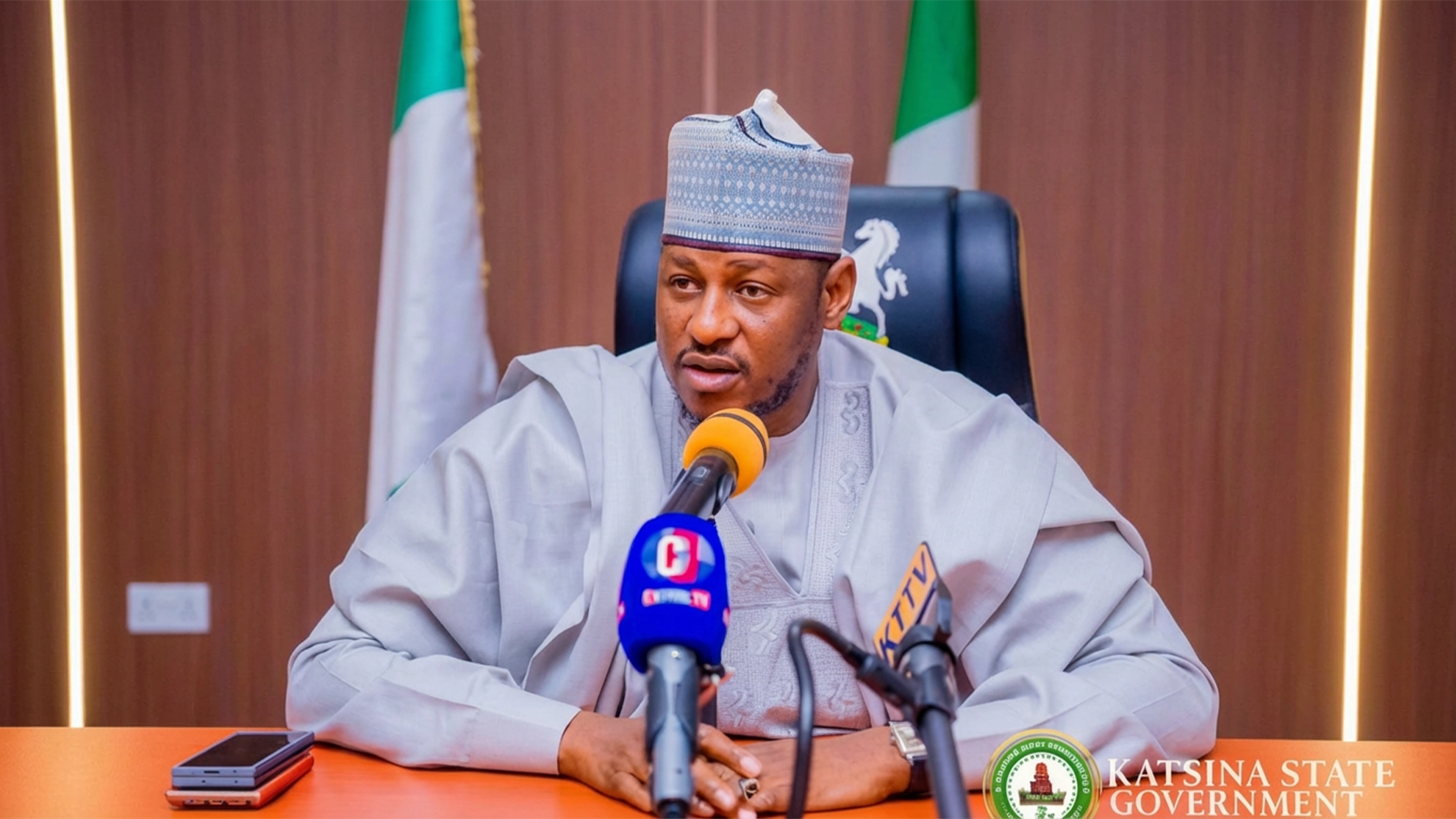
Katsina State governor, Dikko Umaru Radda, has called for greater scrutiny of how the Federal Government manages its share of national revenue, arguing that the centre receives the bulk of funds from the Federation Account Allocation Committee (FAAC) while states and local governments are left to shoulder public anger over worsening economic hardship.
Speaking in an interview with Radio France Internationale (RFI) Hausa, Radda said Nigerians should not blame governors alone for the current economic situation, pointing out that the Federal Government controls 52 per cent of monthly allocations from the Federation Account.
“Whenever there is hardship, people blame governors and local governments,” Radda said. “But when revenue is shared, 52 per cent goes to the Federal Government. It is the remaining 48 per cent that is shared among the 36 states and 774 local governments.”
He questioned the impact of decades of federal dominance in revenue distribution, urging Nigerians to ask critical questions about how the funds retained at the centre have been utilised. “For decades, the Federal Government has been receiving the larger share of federation revenue. So the question Nigerians should be asking is: where has the bulk of that money gone?” he said.
His comments come at a time when state governments are under pressure to account for increased allocations following the removal of fuel subsidy. Radda argued that the current revenue-sharing formula leaves subnational governments struggling to meet growing demands, despite assumptions that governors control the bulk of national resources.
Addressing corruption allegations often directed at governors, Radda cautioned against sweeping generalisations. “Leadership is about individual integrity. It is wrong to generalise and label everyone the same way,” he said, adding that public office holders would ultimately be held accountable for their actions.

The governor also defended his administration’s continued investment in capital projects despite the prevailing hardship, insisting that infrastructure development remains one of the fastest ways to stimulate grassroots economic activity. “When you execute capital projects, you create jobs and bring money down to the people. Labourers earn wages, food vendors make sales and suppliers benefit,” he explained.
Radda said the impact of such spending is already visible across Katsina’s local government areas. “If you go to the local governments today, you will see a lot of economic activity because funds have reached the communities,” he noted.
By shifting attention to the Federal Government’s control of revenue, Radda’s remarks highlight broader questions about fiscal federalism and accountability in Nigeria, particularly as citizens grapple with rising costs and economic uncertainty.

