 Follow Us on Google News
 Follow Us on Google Discover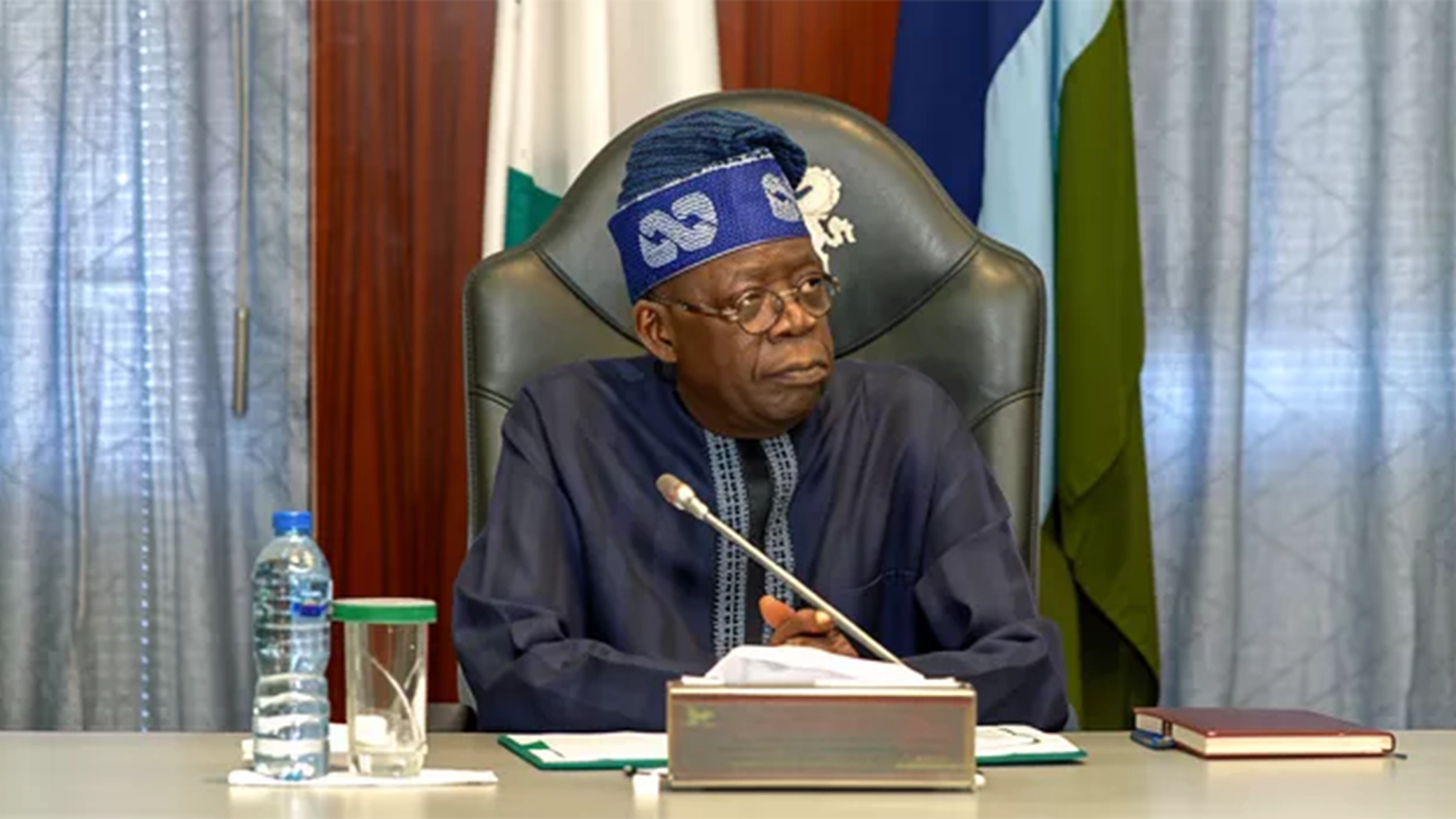
The National Counter Terrorism Centre (NCTC) has said that President Bola Ahmed Tinubu’s formal classification of bandits, armed non-state actors, and other criminal gangs as terrorists is a significant and transformative shift in Nigeria’s national security policy.
The Centre also described the classification as a deliberate policy and legal re-categorisation by the President of a sovereign nation, with significant implications.

National Coordinator of the Centre, Maj.-Gen. Adamu Laka, said the President’s move would pave the way for a strategic, more unified, and forceful response to the multifaceted violent crisis plundering the country.
Laka spoke on Tuesday at an end-of-year interactive session with the media themed: “Strengthening trust, accuracy and partnership in counter terrorism reporting.”
He said both international and Nigerian laws defined terrorism as “acts of serious violence or threats thereof committed with a political, ideological, religious, or ethnic motivation to intimidate a population or compel a government to do or abstain from doing something.”
Laka said: “Traditional insurgents that we face in Nigeria, like the JAS, Islamic State West African Province, the ISSP, clearly face this definition as their violence is overtly ideological and aimed at overthrowing the state.
“For bandits, it is a known fact that they have been gazetted as terrorist groups in Nigeria following a federal High Court order on 25th November 2021, which is cited at the Terrorism Prevention and Prohibition Order Notice 2021.
“Furthermore, for the bandits, armed criminal gangs, and cult groups who are known to undertake kidnapping for ransom, murder, robbery, armed trafficking, extortion, amongst other heinous crimes, the effects of their actions have become indistinguishable from terrorism. They create widespread terror.”
Continuing, Laka said, “If I may ask, what is the primary objective of kidnapping hundreds of school children or attacking villages, if not to instil terror in communities, to extract ransom and concessions?”
According to him, the societal impact, mass displacement, the shutdown of schools and farms, and psychological trauma are identical to those of ideologically driven terrorism.
He said that the gunmen’s actions were aimed at controlling territories, establishing parallel tax systems, among others, ultimately to undermine state authority and directly challenge the state and its legitimacy.
He said their acts are characteristic of terrorism, adding that it was important to highlight the convergence of motives and the increasing alliance and overlaps between bandits and insurgents, as they share weapons and engage in tactical cooperation.
“As we look ahead to the coming year, our collective task remains clear. Terrorism, violent extremism, and organised criminals continue to evolve in form and tactics,” he said.
Laka said countering them requires efficient strategic communication, public awareness, and national cohesion.
He, therefore, said that the media remain a vital ally in this regard as the evolving tactics of terrorists and bandits demanded stronger coordination, deeper intelligence fusion, and strategic communication to deny them the publicity they seek.
“Therefore, your (media) continued cooperation and understanding are indispensable,” he said.
Laka appreciated the continued partnership of the media in amplifying accurate information, promoting public understanding, and supporting the collective efforts to safeguard national security.
He acknowledged the indispensable role of the media within the national security architecture, adding that the interaction should reaffirm the principles that will continue to guide the partnership in the years ahead.
“Allow me to therefore begin by expressing our sincere appreciation to the Nigerian media for professionalism, resilience, and sustained commitment to informing the public under what are more often challenging circumstances.
“Your reporting has helped shape public understanding of complex security realities, amplified national counterterrorism narratives, and reinforced public confidence in the resolve of government to confront terrorism, violent extremism, and other threats to our national stability.
“Through accurate reporting, responsible commentary, and constructive engagement, you have played a vital role in enhancing national awareness, countering extremist propaganda, and promoting unity in the face of adversity.
He said the parlay provided an important platform to reiterate a matter of critical national interest, the need for caution in the handling and dissemination of sensitive security information.
According to him, in an era of instant news cycles, digital virality, and intense competition for breaking stories, the line between public interest and national security imperatives can sometimes become blurred.
“Operational detail, intelligence-led activities, and ongoing investigations are, by their nature, highly sensitive. Premature or detailed disclosure of such information, however well-intended, can compromise operations, endanger lives, undermine ongoing efforts, and adversely aid adversaries who actively exploit open-source information.
“Our appeal, therefore, is not for silence, but for responsibility. Not for restraint in holding institutions accountable, but for the right judgment in separating what should be reported immediately from what should be handled with caution or deferred in the overriding interest of national security. We believe strongly that national security and press freedom are not opposing forces.”

