 Follow Us on Google News


 Follow Us on Google Discover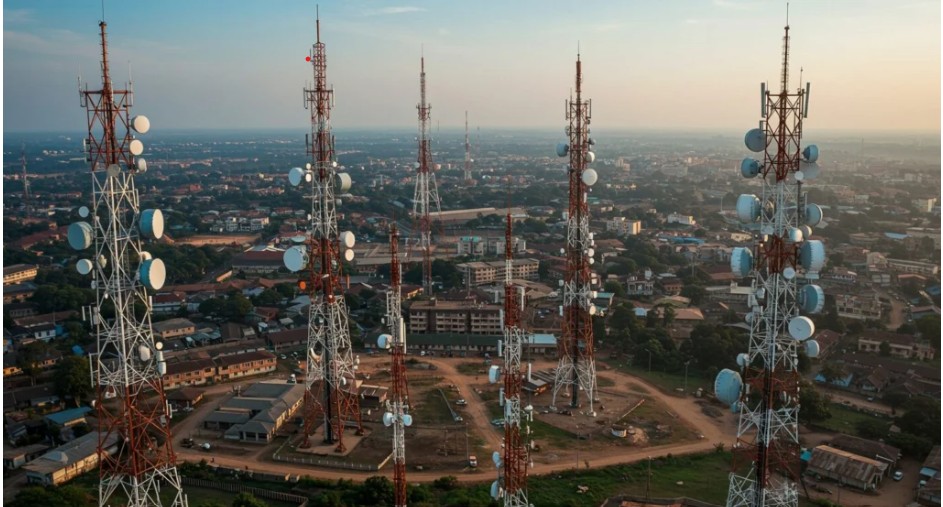
For millions of Nigerians, poor network service is not an anomaly; it is the frustrating norm. From dropped calls to glacial Internet speeds, the gap between expectation and subscribers’ daily reality is vast. With the service further plummeting, despite the telecom operators getting a 50 per cent tariff hike in January 2025 with a promise of improved services, ADEYEMI ADEPETUN writes that telephony services were below optimal in 2025.
Nigeria, Africa’s largest economy and most populous nation, boasts one of the continent’s most vibrant telecommunications sectors. Yet, for millions of subscribers, the promise of seamless connectivity remains an elusive dream.
The Quality of Experience (QoE), the user’s overall perception of the network, is often marred by dropped calls, slow data speeds and intermittent service, turning essential communication into a source of daily frustration.
For 2025, as with previous years, it is the same frustrating experience. From Lagos to Kano, Ondo to Kwara, Abia to Abuja, no respite for the majority of the 175 million active telephone users in the country.
The expectations were that 2025 would be better than previous years, following the Federal Government’s approval of a 50 per cent tariff hike earlier in January for telecom operators and the subsequent charge on them to ensure telephone services improved tremendously across the country. The telcos even promised that within the first three months of the hike, services would be better. Alas…almost one year into the deal, subscribers’ experiences remained shallow.
It was also expected that the telecom regulator, the Nigerian Communications Commission (NCC), whose new leadership, which came on board in October 2023, placed and prioritised QoE as its mantra, would wield the big stick and come hard on erring telecom operators. Unfortunately, that has not happened two years later.
Subscribers’ lamentations
While the quartet of MTN, Airtel, Glo, and 9mobile smiled to the bank daily, declaring huge profits, raking in over N2.5 trillion in the first nine months of 2025, subscribers’ complaints surged further.
Lagos-based entrepreneur, Funmi Adeleke, said: “My business relies on mobile transactions.
“Unstable networks mean missed payments and frustrated customers.” Similar sentiments echoed in Abuja, where IT professional Emmanuel Nwankwo lamented, saying: “Buffering videos and dropped calls are now daily struggles. Experiences on the networks have been terrible. Telephone service in Abuja is the worst in Nigeria.”
Speaking with The Guardian, the President of the National Association of Telecoms Subscribers of Nigeria (NATCOM), Deolu Ogunbanjo, echoed the sentiment further, saying the belief was that services would improve greatly this year, especially with the 50 per cent tariff hike, “but our hopes appeared to have been dashed as services remained below 11 months after.”
Ogunbanjo said there can never be any QoE without improved telephony service across board, stressing that the telecoms sector has become a major pillar for the economy, serving as infrastructure of infrastructure. He said the stability of the sub-sector holds greater prospects for the entire ICT sector.
Affordability slows digital quality of life
Amid the concerns, the quality of digital life in Nigeria, though slightly appreciated in 2025, remained low when compared to other countries in the region.
The seventh edition of Surfshark’s Digital Quality of Life Index (DQL) 2025 ranked Nigeria 97th globally (previously 100th).
The study assessed countries’ overall digital well-being across five areas: Internet affordability, Internet quality, digital infrastructure, digital security, and artificial intelligence.
Nigeria lagged behind South Africa (75th) and Kenya (95th). Finland tops the index, while the U.S. led the AI pillar despite ranking 16th overall.
Surfshark said the Internet is unaffordable in Nigeria compared to other countries. The report noted that Nigerians have to work about one hour and 41 minutes a month to afford mobile Internet. This is 14 times more than in Angola, which has the world’s most affordable mobile Internet (Angolans have to work seven minutes and 27 seconds a month to afford it).
Further, the report added that Nigerians have to work about 14 hours and 32 minutes a month to afford fixed Internet. It is 76 times more than in Bulgaria, which has the world’s most affordable fixed Internet (Bulgarians have to work 11 minutes and 26 seconds a month to afford it).
Surfshark said Nigeria performed best in digital security, claiming 58th place, but faced challenges in Internet quality, ranking 117th. Nigeria ranked 85th in AI— a newly introduced pillar in this year’s edition, 103rd in Internet affordability, and 108th in digital infrastructure.
Nigeria ranked lower in AI than 69 per cent of the countries analysed, with 84 countries above. The report claimed that Nigeria still struggles with digital infrastructure.
Advanced digital infrastructure enables people to utilise the Internet for daily life, from work and study to shopping. This part of the study examined both the number of people with Internet access and a country’s readiness to effectively leverage digital technologies. In Nigeria, 39 per cent of people have Internet access, ranking 108th in the world, while the country ranks 107th for network readiness.
A plagued sector
Despite investments running into billions of dollars, the sector remained plagued by various challenges. There is the infrastructure trap enabled by a hostile operating environment.
According to the Chairman, Association of Licensed Telecom Operators of Nigeria, Gbenga Adebayo, the most significant factors degrading QoE are rooted in the physical and operational environment, placing immense strain on Mobile Network Operators (MNOs) and their infrastructure.
Adebayo noted that there is still huge reliance on generators, saying Nigeria’s erratic public electricity supply forces MNOs to power over 30,000 base stations across the country almost entirely on diesel generators.
“This not only constitutes an enormous operational expense (OPEX) but also leads to service disruptions when diesel supply is interrupted, or equipment fails.
“The rising cost of diesel, coupled with the devaluation of the Naira, significantly increases OPEX. This financial pressure limits the operators’ ability to make massive, essential investments in network expansion and modern upgrades,” he stated.
It is an open secret that critical infrastructure is under attack. Telecom infrastructure, including fibre optic cables, base station batteries, and solar panels, is a constant target for vandals and thieves. Reports indicated an alarming average of 1,100 to 1,700 incidents of vandalism and fibre cuts each week.
These criminal acts lead to widespread, unplanned service outages, increased maintenance costs, and prolonged periods of degraded quality for millions of subscribers.
Telcos face persistent challenges from state and local governments regarding the high cost and administrative bottlenecks in securing RoW permits for laying fibre optic cables.
Civil engineering and road construction projects frequently damage existing underground fibre, causing service cuts and financial losses.
Economic loss
The poor QoE directly impacts the daily lives and economic activities of Nigerians, as witnessed in failed mobile payments, unreliable Internet for e-commerce, and unstable video conferencing, which significantly hamper the growth of Nigeria’s burgeoning digital economy and fintech sector.
While urban centres suffer from congestion, many rural areas remain unserved or severely underserved, exacerbating the digital divide.
Subscribers frequently report the phenomenon of “data depletion,” where data bundles appear to vanish much faster than actual usage, leading to accusations of unfair billing practices and a general mistrust of service providers.

Still awaiting NCC sanctions
Around June, the NCC had issued a stern warning to operators, especially the towercos, asking them to improve services by August or face sanctions. Despite a drop in telephone services months after, no operator appeared to have been sanctioned.
Ogunbanjo said that without sanctions, operators will not sit up and consequently, services will not improve, QoE will never be attained.
The Executive Vice Chairman of NCC, Dr Aminu Maida, in a chat with The Guardian, actually claimed that there has been progress in QoE and regulations around service improvement in the country.
Maida assured that the quality of service will eventually translate to QoE; however, the NCC, in a data-driven report it developed in partnership with Ookla, a global leader in network intelligence and performance measurement, showed where each network stands in network performance.
It cautioned telcos with performance deficits to prioritise investments in network stability, particularly in reducing jitter and latency, to meet subscribers’ growing demands for quality services.
For instance, the report showed that latency and jitter are negatively impacting the Globacom network, giving its subscribers an unpleasant user experience.
According to the data, network performance in Nigeria is increasingly polarised, with some operators making significant strides in high-speed delivery while others continue to struggle with consistency.
However, the report said MTN has the strongest national profile by consistently delivering high download and upload throughput alongside stable latency and jitter values.
For Airtel, the report noted a performance dip as the sector transitions toward 5G and highlighted that latency remains an area for improvement.
But, it praised the network for maintaining a competitive edge in urban download speeds via its 4G network.
Analysis of T2 (9mobile) showed variable performance across different regions, and while occasional high-speed peaks were recorded, the data indicates a significant gap in its overall national QoS.

