 Follow Us on Google News
 Follow Us on Google Discover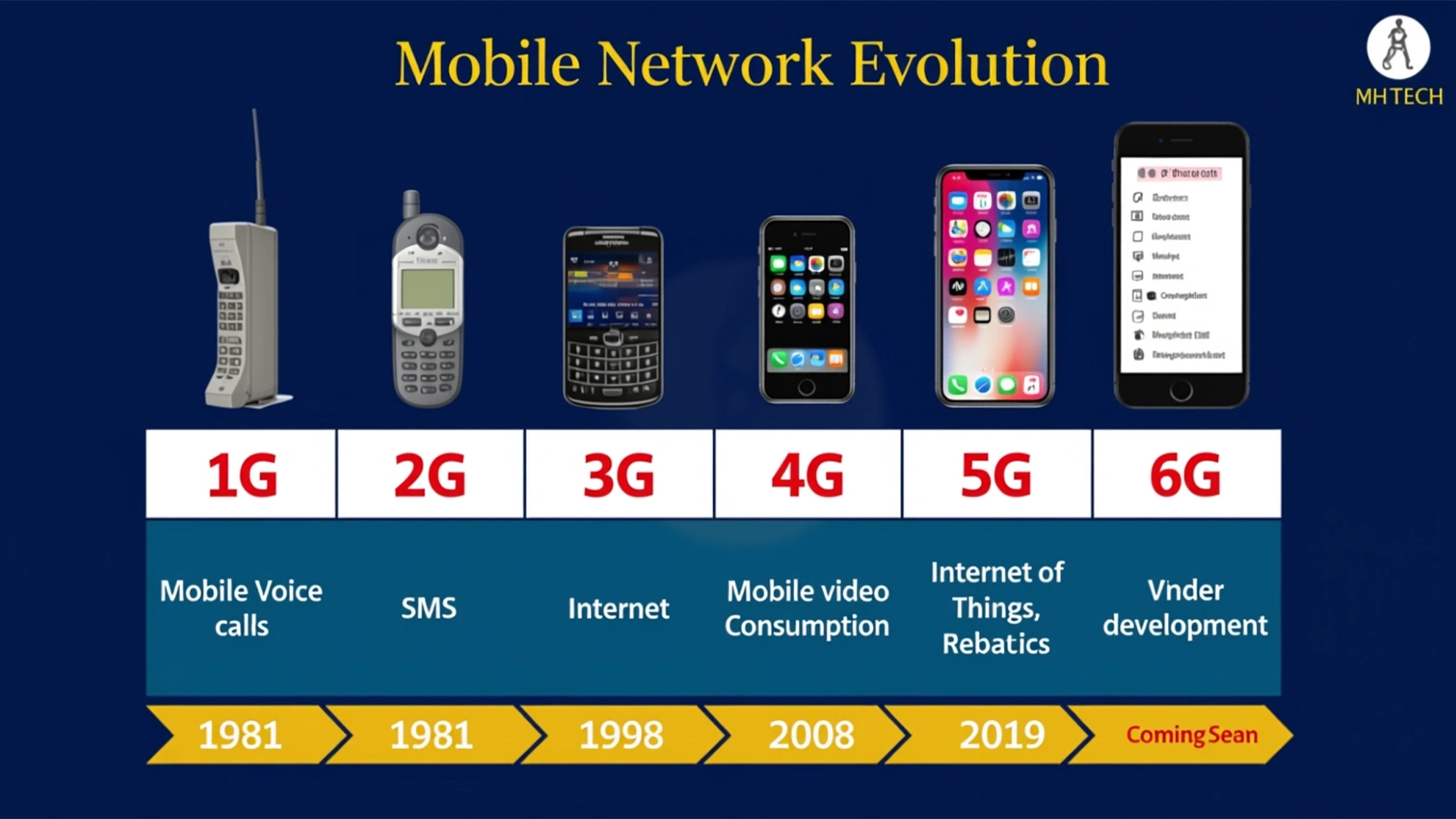
Next-generation 6G networks will require up to three times more mid-band spectrum than is typically available today to keep pace with surging demand for data, AI-powered services and advanced digital applications, according to new analysis published by the GSMA.
GSMA, which represents the mobile ecosystem worldwide, in its Vision 2040: Spectrum for the Future of Mobile Connectivity study, a comprehensive global assessment of spectrum requirements for the coming ‘6G’ era, concluded that a global average of 2–3 GHz of mid-band spectrum per country will be required in 2035–2040 to meet mobile network capacity needs in the highest-demand urban areas, with higher-demand countries needing 2.5–4 GHz.
Compiled by analysts at GSMA Intelligence and the body’s global spectrum team, the study is designed to guide regulators and policymakers as the mobile industry prepares for wide-scale 6G deployments from 2030. This is particularly important as governments negotiate future mobile bands ahead of the crucial WRC-27 treaty conference held by the International Telecommunication Union in two years.
The report’s analysis showed that countries must act now to secure enough spectrum for 6G, or risk slower speeds, rising congestion and lost economic opportunity in the 2030s. The GSMA cautioned that without early government planning, consumers could face poorer connectivity, businesses may struggle to adopt new technologies, and national digital economies could lose competitiveness in the global transition to 6G.
Chief Regulatory Officer, GSMA, John Giusti, said: “This study shows that the 6G era will require three times more mid-band spectrum than is available today. Satisfying these spectrum requirements will support robust and sustainable connectivity, deliver digital ambitions and help economies grow. I hope this report provides useful insights to governments as they strive to meet the connectivity needs of their citizens in the coming decade.”
Key findings from the report revealed that 6G deployments will come from 2030, with five billion connections by 2040. 6G networks are expected to begin commercial deployment in 2030, with significant early rollouts in China, Japan, South Korea, the U.S., the GCC states, Europe, Vietnam and India.

By 2040, the study forecasts that more than five billion 6G connections, around half of all mobile connections globally, 4G and 5G will remain essential, with around two billion 4G and three billion 5G connections still in use.
The study observed that global mobile traffic is expected to reach up to 3,900 exabytes per month by 2040.
Based on the study’s demand scenarios, global mobile traffic is forecast to reach 1,700 EB/month in the low-growth scenario and 3,900 EB/month in the high-growth scenario. This equates to 140–360 GB per mobile connection per month by 2040.
It noted that traffic growth will be driven by continued 5G adoption, increasing numbers of “power users”, and new 6G-enabled applications, including XR, integrated sensing and autonomous systems. The 10 per cent of mobile users that generate 60–70 per cent of total traffic today will increase over time, and the report notes this level of usage will become “normal behaviour” by 2040.
The study found that spectrum needs are determined by traffic in the densest urban zones: 83 per cent of mobile traffic occurs in urban areas. It said those areas account for just about five per cent of geographic territory.
According to it, traffic density is nine times higher in very dense urban areas than in other urban zones and almost 700× times higher than in rural areas. These concentrations are where mid-band capacity becomes critical.
Considering projected traffic, expected improvements in spectral efficiency and modelling of dense urban capacity, the study concluded that global average needs 2–3 GHz of mid-band spectrum, higher-demand countries (the top 50 per cent): 2.5–4 GHz; most countries today have ~1 GHz identified for mobile use, “therefore, an additional 1–3 GHz may be required to meet 6G-era demand and that 2GHz is needed by 2030 to avoid congestion.
The analysis warned that if only 1GHz of mid-band spectrum is available, cities with over 50 per cent of the world’s urban population will be capacity-constrained by 2030 (the beginning of the 6G deployment cycle) if mid-band spectrum remains at today’s levels.
To prevent a decline in user experience, the report stressed that 2 GHz of mid-band spectrum must be operational by 2030.
The report identified the key candidate mid-bands under study for future mobile use to include 3.8–4.2 GHz: +200–400 MHz; 4.4–4.99 GHz: +400–600 MHz; Upper 6 GHz (6.425–7.125 GHz): +700 MHz; 7.125–8.4 GHz: +600–1,275 MHz.
The GSMA noted that each band has existing incumbents, meaning long-lead-time planning is essential for analysing spectrum use and release, device ecosystem development and global harmonisation.

