 Follow Us on Google News
 Follow Us on Google Discover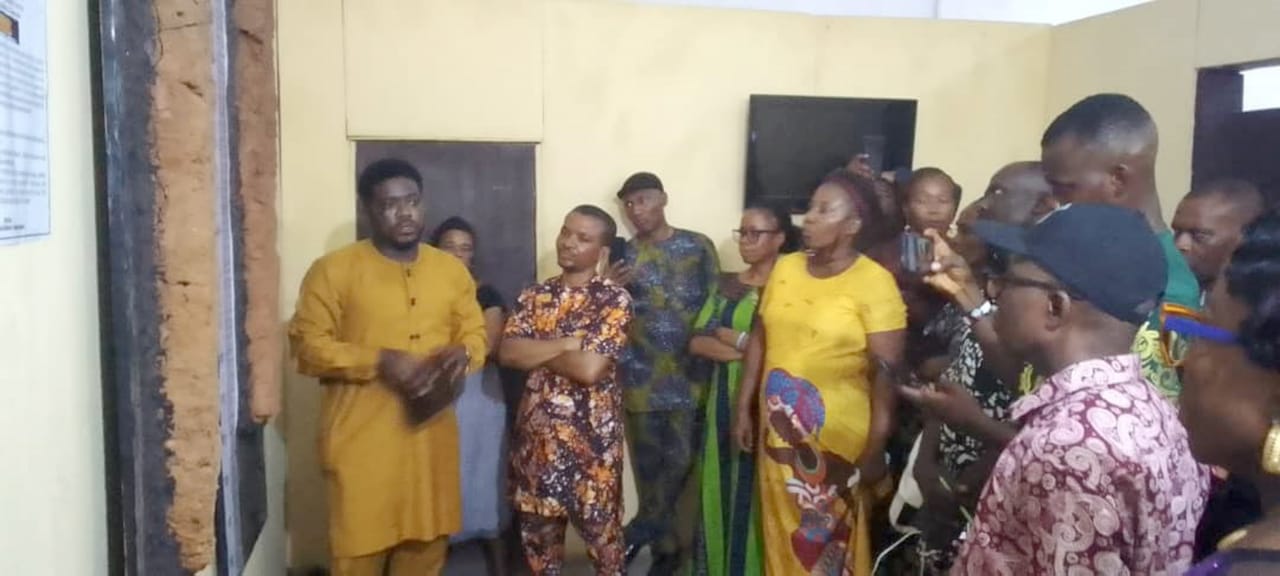
In his bid to bridge the gap between scientific knowledge and public understanding of soils, particularly in an agricultural society, a United States-based Nigerian soil scientist and doctoral researcher, Victor Ugwuegbu, organised a South-east soil monoliths exhibition in Owerri, the capital of Imo State.
The recent two-week exhibition held last December at the National Museum in Owerri, tagged: The soil as an archive, was held in collaboration with the National Commission for Museums and Monuments (NCMM), featuring three soil monoliths collected from Imo, Ebonyi, and Enugu states.
Ugwuegbu, a multidisciplinary artist and researcher at the University of Kentucky, United States, stated that soils across South-east Nigeria serve as a vessel of collective memory — a repository that preserves stories of migration, settlement, spirituality, labour, ecology, and cultural evolution.
According to him, five key themes were explored in the exhibition – land as memory; materiality and identity; environmental awareness; ritual, symbolism, and spirituality; and artistic interpretation of ancestral grounds.
“The soil profiles reflect both the physical and cultural identities of the South-east region, revealing how soil captures history, documents ecological change, and embodies the lived experiences of the people connected to the land,” he said.
Ugwuegbu further said that: “In a region where farming sustains millions of livelihoods, soil knowledge should not remain locked in laboratories or academic journals.

“This exhibition brings agricultural science into a public space, allowing farmers, students, and policymakers to see soil structure, fertility patterns, and land use history. This visibility changes how people value soil and how they think about land management,” he added.
Earlier, while declaring the exhibition open, the Imo State Commissioner for Tourism, Hospitality and Culture, Ernest Ibejiako — represented by the Permanent Secretary of the ministry, T.U.C Nwokonkwo — commended Ugwuegbu and the curator of the National Museum, Owerri, Lady Nancy Ikpe, for organising the exhibition.
Encouraging the museum to continue to maintain its relevance in society, the commissioner noted that the exhibition added colour to the museum’s offerings, while also complementing the Igbo identity.
Ikpe, who represented the Director General of NCMM, applauded the exhibitionist, Ugwuegbu, for his vision and intellectual depth. Professor Sunday Ewele Obalum of the Department of Soil Science, University of Nigeria (UNN), stated that the exhibition represents the first known public display of soil monoliths in Nigeria, bringing soil profiles out of research stations into a national museum space.
Professor Obalum noted that the kind of public engagement is important for improving the understanding of Nigeria’s soils and will also expose the differences in morphological features of the soils and the associated variability in mineralogy and organic matter status.
“These considerations define not only soil quality, but are also intricately linked to food security, land degradation, and sustainable agricultural planning,” the professor said. Soil scientist Ntieneobong Etukudo described the exhibition as a turning point in how soil science is communicated to the public.
“For the first time, soil is being presented not as an abstract concept confined to classrooms and laboratories, but as a visible, readable archive that tells stories about land use, agriculture, and environmental change,” Etukudo said.

