
GDN SIDEBAR
Fashion is often at its most compelling when it sits comfortably between art and function. Ciscacecil’s Amazu collection, unveiled in late 2023, occupies precisely that territory, presenting garments that are unapologetically sculptural while remaining conscious of the female body they are designed to dress.
Rather than relying on overt embellishment or predictable occasionwear tropes, the collection builds its language through architectural manipulation of fabric, controlled volume and a sophisticated understanding of textile behaviour.
The strongest aspect of Amazu is its confidence. The collection never appears hesitant about what it wants to communicate. It is interested in dimensionality, movement and the emotional impact of colour, with organza, satin and duchess silk becoming tools for sculpture rather than mere textiles.
Look 8: Controlled Drama
Look 8 arguably introduces the collection’s visual vocabulary most successfully. The emerald satin mini dress demonstrates an appreciation for balance that is often missing in emerging designers experimenting with exaggerated proportions.
The off-shoulder spiral ruffle is not simply decorative; it serves as the garment’s architectural backbone. Beginning at the neckline and travelling down towards the hip, the ruffle creates a deliberate visual movement that guides the eye across the body. Importantly, the designer resists the temptation to overwhelm the silhouette. By keeping the torso closely fitted, the exaggerated shoulder and hip volume remain elegant rather than theatrical.

Emerald satin is itself a demanding fabric. Its reflective surface exposes poor tailoring instantly, yet the dress maintains structural clarity. The clean fit allows the sculptural element to dominate without descending into costume.
From an editorial standpoint, this is perhaps the collection’s most commercially successful design. It possesses runway impact while remaining highly wearable for cocktail events, red carpets and luxury evening occasions.
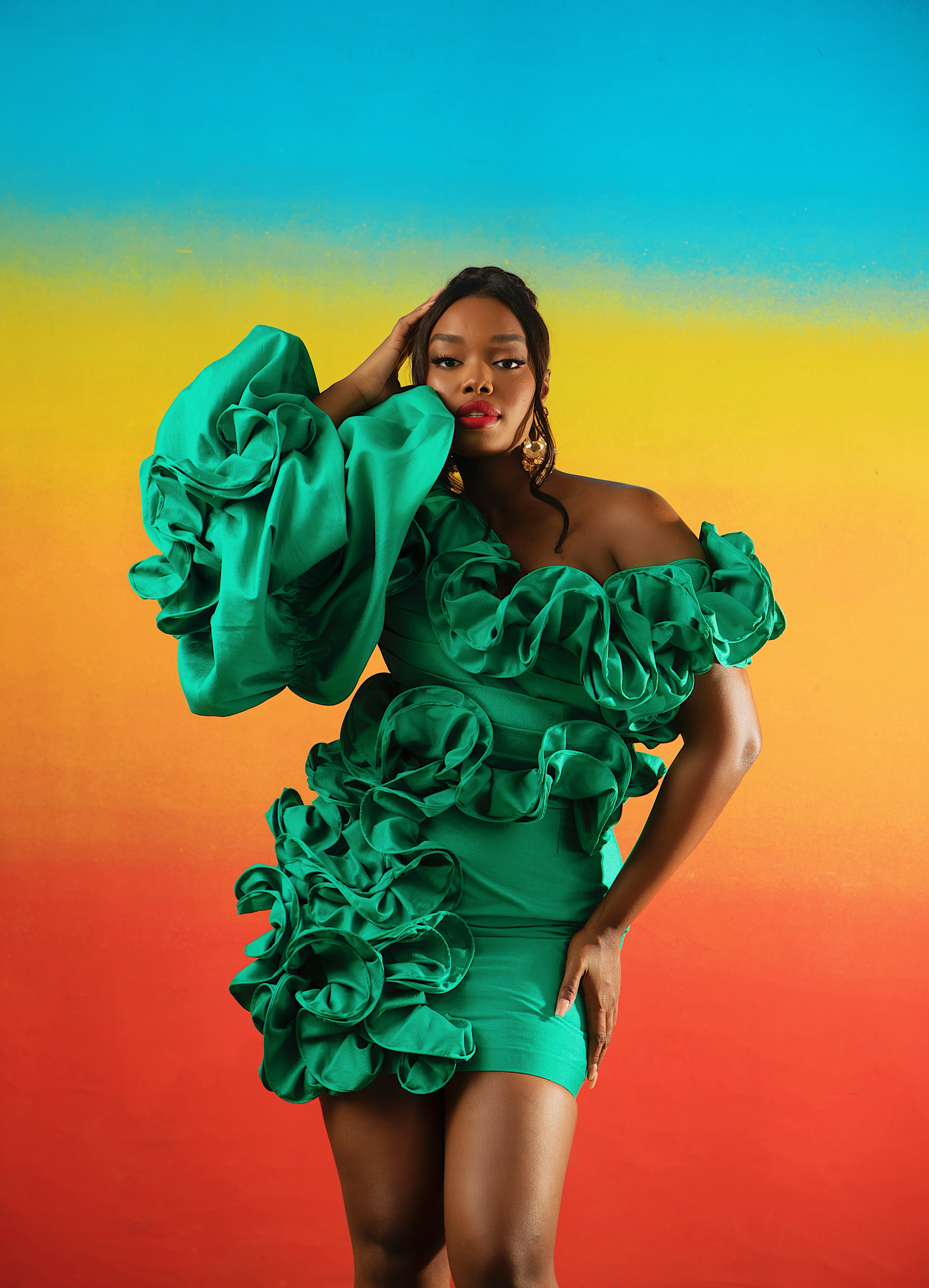
AMAZU BY CISCACECIL | LOOK 8
Look 10: Sculpture Before Fashion
If Look 8 introduces restraint, Look 10 abandons it entirely.
Constructed almost entirely from layered blush and sky-blue organza rosettes, the strapless mini becomes less of a dress and more of a wearable sculpture. Every inch of visible surface is consumed by floral construction, removing conventional negative space and forcing the eye to engage with texture rather than silhouette.
Technically, this is the collection’s most ambitious piece.
Creating hundreds of individually structured petals without collapsing the garment’s form requires considerable precision in pattern engineering and weight distribution. The success lies in maintaining enough internal structure that the dress remains recognisably wearable rather than becoming an oversized floral installation.
However, this ambition also introduces the garment’s biggest limitation.
Without areas of visual rest, the eye struggles to establish hierarchy. Everything competes equally for attention. Editorially, this excess becomes its strength, producing unforgettable imagery, but commercially it narrows the garment’s versatility considerably. This is a collector’s piece rather than a wardrobe staple.
Still, one cannot fault its confidence. Few emerging designers demonstrate this level of commitment to a single construction idea.
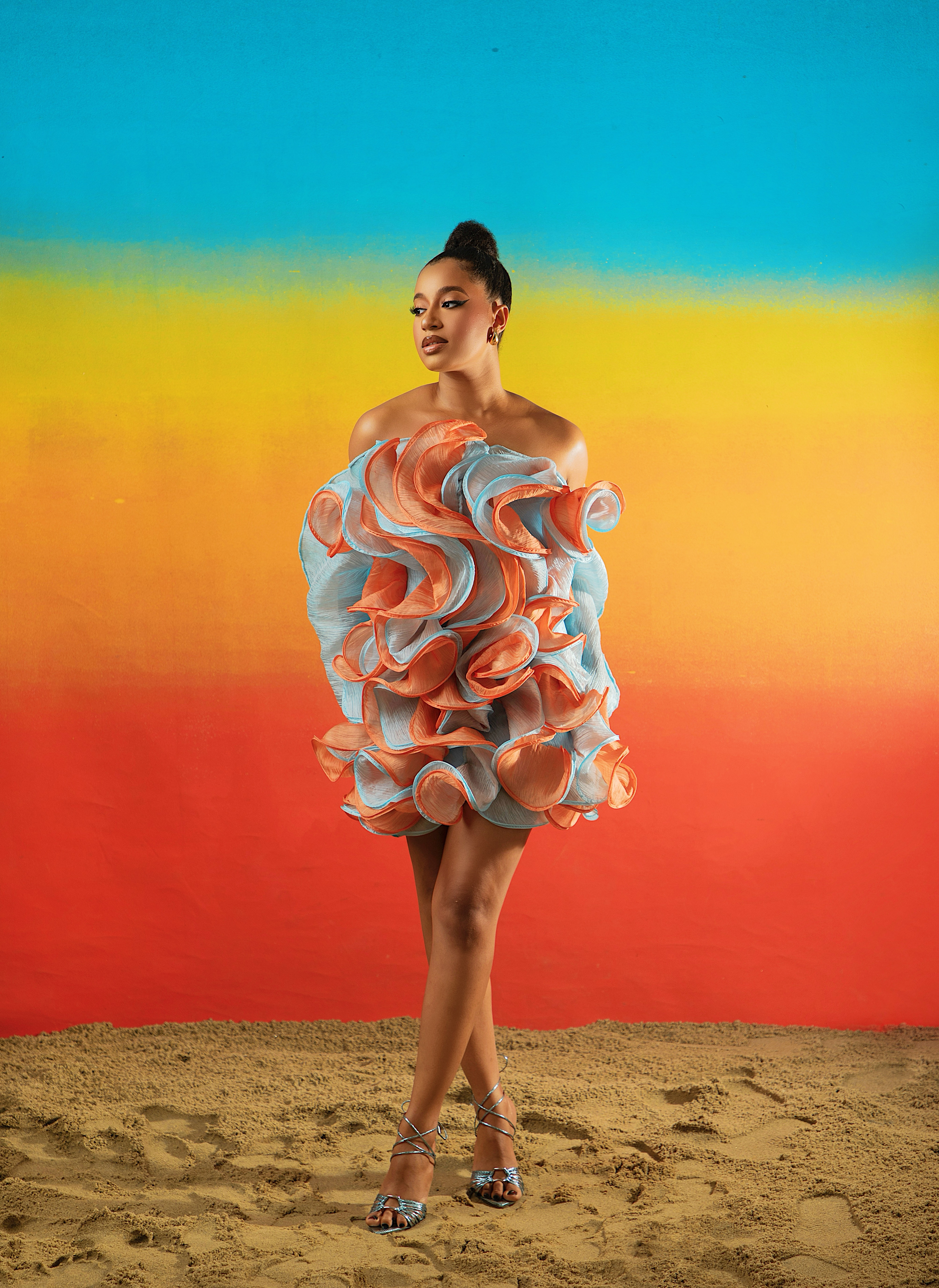
AMAZU BY CISCACECIL | LOOK 10
Look 11: The Collection Finds Its Balance
Where Look 10 overwhelms deliberately, Look 11 shows maturity.
Instead of engulfing the silhouette in organza, the coral rosettes cascade asymmetrically across one side of the corseted bodice, allowing negative space to become part of the design language.
This restraint transforms the garment.
The corsetry regains prominence, the body becomes visible again, and the floral construction operates as emphasis rather than domination. It demonstrates an understanding that luxury often resides not in addition but in careful subtraction.
The asymmetrical placement also creates movement without relying solely on volume. As the wearer walks, the eye naturally follows the cascading floral line downward, giving the garment fluidity despite its structured foundation.
From a fashion editing perspective, this is perhaps the collection’s most refined design. It communicates the collection’s sculptural identity while acknowledging wearability and proportion.
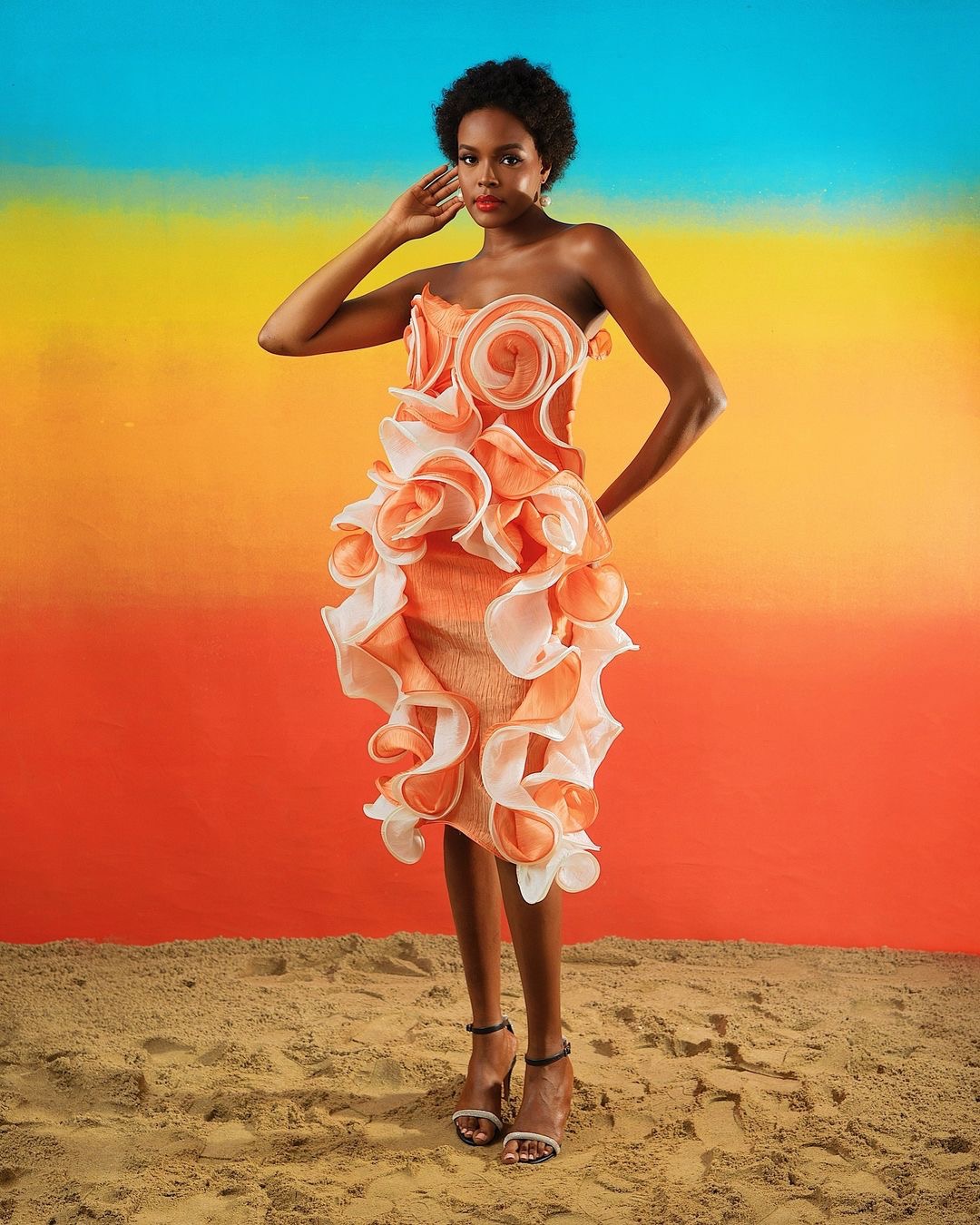
AMAZU BY CISCACECIL | LOOK 11
Look 15: A Study in Fabric Discipline
The mustard duchess silk gown introduces an entirely different conversation.
Where earlier looks manipulate fabric into architectural forms, this gown trusts the fabric itself. Duchess silk possesses considerable body while retaining a subtle lustre, making it notoriously unforgiving. Every dart, seam and fold becomes immediately visible under light.
Here, the construction demonstrates impressive technical discipline.
The draped cold-shoulder detail falls naturally, while the asymmetric handkerchief hem introduces movement without sacrificing elegance. The thigh-high slit prevents the heavier silk from appearing static, allowing the garment to breathe.
It is refreshing precisely because it refuses spectacle.
Rather than relying on sculptural excess, the gown demonstrates confidence through restraint and craftsmanship. It reveals another side of the designer’s abilities; one grounded in tailoring rather than embellishment.
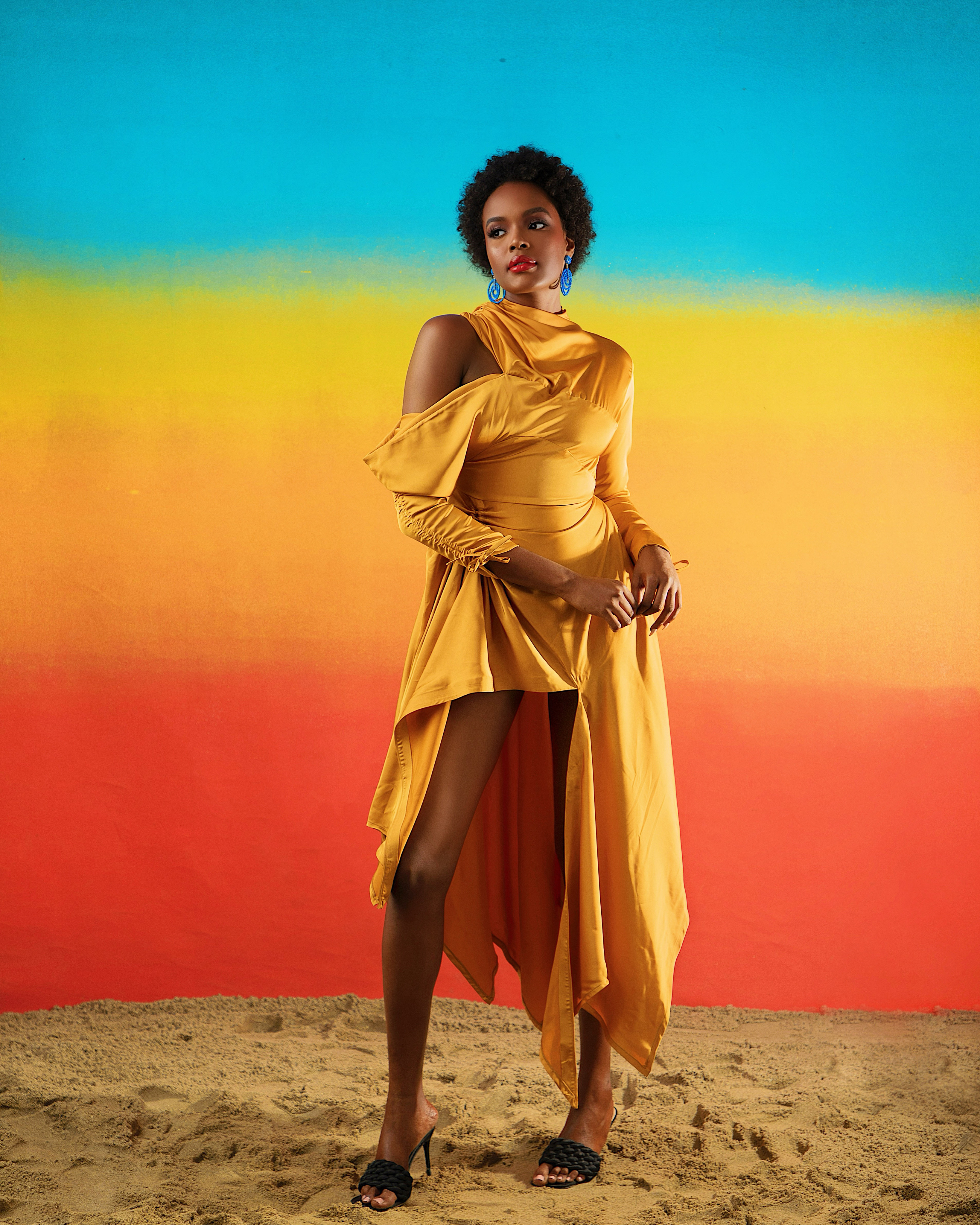
AMAZU BY CISCACECIL | LOOK 15
Collection Critique
Where Amazu becomes less convincing is in its overall narrative.
The sculptural satin and organza dresses establish an immediately recognisable design identity centred on dimensional floral construction and architectural volume. Look 15, although beautifully executed, feels as though it belongs to a parallel conversation. Its elegance is undeniable, yet the conceptual bridge connecting it to the earlier looks remains underdeveloped.
Collections benefit from rhythm. A recurring construction detail, a shared silhouette evolution or a more intentional progression between structured and fluid garments would have strengthened the editorial coherence. Instead, the collection occasionally reads as two distinct creative directions presented simultaneously.
This is less a failure than evidence of a designer exploring multiple strengths at once.
Final Assessment
What ultimately distinguishes Amazu is technical confidence.
Many emerging labels establish themselves through a single recognisable signature before gradually expanding their vocabulary. Ciscacecil appears to be doing the opposite, demonstrating fluency across corsetry, sculptural organza manipulation, satin construction and duchess silk draping within one collection.
That breadth is impressive, though future collections may benefit from greater conceptual editing. Sometimes the strongest statement comes not from demonstrating every capability but from allowing one idea to unfold more completely.
Nonetheless, Amazu succeeds where it matters most. It establishes ciscacecil as a designer with a clear appreciation for construction, an instinct for dramatic femininity, and the technical foundation required to push contemporary Nigerian fashion beyond conventional occasionwear.
It is a collection that asks an important question: how sculptural can fashion become before it stops being clothing? Ciscacecil does not answer that question definitively, but Amazu makes the exploration compelling enough that one looks forward to what comes next.