GDN SIDEBAR
NEED TO KNOW
- Born Oluwatosin Oluwole Ajibade in Port Harcourt, Mr Eazi studied mechanical engineering at Kwame Nkrumah University of Science and Technology in Ghana, where he began making music.
- He popularised Banku music, blending Ghanaian highlife with Nigerian melodies and chord progressions. His early releases include Bankulize and Skin Tight, featuring Efya.
- He won Next Rated at The Headies, Best New Artiste at the Soundcity MVP Awards and Most Promising Act to Watch at the Nigeria Entertainment Awards, all in 2016.
- He founded emPawa Africa to fund and mentor emerging African artistes, extending his work into talent development and the music business.
- His debut solo studio album, The Evil Genius, arrived in October 2023, following the mixtapes Accra to Lagos and Lagos to London. His international collaborators include J Balvin, Bad Bunny, Major Lazer and Nicki Minaj.
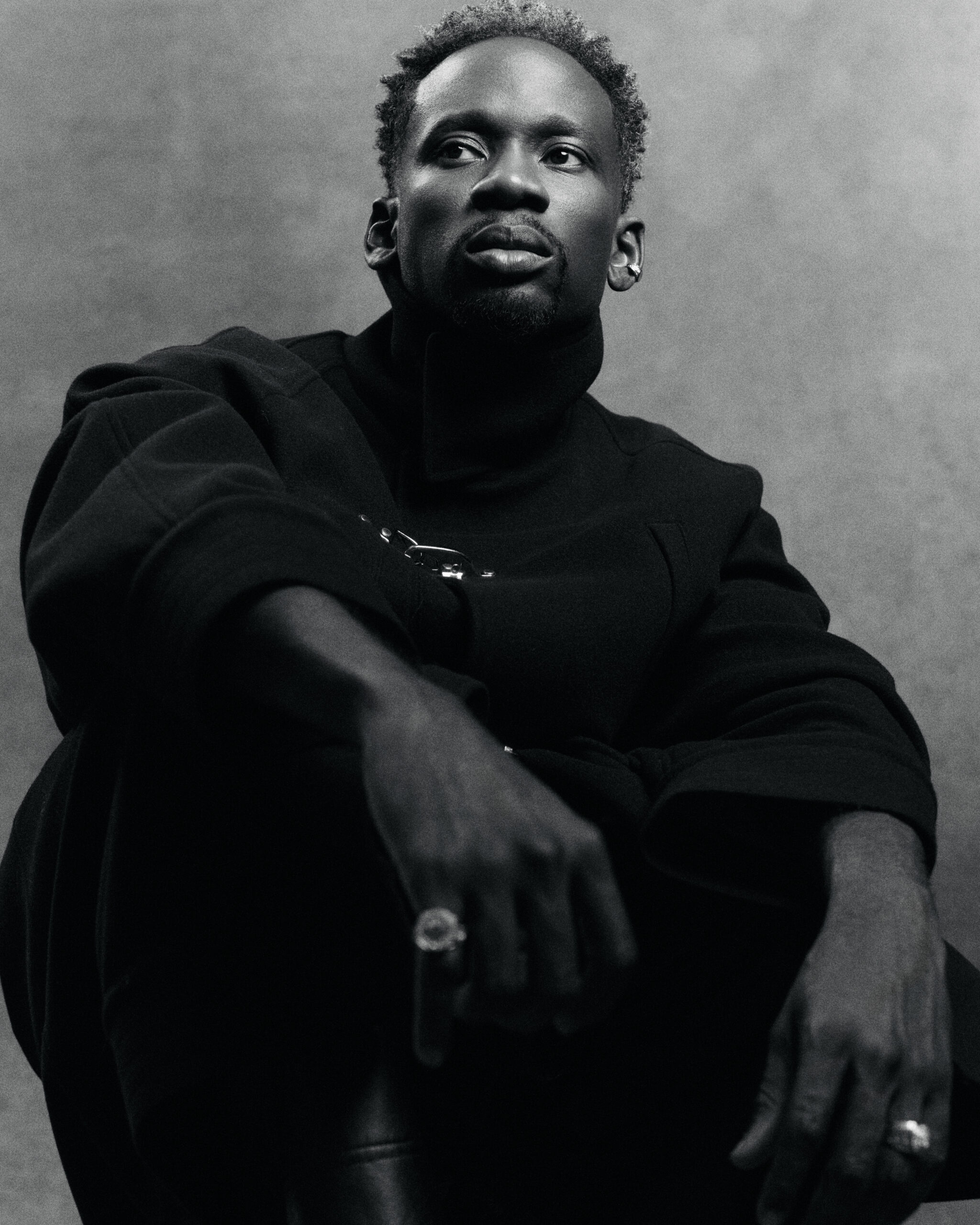
On that sunny Wednesday afternoon, Mr Eazi walked into one of the meeting rooms at his emPawa Africa annex, tucked somewhere within the inlets of Ikoyi, Lagos. Spotting a soft smile, a starched navy-blue long-sleeved shirt and space buns already coloured with grey hair, he settled into his seat with the same easygoing charisma one can hear in his latest groove with Ghanaian superstar Moliy, titled Comfort.
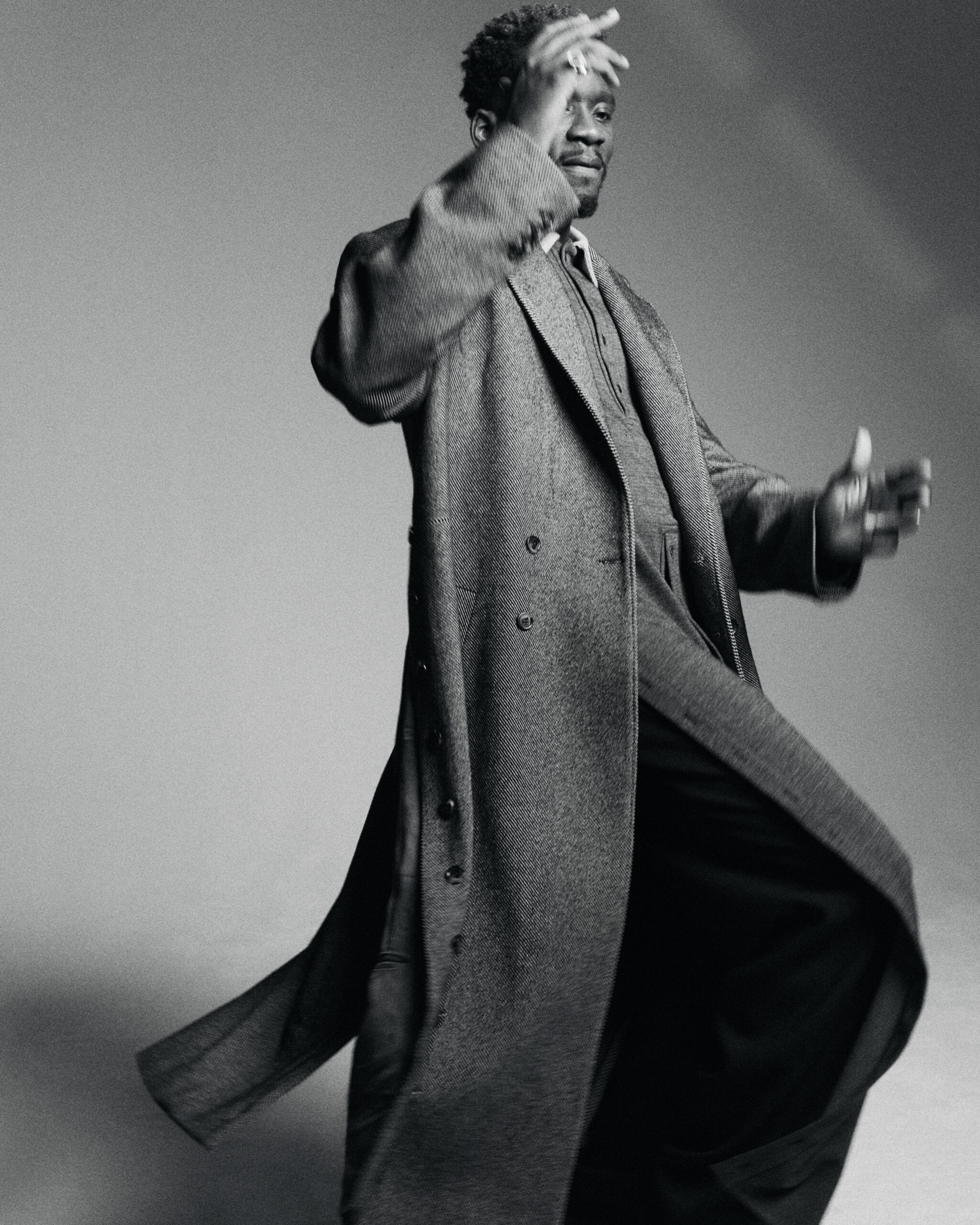 Throughout the year, it seems Mr Eazi, born Oluwatosin Ajibade, has rekindled his musical romance with neighbouring Ghana, where he spent a significant part of his formative years as an engineering student, gold trader, event organiser and all-round entrepreneur. He’s released a joint project with Ghanaian RnB troubadour King Promise, dubbed ‘See What We’ve Done’, and now, with the fire of Comfort, he’s reheating the signature Banku sound that marked his breakthrough within the Nigerian music scene in the 2010s.
Banku music itself is a peculiar soundscape Mr Eazi popularised during his early career, drawing from Ghanaian highlife, Nigerian chord progressions and the tropical bounce of West African dance music. With records like Bankulize, Skin Tight, Anointing and Shitor, among others, he established a distinctive musical identity, characterised by percussion, melodies and his signature singing style.
Sometime back in 2011, Mr Eazi walked into a roadside restaurant in Adenta, northeast of central Accra, and that was the first time he encountered the popular Ghanaian staple, Banku. For a young hustler, he found it considerably cheaper than jollof, another popular staple in the community. That afternoon, after eating the dish before a studio session, he noticed that his already relaxed singing delivery had become even slower. This peculiar experience, he recalls, would eventually become part of the story behind his signature Banku sound, which helped shape Nigerian pop throughout the 2010s.
Interestingly, following the release of his 2023 debut solo album, The Evil Genius, alongside subsequent projects including his 2025 EP, Maison Rouge, Mr Eazi appears increasingly eager to explore the full breadth of his creative instincts. Through his ChopLife SoundSystem collective, which he co-founded with DJ Edu, and his more recent releases, he’s continued to embrace a distinct creative freedom that allows him to experiment across genres, from dancehall and reggae to RnB and electronic dance music.
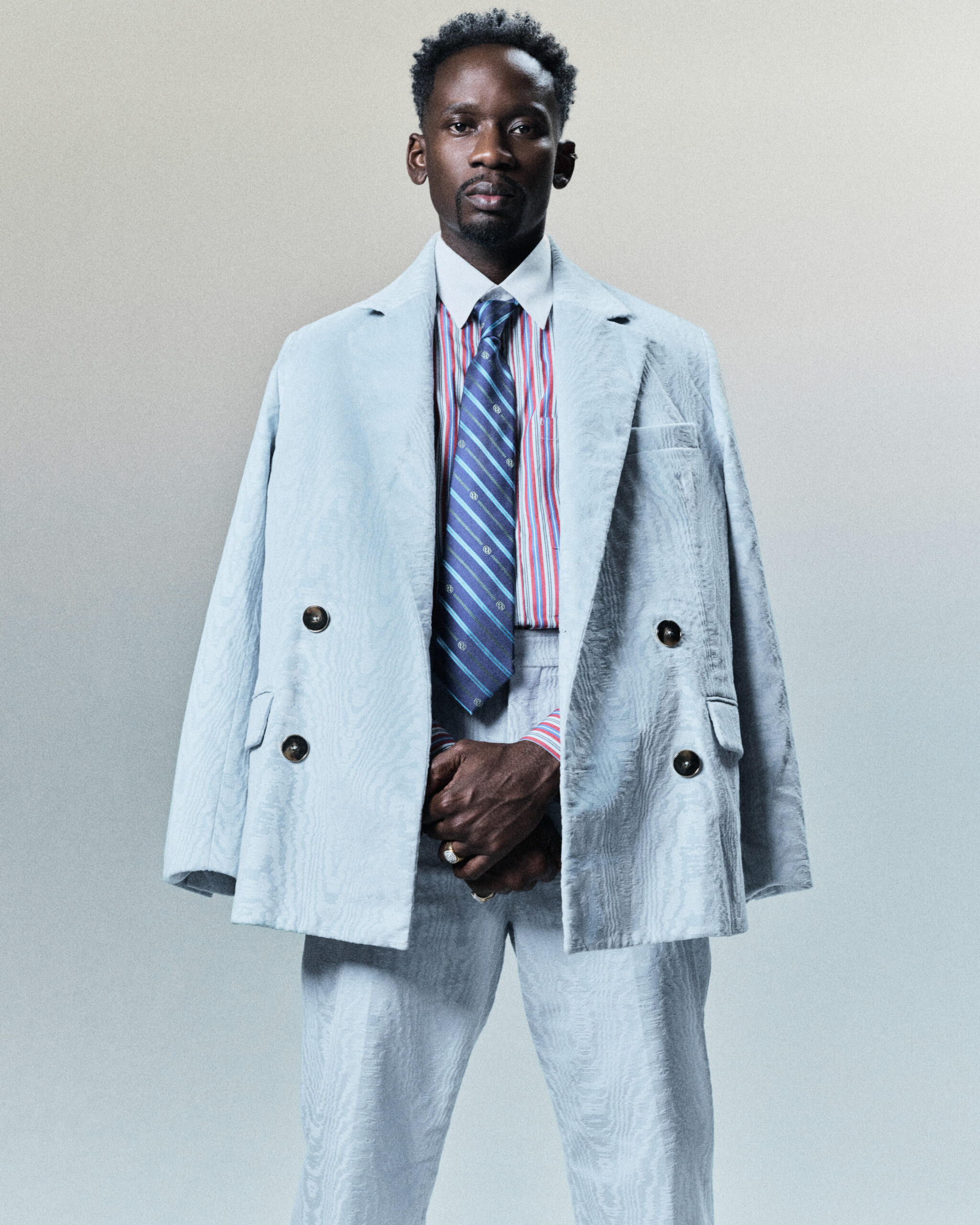 Beyond music, Mr Eazi is also a thriving Pan-African entrepreneur with a growing portfolio spanning music, technology, gaming and entertainment. Through emPawa Africa and his wider business interests, he’s continued to build platforms for emerging African talent, while his annual Detty Rave festival in Ghana has grown into a major fixture on the country’s December festival calendar, drawing thousands of global revellers.
Catching up with Guardian Music, the singer and entrepreneur takes us down memory lane, revisiting his earliest encounters with Ghanaian culture and the unlikely culinary inspiration behind Banku music. He opens up about the making of Comfort, his renewed appetite for musical experimentation, the business of building Africa’s entertainment infrastructure, his changing relationship with fame, family and creative freedom, and his ambition to build a publicly listed African entertainment company, among others.

Your latest single, Comfort, featuring Moliy, is an amazing record. This year, you’ve also collaborated with King Promise. What continues to draw you to Ghana’s music scene?
First, I still live in Ghana. I still have my home in Ghana. I went to Ghana when I was 15, and before then, my life was just church, school, church, school. So, the first time I went into the world and was on my own was in Ghana. That place will always feel like home because that’s where I started to become myself.
Beyond that, Ghana is also where I started making music. The first time I ever got into a studio was in Ghana, and the first producer I worked with was Ghanaian. So there’s always going to be that familiarity with where you started.
I’ve been blessed with love and support all over the world, but Ghana has particularly embraced me as one of their own. Some people meet me and think I’m Ghanaian.
Sometimes, when I’m at the airport going into Ghana and I present my passport, they’ll ask, “Why do you have a Nigerian passport?” And I’ll say, “Because I’m Nigerian.” They’ll be like, “Oh, no, no, you’re our own!”
I’m sure you’re also a fan of Ghanaian jollof.
I’m a fan of all the jollof! Any jollof my wife gives me, that’s what I’m a fan of. Right now, I don’t know the difference between Ghanaian and Nigerian jollof. I just know one jollof, my wife’s jollof.
Speaking of Ghanaian food, Banku comes to mind. It’s one of the country’s popular staples and also the identity of your signature sound. When did you first discover the food itself?
Somewhere around 2011, if I’m being honest. I can remember vividly because I went to a place called Loto Kiosk in Adenta. They had this banku spot at the bus stop.
The only reason I started eating banku was that it was cheaper to buy banku than to buy jollof. So I tasted banku one day before a studio session. At that time, I wasn’t even a professional artist. Music was still a hobby.
I remember that I already talked slowly, but when I ate that banku, I became even slower. Imagine going into the studio and now I’m singing slowly! That sort of became my signature.
So, big shout-out to Loto Kiosk. The other day, I was talking to somebody and asking if that guy was still there because I wanted to go and give him a gift. Baba, thank you!
 That sound still features in your releases, including Comfort. Were you intentional about revisiting it on this record?
To be honest, no. It just came naturally. When I’m making my own music, I’m attracted to fusion sounds. If you listen to “Comfort,” you can still hear those same claps in the drums. The instrumentation is a little different, but it’s still that same sort of beat.
I’m guessing that’s why I was drawn to it. It wasn’t like I was trying to update the sound or anything. As soon as Rage played it, I was like, “Yo, yo, yo, this one!” And then we started working on it.
Did you always know you wanted Moliy on the track?
That happened after the track was done. The first time I posted the track on Instagram, Moliy wasn’t on it. It was a sample, actually a Splice sample that you can still find on Splice.
Then I started thinking, whose voice would do justice to this? My team reached out to Moliy. I was in London at the time, so we flew her over.
You seem to enjoy moving around. Would you describe yourself as a nomad?
Yeah, very much so.
Does it affect you when you can’t move around freely?
Definitely. That’s one of the reasons why I know I can’t be a bad boy, because I love my freedom more than anything else. Freedom drives me. That’s why I always stick to the law.
And it’s the same freedom I like in my music. If you look at my catalogue, there’s pure dancehall in there. There’s dance music, pop, RnB and reggae. I’ve had pop Top 10s in the UK.
I love that same creative freedom in the kind of music I make. I don’t like being boxed in and told, “This is the Mr Eazi sound.” I would purposely revolt against that just to show myself that I’m not in bondage.
I’ve done reggaeton. I have songs that I perform in Colombia and everywhere, and people go crazy. But if I perform those same songs in Lagos, maybe nobody knows them. And these are songs I wrote from A to Z.
Speaking of your identity, let’s talk about your hairstyle. Is the grey intentional?
I didn’t dye it, actually. This is my hair, 100 percent. I’ve been going silver since 2020, but I always dyed it black. Eventually, my scalp started getting dry because you’re not using the same quality of dye every time. I’ve dyed my hair brown and different colours, so I think it was affecting my scalp. I had to cut my hair. I went on zero when I was going on my honeymoon. Then, when the hair started growing back, I was like, there’s no need to dye it again. And I’m the only Afrobeats artist with silver hair, so it helps me stand out! I think I might be the only person with silver hair and this puff-puff hairstyle.
How do older people react when they see you with it?
Older people take me more seriously! That’s why I’m happy I’ve changed it to puff-puff, because they were taking me too seriously.
I remember going to the office of one of my older friends. When he saw me with the puff-puff hairstyle, he was like, “Ah! I was already using you as an example to my son. Now you’re going to do this?”
Let’s return to the music. You and King Promise already have great chemistry. How did you both decide on making See What We’ve Done?
First of all, the fans had always wanted us to do a joint project. Then King Promise came to my traditional wedding in Dubai. We were in the car going back home, and he was playing lots of music. That was when we got the idea.
Initially, he wanted me to collaborate on one or two songs. Then we were like, wait, why don’t we just do the whole project together?
At the time, he was able to do that because he’d just come off his old deal, so he had the freedom to release music. I also always have the freedom to release music. So we decided to put it out together, and I’m happy we did.
Are you currently working on another project?
I was working on a dancehall album. That’s why this year we dropped Lamborghini with Vybz Kartel. We dropped Remember That with Shams. Before that, last year, we put out Dance for Me. The full dancehall album is already complete.
Then I went into the studio to add finishing touches to the album and started making new music. Bro, I wasn’t even trying to make anything new. I was just trying to finish that project!
Does that creative restlessness ever tire you out?
Yeah, sometimes I tire myself because I’m like, bro, what is this one? But we have one life to live. So if you can do something, you just do it.
What part of making music do you enjoy the most?
I enjoy making it more than anything. But lately, I’ve started enjoying promoting it.
I didn’t always enjoy promoting music. I’m the kind of addict who just wants to make music in the studio, enjoy it in the studio and not release it.
The number of songs I have on my hard drive is too much. My friends are always telling me about the number of hits I have. They’ll be wondering, “Why didn’t you drop that one?”
But the part I love most is making it. You can’t beat the vibes in the studio because nothing else exists when you’re in that space.
Is it safe to say that making music is no longer primarily about profit for you?
When I started making music, I wasn’t making music for profit. I was making music because I didn’t have any other hobby.
When I finished university and was about to start my master’s, I went into my trading business. I was importing La Casera from Nigeria to Ghana, doing the same for Gala, and running my gold-trading business.
I was about 21, using people’s money to trade. And that comes with a lot of pressure because these weren’t angel investors. These were people calling you and saying, “Omo, where’s my money? You said I’ll get my money back in three months!”
So, to relax, because of how I grew up, my mum being a Christian woman and instilling that spirit in us, I wasn’t going to drink or smoke myself into relaxation.
I didn’t have anything else to do to relax, so I started going to the studio.
From there, that hobby took control of me to the point where it became my career. And the moment it became my career, after some time, it became my job because that was the only thing giving me money.
Then it became stressful, so I had to run back to business. But I never stopped putting out music.
It’s a beautiful thing now to be at the point where I’m making music, and I know I don’t have to survive through it. I can just focus on doing what I wanted to do in the beginning, which was music as my hobby.
It seems being Mr Eazi has always required you to be both a musician and an entrepreneur.
It has to be!
That’s why I never signed a record deal. I could have just signed a record deal and collected the cheque, but that would have been boring to me. I would have gone crazy!
Because what would I have been doing? Just being in the studio? I enjoy the hustle. I complain about it a lot, but I enjoy it. Okay, now we have to find money to promote this song. We have to look at the marketing plan. It brings out my engineering brain. It fires me up.
And if I’m not doing it for myself, that’s what I want to do for somebody else. Come on, I was a new artist, and I was already signing artists! Who does that? Who the f*** does that happen? You’re a new artist still trying to find money to promote your own music, and you’re signing other artists.
A lot of people thought that if you signed to another artist, they wouldn’t want you to become more successful than them. But I didn’t bother. I wanted my artistes to be even more successful than me.
I didn’t care because, for me, it was exciting taking an artiste from zero to something. I’d like to do it again. Maybe when I’m 40, I’ll go into management.
Are there any emerging Nigerian artistes you’re particularly interested in right now
I am in sync with a lot of underground artists, but I don’t want to sign anybody. I just want to mentor. You have questions? You come to me.
I’m excited about Octobersrich. I’m excited about Double GEE. I’m so excited about that guy. I want to meet him.
I’m excited about Oshamo, obviously. He has a deal with emPawa. There’s another guy, Kid Carder. I heard his music yesterday.
Having witnessed different eras of Nigerian pop music, what do you think the industry is currently missing?
I just think we need more platforms, to be honest. More promotional platforms.
When we had Industry Nite, there used to be a place in VI; I’m forgetting what it was called — where, as an underground artiste, you could get a gig and perform live.
Open-mic nights, places where people could go and enjoy live music and artists could hone their craft. We need more of that.
But I know it comes with money. That’s why we need more investment and more patrons looking into music.
Speaking of investment, have you considered building or investing in a Nigerian music-streaming platform?
In terms of having my own streaming platform, I’ve always felt that you don’t just say you want to build a streaming platform because you want to build one.
Are you going to provide a better service than what already exists?
It shouldn’t just be because there must be a Nigerian streaming platform. If you’re going to provide a better service, then by all means, you should do it.
There was a time I was looking at it. I’m still looking at investing in Mdundo, a listed company out of Kenya. I like what they’re doing.
But apart from that, I’m looking more towards infrastructure. I want to build venues. Two-thousand-capacity venues, 750-capacity venues.
You previously discussed plans for a major entertainment venue in Ghana. Has there been any progress?
We haven’t been able to finalise it.
You know, when you have to do something with the government, there’s a lot of bureaucracy. We were so close to finalising the deal, and then the ministers changed. So we had to almost start again from the beginning.
But we have a new venue where we’ll be doing a Detty Rave. It’s an indoor venue.
What should people expect from Detty Rave this year?
This year, we want to do more than one day. It’s going to be in an indoor venue. I’m going to Accra in a few days to finalise everything.
We want to do multiple days in the indoor venue, and I think the production is going to be even crazier, giving people that experience.
Through that, we’ll be able to show investors that this is what we mean by the indoor venues we want to build. These are the possibilities.
What kind of entertainment venue do you envision building?
I’m thinking of something more rustic. I feel like there needs to be somewhere you can go and rave. A production space that you can transform completely.
You can scatter everything and turn it into a fashion show. A multipurpose venue built for music and entertainment.
That’s the big thing I’m looking to do. In my head, I want to put out music for the next ten months and then start building some of this infrastructure. We pray that God grants us the strength and favour to do it.
You’ve been juggling music, entrepreneurship, and several commitments. Now that you’re married, how do you balance all of that with family life?
Family is the most important thing.
Right now, I’m working, but once I’m at home, you can’t reach me. My team knows that.
Once he’s with his family, anything that wants to happen should happen. You can’t see me!
How has having a family influenced your career and the decisions you make?
When you have a family, you don’t just think for yourself anymore. It makes you more selfless.
It’s even affecting the kind of relationships I’m having with other artists.
I’ve gone from “Hey, let’s do business” to “I can mentor you.”
Those things are changing, and that’s what happens when you have a family. You start thinking about sacrifice. You start thinking about impact.
And I’m happy that’s the natural trajectory.
When you’re not making music, promoting records or running businesses, what do you enjoy doing?I enjoy going to the park with my wife or watching a movie with her.
Or spending time with my niece. Getting my niece to take out my hair, and she’ll say she’s doing a new style for me.
She’ll destroy all the niceness I have in my hair, and then we’ll go and wash it together.
Or going with her to the playground and watching her play with her friends.
Those things are really, really important.
Looking ahead, what’s your broader vision for Mr Eazi, both as a musician and an entrepreneur?
For music, it’s putting out more music.
I want to get to the point where I’m putting out one song a month. Then I want to get to the point where I’m putting out two songs a month and giving those records good energy when it comes to promotion.
And I want to structure the ChopLife company to the point where I can list it. I want to be the first West African entertainment brand listed on the stock exchange.
That’s my goal. To say, wow, a company that’s a record label, gaming, everything, is listed on the exchange. Because of what it signifies. It’s transformative.
If there was no Jay-Z, there’s a lot of Mr Eazi thinking that wouldn’t have happened. So hopefully, there are kids seeing the way I’m moving and saying, “Yeah, I want to do this.”