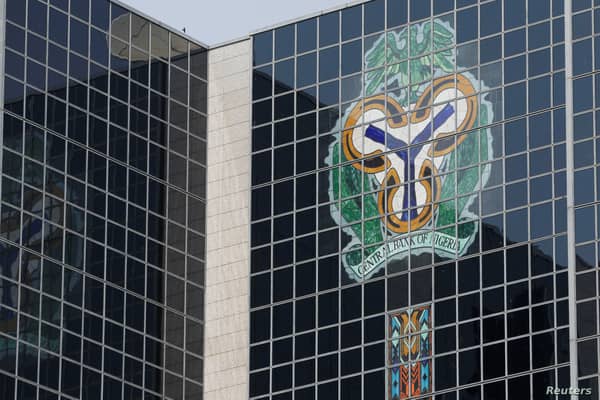
The number of fully-recapitlisated banks may be heading to 24 with Sterling Bank Plc joining the list.
First Bank of Nigeria Limited and Standard Chartered Bank Nigeria Limited announced they had fully met the threshold to increase the tally beyond 18 operators the Central Bank of Nigeria (CBN) reported in December.
United Bank for Africa has also crossed the threshold with the conclusion of its recent N178.3 billion rights issue.
The Guardian learnt that Sterling Bank’s updated capital has received regulatory validation, confirming it has successfully scaled the hurdle to retain its national banking licence.
Its effort followed a series of targeted capital raise efforts by its parent company, Sterling HoldCo, with the latest being a public offer to raise over N88 billion.
The public offer proceeds were said to have secured regulatory approval. It was the latest alongside that of FirstBank to be validated.
Most of the tier-one and tier-two banks have met the new capital requirements, paving the way for a stronger and more resilient banking sector.
Earlier, non-interest banks (NIBs) such as The Alternative Bank, Jaiz Bank, TAJBank and Lotus Bank had confirmed that they had been cleared by the apex bank.
However, experts continue to warn that what the banks do with their new financial strength and risk management framework, rather than their size, will determine how important the recapitalisation will be for the economy.
The recapitalisation policy, which kicked off in 2024, mandates commercial banks with international operations to raise their capital to at least N500 billion, while banks with national licences are to match their authorised capital with N200 billion.
Regional banks are pegged at N50 billion while national and regional non-interest banks are required to raise theirs to N20 billion and 10 billion, respectively.
The 24-month compliance window, which ends on March 31, has seen banks embarking on a blend of capital raising programmes, including rights issues and public offers.
The issuances have significantly altered the balance sheets of banks and increased their issued capital. Some of the banks have had their newly-issued shares introduced on the Nigerian Exchange Limited (NGX), thus increasing both liquidity and activities on the market.
Previous consolidation executed by Prof. Charles Soludo in 2004/2005, as the then CBN governor, saw a similar transformation of the sector.
That programme, which raised the capital requirement from N2 billion to N25 billion, reduced the number of banks from 89 to 25. But for once, Nigeria had banking brands that could underwrite big-ticket facilities.
The downside, however, was excessive risk-taking and poor corporate governance that triggered a major crisis in the sector in 2008. The crisis led to the nationalisation of notable banks and subsequently, the birth of the Asset Management Corporation of Nigeria (AMCON).
As of January 14, The Guardian understands, about 23 banks had successfully met the new capital requirement in a process led by Access Bank after it raised N351 billion through a rights issue.
Zenith, another systemically important bank (SIB), raised over N350 billion through a combination of rights issues and public offers, increasing its eligible capital to N614 billion.
GTBank, FirstBank and UBA – the other three SIBs – have all met the thresholds.
Whereas all the local banks leveraged the equity market, Citibank and Standard Chartered Nigeria secured support from their international parent companies to raise their capital.