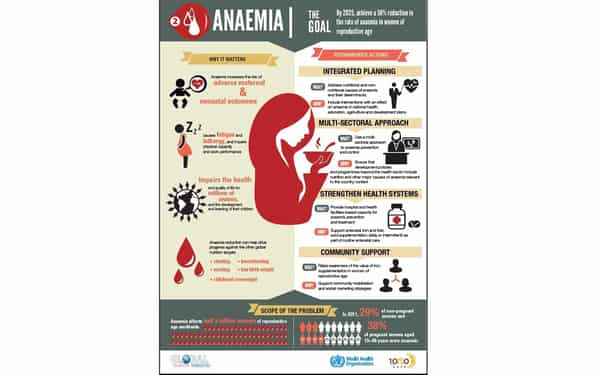
Nigeria and several other African countries have failed to meet the global 2025 target for reducing anaemia among women of reproductive age, triggering renewed efforts to develop acceleration plans aimed at achieving the revised 2030 goal.
The missed target dominated discussions at a regional workshop held in Saly, Senegal, where technical experts from governments of 21 countries in the WHO African Region, alongside development partners, met to reassess progress and chart a new course for reducing anaemia among women and children.
The workshop was convened to move beyond declarations and translate long-standing commitments into concrete, country-led strategies aligned with global and continental frameworks.
The World Health Organisation (WHO) African Region noted that data presented at the meeting showed that despite commitments made since 2012 to reduce anaemia prevalence by 50 per cent by 2025, no country in the region is currently on track, prompting the extension of the target to 2030.
According to the agency, anaemia remains one of the most persistent public health challenges on the continent, affecting millions of women and children and constraining progress in health, education, and economic development.
In Nigeria, efforts to address anaemia have been anchored in national nutrition policies. The country launched its first National Policy on Food and Nutrition in 2002 and revised it in 2016, setting new targets to be achieved by 2025. These included reducing anaemia in pregnancy from 61 per cent in 2018 to less than 40 per cent, increasing exclusive breastfeeding rates, expanding micronutrient supplementation, and improving deworming coverage among children.
However, available data indicate that several targets, both under the 2002 policy and the revised 2025 benchmarks, remain largely unmet. The Nigeria Demographic and Health Survey (NDHS) shows that about 55 per cent of women of reproductive age are affected by some degree of anaemia, while approximately 67 per cent of children aged six to 59 months are anaemic.
Recent evidence has further underscored the complexity of the problem. Findings from Nigeria’s National Food Consumption and Micronutrient Survey, published by the Federal Ministry of Health in 2024, revealed that anaemia is driven by multiple, overlapping factors. The survey linked micronutrient deficiencies, infections, inflammation, and genetic blood disorders to a higher likelihood of anaemia across population groups.
Iron deficiency was strongly associated with anaemia among women of reproductive age and adolescent girls, while deficiencies in vitamin A, zinc, folic acid, and vitamin B12, as well as malaria, inflammation, Helicobacter pylori infection, and sickle cell disease were identified as significant contributing factors.
Opening the workshop, the Head of Senegal’s National Council for the Development of Nutrition, Dr Mbaye Sene, said anaemia remains a major obstacle to maternal health, optimal child development, and broader national development. He stressed that collective responsibility and sustained commitment are required to change the health trajectory of millions of women and children across Africa.
Echoing this concern, Dr Ousmane Dieng, Nutrition Officer at the WHO, noted that no region of the world is currently on a trajectory capable of delivering a substantial reduction in anaemia. He said the participation of countries at the workshop reflected a shared resolve to reverse the trend and improve the health and well-being of women and children.
During technical sessions, national teams reviewed country-level data, identified implementation gaps, and defined priority actions. Discussions focused on integrating the prevention and treatment of anaemia across health service delivery platforms, including sexual and reproductive health services and community health programmes. Governance, accountability, and resource mobilisation were also highlighted as critical to sustaining progress.
By the end of the three-day meeting, each participating country had developed a draft acceleration plan addressing identified gaps. The plans outlined priority actions across the five action areas of the WHO framework for anaemia reduction, with particular attention to women and children, coordination mechanisms, financing, and monitoring strategies.
The WHO Regional Office for Africa, through its Nutrition and Food Safety Programme, said it continues to support Member States by strengthening evidence generation and use. It noted that country profiles detailing the burden of anaemia, its determinants, and existing interventions have been developed to guide more targeted, multisectoral responses.
Development partners, including Nutrition International, UNICEF, Action Against Hunger, and the African Union Commission, reaffirmed their commitment as co-conveners of the workshop, pledging technical support and resources to translate priority actions into measurable results.
Explaining how the workshop would inform national action, the Director of the National Nutrition Programme, Dr Bruno Senge, said the process enabled countries to realign national priorities with regional and international recommendations. He disclosed that the Democratic Republic of Congo plans to finalise and adopt a multisectoral anaemia strategy, establish technical coordination structures, mobilise resources, and conduct further studies to better understand the condition’s underlying causes.
Similarly, Neema Joshua, Deputy Director of Nutrition, said the discussions reinforced the need for a holistic approach that goes beyond nutrition alone. She noted that malaria, parasitic infections, menstrual disorders, and hereditary blood diseases must be addressed alongside dietary interventions.
WHO said the outcomes of the Saly workshop reflect a renewed commitment to the 2030 anaemia reduction targets and growing recognition of anaemia as a cross-sectoral development priority. While acknowledging the complexity of the challenge, the agency stressed that solutions exist and political will is strengthening, adding that coordinated action, strong governance, and sustained investment could significantly improve the lives of millions of women and children across Africa.