GDN SIDEBAR
In Badagry, the Seriki Faremi Williams Abass Slave Museum keeps the old slave cells where people were held before being taken away. But the story of the man behind the museum is just as complicated as the history of the place.
Who was Abass?
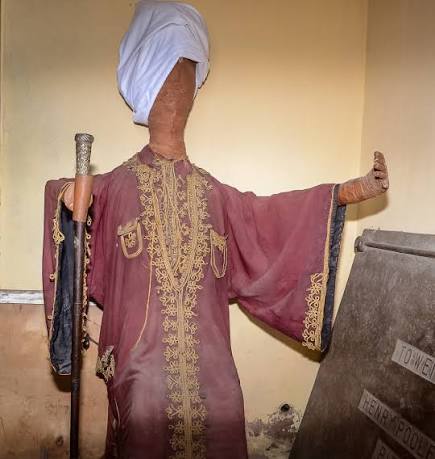
The museum takes its name from Seriki Faremi Williams Abass, whose own life is closely tied to the history of the compound. Born Ifaremilekun Fagbemi in Joga Orile, present-day Ogun State, Abass was captured as a child during a raid by the Dahomeans and taken to Abomey before he was sold to a European slave trader, Mr Williams.
He was taken to Brazil, where he was given the name Abass Williams, and eventually gained his freedom before returning to West Africa. By the 1830s, he had settled in Badagry and later became involved in the slave trade, working as a middleman between African suppliers and European merchants.
This is the part of Abass’s story that makes the museum particularly difficult to view through a simple victim-and-survivor narrative. He had experienced enslavement himself, yet later became involved in the same trade that had taken away his freedom. His participation brought him wealth and influence in Badagry, and his position remained significant after the abolition of slavery. In 1913, during British colonial rule, he was appointed Paramount Ruler.
His influence in the area is also remembered in local accounts of the founding of Aiyetoro and Idogo, adding another layer to the story of a man whose life moved from captivity to wealth and political influence.
The compound

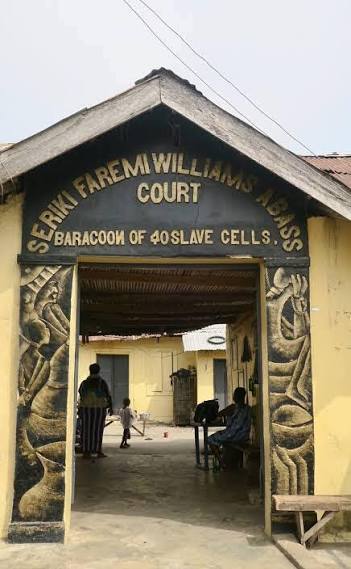
From the road, the Seriki Faremi Williams Abass Slave Museum in Badagry, Lagos State, looks like an ordinary old compound. Located on Marina Road, close to the Badagry post office, it does not have the imposing entrance or grand architecture that might suggest the weight of the history preserved within it. Yet behind its old wooden door are the remains of a period when Badagry was an important point in the transatlantic slave trade.
Also known as the Brazilian Barracoons, the site is believed to have been established between 1840 and 1844. The barracoons were used to hold enslaved people before they were taken to the coast and transported across the Atlantic, particularly to Brazil. The compound is believed to contain about 40 cells, although only two were open to visitors when heritage researcher Faye Sayer visited in 2018. Some of the others were empty, while others were being used as living spaces.
That detail is part of what makes the museum unusual. The compound has not been turned entirely into a conventional museum space; it remains family property, with parts of it still used as living quarters. At the entrance, a large sign and cast-metal plaque introduce visitors to the site, while inside, photographs, newspaper cuttings, documents and other materials provide an account of the compound and the people connected to it. Chains, shackles and other objects associated with the slave trade are also displayed.
Inside the cells
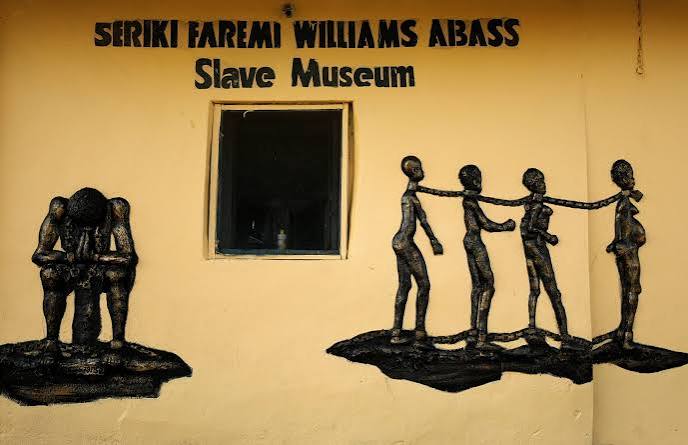
The museum’s guided tour takes visitors through different stages of the slave trade, beginning with the goods that were exchanged for enslaved people. Umbrellas, tobacco, whisky and guns are among the items used to explain how European merchants and African traders conducted business before the tour moves to the capture and confinement of people.
Chains and other restraints are displayed as the guide explains what happened to those who were captured and how their identities were stripped away as they were prepared for sale. The men’s section contains two main rooms, with the first displaying photographs, shackles and other objects, as well as a life-size wax figure of Abass.
The second room is the actual slave cell, a dark, windowless space where chains and manacles remain part of the display. During Sayer’s visit in 2018, visitors were briefly left inside with the door closed before the tour continued. The moment does not recreate what enslaved people endured, but standing inside the confined room offers a physical sense of how limited the space was for those who were held there.
The women’s cell
The women’s slave cell follows a similar arrangement, with photographs, chains, shackles and other materials relating to the slave trade. Around the compound are also objects from different periods, including pottery and a gramophone, showing how the property continued to evolve long after the period of the slave trade.
The tour eventually leads to the courtyard, where visitors find a well and the mausoleum of Seriki Faremi Williams Abass. For his descendants, the mausoleum represents an ancestor who survived enslavement and later became a wealthy and influential man in Badagry, but his position in the slave trade remains an unavoidable part of his legacy.
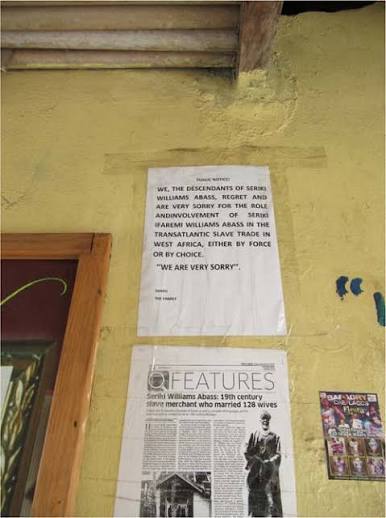
A statement displayed at the museum expresses regret over Abass’s involvement in the trade, acknowledging the difficult history attached to his name.
Other places to visit
The museum is one of several heritage sites that make up Badagry’s wider slave-trade history. Visitors can continue to the Vlekete Slave Market, Mobee Royal Family Slave Relics Museum, Gberefu Slave Route and the Point of No Return, each offering a different part of the journey from capture and sale to the eventual movement of enslaved people towards the coast.
Getting there
Badagry is about an hour and a half from Ikeja, Lagos by road, although traffic along the Lagos-Badagry Expressway can make the journey longer. The museum is located close to the Badagry post office, making it relatively easy to find once visitors reach the town, and having a local guide can make the experience more informative because much of the history is explained during the tour rather than through written displays alone.
Before you go
Entry fees and guide charges can change, so visitors should confirm the current rates before making the trip. The museum is best approached as part of a wider Badagry heritage visit, particularly for anyone interested in understanding how the town became connected to the transatlantic slave trade.