
GDN SIDEBAR
Nigeria’s cities are full of buildings that have become landmarks in their own right. Some are tall enough to dominate a skyline, others are recognisable because of their shape, while some have been around for so long that generations of Nigerians have grown up seeing them.
Lagos has its old towers, churches and cultural buildings, many of them now surrounded by newer developments. Abuja has the grand government buildings and religious centres that have come to define its carefully planned skyline. In Ibadan, buildings such as Cocoa House still recall a period when the city was at the centre of the country’s agricultural economy.
Some of these structures are decades old. Others are relatively new. Together, they offer a look at how architecture has changed across Nigeria and the different ambitions behind the buildings that have shaped its cities.
1. NECOM House, Lagos
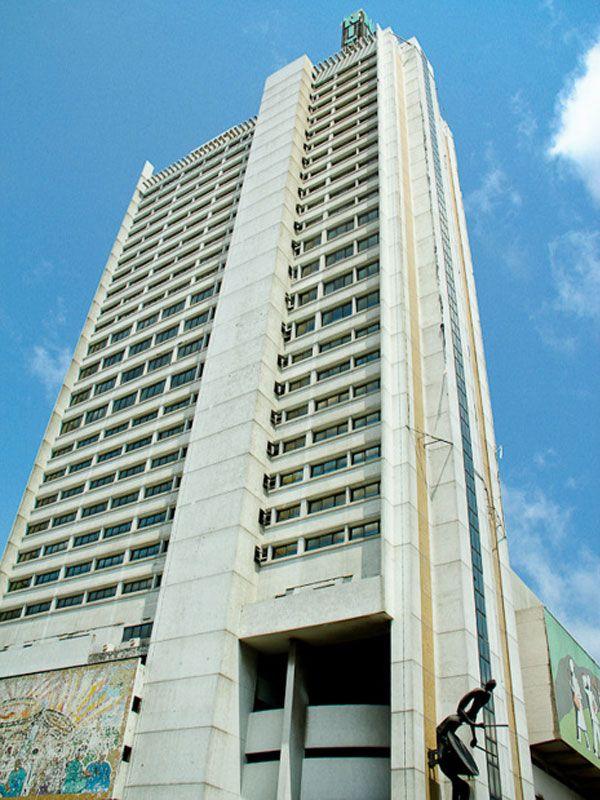
The 32-storey building was completed in 1979 and rises 160.3 metres above Marina. Its tall telecommunications spire is the feature that gives the building its familiar shape, and it has made NECOM House one of the easiest buildings to pick out on the Lagos skyline.
The building was originally known as the NITEL Building and was built as a telecommunications centre. At the time, a structure of this size was a major statement in a city that was rapidly developing.

2. UNILAG Senate Building, Lagos
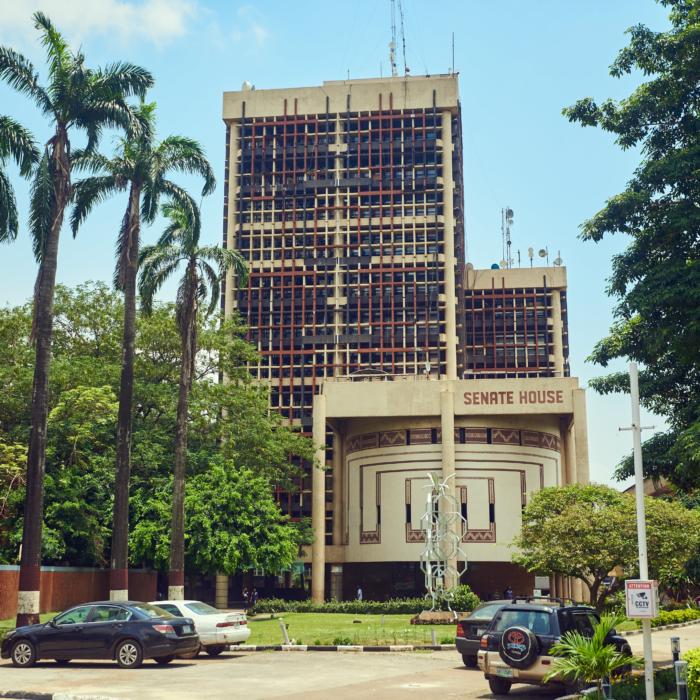
The Senate Building at the University of Lagos is one of those structures that students and visitors to Akoka would find difficult to miss.
Designed in 1980 and completed in 1985, the 14-storey building has a striking concrete facade covered with deep external sun-shading elements. The building houses executive offices, administrative spaces and the university’s Senate chamber.
Its design is very much of its period, with the strong geometric lines and exposed concrete associated with modernist architecture. More than 40 years after it was completed, it remains one of the most recognisable structures on the UNILAG campus.
3. Cathedral Church of Christ, Lagos
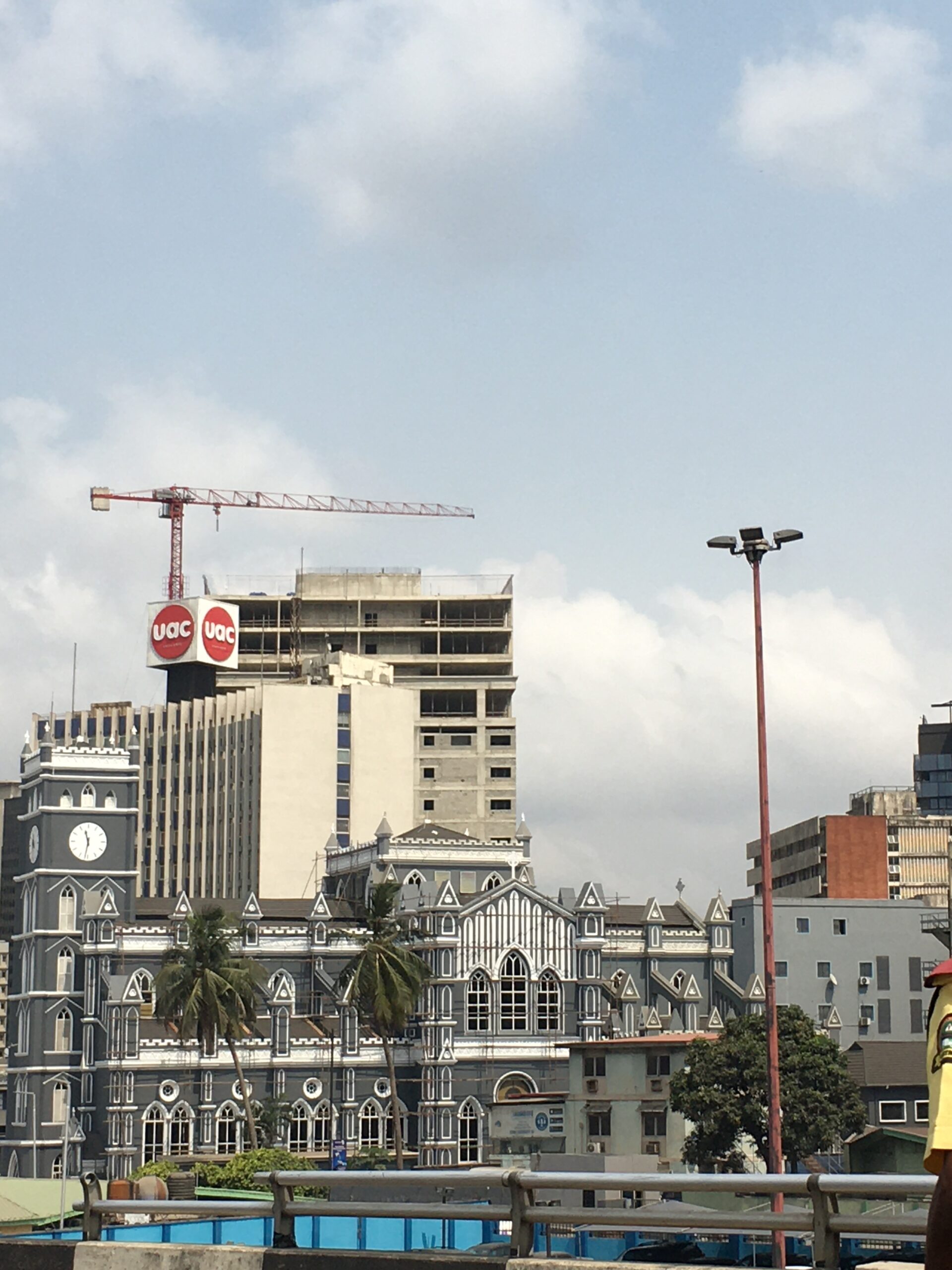
The present cathedral was designed in the Norman Gothic style, with its foundation stone laid in 1924 and construction completed in 1946. Its pointed arches, stonework, stained-glass windows and tall tower give it the appearance of a European church, even though it stands in the middle of one of Nigeria’s busiest commercial districts.
The history of the church on the site goes back further. An earlier Christ Church had been established there in the 19th century.
Today, the cathedral is surrounded by modern offices and high-rise buildings, but its older architecture remains one of the clearest reminders of what this part of Lagos looked like before the modern skyline took shape.
4. National Theatre, Lagos
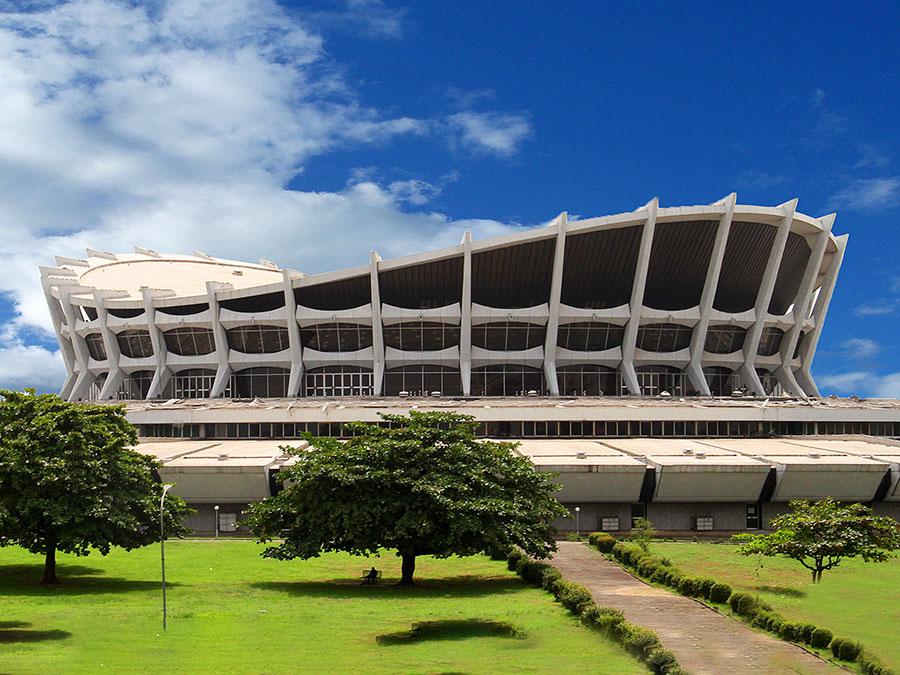
The National Theatre is probably one of the easiest Nigerian buildings to recognise from a photograph alone. Its huge curved exterior, often compared with a military cap, stands in Iganmu and has been part of the Lagos landscape since the 1970s.
Construction began in 1973, with the design inspired by the Palace of Culture and Sports in Varna, Bulgaria. The building was completed in 1975 and later became one of the major venues for FESTAC ’77.
Inside, it was designed for much more than theatre performances. The complex included an auditorium, exhibition halls, cinemas and other spaces for cultural events.
The building has had its share of repairs and changes over the years, but its distinctive shape remains familiar to anyone who knows Lagos.
5. Abuja National Mosque, Abuja
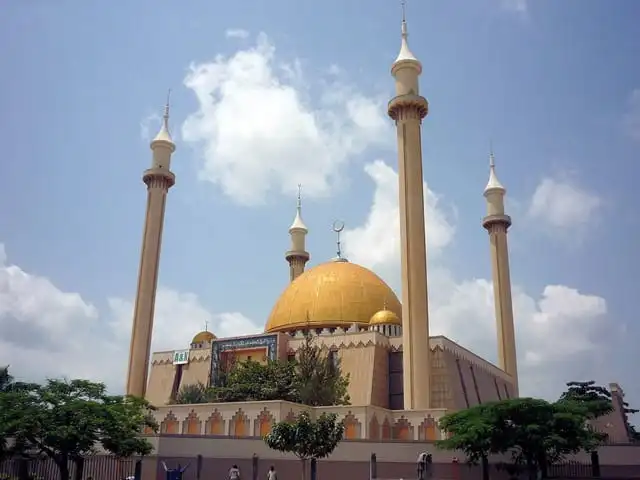
The golden dome of the Abuja National Mosque is one of the defining sights of the capital. Completed in 1984, the mosque stands along Independence Avenue and has four minarets surrounding its large gold-anodised dome. The complex also contains facilities including a library and conference spaces.
Its central location makes the building particularly noticeable. The dome can be seen from several parts of Abuja, especially around the city’s central districts.
The mosque has been part of Abuja’s landscape since the capital was still taking shape and remains one of the buildings most closely associated with the city.
6. National Christian Centre, Abuja
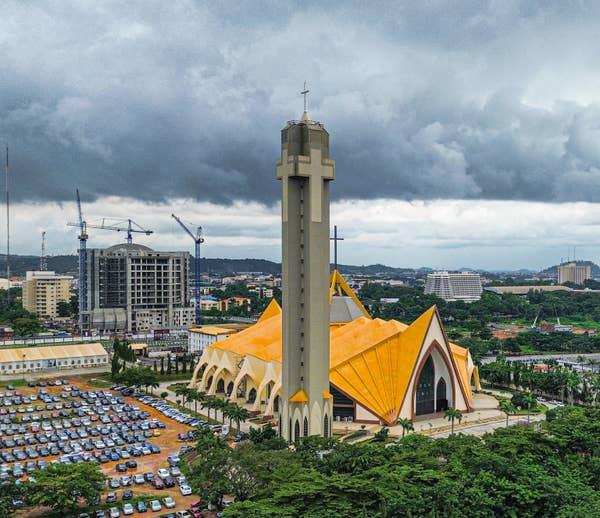
The National Christian Centre is another Abuja landmark that is difficult to overlook. The interdenominational church was completed in the early 2000s and dedicated in 2005. Its design combines neo-Gothic elements with a more contemporary style, particularly in its large arches and tall central space.
The interior is just as striking as the exterior, with stained-glass windows, a pipe organ and a broad nave.
One unusual feature is the rotating altar, which was designed to give different sections of the congregation a changing view during services.
Together with the National Mosque nearby, the centre has become part of the architectural character of central Abuja.
7. World Trade Centre, Tower 2, Abuja
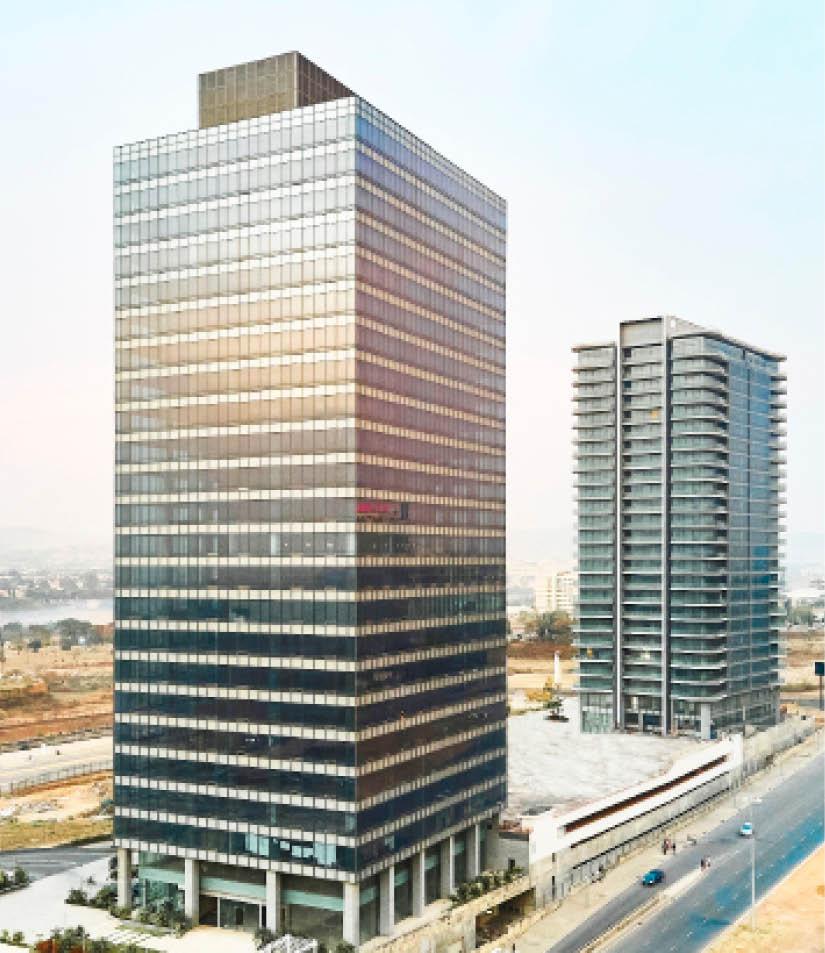
Tower 2, also known as the Abuja World Trade Centre Commercial Tower, stands about 120 metres high and has 24 floors. It was completed in 2017 and has a glass exterior that gives it a distinctly modern appearance.
The tower sits in Abuja’s Central Business District as part of the wider World Trade Centre development.
Compared with the low-rise buildings that dominate much of Abuja, its height makes it particularly noticeable. It is also part of the city’s gradual move towards a more recognisable high-rise skyline.
8. Cocoa House, Ibadan
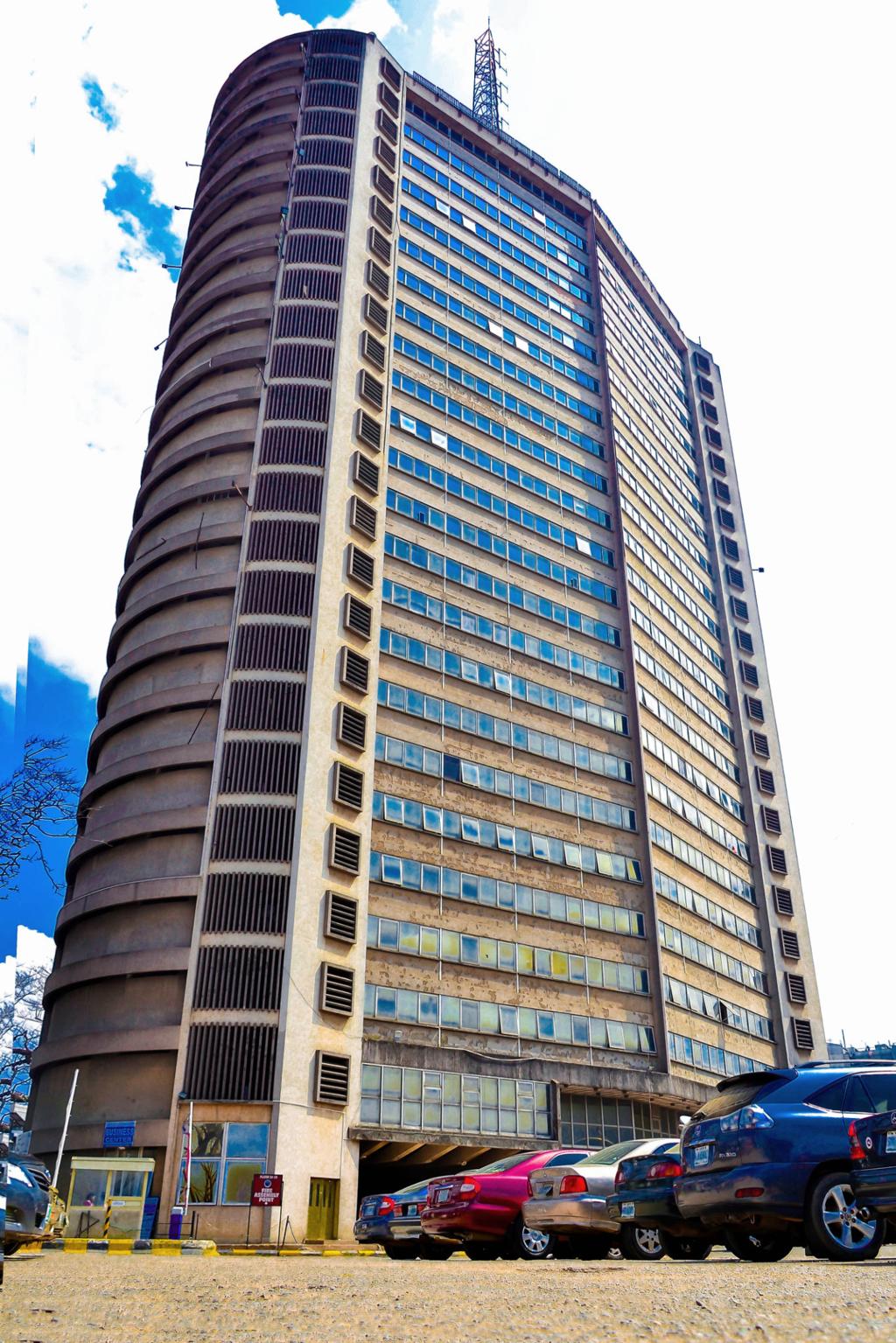
Completed in 1965, the 26-storey building rises about 105 metres above Dugbe. It became the first skyscraper in West Africa and was financed from agricultural commodity revenues, particularly cocoa.
Its original name was Ile Awon Agbe, meaning House of Farmers. The building was a reflection of the economic importance of agriculture at the time. Cocoa was a major source of revenue for the old Western Region, and the decision to build such a tall structure in Ibadan was a statement of that prosperity.
Cocoa House remained Nigeria’s tallest building until NECOM House was completed in Lagos in 1979.
9. Ship House, Abuja
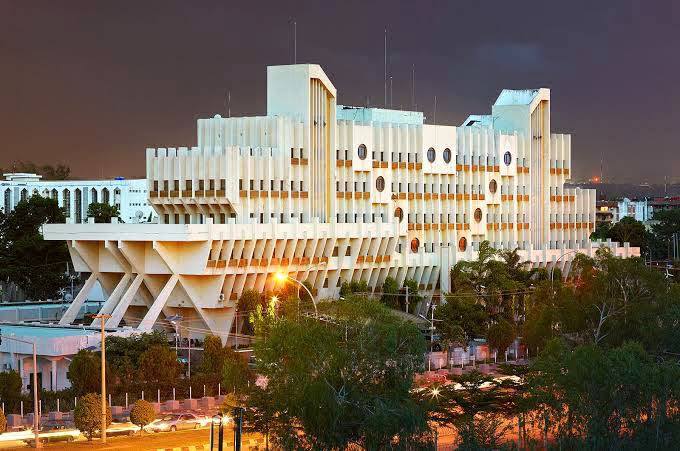
Ship House, the headquarters of the Ministry of Defence in Abuja, is one of them. Located in Area 10, the building was designed with a form that resembles a ship, complete with stepped sections and projecting parts.
The unusual design makes it stand out among the more conventional office buildings around it. It is still used as the headquarters of the Ministry of Defence and remains one of the more memorable government buildings in Abuja.
10. Eko Champagne Pearl Tower, Lagos
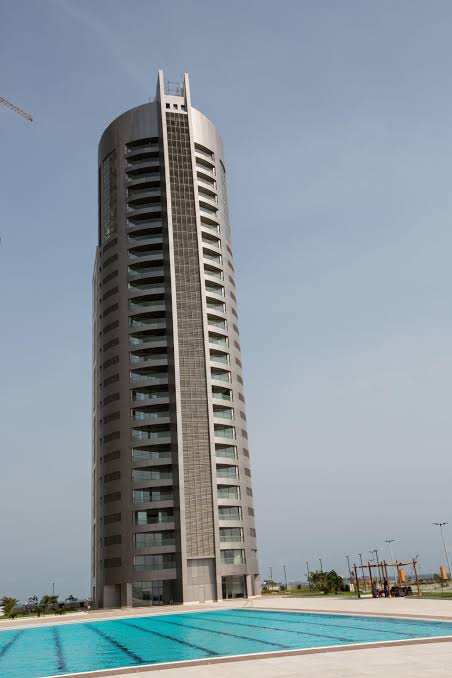
The Lagos skyline has been changing quickly, and Eko Atlantic has become one of the clearest examples of that change.
Champagne Pearl Tower is one of the residential buildings that make up the Eko Pearl Towers development. The 30-storey building was completed in 2017 and designed by Tabet Atelier d’Architecture.
Its glass, steel, aluminium and reinforced concrete exterior gives it the sleek appearance associated with modern high-rise developments.
The location is part of its appeal. Standing along the Atlantic waterfront, the tower looks out over an area of Lagos that has been transformed significantly in recent years.
11. Emir’s Palace, Kano
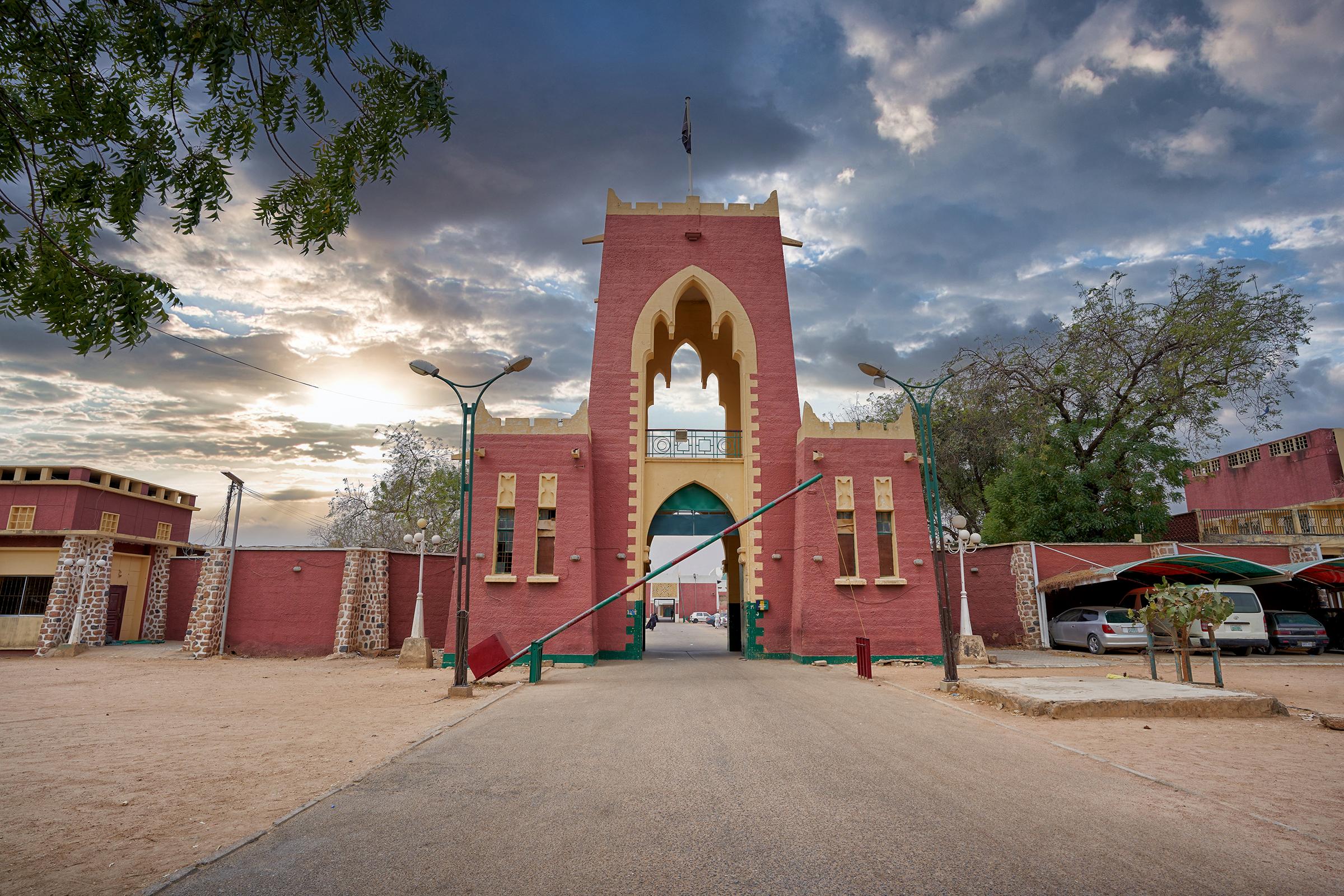
The Emir’s Palace in Kano is large in a very different way from the skyscrapers of Lagos and Abuja.
Its scale comes from the size of the compound, its courtyards, gates and collection of buildings rather than from its height.
The palace dates to the reign of Emir Muhammadu Rumfa, who ruled Kano between 1463 and 1499. It forms part of the historic landscape of Ancient Kano City and reflects the architectural traditions of the Hausa royal compound.
The gates and different sections of the palace were designed around the functions of the royal household and administration.
It is a reminder that some of Nigeria’s most impressive architecture existed long before concrete towers and glass facades became common.
12. First Storey Building, Badagry
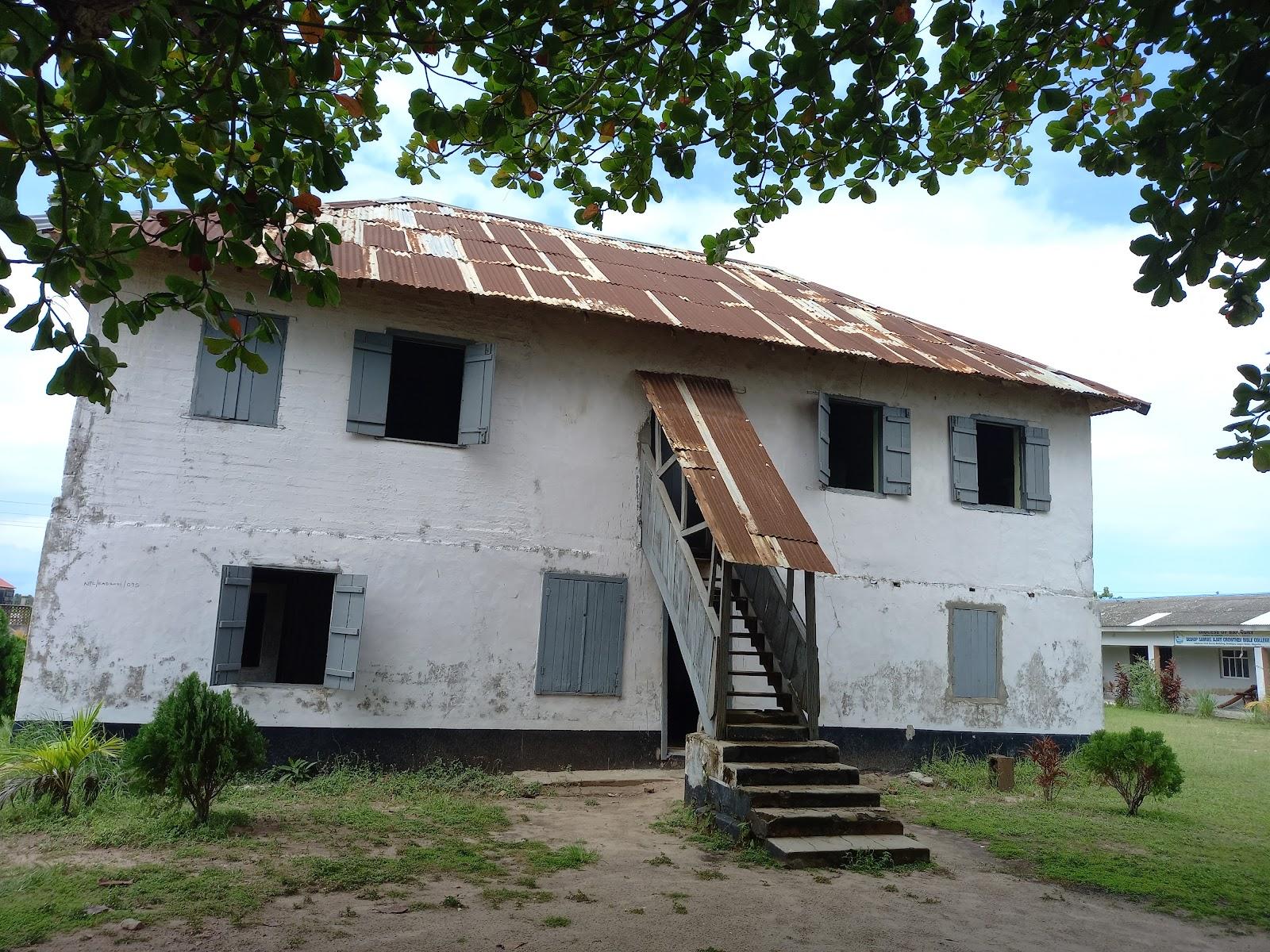
The First Storey Building in Badagry is not massive by today’s standards. In fact, beside many of the buildings on this list, it is remarkably small.
The building was completed in 1845 after its foundation was laid in 1842. It was built for the Church Missionary Society and became associated with Samuel Ajayi Crowther, who lived there while working on the Yoruba translation of the Bible.
Its two-storey structure is a reminder of an earlier period in Nigeria’s history, when buildings of this kind were still unusual.
Located close to the Badagry waterfront, it remains one of the town’s most important historic landmarks.
13. Mapo Hall, Ibadan
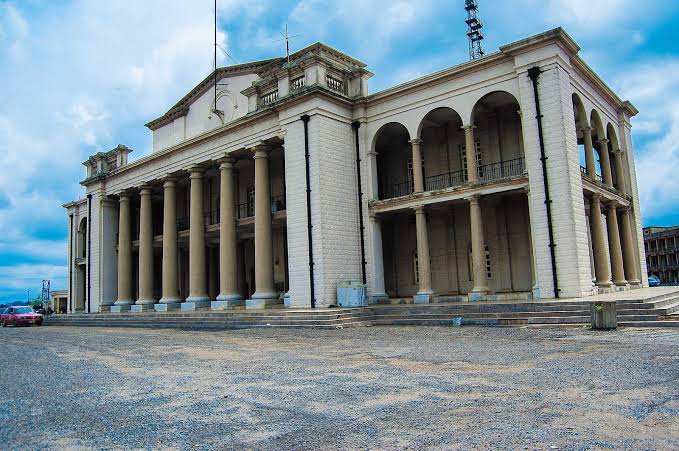
Mapo Hall sits on one of the most prominent points in Ibadan. Construction began in 1925 and the hall was commissioned in 1929. It was designed and constructed by engineer Robert Jones and reportedly cost £24,000 at the time.
Its large columns, broad facade and position on Mapo Hill give it an imposing appearance. From the hill, visitors can also look across a large part of the city.
The building has served as a civic space for decades and has become closely associated with Ibadan. Even as the city has expanded around it, Mapo Hall has remained a familiar part of the landscape.
14. Kingsway Tower, Lagos
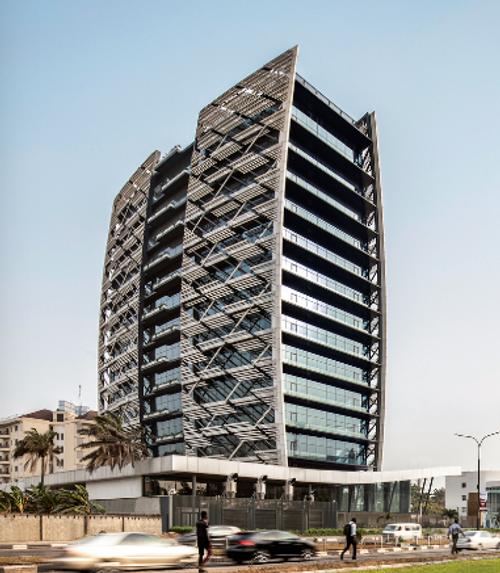
Kingsway Tower is one of the newer additions to the architecture of Ikoyi. Completed in 2019, the mixed-use building was designed by South African architectural firm SAOTA. It contains retail spaces, restaurants and offices.
Its most obvious feature is the patterned screen covering much of the facade. Apart from giving the tower its appearance, the screen helps reduce direct sunlight. The design also incorporates greenery into the building.
The tower’s curved podium and patterned exterior give it a very different look from many of the older buildings around Ikoyi, reflecting the neighbourhood’s changing skyline.
15. Central Bank of Nigeria Headquarters, Abuja
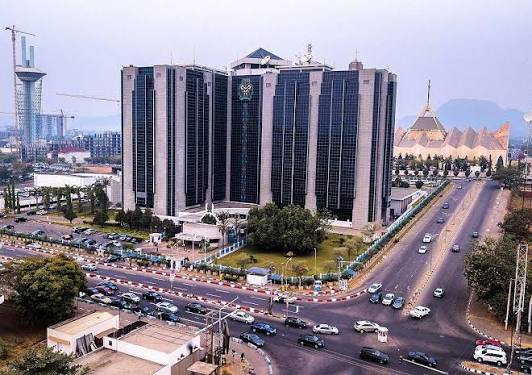
The headquarters of the Central Bank of Nigeria occupies a prominent position in Abuja’s Central Business District.
The large office complex has extensive glazing and a strong vertical form, making it noticeable among the government and commercial buildings around it.
It is not as immediately unusual as Ship House or the National Theatre, but its size and location give it a significant place in the capital’s built environment.
As the headquarters of Nigeria’s central bank, the building is also closely associated with one of the country’s most important financial institutions.
Federal Palace Hotel, Lagos
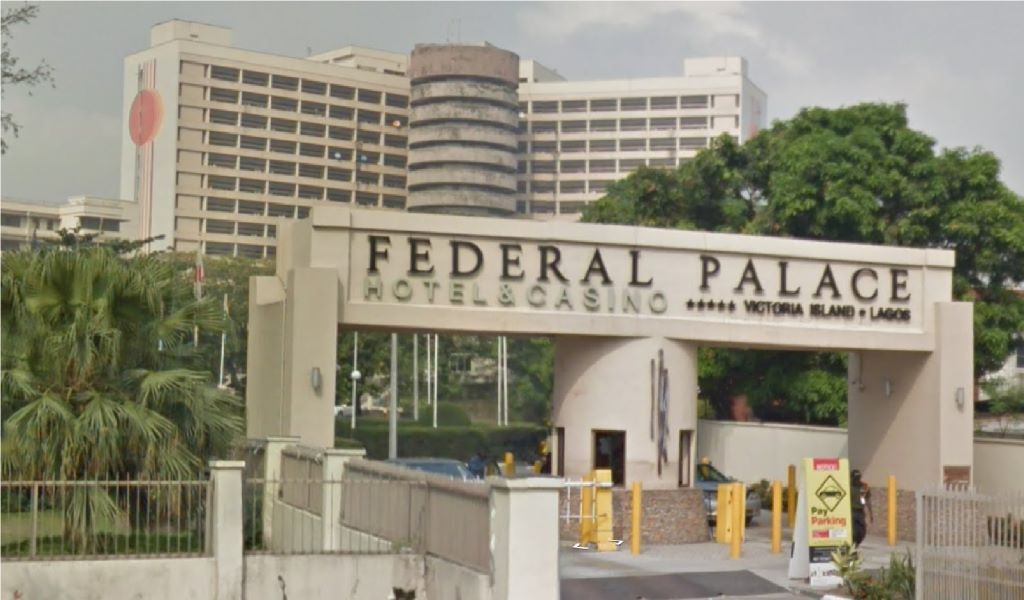
Opened in 1960, the Federal Palace Hotel in Victoria Island was built as Nigeria prepared for independence and became an important part of the celebrations.
Its Independence Hall hosted the official independence celebration, while its boardroom is associated with the signing of Nigeria’s Declaration of Independence.
A state banquet was also held at the hotel in November 1960. Since then, the hotel has hosted visiting dignitaries, diplomats and major events, becoming part of Lagos’ history. Its significance goes beyond its architecture: the Federal Palace Hotel remains one of the places closely connected to Nigeria’s transition from colonial rule to independence.