
GDN SIDEBAR
From family lineage and royal ancestry to traditional beauty and community identity, Yoruba facial marks carry stories of belonging, history, and cultural expression.
Facial marks have long been part of the cultural identity of many Yoruba communities in south-western Nigeria. Across generations, the lines cut into the cheeks of men and women have served as more than physical adornment. They have identified families, connected children to their ancestry and, in some communities, distinguished royal lineages. Guardian’s account of the symbolism of tribal marks in Nigeria explores some of these cultural meanings.
Known broadly as ilà, these marks were traditionally created through scarification, a process in which the skin is cut to produce permanent lines or patterns. Their appearance differed from one family and community to another. Some consisted of three horizontal lines on each cheek, while others featured vertical, diagonal, or more elaborate arrangements.
Although the practice has declined considerably, Yoruba facial marks remain an important part of conversations about heritage, identity, beauty and the changing relationship between tradition and modern life. The decline of tribal marks in Nigeria has also raised questions about how cultural practices are preserved.
What are Yoruba tribal marks?
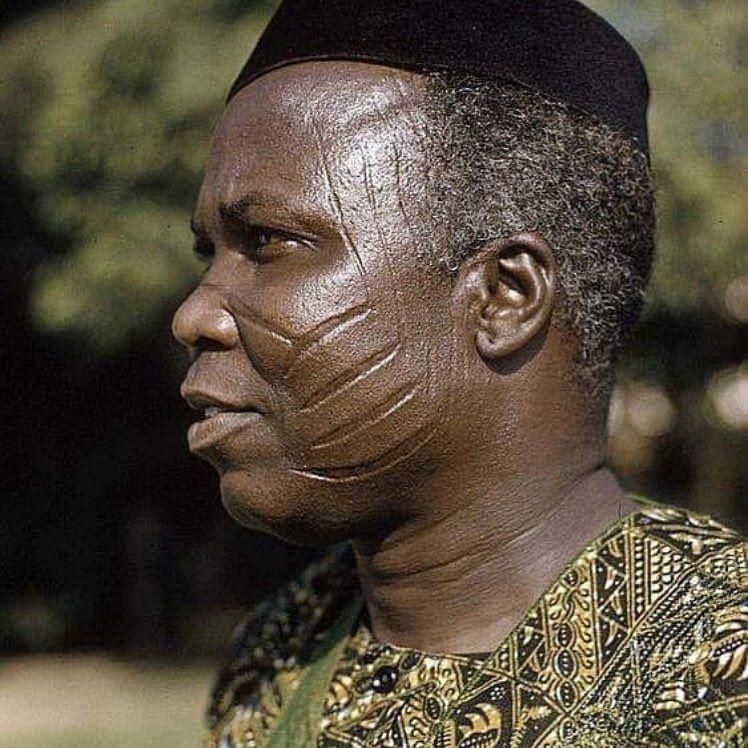
Yoruba tribal marks are permanent facial scars traditionally made through deliberate cuts on the skin. They are also known as facial scarification or ilà ojú.
Unlike temporary decorations or painted designs, the marks remain on the face after the cuts heal. Their patterns were not selected randomly. In many communities, they followed established family traditions and helped identify a person’s lineage.
The marks were particularly associated with the cheeks, although scarification could also be practised on other parts of the body.
Not every Yoruba person had facial marks, and the patterns were not uniform across Yorubaland. A person’s marks could reflect their father’s family, a particular community or, in some circumstances, their mother’s lineage.
Why did Yoruba people wear tribal marks?
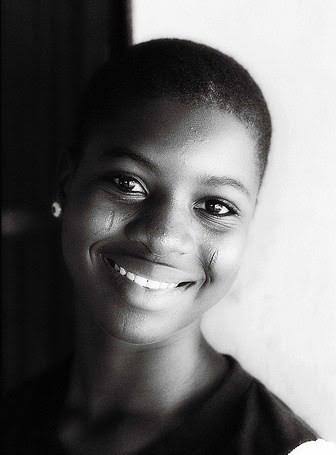
The reasons for facial scarification varied, but family identity was among its most important functions. Historical accounts of Yoruba scarification document its connections with lineage, protection and social identity.
Family lineage and ancestry
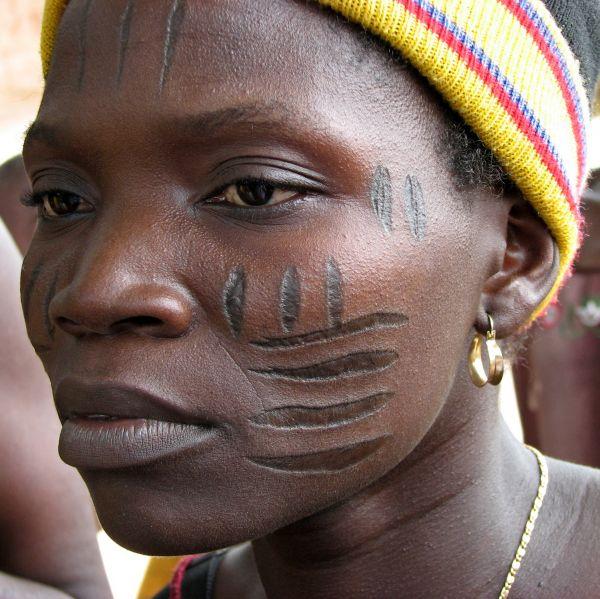
Facial marks helped distinguish one family from another. In communities where several families shared similar names, occupations, or settlements, the lines on a person’s face could provide another way of identifying their ancestry.
According to research by Olanikẹ Ola Orie on Yoruba facial scarification, family marks communicated membership, status and the responsibilities associated with belonging to a particular lineage.
In certain circumstances, a child could receive marks associated with the mother’s family. This could happen when a woman came from a royal household and her husband chose to honour her lineage.
An account from Orin, Ekiti State, offers another perspective on how tribal marks could serve as markers of identity and protection.
“In my grandparents’ home, which was polygamous, wives sometimes killed one another’s male children. When my grandmother became pregnant and gave birth to my father, she did not take him home from the local maternity centre. Instead, she sent him to her friend’s village in Ondo State to protect him.
“While he was there, he was given a tribal mark to distinguish him from his Orin, Ekiti, origin. He was later brought back home to his mother, who took care of him. The mark served as a form of protection because it made him appear to belong to Ondo rather than Ekiti. Nobody suspected that she was caring for her own child.”
– Mr Adebayo Sadare
Community identity
Beyond the immediate family, facial marks could identify a person’s place of origin. Different Yoruba communities developed recognisable patterns, and historical accounts document variations among the people of Oyo, Egba, Ijebu, Owu, Ife, Ondo, Ijesa and other groups.
These distinctions were especially important in societies where identity was closely tied to family history, community relationships and inherited customs. Facial marks as natural identity examines how these patterns differed across Yoruba towns and lineages.
Beauty and personal appearance
Facial marks also had an aesthetic dimension. For some people, the lines were considered attractive and formed part of the traditional understanding of beauty.
Their appeal was reflected in Yoruba names and expressions associated with particular patterns. Names such as Àbàjàwùmí and Péléyẹmí express affection for the appearance of the marks.
However, beauty was not a universal reason for the practice. The meaning attached to a particular pattern depended on the family, community and circumstances in which it was given. The cultural beauty system in Nigeria also explores the relationship between body adornment, identity and heritage.
Royal ancestry and status
Some facial patterns were associated with particular royal families and titled lineages.
Historical accounts of Oyo, for instance, describe two sets of three horizontal lines on each cheek as a pattern associated with the royal family. A single set of three lines was linked to the family of the Basorun, an important figure in the Oyo political system.
These associations were specific to their historical and family contexts. A facial pattern should not automatically be taken as proof of royal ancestry without understanding the lineage behind it.
The different types of Yoruba tribal marks
Yoruba facial marks varied in shape, length, number and arrangement. Samuel Johnson’s The History of the Yorubas, published in 1921, provides one of the important historical descriptions of these patterns. Later research by Orie also examines their structure and regional distribution. The following are some of the documented types.
Àbàjà
Àbàjà is among the best-known Yoruba facial-mark patterns. It generally consists of three or four horizontal lines cut into each cheek.
The pattern could appear in different arrangements, depending on the family. Some had a single set of lines, while others had double sets or additional vertical lines.
In historical accounts of Oyo, the arrangement of the lines could carry distinctions associated with particular families and social positions. Two sets of three horizontal lines were linked to the Oyo royal family, while a single set was associated with the Basorun’s family.
The Egba also had a variation known as Àbàjà Òró, which consisted of three upright lines on each cheek rather than the horizontal arrangement commonly associated with Oyo.
Kéké
Kéké is a pattern formed from diagonal lines. It is documented among Owu families and is associated with a broken or interrupted arrangement of lines.
It is important to distinguish it from Gọ̀mbọ́, another diagonal pattern. Although the two can look similar, their arrangement differs.
Turé
Turé is another documented pattern associated with Oyo. It combines longer vertical lines with shorter perpendicular marks.
Its arrangement differs from the horizontal lines of Àbàjà and the diagonal patterns of Kéké and Gọ̀mbọ́.
Pélé
Pélé is a term that requires some explanation because it appears in different discussions of Yoruba facial adornment.
In Samuel Johnson’s historical account, it refers to three short vertical lines over the cheekbones. He describes it as a pattern that was not exclusive to a particular family. Some men, particularly Muslims who did not favour family distinctions on the face, reportedly adopted it rather than leaving their faces unmarked.
Other research discusses Pélé as part of combinations with other scarification patterns. The term has also been used in descriptions of decorative facial marks associated with beauty.
It is therefore important not to assume that every reference to Pélé describes exactly the same practice or carries one universal meaning.
Àbàjà Olówù
Àbàjà Olówù is associated with the Owu people. It combines three horizontal lines with three upright lines above them.
The arrangement gives the pattern a distinctive appearance and reflects the variations that developed among Yoruba communities.
Kéké Olówù
Kéké Olówù is another Owu pattern. It resembles the diagonal Kéké arrangement but is characterised by interrupted or separated lines.
Together, Àbàjà Olówù and Kéké Olówù illustrate the distinctive scarification traditions documented among Owu families.
Tribal marks across Yoruba communities
Although several patterns were shared or adapted across communities, historical records identify regional differences.
Oyo
Oyo is associated with patterns including Àbàjà, Kéké, Gọ̀mbọ́ and Turé. The marks could distinguish families and, in certain cases, indicate specific lineage associations.
Egba
The Egba are known in historical descriptions for Àbàjà Òró, which consists of three upright lines on each cheek.
The marks were sometimes shorter or less pronounced among younger generations, making them difficult to distinguish from other patterns.
Ijebu
Historical accounts identify two principal Ijebu arrangements. One resembles the Owu Àbàjà Olówù pattern, although its horizontal lines are curved. The other resembles the Egba upright Àbàjà Òró.
This variation shows why it is difficult to assign one pattern to every person from a particular Yoruba community.
Owu
Owu facial marks include Àbàjà Olówù and Kéké Olówù. Their arrangements differ from the more familiar Oyo patterns and are linked to particular family traditions.
Ife
The Ife pattern described in historical accounts consists of three horizontal lines, generally shorter than the Oyo arrangement. However, many people in the community traditionally had no facial marks.
Ondo
A common pattern documented among the Ondo consists of one bold line or incision on each cheek, positioned over the cheekbone.
Ijesa
Most Ijesa people were historically described as having plain faces. Some families, however, had five or six closely drawn horizontal lines on each cheek.
Igbomina
Igbomina marks are described as three parallel horizontal lines on each cheek. They are generally longer and more widely spaced than some Oyo patterns.
Yagba
The Yagba pattern consists of three long lines on each cheek. The lines are widely spaced towards the back of the cheek and converge closer to the angle of the mouth.
Efon
Among the Efon, historical descriptions identify several closely drawn lines that form a dark, patch-like area on each cheek.
These regional descriptions are drawn largely from historical accounts. They should not be treated as a complete record of every family or variation within each community.
How were the marks made?
Traditional facial marks were created through scarification. A practitioner used a sharp instrument to make deliberate cuts on the skin, following the pattern associated with the child’s family or community.
In her research, Orie identifies specialists known as olóolà or akòmòlà. A 2006 study by George, Ogunbiyi and Daramola also uses the term okola for the practitioner.
The names and descriptions reflect the terminology recorded in different sources and should not necessarily be treated as interchangeable titles in every Yoruba community.
At what age were children given tribal marks?
The age at which children received facial marks varied.
Orie’s research, drawing on earlier scholarship, describes the practice among some Yoruba communities as taking place when a child was between three weeks and three months old.
A 2006 study published in the International Journal of Dermatology, however, records a wider age range, from approximately three weeks to 10 years.
The difference suggests that there was no single age followed by every family. The timing could depend on community custom, family decisions, and the circumstances surrounding the child.
In some cases, marking was delayed if a child was considered too sickly to undergo the procedure.
The ceremony and family involvement
The marking ceremony could involve more than the child and the practitioner.
Historical descriptions record that the family sometimes consulted Ifá before selecting a date for the procedure. It was traditionally performed around dawn, with some communities believing that an early-morning procedure would reduce excessive bleeding. This was a cultural belief, not a medically established fact.
Male relatives could hold the child during the procedure, while women gathered nearby to recite the child’s oríkì and offer prayers.
The oríkì is an important part of Yoruba oral tradition. It can recall family history, ancestry, personal qualities, and the achievements of earlier generations.
The women also prayed that the child would live long enough to witness the same ceremony being performed for their own children.
After the procedure, traditional preparations were sometimes applied to the wounds. The 2006 study records the use of palm oil, dyes and herbal preparations, with healing reported to take approximately three weeks.
These accounts document historical practices. They should not be taken as instructions for carrying out scarification today.
Àbíkú and the marks associated with spiritual beliefs
Another aspect of Yoruba scarification is its connection with the traditional belief in àbíkú.
Some children believed to be àbíkú received special marks known as ilà àbíkú or ilà elére. These could include individual lines on the face or multiple incisions on other parts of the body.
The purpose of these marks was understood within the spiritual beliefs of the period. Some were intended to discourage the spirit from returning to the other world.
Not every child believed to be àbíkú received facial marks. The nature of the ritual could depend on the guidance given by a diviner and the family’s interpretation of the child’s circumstances.
It is important to understand àbíkú scarification as part of a traditional belief system rather than a medical explanation for childhood illness or death.
Tribal marks, war and recognition
Facial marks also had a practical role in recognising people and establishing connections during periods of conflict and displacement.
Historical accounts and oral traditions describe how marks could help people identify members of particular communities. They could be especially significant when people were separated from their families.
Mr Philp Olabode recalls how tribal marks were also used to identify people from different villages during periods of inter-village conflict.
“During inter-village wars, tribal marks were given to people from different villages to distinguish them. This way, survivors could be identified and returned to the villages they belonged to.”
– Mr Philp Olabode
Some accounts connected facial marks with recognition during the transatlantic slave trade, when people taken from their communities could potentially be identified by relatives who recognised their markings.
Research has also recorded oral accounts of the use of facial marks for recognition during the Nigerian Civil War.
The beauty of facial marks in Yoruba culture
For some Yoruba people, the marks enhanced the face and were regarded as signs of attractiveness. Their appearance could be associated with elegance, family pride and cultural belonging.
The affection attached to certain patterns appears in Yoruba personal names. Àbàjàwùmí, for instance, expresses a liking for Àbàjà, while Péléyẹmí conveys the idea that Pélé suits or pleases the bearer.
Such names show that facial marks could carry emotional and aesthetic value beyond their role in identifying lineage.
The health risks of scarification
Traditional facial scarification involved cutting the skin, and the process carried health risks.
The 2006 dermatological study on cutaneous adornment among the Yoruba records complications associated with facial marks, including keloids and foreign-body reactions.
Keloids are raised scars that develop when scar tissue grows beyond the boundaries of an original wound. Their development varies from person to person, and not everyone who undergoes scarification develops them.
The use of sharp instruments and the possibility of infection also raise concerns about the safety of the procedure.
These health considerations form part of the contemporary debate about preserving cultural heritage while protecting the wellbeing and rights of children.
What does Nigerian law say about tribal marks on children?
The Child Rights Act 2003 addresses tattooing and skin marking on children.
Section 24 states that no person shall tattoo or make a skin mark on a child, or cause such a mark to be made. The provision also sets out penalties for anyone who commits the offence.
The Act defines a child as a person below the age of 18. However, its application and enforcement must be considered alongside the adoption and domestication of child-rights legislation at state level. It is therefore important to distinguish the federal Act’s provisions from the specific legal position and enforcement arrangements in individual states.
Why are Yoruba tribal marks disappearing?
Facial scarification has declined significantly over the years. Several factors have contributed to the change.
Changing ideas about identity
In earlier generations, facial marks were an important way of communicating family and community identity. Today, people can establish these connections through surnames, family records, language, oral history and other forms of cultural expression.
The need for a permanent facial marker has therefore become less central to everyday identity.
Education and changing social attitudes
Education, urbanisation and changing social attitudes have influenced how younger generations view scarification.
For Mr Femi Oyedotun, whose family traditionally gave the Mefa-Mefa mark to first male children, the practice was closely tied to family identity.
“My tribal mark is Mefa-Mefa. I was given this mark because it is the one traditionally given to first male children in my family.
“Tribal marks are important because they help distinguish one family from another and one lineage from another. In the olden days, they served as a means of identifying and differentiating families.
“However, the practice has gradually declined due to civilisation and changing cultural practices. Nowadays, many parents no longer want their children to have tribal marks.”
– Mr Femi Oyedotun
Health and children’s rights
Concerns about pain, possible complications and children’s rights have also contributed to the decline.
The question of whether a child should undergo an irreversible procedure without personal consent is increasingly central to discussions about the practice.
Social stigma and discrimination
People with facial marks have not always been received positively in contemporary society. Some have experienced teasing, unwanted attention or discrimination because of their appearance.