UN unveils investigation into Trump’s ‘sabotage’ claims
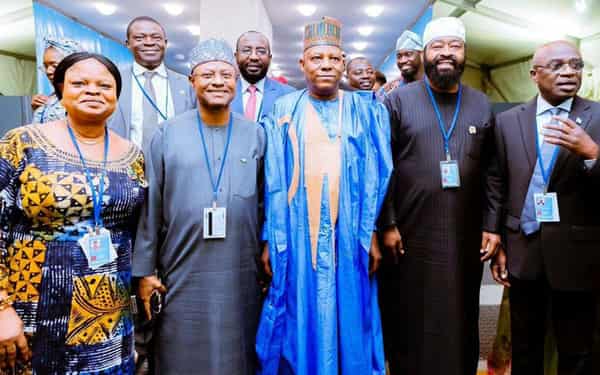
The African Democratic Congress (ADC) lambasted Vice President Kashim Shettima for focusing on the plight of Palestinians during his address but failing to address the worsening insecurity and economic hardship in Nigeria.
Meanwhile, the United Nations told President Donald Trump of the U.S. that it had launched a “thorough investigation” into what he called “triple sabotage” during his visit to the organisation’s headquarters.
The ADC Deputy National Publicity Secretary, Jackie Wayas, in a statement yesterday, described the Vice President’s remarks at the United Nations General Assembly (UNGA) meeting as a missed opportunity to secure global support to tackle the crises ravaging the country.
Wayas said Nigeria was at a breaking point, with insecurity forcing farmers to abandon their fields, food production collapsing in several states, and the cost of essential goods rising sharply.
“Just days ago, Nigerians watched in shock as heavily armed bandits, with ammunition draped around their necks, brazenly held a press conference in Katsina State. This is not just an embarrassment; it is a national shame and an indictment of any government that claims to have control over its territory,” she said.
The ADC spokesperson accused the administration of neglecting urgent domestic issues while seeking relevance on the international stage. She warned that hunger was becoming a daily reality for millions of Nigerians as insecurity continued to disrupt agricultural activities and food distribution.
The U.S. had sent a letter to the UN Secretary-General, Antonio Guterres, on Wednesday demanding answers about an escalator that failed, stranding Trump and first lady Melania Trump, as well as a malfunctioning teleprompter and a faulty public address system.
In a long, angry social media post, Trump described the string of mishaps as “very sinister,” called for people to be arrested and said the U.S. Secret Service was also conducting a probe.
In a related development, world leaders have continued to lament the global crisis. Georgian President, Mikheil Kavelashvili, evoked the memory of Russia’s 2008 invasion of his country as he condemned the ongoing war in Ukraine.
“For a fourth year now, a horrific, bloody war has been raging in Ukraine, bringing catastrophic consequences and immense human suffering, drawing on the bitter experience of the 2008 war whose wounds have not yet healed,” he said.
Stressing that Georgia understands better than many the pain that Ukraine endures today, he reaffirmed Tbilisi’s “firm and unwavering support” for Ukraine.
In his address, the president of Haiti’s Transitional Presidential Council, Laurent Saint-Cyr, painted a dire picture of his country’s escalating violence. “Haiti is experiencing war, a war between criminals that want to impose violence as their social order and a population, an unarmed population, that is fighting for human dignity and freedom,” he said.
Saint-Cyr warned that the international community’s response had been inadequate, noting that only 1,000 members of a promised 2,500-strong multinational mission remain deployed. He endorsed a United States and Panama backed plan to send a 5,500-member “Gang Suppression Force” to Haiti and renewed calls for reparations from France, citing the crippling 1,825 indemnity agreement that forced Haiti to compensate former French slaveholders.
Yemeni President Rashad al-Alimi also pressed the Assembly to act, accusing Houthi rebels of being armed with internationally banned weapons supplied by Iran. He called for “an effective international coalition” to restore stability and rebuild Yemen’s institutions, stressing that collective pressure is needed “to impose peace.”
Palestinian President, Mahmoud Abbas, addressed the Assembly via video link after being denied a U.S. visa. His speech centred on the demand for an independent Palestinian state and an immediate end to the war in Gaza. Abbas outlined a framework for post-war governance, including Palestinian elections within a year, the release of prisoners, unimpeded humanitarian access, and a reconstruction plan for Gaza and the West Bank.