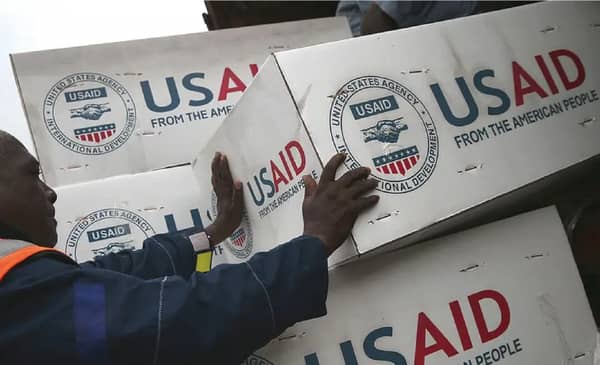
Nigeria ranks among the hardest-hit nations from the President Donald Trump administration’s abrupt cuts to United States Agency for International Development (USAID) grants and contracts, amounting to billions of naira in unspent funds, according to the investigation by the Centre for Collaborative Investigative Journalism (CCIJ).
The probe uncovered more than N250 billion ($142.6 million) in unspent grants and contracts from the 2024 U.S. budget allocated to Nigeria.
Globally, $5 billion in such funds were lost across USAID programmes, but analysts caution the true scale of losses could be many times higher, with no complete tally available.
U.S. foreign aid in 2024 represented over 40 per cent of global humanitarian assistance, per United Nations data, amplifying the impact on vulnerable regions like Africa.
Many African countries have seen sharp reductions in U.S. grants and cooperative agreements, and Nigeria is in the top tier alongside Kenya, Tanzania, Ghana and others. Gambia is the least affected with only one contract in unspent funds totalling N17 million ($10,620)
Key Nigerian projects affected include Tetra Tech Inc.’s Empower Nigeria initiative: Potential cut of $23,372,832 (N37 billion) and Chemonics International Inc. USAID project: $6,420,113 (N10 billion) among others.
The cuts have crippled aid organisations worldwide, with a non-scientific survey estimating 260,000 job losses among USAID recipients.
“The true chaos that was created was real and doesn’t get undone,” said Warren from AVAC.
Nowhere is the pain more acute than in the President’s Emergency Plan for AIDS Relief (PEPFAR) programmes, which have saved over 26 million lives by delivering antiretroviral (ARV) drugs to HIV patients. Despite its proven bipartisan success, PEPFAR projects in Nigeria descended into disarray for months post-cuts.
In Nigeria, where over two million people living with HIV are residents, drug shortages have forced healthcare workers to ration supplies.
Pregnant women in Gwagwalada, on Abuja’s outskirts, shared harrowing accounts with CCIJ: “I skipped my doses in February, after I went to the health centre in Gwagwalada… and found that I couldn’t get drugs. I was running out of medication,” said Blessing Christopher, a pregnant HIV patient. “I take today; I don’t take tomorrow. That’s how I was alternating the drugs to make them last longer.”
Health experts like Dr Deborah Ubieko at the University of Abuja Teaching Hospital warn that irregular ARV use endangers both mothers and babies, increasing transmission risks.
A PEPFAR analysis by former USAID official Ramona Godbole shows only 35 per cent of awards remain active. Cuts appear driven by ideology rather than need, prioritising pregnant and breastfeeding women while de-emphasising high-risk groups like gay men, drug users, and transgender individuals.
“This administration is clearly making decisions on ideology and politics, not on epidemiologic need in health terms or development need in the larger context,” Warren added.