• Bloc appoints Dangote as business council chair
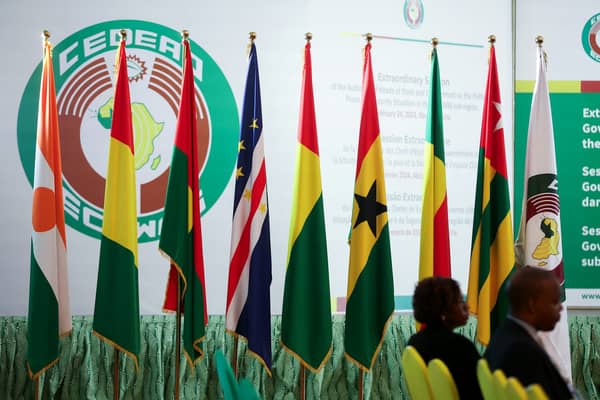
Regional leaders of the Economic Community of West African States (ECOWAS), yesterday, converged on Abuja for the 68th Ordinary Session of the Authority of Heads of State and Government, pledging to defend democracy, deepen economic integration, and strengthen collective security amid rising instability across the sub-region.
They hailed the swift mobilisation of troops and air assets, spearheaded by Nigeria, to respond to political crises in West Africa, following the unconstitutional coup in Guinea-Bissau and the attempted overthrow in the Benin Republic.
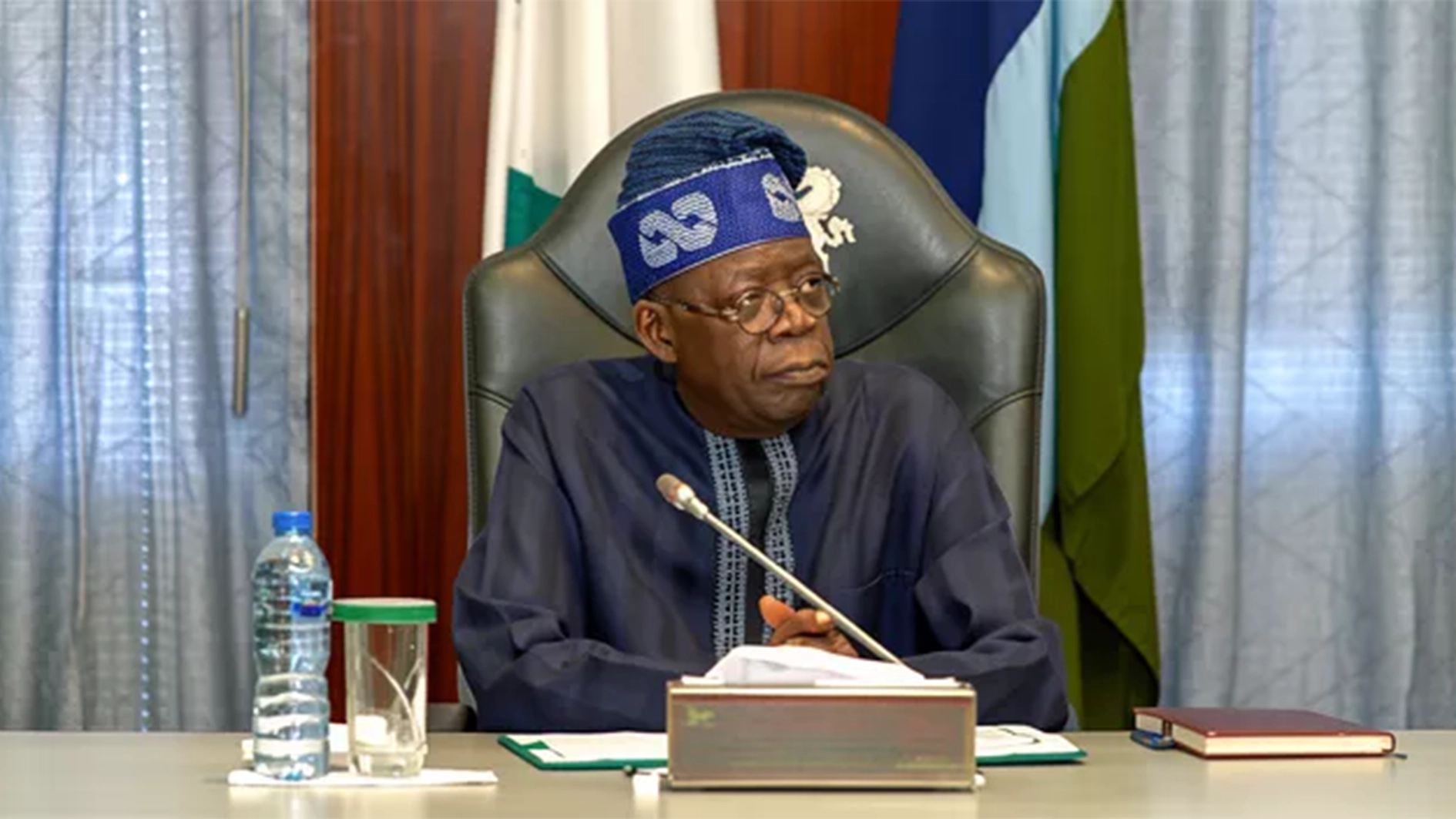
President Bola Tinubu, represented by Vice President Kashim Shettima, opened the summit at the State House Conference Centre, with an appeal for unity, warning that “the bloc is weakest when divided.”
“We do not share geography by accident; we share it by design, by history and kinship,” Tinubu said, describing West Africa as a family bound by memory, culture, struggle and aspiration.
He stressed that while disagreements among member states are inevitable, they must not undermine the sense of belonging or shared destiny.
“Our unity is not transactional but foundational. Fraternity, not force, must define the future of our community,” Tinubu said, highlighting terrorism, violent extremism, unconstitutional changes of government, transnational crime, arms proliferation, cyber insecurity, climate shocks, food insecurity, and irregular migration as shared threats requiring coordinated action.
“These challenges recognise no borders. No single member state, regardless of size, can achieve enduring stability in isolation,” he added, reaffirming Nigeria’s commitment to ECOWAS-led collective action.
Tinubu formally welcomed heads of state to Abuja, expressing hope that the summit would strengthen trust, restore confidence, and reposition ECOWAS as a bloc anchored on solidarity, justice and shared destiny.
Amid discussions on governance and security, the summit also highlighted a decisive pivot towards private-sector-led integration.
ECOWAS Commission President, Dr Omar Alieu Touray, announced the launch of the ECOWAS Business Council, naming Nigerian industrialist, Aliko Dangote, as its pioneer chairman.
“Dangote has graciously accepted to serve as the pioneer chairperson of the ECOWAS Business Council,” Touray said.
“Given his vast experience across West Africa, the council will drive investment and economic integration in the region.”
Touray described the council as a structured platform to foster dialogue and partnership between governments and private-sector actors, with ECOWAS institutions facilitating coordination.
“Intra-regional investment is a key driver of trade. We must prioritise, support and empower our regional private sector,” he said, announcing plans for a West African Economic Investment Summit, envisioned as a Davos-style forum to coordinate investment and monitor regional progress.
Chairman of the ECOWAS Authority and President of Sierra Leone, Julius Maada Bio, described the summit as a historic crossroads, warning that West Africa faces some of the gravest security, democratic, and economic challenges in its post-independence history
The rapid deployment of troops, commended by Bio, underscores the bloc’s unwavering commitment to defending democracy and stabilising the sub-region.
“ECOWAS does not and will not compromise on democratic governance,” Bio said, emphasising the need for credible, inclusive and time-bound pathways to restore constitutional order.
He expressed solidarity with the people of Guinea-Bissau and reaffirmed support for President Patrice Talon and the citizens of Benin, highlighting ECOWAS’s readiness to act decisively whenever democratic norms are threatened.