President Bola Tinubu has transmitted the 2026–2028 Medium-Term Expenditure Framework (MTEF) and Fiscal Strategy Paper (FSP) to the House of Representatives, urging lawmakers to fast-track its approval as the foundation for the 2026 federal budget.
The letter, read by Deputy Speaker Benjamin Kalu during Wednesday’s plenary, underscores the urgency of timely legislative consideration to ensure a smooth budget process.
“It is with pleasure that I forward the 2026 to 2028 Medium-Term Expenditure Framework and Fiscal Strategy Paper, MTEF and FSP, for the kind consideration and approval of the House of Representatives,” the letter stated.
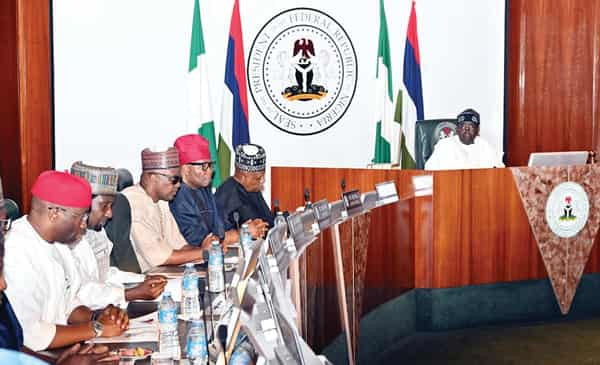
The MTEF/FSP was approved by the Federal Executive Council (FEC) on December 3, 2025, marking a critical step in Nigeria’s annual budget cycle.
The FEC, chaired by the President, serves as the highest decision-making body for national fiscal policy, approving spending frameworks, revenue assumptions, and economic projections that guide the preparation of the federal budget.
For the 2026–2028 framework, the FEC pegged the oil price benchmark at $64.85 per barrel and set the budget exchange rate at N1,512 to $1. These parameters provide the baseline for revenue forecasts and expenditure ceilings for the coming three years.
The MTEF/FSP also outlines government priorities across key sectors, including infrastructure, social services, and security, offering a strategic roadmap for economic planning.
By transmitting it to the House of Representatives, the presidency signals its commitment to fiscal discipline and timely budget implementation.
FEC approval is a critical precursor to legislative scrutiny, ensuring that budget proposals align with national economic goals before being formally debated and passed by the National Assembly.
In other news, the Special Adviser to the President on Information and Strategy, Bayo Onanuga, on Wednesday said President Bola Ahmed Tinubu has constituted a high-level ministerial committee to tackle the long-standing issue of unpaid obligations to more than 2,000 federal contractors.
The move follows months of sustained pressure from indigenous contractors who claim the Federal Government owes them over N4 trillion for completed projects.
The prolonged non-payment has reportedly pushed many into severe financial distress, triggering repeated protests at the Ministry of Finance and the National Assembly in late 2025.
Contractors say the delays have led to loan defaults, loss of property, deteriorating health conditions, and, in some cases, deaths among affected members.
Although the Minister of Finance, Wale Edun, had earlier outlined a structured pathway for settling the debts, following directives from President Tinubu to commence payments, contractors insist that less than one per cent have been paid, with no significant progress recorded.
Addressing State House correspondents after the Federal Executive Council (FEC) meeting in Abuja, Onanuga said the President held “a very productive discussion” with ministers after receiving a fresh briefing on the scale and implications of the outstanding payments.