• Coups not French problem, says Aworawo • Military takeover, evidence of challenge between France, former colonies
• Prof Erugo: Increase in number of outstings, consequence of long existing political ties, grip on former French colonies
Following the military take over of Gabon and the subsequent naming of General Brice Nguema, as the leader of the junta, experts have raised concern over the ugly trend.
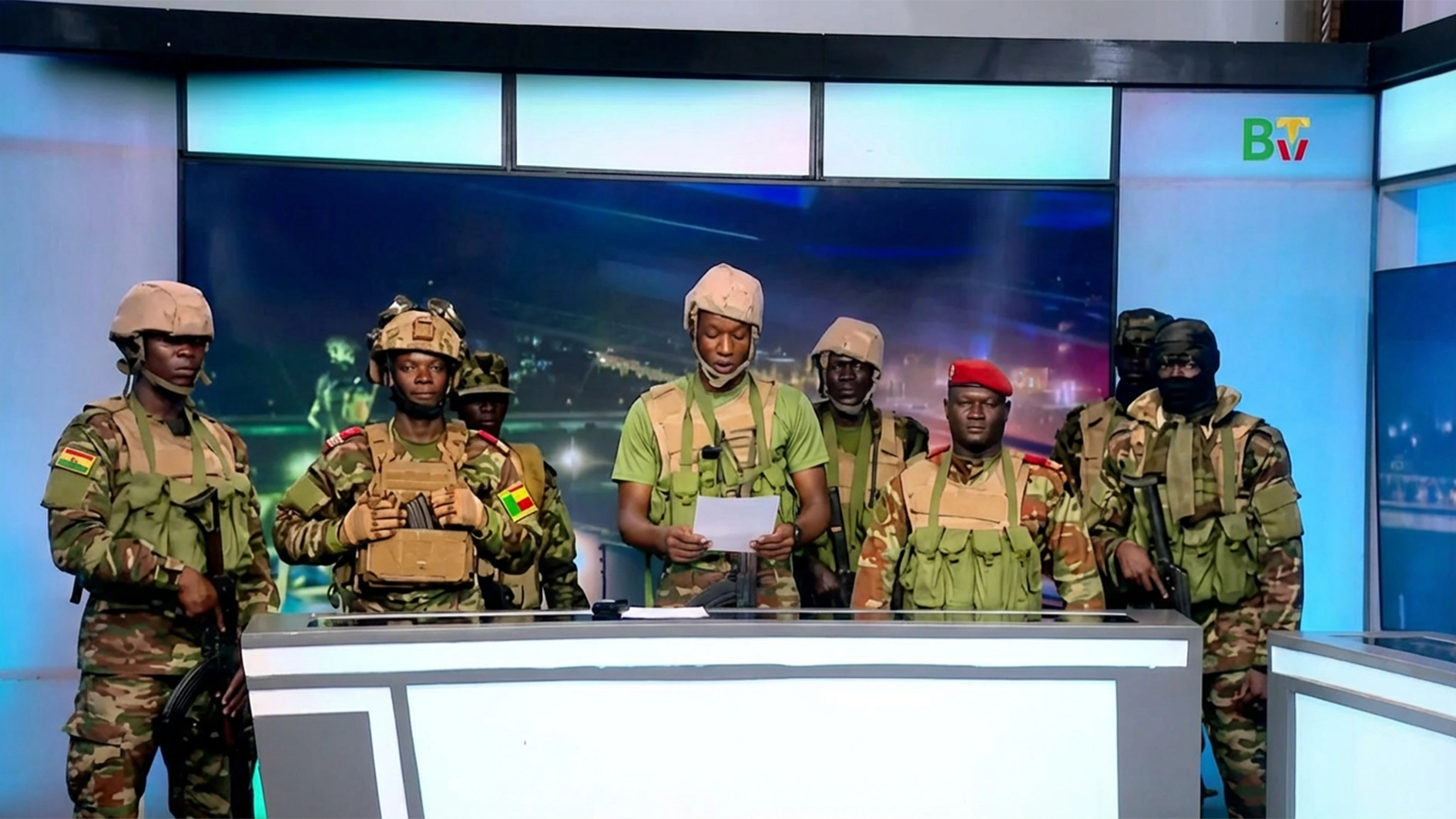
Gabon is the sixth francophone country to fall under military rule in the last three years as former colonial power, France, struggles to maintain its influence on the continent.
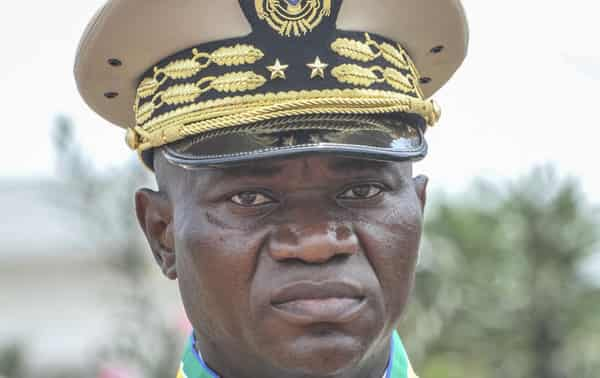
General Nguema, last Wednesday, led a coup against Ali Bongo and toppled the president shortly after he was named winner of a disputed election. Crowds of cheering civilians turned up at his inauguration, a sign there is some support for the military.
However, there are concerns Gen. Nguema’s rule will be a continuation of the 55-year Bongo dynasty. Ali Bongo’s father, Omar, was in power for 41 years, before he died in 2009 and was succeeded by his son.
The general spent most of his career in the Bongo’s inner circle and is even thought to be Ali Bongo’s cousin. The inauguration is the latest in a series of takeovers across West and Central Africa.
Gabon has been suspended from the African Union following the coup, which has been condemned by the UN and France. Reacting, Senior Lecturer, Department of History and Strategic Studies, Faculty of Arts, University of Lagos, Friday Aworawo, believes that the coups are not a French issue, but added that the fact that France protects those in government might be a contributing factor.
He said that unlike former English colonies, where their colonial masters don’t have direct influence on them, France has a different system, which is obtainable because of the policy of assimilation and association introduced during the colonial era.
He, however, stated that the rising coup in Africa is a testament to bad governance in the region, adding that if Nigeria continues in the path of these economic trials, insecurity, the possibility of a similar fate presents itself. He urged Nigeria to avoid the policy of sit-tightism, as no one should hold onto power, saying he is Solomonic in wisdom.
According to him, the ordinary Gabonese is in dire situation, as the rulers are not doing their best for the economy, but for their pockets. Gabon is a rich oil nation with a population of about 2.3 million, but citizens are living in abject poverty.
Stressing that bad leadership is the leading cause for recent coups, Aworawo also said some people would argue that civilian coup has been occurring where the electoral process has been fraudulent to the point that votes don’t count, so, they needed military intervention.
On the economic effect of the ‘sacks’ to the continent, he said because Africa is a producer of primary products, consequently, friends of those that have been knocked out of power may impose sanctions as a way to compel the coupists to return to democratic rule, an action that can affect the economy. He, however, noted that such sanctions primarily affect the ordinary man.
For Associate Professor, Nigerian Institute of International Affairs (NIIA), Dr. Joshua Bolarinwa, these coups show that there is a challenge with the relationship, which has existed in the colonial and post-colonial states of France.
For instance, he noted that currencies of these Western and Central African countries are produced in France in contrast to their counterparts in Northern Africa.
“For these countries, a larger portion, about 80 per cent, of their GDP, is kept in France and they have to apply officially and charge interest before they can assess their funds. They still are unable to withdraw more than about 20 per cent from what they have kept in France.
“These problems are aggravated by these nations having the money and unable to access their funds to take care of their country. These challenges coupled with internal challenges have led to these coups.
“For example, Niger has the seventh largest deposit of uranium, but still doesn’t have electricity and is powered by Nigeria, but every four bulbs in France is powered by Nigerien uranium.
“These former colonies are trying to free themselves from French neo-colonisation,” he said. He said one major challenge affecting these colonies and a lot of African States is that there is huge poverty, unemployment crisis, rising inflation and socio-economic challenges, all of which has created a vacuum and ill feelings among the people.
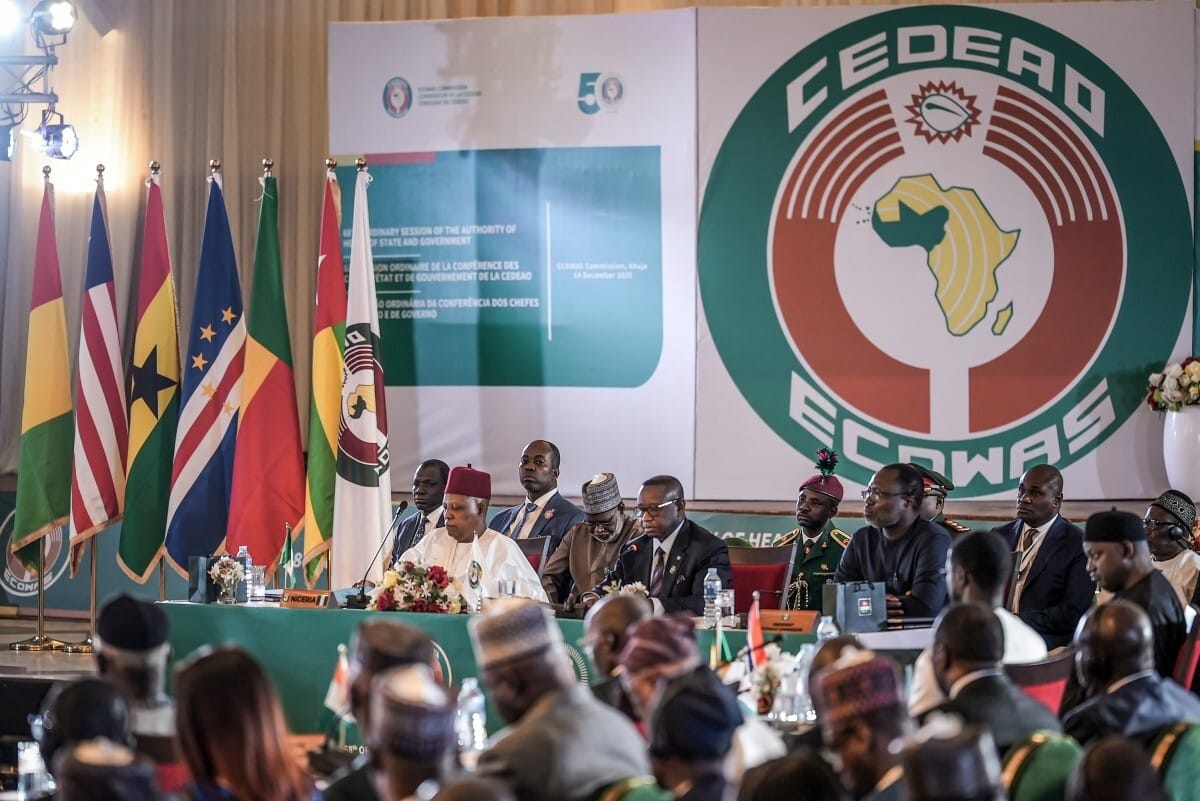
He explained that if economic issues were tackled, there would be a reduction in the trend of coups. Bolarinwa urged the Economic Community of Central African States (ECCAS), Economic Community of West African (ECOWAS) and African Union (AU) to tread cautiously while intervening to eliminate the coup, adding that the best method to address it is through dialogue, negotiation and discovering citizens’ desires.
He, however, said he awaits the reaction of France who is quickly and gradually losing its grip in West and Central Africa, adding that the spread of the coup might limit itself to former French colonies.
He said these African countries should have, through a strategic gradual process, detach themselves from France and not an abrupt one like is displayed, which has a tendency to compound their poverty, governance challenges, unemployment and economic crisis.
According to him, there is so much influence from extra African powers. Apart from France, there is America, Russia, China, so in some of these coups there could be influence of these powers.
Former Dean, Faculty of Law, Abia State University (ABSU), Prof. Sampson Erugo (SAN), emphasised that the increase in the number of coups in former French colonies appears to have to do with the long existing political ties and grip of the colonies by France.
“From the rhetoric, there is an indication that the failure of democracy or governance in those colonies is forcing a rethink. Probably, the people are finally deciding to break the colonial bond. It is a different issue altogether whether they can manage their newfound freedom,” he said.
He envisions that the upsurge of coups in Africa should worry and serve as a wake-up call to strengthen democracy in Nigeria. He buttressed that the major factors inciting the coups are essentially the failure of democracy or governance with attendant poverty, corruption, and underdevelopment of the African nations.
Erugo urged all stakeholders to enthrone the rule of law and genuine democracy, with the dividends of democracy delivered to the people.
“Much as the worst democracy is said to be better than the best military rule, it is becoming debatable whether what we have in most of Africa is democracy. It is only democracy in the right sense of the word that will endure and be sustained anywhere.
Nigeria must make appreciable progress towards sustainable democracy. He noted that the coups pose a threat to Africa’s growth socially, economically, and politically.
“Unfortunately, the political elite appears not to be learning any lessons from the coups in the impunity witnessed everywhere. Of course, the legal implication of coups is that it is an illegitimate way of taking power. It is undemocratic, unconstitutional, and unlawful both in domestic and international legal systems,” Erugo added.