Welcome, friend. I’m delighted you’re here asking about Americans living in Nigeria, because this question touches on something I’ve watched evolve dramatically over my years covering cross-continental migration patterns. This article represents the conclusion of months of research into reverse migration trends and years of experience documenting the fascinating relationship between Nigeria and the United States.
The question of how many Americans in Nigeria currently reside might surprise you with its complexity. According to the most recent estimates from the Nigerians in Diaspora Commission, whilst Nigeria tracks over 17 million Nigerians living abroad, the reverse flow of Americans to Nigeria remains relatively modest yet growing. Current estimates suggest approximately 10,000 to 25,000 American citizens live in Nigeria at any given time, though these figures fluctuate significantly based on economic conditions, security concerns, and employment opportunities in sectors like oil, telecommunications, and international development.
But here’s what makes this number so slippery to pin down. Unlike Nigeria’s meticulous tracking of its diaspora population, Nigeria doesn’t maintain a centralised database specifically for American residents. Instead, we piece together estimates from US Embassy consular registration data, work permit applications processed by Nigerian immigration authorities, and corporate human resources records from multinational companies.
How Many US Citizens Currently Live in Nigeria?
The American community in Nigeria is considerably smaller than you might expect given the robust economic ties between both nations. Best available estimates place the number between 10,000 and 25,000 American citizens currently residing in Nigeria, with the highest concentrations in Lagos and Abuja. These aren’t your typical expat retirees lounging on beaches. Most are working professionals in specific sectors.
I remember interviewing an American petroleum engineer in Port Harcourt who laughed when I asked about the American community size. “We’re a tight-knit group,” he said, “because we’re relatively few. Everyone knows everyone, especially in the oil sector.”
The American population ebbs and flows with Nigeria’s economic fortunes and security climate. During the peak of Nigeria’s oil boom in the late 2000s, American numbers swelled considerably. The 2015 economic downturn and subsequent security concerns saw many Americans relocate, though numbers have been gradually recovering as Nigeria’s economy stabilises and attracts foreign investment.
This is a stark contrast to the reverse flow. According to US Census Bureau data, over 600,000 Nigerian-born individuals lived in America as of the 2020 Census, making Nigerians one of the most educated and successful African immigrant groups in the United States. The asymmetry tells its own story about economic opportunity, educational access, and quality of life considerations.
American Sectors and Employment Patterns in Nigeria
Here’s a detailed breakdown of where Americans work and how their presence has evolved:
| Sector | Estimated Americans | Primary Locations | Average Tenure | Key Employers |
|---|---|---|---|---|
| Oil & Gas | 4,000-8,000 | Lagos, Port Harcourt, Warri | 2-4 years | Chevron, ExxonMobil, Shell |
| US Government/Embassy | 800-1,200 | Abuja, Lagos | 2-3 years | State Department, USAID |
| International Development | 1,500-2,500 | Abuja, Kano, Jos | 1-3 years | USAID contractors, NGOs |
| Technology & Telecommunications | 800-1,500 | Lagos, Abuja | 2-5 years | Tech startups, Andela |
| Education & Academia | 600-1,000 | Lagos, Ibadan, Abuja | 3-7 years | Universities, American schools |
| Finance & Banking | 500-1,000 | Lagos, Abuja | 3-5 years | Citibank, international firms |
| Healthcare & Medical | 300-600 | Lagos, Abuja, Jos | 2-4 years | Mission hospitals, NGOs |
| Other/Retired/Business | 2,000-4,000 | Various | Variable | Self-employed, small business |
The oil and gas sector has historically been the largest employer of Americans in Nigeria, accounting for roughly 40 percent of the American population. These are typically highly skilled engineers, geologists, and senior management who command substantial salaries and live in secured compounds.
Can a US Citizen Legally Live in Nigeria?
Absolutely, and the process is more straightforward than many Americans initially assume. US citizens can live in Nigeria through several legal pathways, each with specific requirements and benefits. I’ve guided numerous Americans through this process over the years, and whilst there’s bureaucracy involved (this is Nigeria, after all), it’s entirely manageable with proper planning.
The most common route is the Standard Temporary Work Permit, which requires a Nigerian company to sponsor your employment. Your employer must demonstrate that your skills aren’t readily available in Nigeria’s labour market, though in practice, this requirement is often waived for senior technical positions. The permit typically lasts two years and can be renewed.
For Americans with Nigerian heritage (and there are many thanks to centuries of connection), obtaining permanent residency becomes significantly easier. The National Identity Management Commission now offers diaspora enrolment services that help Americans of Nigerian descent secure their National Identification Number, which serves as a gateway to various residency options.
7 Essential Steps to Relocating to Nigeria as an American
Based on conversations with dozens of Americans who’ve made the move successfully, here’s the practical roadmap:
- Secure Employment Before Departure. Don’t arrive hoping to find work. Have a confirmed job offer with a registered Nigerian company willing to sponsor your work permit. Most successful American residents had employment arranged 3-6 months before relocating. Your employer will handle much of the visa paperwork, making your transition infinitely smoother.
- Obtain the Proper Visa Type. Apply for a Subject to Regularisation (STR) visa at the Nigerian embassy or consulate nearest you in America. This temporary visa allows you to enter Nigeria whilst your work permit is processed. Bring your job offer letter, passport valid for at least six months, passport photographs, completed application forms, and proof of yellow fever vaccination. The STR typically processes within 2-4 weeks, though I always advise allowing extra time because government processing speeds vary.
- Register with the US Embassy Upon Arrival. Within your first week in Nigeria, enrol in the Smart Traveler Enrollment Program (STEP) at the US Embassy in Abuja or US Consulate in Lagos. This isn’t mandatory but proves invaluable during emergencies, security alerts, or the occasional evacuation recommendation. The embassy provides security updates tailored to Americans and can expedite passport renewals or emergency services when needed.
- Convert Your Work Permit Through Nigerian Immigration. Your employer will submit applications to the Nigerian Immigration Service on your behalf, but you’ll need to attend biometric appointments. Bring originals and photocopies of your passport, employment contract, company registration documents, academic certificates, and professional qualifications. Budget ₦250,000 to ₦500,000 for processing fees, depending on your permit type and duration. Processing typically takes 6-12 weeks, during which your STR visa keeps you legal.
- Secure Appropriate Housing in Safe Neighbourhoods. Americans typically gravitate toward specific areas based on their city. In Lagos, consider Victoria Island, Ikoyi, Lekki Phase 1, or Banana Island if your budget allows (monthly rent ranges from ₦800,000 to ₦15 million depending on luxury level). In Abuja, Maitama, Asokoro, Wuse 2, and Garki are popular with expatriates. Always use a reputable estate agent, insist on seeing properties personally rather than relying on photos, negotiate firmly (initial asking prices often drop 15-20 percent), and ensure your compound has adequate security including perimeter walls, guards, and backup power generation.
- Open a Nigerian Bank Account and Establish Financial Infrastructure. Most American residents use GTBank, Access Bank, or Zenith Bank because they offer relatively smooth international transfers and English-speaking customer service. You’ll need your passport, work permit, proof of address (utility bill or tenancy agreement), recent passport photographs, and a letter from your employer. Don’t expect American-style banking convenience. Internet banking works reasonably well, but be prepared for occasional website outages and the reality that physical bank visits remain necessary for many transactions. Maintain your American bank account for receiving salary portions in dollars and handling US-based expenses.
- Adapt Your Health Insurance and Medical Planning. Nigerian public healthcare won’t meet American expectations, so comprehensive international health insurance is non-negotiable. Companies like Cigna Global, Allianz, and Aetna International offer plans that cover both Nigerian private hospitals and medical evacuation to Europe or America for serious conditions. Budget ₦500,000 to ₦2 million annually depending on coverage levels and your age. Many Americans maintain relationships with specific private hospitals like Lagoon Hospitals in Lagos or Cedarcrest Hospitals in Abuja, where standards approximate Western expectations and English is universally spoken by medical staff.
Remember, living successfully in Nigeria as an American requires mental flexibility and patience with systems that operate differently from what you’re accustomed to. The Americans I know who thrive here are those who embrace the differences rather than fighting against them.
Which US State Has the Most Nigerian Immigrants?
Now, let’s flip the question around because understanding the Nigerian diaspora in America provides essential context for the reverse flow. Texas houses the largest Nigerian-born population in the United States, with approximately 70,000 to 90,000 Nigerian immigrants according to recent US Census Bureau analysis. Maryland follows closely with 65,000 to 75,000, whilst New York, California, and Georgia each host 40,000 to 60,000 Nigerian-born residents.
This geographic concentration isn’t random. Houston’s massive energy sector naturally attracts Nigerian petroleum engineers and geoscientists, creating networks that facilitate further migration. The presence of one Nigerian family draws relatives, friends from the same village, and eventually creates mini-communities complete with Nigerian churches, restaurants, and cultural organisations.
I’ve observed this pattern firsthand whilst researching Nigeria’s diverse cultural communities. A Nigerian petroleum engineer settles in Houston for work, then his brother follows, then a cousin, then friends from university. Within a decade, you’ve got entire neighbourhoods where Igbo, Yoruba, or Hausa is spoken as commonly as English. Maryland’s concentration stems partly from its proximity to Washington DC and the significant number of Nigerians working in government, international development, and academia.
The Texas-Nigeria connection has become so robust that several Nigerian state governments maintain informal trade offices in Houston, recognising the economic bridge that the diaspora population creates. When Americans relocate to Nigeria, they often find that having previously lived in Texas, Maryland, or New York gives them unexpected social advantages because so many Nigerians have connections to those states through relatives.
How Americans Experience Daily Life in Nigeria
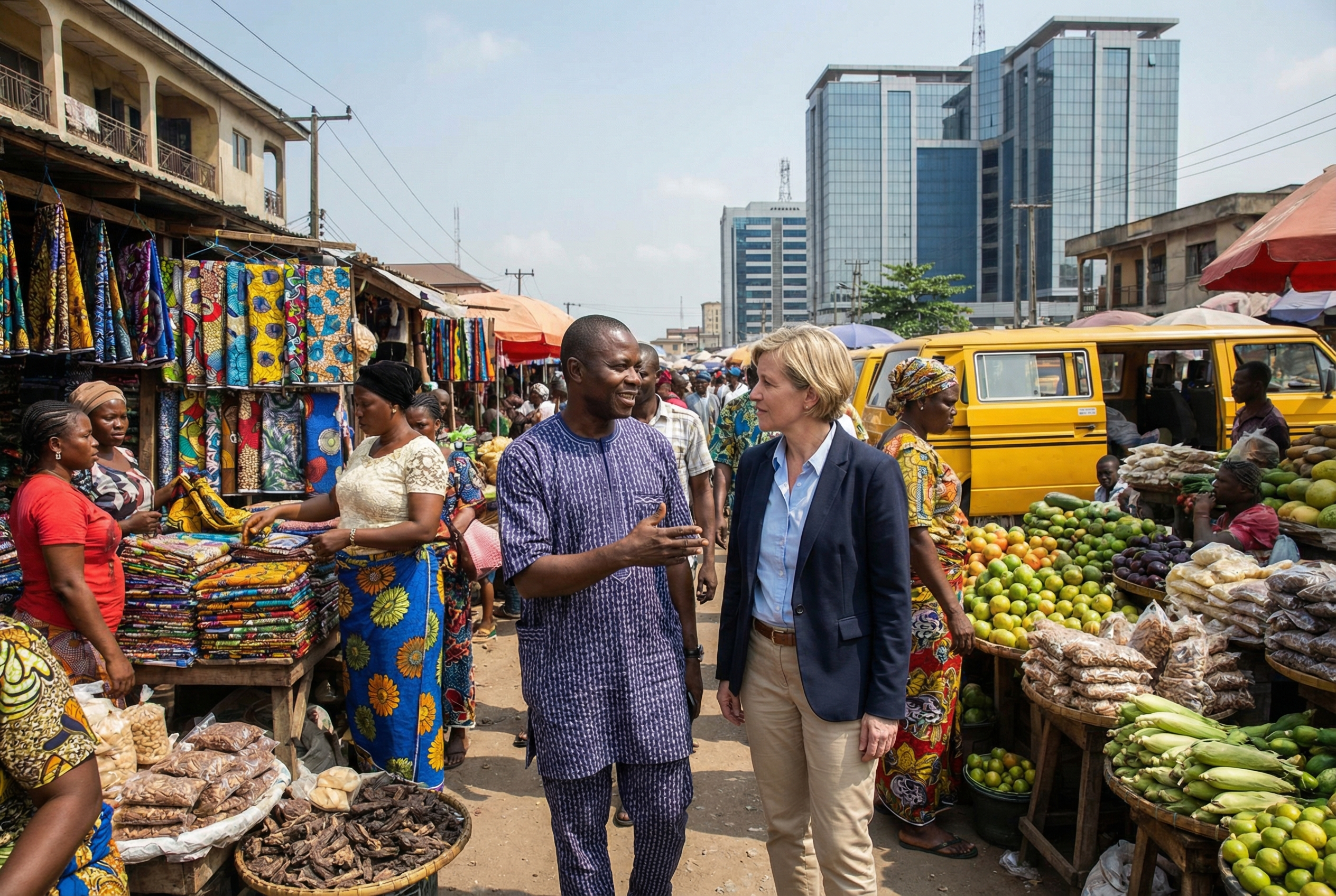
Living in Nigeria as an American is nothing like the Africa portrayed in Western media. Lagos, where most Americans reside, is a chaotic, vibrant megacity of 25 million people with traffic that makes Los Angeles look efficient and a hustle culture that would impress New Yorkers.
Your daily experience depends enormously on your economic position. Americans working for major multinationals typically live in secured compounds with backup generators, water treatment systems, and 24-hour security. You’ll likely have household staff (which many Americans find culturally uncomfortable initially but eventually accept as both economically beneficial and culturally expected). Your children will attend expensive international schools where annual fees run ₦8 million to ₦25 million.
But here’s what surprises most Americans positively. The warmth and hospitality of Nigerians exceeds anything you’ve experienced. Colleagues will invite you to family celebrations, share meals, and genuinely welcome you into their lives in ways that feel remarkably open compared to American social reserve. The entrepreneurial energy is infectious. Everyone’s building something, creating something, hustling for the next opportunity.
The challenges are real, though. Corruption infiltrates daily interactions in ways Americans find exhausting. Police checkpoints require “dash” (small bribes). Securing any government service often involves knowing someone who knows someone. Infrastructure frustrations mount quickly when power cuts interrupt work multiple times daily, internet reliability proves maddeningly inconsistent, and traffic transforms a 10-kilometre journey into a two-hour ordeal.
Security consciousness becomes second nature. You learn which neighbourhoods to avoid, when to leave events (never after 10pm if you can help it), and how to maintain a low profile. Most Americans here avoid flashy displays of wealth, don’t walk around with phones visible in certain areas, and always travel with doors locked and windows up.
What Percentage of Nigerian-Americans Return to Nigeria?
This is where things get really interesting from a demographic perspective. According to research tracking return migration patterns and data from the Nigerians in Diaspora Commission, approximately 2 to 5 percent of Nigerian-Americans make permanent or semi-permanent returns to Nigeria during their lifetimes. However, that seemingly small percentage actually represents 15,000 to 30,000 individuals, creating a meaningful returnee community.
The return pattern typically follows a career arc. First-generation Nigerians who emigrated to America for education and opportunity often return in their 50s and 60s after accumulating American pensions, social security eligibility, and sufficient capital to live comfortably in Nigeria. These returnees bring valuable skills, international networks, and capital that Nigeria desperately needs for development.
Second-generation Nigerian-Americans (born in America to Nigerian parents) show lower return rates, typically around 1 to 2 percent making permanent moves. However, many maintain dual residency, spending several months annually in Nigeria while keeping their American base. This “straddling” approach has become increasingly common as remote work technology makes location flexibility more viable.
I’ve interviewed numerous returnees over the years, and their motivations cluster around several themes. Family obligations rank highest, particularly caring for ageing parents or managing inherited family property. Business opportunities attract entrepreneurs who recognise that Nigeria’s challenges represent gaps in the market for those with capital and international expertise. Some simply tire of American racism and cultural alienation, finding that despite Nigeria’s frustrations, they feel more authentically themselves here.
The returnee experience varies dramatically. Those who maintained strong Nigeria connections throughout their American sojourn, visiting regularly and staying engaged with home politics and culture, typically adjust smoothly. Those who left Nigeria as children or teenagers often struggle because the Nigeria they return to bears little resemblance to their childhood memories. The pace of change here has been extraordinary.
Financial planning proves critical for successful returns. Returnees need dollar-denominated income streams (pensions, investments, remote work) because relying solely on naira income exposes you to currency devaluation risk. Healthcare planning ranks second because Nigerian medical infrastructure, whilst improving, still lags far behind American standards for chronic disease management.
Understanding the Unique Position of Americans in Nigeria
Americans occupy a peculiar position in Nigeria’s expatriate hierarchy. Unlike British expatriates who carry colonial history baggage, or Chinese nationals who’ve become controversial due to predatory lending concerns, Americans generally enjoy positive perceptions. Nigeria’s entertainment culture is heavily influenced by American music, film, and fashion, creating a natural affinity, particularly among younger Nigerians.
Professional Americans in Nigeria typically command salaries significantly higher than local equivalents, though this gap has narrowed as Nigerian professionals increasingly demand market rates. An American petroleum engineer might earn $150,000 to $250,000 annually, whilst a similarly qualified Nigerian counterpart now commands $80,000 to $150,000. Twenty years ago, that gap would have been far wider.
The cultural adjustment challenges Americans face differ from other expatriates. British expatriates navigate Nigeria with some cultural familiarity given colonial history and Commonwealth connections. Americans, however, arrive with limited preconceptions about Nigeria beyond vague notions absorbed from news coverage that typically emphasises corruption, Boko Haram, and poverty. Most Americans are pleasantly shocked by Lagos’s sophistication, Abuja’s modernity, and the Nigerian elite’s cosmopolitan lifestyle.
Language rarely poses problems since English serves as Nigeria’s official language, though the local varieties (Nigerian Pidgin, various accents) require adjustment. Many Americans report that understanding rapid Yoruba-inflected Lagos English or Hausa-influenced Kano English takes several months of immersion.
One American friend who’s lived in Lagos for seven years put it perfectly: “Nigeria frustrates you and enchants you simultaneously. You’ll curse the traffic whilst laughing at something ridiculous, feel annoyed by bureaucracy whilst being moved by someone’s kindness. It’s exhausting and exhilarating in equal measure.”
Future Trends in American-Nigerian Migration
Looking ahead, several factors suggest the American population in Nigeria could grow modestly over the coming decade. Nigeria’s economic diversification efforts are attracting American technology companies, with Lagos emerging as a legitimate African tech hub. The American tech presence has already increased, with companies like Andela, Flutterwave, and various fintech startups employing American talent.
The push toward renewable energy presents new opportunities too. As Nigeria transitions away from oil dependency, American expertise in solar, wind, and battery technology becomes increasingly valuable. Several American renewable energy companies have established Nigerian operations in the past three years.
Remote work’s normalisation could drive another trend. Americans who secured remote positions with US companies during the pandemic now theoretically can work from anywhere. Some, particularly those with Nigerian heritage, are choosing Lagos or Abuja as their base whilst maintaining American salaries. This arbitrage (earning dollars whilst spending naira) provides lifestyle advantages impossible to achieve living in America.
However, security concerns remain the primary limiting factor for American growth. The State Department’s travel advisories for Nigeria, whilst often criticised as overly cautious by long-term American residents, do influence corporate decisions about staff deployment. Each major security incident triggers reassessments by multinationals about their American employee presence.
Climate change might unexpectedly influence migration patterns too. As American coastal cities face increasing hurricane risks and western states battle wildfires, some Americans of Nigerian descent are reconsidering where “home” truly is. If America becomes less stable politically and climatically whilst Nigeria continues its steady (if uneven) development trajectory, the calculation might shift.
Why the Diaspora Connection Matters
The significance of Americans living in Nigeria extends far beyond raw numbers. These individuals serve as crucial cultural bridges, facilitating business relationships, educational partnerships, and people-to-people understanding that transcends government diplomacy. Every American living successfully in Nigeria contradicts negative stereotypes and demonstrates that Africa’s most populous nation offers viable opportunities despite its challenges.
For Americans considering the move, I always emphasise realistic expectations. Nigeria will test your patience, challenge your assumptions, and occasionally make you question your sanity. But it will also expose you to human warmth, entrepreneurial creativity, and cultural richness that you simply cannot experience in America. The key is approaching Nigeria on its own terms rather than expecting it to conform to American standards.
For Nigerians reading this, understand that Americans in your midst are navigating significant cultural adjustment whilst contributing meaningfully to your economy and society. That petroleum engineer struggling with Lagos traffic, that development worker setting up rural healthcare clinics, that teacher at an international school – they’ve chosen to be here despite easier options elsewhere. That deserves acknowledgment.
The relationship between America and Nigeria, mediated through these human connections, will profoundly shape both nations’ futures. With Nigeria projected to become the world’s third most populous country by 2050, Americans who invest time understanding Nigeria now position themselves at the forefront of one of this century’s most important bilateral relationships.
Making the Nigeria-America Connection Work
Building on the comprehensive picture I’ve painted, let me leave you with this: the question “how many Americans live in Nigeria” matters less than understanding why they’re here and what the relationship teaches us about global interconnection. Every American in Lagos sending reports back to Houston, every Nigerian-American in Maryland wiring money home to Enugu, every mixed-status family navigating two continents simultaneously – these are the sinews connecting our globalised world.
I’ve spent years documenting Nigeria’s economic trajectory and the families that shape its business landscape, and I can tell you this: Nigeria’s future depends partly on its ability to attract and retain global talent, including Americans. Conversely, America’s relationship with Africa’s coming economic powerhouse will be mediated through these human connections.
Whether you’re an American considering a move to Nigeria, a Nigerian curious about reverse migration, or simply someone interested in 21st-century population dynamics, understanding this bilateral human flow provides insight into broader patterns of globalization, development, and intercultural exchange. The numbers tell one story, but the human experiences behind those numbers tell another, richer narrative about our interconnected world.
Similarly, understanding how Nigerians have established themselves in America provides the essential context for why the reverse flow remains comparatively modest but potentially growing. The asymmetry between tens of thousands of Americans in Nigeria versus over half a million Nigerians in America reflects economic realities, but also demonstrates that human migration is never just about push factors in origin countries. Pull factors in destination countries matter enormously, and Nigeria is working to make itself a more attractive destination for global talent.
Key Takeaways
- Current estimates suggest 10,000 to 25,000 Americans live in Nigeria, concentrated primarily in Lagos and Abuja, with oil and gas, government, and international development sectors employing the majority.
- Legal residence requires proper work permits and visas, with Americans needing employer sponsorship, but the process is manageable with advance planning and realistic expectations about Nigerian bureaucracy.
- The diaspora connection works both ways, with Nigerian-Americans in Texas, Maryland, and New York creating cultural and economic bridges that facilitate American migration to Nigeria whilst maintaining strong trans-Atlantic family and business networks.
Frequently Asked Questions About Americans Living in Nigeria
How many Americans live in Nigeria currently?
Current estimates place the American resident population in Nigeria between 10,000 and 25,000 individuals, though precise figures remain elusive because Nigeria doesn’t maintain a centralised registry of foreign residents by nationality. The majority concentrate in Lagos and Abuja, working primarily in oil and gas, international development, technology, and education sectors.
Can Americans live in Nigeria permanently?
Yes, Americans can obtain permanent residency in Nigeria through several pathways including continuous residence for specified periods, marriage to a Nigerian citizen, investment in the Nigerian economy above certain thresholds, or demonstrating Nigerian ancestry. The Combined Expatriate Residence Permit and Alien Card (CERPAC) serves as the primary documentation for long-term foreign residents.
Is Nigeria safe for American citizens to live in?
Safety in Nigeria varies dramatically by location and lifestyle. Major cities like Lagos and Abuja have secure neighbourhoods where thousands of expatriates, including Americans, live relatively safely with sensible precautions including secured housing, reliable transportation, avoiding high-risk areas, and maintaining security awareness. Rural areas and certain northern states face more significant security challenges from insurgency and banditry.
How much does it cost for an American to live in Nigeria?
Americans in Nigeria typically spend ₦2 million to ₦8 million monthly depending on lifestyle choices and family size. This includes rent (₦800,000 to ₦4 million monthly in expatriate areas), schooling for children if applicable (₦700,000 to ₦2 million monthly per child), household staff, security, transportation, food, and utilities including backup generators and water treatment.
Do Americans need a visa to enter Nigeria?
Yes, American citizens require visas to enter Nigeria, obtained from Nigerian embassies or consulates in the United States prior to travel. Tourist visas allow stays of 7 to 90 days depending on type, whilst work-related stays require Subject to Regularisation (STR) visas that enable you to enter Nigeria whilst your work permit processes through Nigerian Immigration Service.
What jobs do Americans typically have in Nigeria?
The petroleum industry employs the largest number of Americans in Nigeria, accounting for approximately 40 percent, followed by US government positions at the embassy and USAID, international development and NGO work, technology and telecommunications, education at international schools and universities, and finance at multinational banks. Most positions require specialised skills that justify work permit approval.
How does healthcare work for Americans living in Nigeria?
Americans in Nigeria almost universally maintain comprehensive international health insurance covering both Nigerian private hospitals and medical evacuation for serious conditions. Nigerian public healthcare infrastructure doesn’t meet American expectations, but private hospitals in major cities like Lagoon Hospitals and Cedarcrest Hospitals provide adequate care for routine medical needs with English-speaking staff.
Can Americans buy property in Nigeria?
Yes, but with restrictions and complications. Foreigners including Americans can purchase property in most Nigerian states, though some states restrict land ownership to Nigerian citizens or require special approvals for foreign purchasers. Most Americans lease rather than purchase given currency risks, property title verification challenges, and the likelihood their Nigeria residency is temporary rather than permanent.
What are the biggest challenges Americans face in Nigeria?
Infrastructure limitations including unreliable electricity and water supplies, traffic congestion in major cities, bureaucratic inefficiency requiring patience for government processes, security concerns requiring constant awareness, corruption infiltrating many daily interactions, and cultural adjustment to different business practices, social norms, and communication styles all challenge American residents initially.
How do Americans get around in Nigeria?
Most Americans in Nigeria employ personal drivers rather than driving themselves given chaotic traffic, unfamiliar roads, security concerns, and the high risk of accidents in Nigeria’s challenging driving environment. Companies typically provide vehicles and drivers for expatriate staff, whilst those self-funding their stay budget ₦300,000 to ₦600,000 monthly for vehicle, fuel, maintenance, and driver salary.
What’s the tax situation for Americans working in Nigeria?
Americans working in Nigeria face dual taxation obligations, paying Nigerian income tax on earnings within Nigeria whilst still filing US tax returns on worldwide income. The US-Nigeria tax treaty and Foreign Earned Income Exclusion can mitigate double taxation, but most Americans employ tax professionals familiar with both systems to ensure compliance and minimize tax liability.
Why would an American choose to live in Nigeria?
Americans relocate to Nigeria primarily for lucrative employment opportunities in sectors like oil and gas paying salaries significantly higher than US equivalents with housing and education allowances, entrepreneurial opportunities recognizing market gaps that Western experience can fill, family connections particularly for Nigerian-Americans reconnecting with heritage, and international development work for those passionate about contributing to African development through NGOs and government programmes.