Hello there, friend. I need to share something with you that represents months of careful research and years of experience covering Nigerian affairs. Understanding what life in Nigeria is really like today requires looking beyond headlines and statistics to see how actual people navigate their daily existence in Africa’s most populous nation. The picture is complex, often contradictory, and far more nuanced than most international coverage suggests.
I’ve spent considerable time travelling across Nigeria, from the bustling markets of Onitsha to the tech hubs of Lagos, from the ancient cities of the North to the oil-rich communities of the Delta. What I’ve discovered challenges simple narratives. Life here is simultaneously difficult and vibrant, challenging and full of opportunity, frustrating and remarkably hopeful.
Let me be direct: Nigeria today is experiencing one of its most difficult economic periods in recent memory, yet somehow life continues with a peculiar resilience that would astonish most outside observers.
How Do Nigerians Experience Daily Living Conditions?
The living situation in Nigeria varies dramatically depending on where you are, what you do, and how much you earn. It’s rather like asking about weather across an entire continent; there’s no single answer that fits everyone’s reality.
In Lagos, Nigeria’s commercial capital, a one-bedroom flat in a decent neighbourhood can cost ₦800,000 to ₦2 million monthly, whilst the same money could rent an entire house in many Northern cities. This geographic disparity shapes every aspect of how people experience daily life.
I remember visiting Mrs. Adebayo in her Lagos home last year. She’s a civil servant earning ₦150,000 monthly, living in a two-bedroom flat that costs ₦600,000 annually. After rent, transport (₦40,000 monthly), food (₦70,000), and children’s school fees, she’s perpetually broke despite having a “good government job”. Her situation isn’t unusual.
Power supply remains Nigeria’s most persistent infrastructure challenge. According to the National Bureau of Statistics, most Nigerians receive fewer than 12 hours of electricity daily, with many areas getting just 4-6 hours. This forces households and businesses to spend enormous amounts on generators and fuel, which now costs over ₦1,000 per litre in many locations.
Water is another daily struggle. In many urban areas, municipal water supply is so unreliable that middle-class families spend ₦15,000 to ₦30,000 monthly buying water from tanker trucks. Poorer families make do with wells, boreholes, or vendors selling water in jerry cans.
Healthcare access divides sharply along economic lines. The wealthy fly to India, Dubai, or London for treatment. The middle class uses expensive private hospitals charging ₦50,000 just for doctor consultations. The poor rely on underfunded public hospitals with long queues, medicine shortages, and overworked staff.
Education costs have exploded. A decent private primary school in Lagos now charges ₦300,000 to ₦1 million annually per child. Public schools cost less but often lack basic facilities, trained teachers, and learning materials. This creates enormous pressure on families trying to give children proper education.
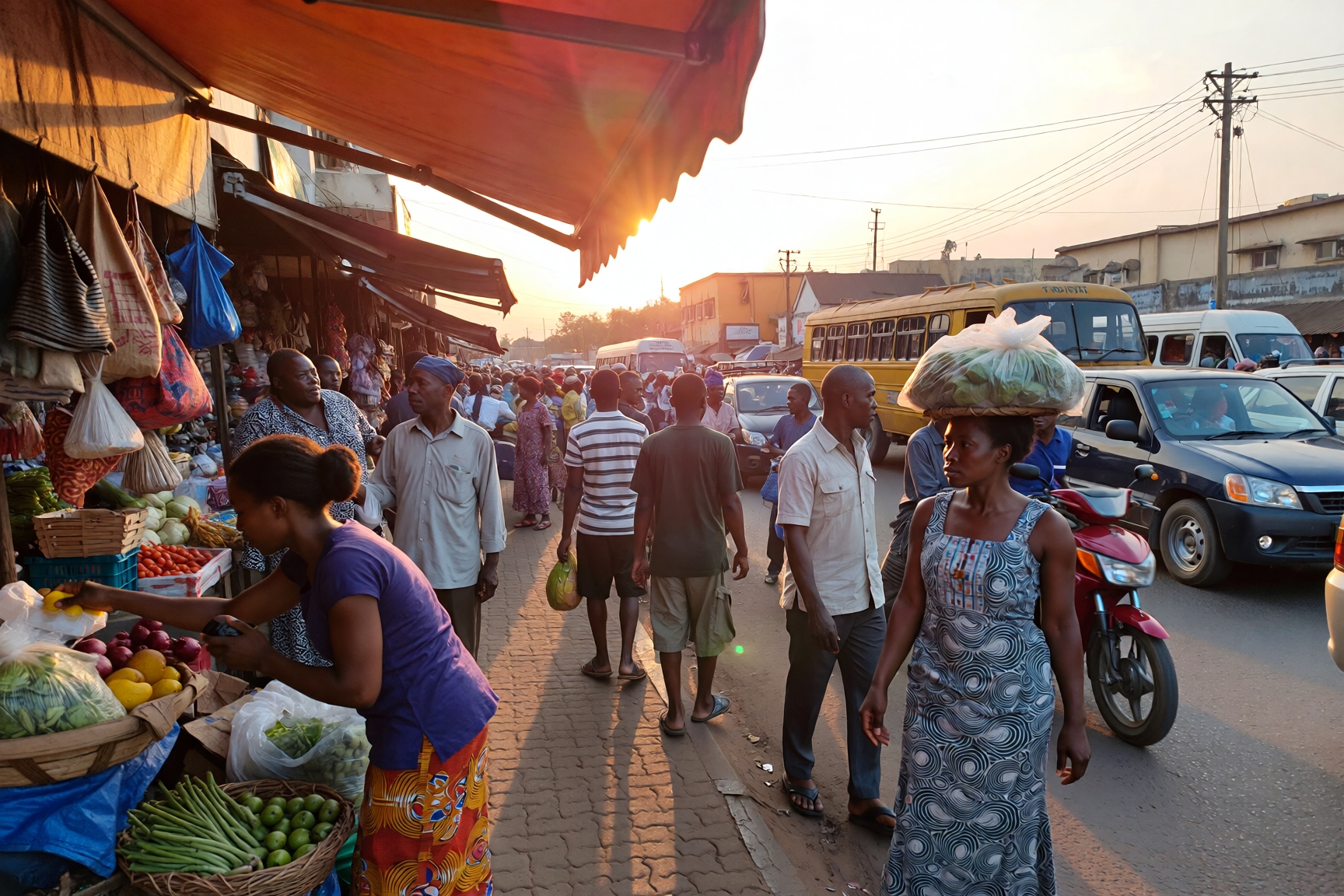
Transport in major cities is chaotic but functional. Lagos traffic can turn a 10-kilometre journey into a two-hour ordeal. Guardian Nigeria reported that deteriorating economic conditions have made even basic movement expensive, with transport costs consuming 20-30% of many workers’ income.
What Economic and Security Challenges Define Nigerian Life Today?
If you want to understand what problems Nigeria faces now, start with this: the country is experiencing simultaneous economic, security, and governance crises that compound each other in devastating ways.
The economic situation has deteriorated markedly since 2023. Fuel subsidy removal in May 2023 triggered inflation that peaked above 30%, whilst the naira collapsed from ₦450 to over ₦1,750 per dollar. These twin shocks decimated purchasing power overnight.
I spoke with Mr. Ibrahim, a teacher in Kano. His salary of ₦95,000 bought his family a comfortable life in 2022. Today, that same ₦95,000 barely covers food. Rice that cost ₦25,000 per bag now sells for ₦95,000. Transport that cost ₦200 now costs ₦800. His real income has fallen by more than 60%, yet his nominal salary hasn’t changed.
The Central Bank of Nigeria documented how rising food prices have created an affordability crisis affecting millions. Food inflation exceeded 40% in 2024, making basic nutrition increasingly unaffordable for ordinary families.
Security concerns vary by region but affect everyone. In the Northeast, Boko Haram insurgency continues despite military operations spanning over a decade. In the Northwest, bandit groups kidnap for ransom, forcing villages to pay protection money. In the Southeast, separatist tensions and unknown gunmen attacks create climate of fear.
Even relatively peaceful areas aren’t immune. Kidnapping has become so common that middle-class Nigerians now avoid certain roads, hire security for family events, and constantly assess risk before travelling. This psychological burden is exhausting.
The Radio Nigeria Government Portal reported that 133 million Nigerians live in multidimensional poverty, experiencing deprivations in health, education, living standards, work, and security simultaneously.
Yet somehow, Nigeria’s informal economy keeps churning. Markets overflow with goods. Street vendors sell everything imaginable. Entrepreneurs find gaps and fill them. This economic activity happens despite infrastructure failures, not because of functioning systems.
Corruption adds another layer of difficulty. Government officials demand bribes for basic services. Police checkpoints become money-collection points. Business permits require unofficial payments. This corruption tax makes everything more expensive and demoralising.
Climate change is reshaping agricultural livelihoods. Flooding in Delta communities, desertification in the North, and erratic rainfall everywhere are forcing rural-urban migration and creating new pressures in already overcrowded cities.
Living Standards Across Different Nigerian Regions
| Region | Average Monthly Income | Electricity Hours/Day | Access to Clean Water | Primary Security Concern | Food Cost (Family of 5) |
|---|---|---|---|---|---|
| South-West (Lagos) | ₦120,000-₦180,000 | 8-12 hours | 45% piped water | Armed robbery, traffic | ₦150,000-₦200,000 |
| South-East (Enugu) | ₦85,000-₦130,000 | 6-10 hours | 35% piped water | Unknown gunmen, kidnapping | ₦120,000-₦160,000 |
| South-South (Port Harcourt) | ₦100,000-₦150,000 | 10-14 hours | 40% piped water | Cultism, oil theft | ₦130,000-₦180,000 |
| North-Central (Abuja) | ₦110,000-₦200,000 | 10-16 hours | 55% piped water | Kidnapping on highways | ₦140,000-₦190,000 |
| North-West (Kano) | ₦70,000-₦110,000 | 4-8 hours | 30% piped water | Banditry, kidnapping | ₦100,000-₦140,000 |
| North-East (Maiduguri) | ₦65,000-₦100,000 | 3-6 hours | 25% piped water | Insurgency, displacement | ₦95,000-₦130,000 |
This table shows remarkable regional disparities in living standards, with Northern regions generally experiencing lower incomes, worse infrastructure, and more severe security challenges whilst bearing higher food costs relative to income.
Is Nigeria Actually a Decent Place to Call Home?
The question “is Nigeria a nice country to live in” deserves a more honest answer than you’ll typically find. The truthful response is: it depends entirely on who you are, what resources you have, and what you’re comparing it to.
For Nigeria’s upper class (probably 5-10% of the population), life can be quite comfortable. They live in gated estates with private security, 24-hour generator power, boreholes for water, and children in international schools. They travel abroad frequently, access excellent private healthcare, and insulate themselves from most infrastructure failures. Their Nigeria is genuinely pleasant.
For the emerging middle class (another 15-20%), life is a constant hustle. They work multiple jobs, navigate failing infrastructure daily, and worry constantly about slipping backwards economically. They experience Nigeria as exhausting but still offering possibilities if they work hard enough and get lucky.
For the remaining 60-70% living in poverty or near-poverty, Nigeria is relentlessly difficult. Every day brings choices between buying medicine or food, paying school fees or rent, risking bad roads or missing work. Yet even here, I’ve found remarkable resilience and community support that sustains people through hardship.
What makes Nigeria potentially liveable despite challenges? Several things stood out during my research.
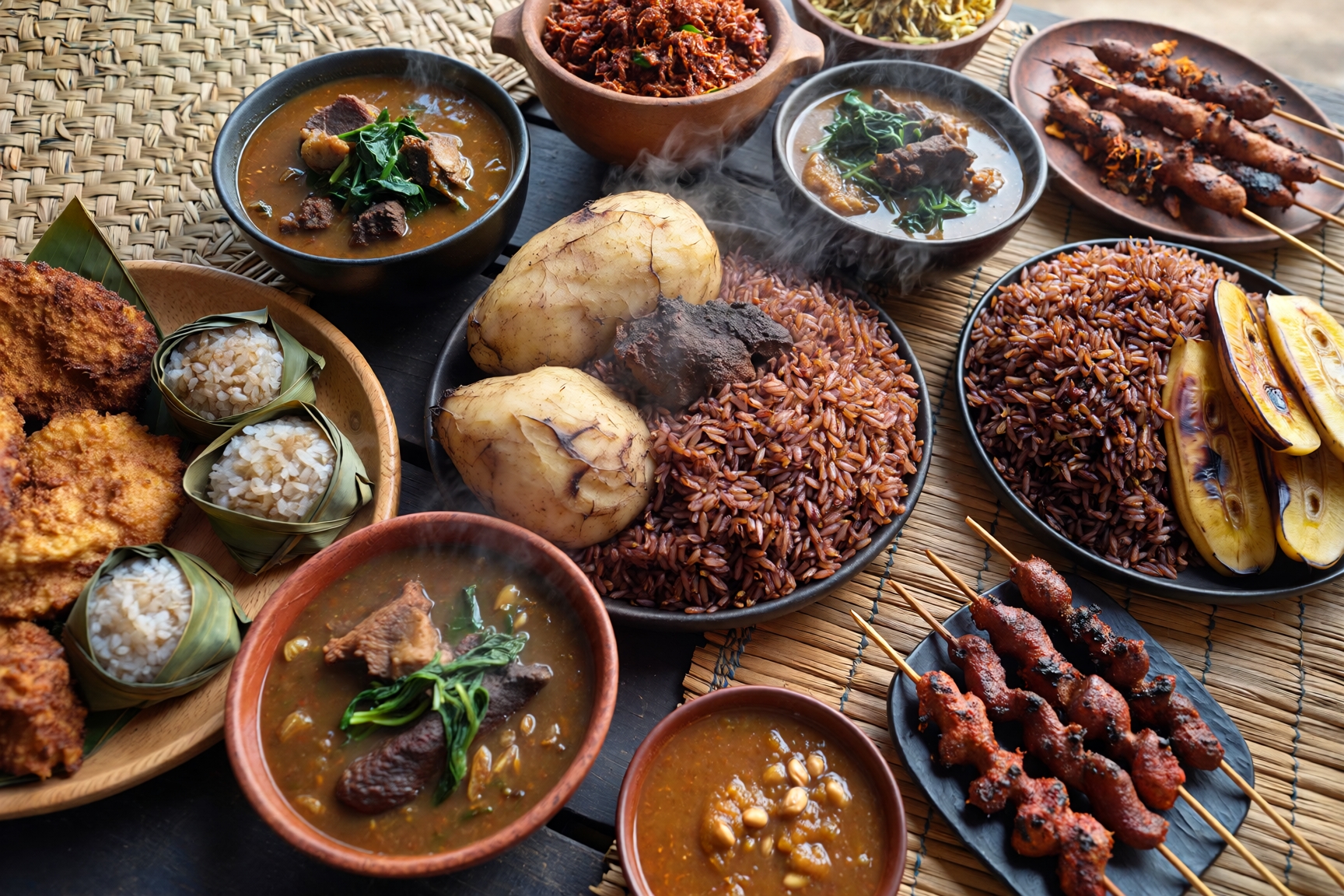
The food is exceptional. Nigerian cuisine rivals any on earth, with regional specialities that showcase incredible culinary creativity. From jollof rice debates to suya at midnight, food culture brings joy that transcends economic hardship.
The social connections are deep. Nigerian society remains intensely communal. Family and friend networks provide support systems that would be unthinkable in more individualistic cultures. You’re rarely truly alone here.
The cultural richness is astounding. Nollywood produces more films than Hollywood. Afrobeats dominates global music charts. Nigerian literature wins international prizes. Fashion designers create world-class work. This creative energy makes Nigeria exciting to experience.
The entrepreneurial spirit is unmatched. Faced with infrastructure that barely functions, Nigerians create solutions. Need power? There’s a generator market. Need water? Vendors deliver it. Need transportation? Okada riders fill the gap. This adaptability is genuinely impressive.
But I’d be dishonest if I didn’t acknowledge the severe downsides. The infrastructure failures aren’t charming quirks; they’re expensive, dangerous, and exhausting. The security concerns aren’t exaggerated; kidnapping, armed robbery, and violence are real risks. The economic hardship isn’t temporary; it’s been worsening for years with no clear turnaround in sight.
Guardian Nigeria’s economic analysis revealed a troubling truth: whilst economists debate whether the economy is “stable”, over 70% of Nigerians risk spending their entire lives below the poverty line if current growth rates continue.
Young Nigerians particularly struggle with this reality. University graduates face unemployment rates exceeding 40%. Those who find work often earn ₦50,000 to ₦70,000 monthly, barely enough for basic survival in major cities. This has fuelled massive emigration, with hundreds of thousands leaving annually seeking better opportunities abroad.
Who Are Nigerians and What Shapes Their Character?
Understanding what people are like in Nigeria requires appreciating both diversity and common threads that unite 230 million individuals across 371 ethnic groups.
Nigerians are intensely social. Solitude is viewed with suspicion. The question “how are you?” expects a real answer, not a quick “fine”. Relationships matter more than schedules, which is why “African time” exists (meetings starting an hour late is normal, not rude).
Religion permeates everything. Nigeria splits roughly 50-50 between Muslims (predominantly North) and Christians (mainly South), with traditional religions still practised. You’ll hear “God willing” or “Insha’Allah” punctuating ordinary conversation, see religious stickers on every vehicle, and find people attending services weekly regardless of economic hardship.
Nigerians are phenomenally resilient. They’ve developed coping mechanisms for challenges that would break people elsewhere. Power outage? Everyone has backup plans. Government fails? Communities organise themselves. Economy collapses? People find multiple income streams. This adaptability is both admirable and tragic (it shouldn’t be necessary).
Humour and optimism coexist with hardship. Nigerian comedy is world-class because laughing at absurdity helps people cope. Even discussing terrible situations, you’ll hear jokes. This isn’t denial; it’s survival strategy.
Respect for age and authority runs deep. Younger people greet elders elaborately. Children rarely call parents by name. Hierarchies in families, workplaces, and communities are observed, though this is gradually changing among urban youth.
Education is valued almost religiously. Parents sacrifice enormously for children’s schooling, seeing it as the primary path to better life. This explains why even poor families pay school fees before buying food.
Nigerians are direct and expressive. Emotions show openly. Arguments can seem heated to outsiders but are just passionate discussion. Celebrations are loud, colourful, exuberant affairs (weddings can host 500+ guests).
The hustle mentality dominates. Most Nigerians work multiple jobs or have side businesses. A civil servant might farm weekends, trade currencies evenings, and sell products online. As I detailed in my article on how Nigerians make a living, approximately 66% of working Nigerians are self-employed precisely because waiting for someone else to provide opportunities is unrealistic.
Class consciousness is strong yet fluid. Nigeria has distinct classes (elite, middle, poor) but social mobility, whilst difficult, isn’t impossible. Success stories of people rising from poverty inspire others to keep trying.
Regional differences matter enormously. Northerners and Southerners can feel like different countries. Yoruba, Igbo, Hausa-Fulani cultures have distinct values, communication styles, and social norms. Understanding these differences is crucial for navigating Nigerian society successfully.
Seven Steps to Understanding Contemporary Nigerian Life
If you want to truly grasp what life is like in Nigeria today, here’s a practical framework based on years of observation:
1. Understand the income-expense disconnect. Calculate real purchasing power, not just nominal figures. Someone earning ₦200,000 monthly might sound well-off until you realise rent takes ₦80,000, transport ₦45,000, food ₦90,000, and utilities ₦40,000. They’re actually in deficit, explaining why most Nigerians need multiple income streams.
2. Factor infrastructure costs into every calculation. Official prices don’t reflect reality. A ₦50,000 monthly electricity bill becomes ₦150,000 when you add generator fuel. Rent doesn’t include the ₦300,000 annual generator purchase, water tanker deliveries, or security payments. These hidden costs make everything 2-3 times more expensive than it appears.
3. Recognise security as a daily planning factor. Nigerians constantly assess risk. Which roads are safe? What time is dangerous for travel? Should we hire security for this event? This isn’t paranoia; it’s necessary vigilance that shapes decisions from wedding venues to school locations to business trips.
4. Appreciate the informal economy’s dominance. Official employment statistics miss how most Nigerians actually work. The woman selling vegetables by the roadside, the mechanic operating from a street corner, the tailor working from home, they’re all economically active but invisible in formal metrics. Understanding this informal sector is key to understanding Nigerian economic life.
5. Observe how social networks function as safety nets. Government social services barely exist. Instead, family, ethnic associations, religious congregations, and community groups provide support during illness, unemployment, or disasters. You can’t understand Nigerian survival without understanding these networks.
6. Acknowledge regional inequality. Nigeria isn’t one country economically. Lagos State has infrastructure and opportunities that Zamfara State can’t imagine. Poverty rates in Sokoto exceed 90% whilst Ondo’s are 27%. Any statement about “Nigeria” needs geographic qualification.
7. Study the contradiction between aggregate wealth and individual poverty. As I explored in my analysis of whether Nigeria is rich or poor, Nigeria has Africa’s largest economy (₦277.5 trillion GDP) yet 133 million citizens live in multidimensional poverty. This paradox is the essential Nigerian reality.
Living in Nigeria Today: The Verdict
After all this research and reflection, what’s the actual answer to “what is life like in Nigeria today”?
Life in Nigeria today is characterised by economic hardship affecting over 60% of the population, persistent infrastructure deficits in power and water supply, regional security challenges ranging from insurgency to kidnapping, yet offset by strong social networks, vibrant cultural life, and remarkable individual resilience. Most Nigerians work multiple income streams to survive, navigate daily challenges that would overwhelm less adaptable populations, and maintain surprising optimism despite circumstances that objectively warrant despair.
The economic data is brutal. Inflation exceeding 30%, currency depreciation of over 75%, food prices tripling whilst incomes stagnate, and 129 million people below the poverty line according to Guardian Nigeria’s reporting on World Bank findings. These aren’t abstract statistics; they represent families choosing between medicine and food, children dropping out of school, elderly people going without healthcare.
Yet Nigeria pulses with energy and possibility. Markets overflow with activity. Churches and mosques are full. Music blares from speakers. People laugh, argue, celebrate, and mourn together. Life happens intensely here.
The infrastructure reality is that most Nigerians live without reliable electricity, clean water, decent roads, or accessible healthcare. They’ve created parallel systems to cope: generators for power, tankers for water, okadas for transport, chemists for healthcare. These workarounds function but cost enormously and reinforce inequality.
Security concerns are genuine and widespread. You can’t move freely without risk assessment. Kidnapping affects not just the wealthy but market traders, students, religious leaders. Insurgency has displaced millions. Banditry has made farming impossible in many areas. This insecurity constrains economic activity and quality of life profoundly.
However, the social fabric remains stronger than in many wealthier countries. Extended families function as social safety nets. Communities organise self-help projects when government fails. Religious institutions provide not just spiritual comfort but practical support. This communal spirit sustains people through hardship that would crush more individualistic societies.
The question “is Nigeria a nice place to live” has no universal answer. For those with resources to insulate themselves from infrastructure failures and security risks, Nigeria offers cultural richness, business opportunities, and social connections that make it genuinely appealing. For the majority struggling with poverty, unreliable services, and daily survival challenges, Nigeria is exhausting and often heartbreaking whilst still being home.
Key Takeaways for Understanding Nigerian Life
- Economic reality: Most Nigerians require 2-3 income sources to survive as single formal employment rarely covers basic expenses, with 133 million people living in multidimensional poverty whilst navigating inflation above 30% and currency that has lost over 75% of its value since 2023.
- Infrastructure adaptation: Daily life involves constant workarounds for failed systems including spending ₦40,000-₦100,000 monthly on generator fuel for power, ₦15,000-₦30,000 on water deliveries, and ₦30,000-₦80,000 on transport due to poor public options, making actual cost of living 2-3 times higher than official prices suggest.
- Resilience and community: Despite severe challenges, Nigerians maintain strong social networks providing safety nets government doesn’t, vibrant cultural life offering psychological sustenance, and entrepreneurial creativity generating income opportunities in impossible circumstances, creating quality of life that statistics alone cannot capture.
Related Insights on Nigerian Life
Understanding contemporary Nigerian life requires examining both how people earn their living and the broader economic context shaping their opportunities. My previous research into how the average person makes a living in Nigeria reveals that approximately 66% of working Nigerians are self-employed, combining multiple income streams rather than relying on single formal employment. This hustling mentality isn’t a choice but a necessity in an economy where formal jobs are scarce and salaries rarely cover basic expenses.
The broader question of whether Nigeria is rich or poor provides essential context for understanding why Africa’s largest economy by GDP still has over 60% of its population living in poverty. The disconnect between aggregate wealth and individual prosperity explains much about daily Nigerian life, where enormous natural resources and economic output coexist with infrastructure failures, service deficits, and limited opportunities for ordinary citizens to share in the nation’s wealth.
FAQ: What is Life Like in Nigeria Today?
What is the current cost of living in Nigeria?
The cost of living in Nigeria has increased dramatically, with basic expenses in Lagos typically requiring ₦250,000 to ₦400,000 monthly for a family of four, covering rent (₦100,000-₦150,000), food (₦120,000-₦180,000), transport (₦40,000-₦60,000), and utilities including generator fuel (₦30,000-₦50,000). Regional variations are substantial, with Northern cities generally 30-40% cheaper than Lagos whilst still consuming most of average incomes that range from ₦65,000 to ₦180,000 monthly depending on location and sector.
How safe is it to live in Nigeria right now?
Safety in Nigeria varies significantly by region, with the Northeast facing ongoing insurgency, the Northwest experiencing widespread banditry and kidnapping, the Southeast dealing with separatist tensions and unknown gunmen, whilst the Southwest remains relatively safer though still experiencing armed robbery and occasional kidnapping, particularly along highways. Most Nigerians adapt by avoiding certain areas, travelling only during daylight, hiring private security for events, and maintaining heightened situational awareness, with urban middle-class families spending ₦20,000 to ₦50,000 monthly on additional security measures.
What is the job market like in Nigeria today?
Nigeria’s job market is severely constrained, with youth unemployment exceeding 40% and most formal job openings receiving hundreds of applications for single positions, forcing approximately 66% of working Nigerians into self-employment in agriculture, trading, or services that require minimal capital but generate unstable income. University graduates often wait 2-5 years for formal employment whilst surviving through multiple informal income streams, with entry-level formal sector positions typically paying ₦50,000 to ₦100,000 monthly, barely enough for survival in major cities like Lagos or Abuja.
How is the power supply situation in Nigeria?
Electricity supply in Nigeria remains critically unreliable, with most areas receiving 4-12 hours daily whilst some regions experience days without power, forcing households and businesses to depend on generators that cost ₦200,000 to ₦500,000 to purchase plus ₦30,000 to ₦100,000 monthly in fuel at current prices exceeding ₦1,000 per litre. This infrastructure failure effectively doubles or triples energy costs for ordinary Nigerians whilst constraining economic productivity, with small businesses reporting that generator fuel often exceeds rent as their second-highest operating expense after staff salaries.
What are the biggest challenges facing Nigerians today?
The most pressing challenges facing Nigerians today include severe economic hardship with inflation above 30% and real wages declining by 50-60% since 2023, making food and basic necessities increasingly unaffordable for families earning stagnant salaries. Security threats ranging from insurgency and banditry to kidnapping and armed robbery constrain movement and economic activity across multiple regions, whilst infrastructure deficits in electricity, water, healthcare, and transportation force citizens to spend enormous amounts creating private alternatives to services governments should provide.
How much does food cost in Nigeria now?
Food prices in Nigeria have approximately tripled since 2022, with a 50kg bag of rice now costing ₦90,000 to ₦110,000 compared to ₦25,000 previously, beans at ₦90,000 per bag, vegetable oil at ₦7,000 per 5-litre container, and a live chicken at ₦8,000 to ₦12,000 depending on size and location. A family of five typically spends ₦100,000 to ₦200,000 monthly on food depending on region and dietary preferences, with many families reducing meat consumption, eating fewer meals, or switching to cheaper alternatives as food inflation exceeding 40% outpaces income growth for most Nigerians.
Is healthcare accessible in Nigeria?
Healthcare accessibility in Nigeria is severely limited, with public hospitals often lacking basic medicines, equipment, and adequate staffing whilst charging ₦5,000 to ₦20,000 for consultations, forcing middle-class Nigerians to use private hospitals that charge ₦50,000 for doctor visits plus expensive diagnostic tests and medications. Many Nigerians delay seeking care due to cost, rely on chemists for self-medication, or turn to traditional healers, whilst the wealthy travel to India, Dubai, or London for serious medical treatment, highlighting extreme inequality in health outcomes that sees Nigeria ranking among the world’s worst for maternal and child mortality rates.
What is the education system like in Nigeria?
Nigeria’s education system is deeply stratified, with wealthy families paying ₦500,000 to ₦5 million annually per child for quality private schools with proper facilities and trained teachers, middle-class families stretching to afford mid-range private schools charging ₦200,000 to ₦800,000, whilst the majority attend underfunded public schools with overcrowded classrooms (often 80+ students), poorly paid teachers, and minimal learning materials. University education faces similar challenges including frequent strikes, outdated curricula, and deteriorating infrastructure, yet remains highly valued with fierce competition for admission and parents making enormous sacrifices for children’s educational advancement.
How do Nigerians cope with infrastructure failures?
Nigerians have developed extensive coping mechanisms for infrastructure failures, creating parallel private systems including generator networks for power (costing ₦30,000 to ₦100,000 monthly in fuel), water tanker deliveries (₦15,000 to ₦30,000 monthly), private security arrangements, and informal waste collection services. Businesses invest heavily in backup systems that can cost more than the primary service would in functioning economies, whilst individuals develop multiple income streams to afford these workarounds, though this adaptation comes at enormous financial and psychological cost whilst reinforcing inequality between those who can afford alternatives and those who cannot.
What is the political situation like in Nigeria?
Nigeria’s political situation is characterised by weak governance, widespread corruption, and citizens’ deep cynicism about political leadership following decades of unfulfilled promises and mismanagement of national resources. The 2023 elections saw high voter registration but also allegations of irregularities, whilst ongoing economic reforms including fuel subsidy removal and currency floatation have worsened living conditions for most citizens, triggering protests and strikes even as government officials maintain these policies are necessary for long-term stability despite offering little immediate relief to suffering populations.
How are social relationships different in Nigeria?
Social relationships in Nigeria are intensely communal and hierarchical, with extended family networks functioning as primary support systems that can span hundreds of people requiring financial obligations during celebrations, funerals, and emergencies. Age-based respect protocols remain strong, religious communities provide both spiritual comfort and practical assistance, and ethnic identity shapes social networks in ways unfamiliar to more individualistic societies, whilst urban migration and economic pressure are gradually weakening these traditional bonds particularly among younger, educated Nigerians navigating modern career demands.
What is transportation like in Nigerian cities?
Transportation in Nigerian cities combines chaotic informal systems with minimal formal infrastructure, featuring motorcycle taxis (okada) charging ₦300 to ₦800 per trip, shared minibuses (danfo) that cost ₦200 to ₦500, private car hires (Uber/Bolt) at ₦1,000 to ₦5,000 depending on distance, whilst traffic congestion in Lagos can extend 10-kilometre journeys to two hours during peak periods. Poor road conditions, aggressive driving, and minimal traffic enforcement create significant accident risks, whilst transport costs consume 20-30% of many workers’ income as the wealthy rely on private vehicles and drivers whilst the majority squeeze into crowded public transport or walk long distances to save money.