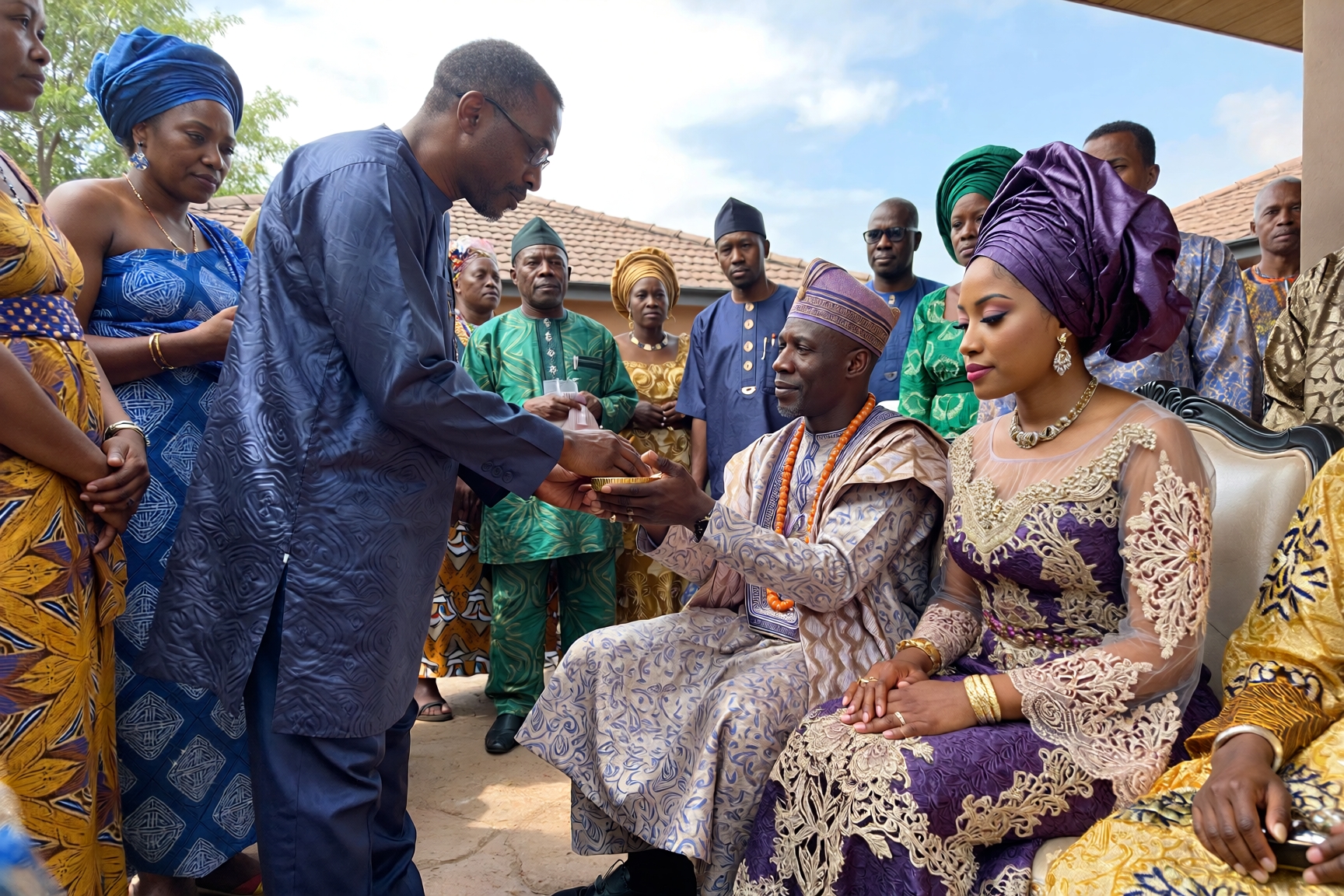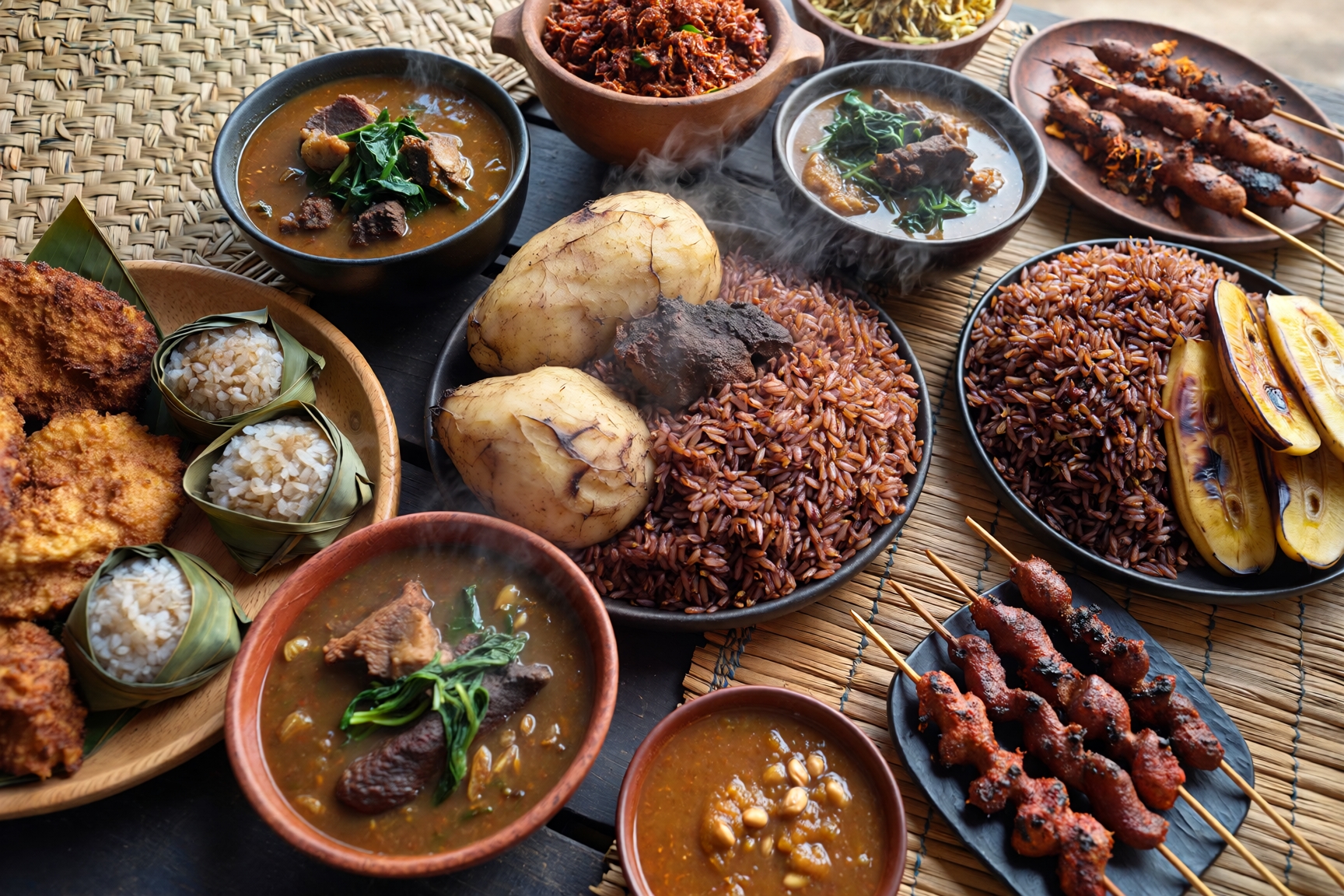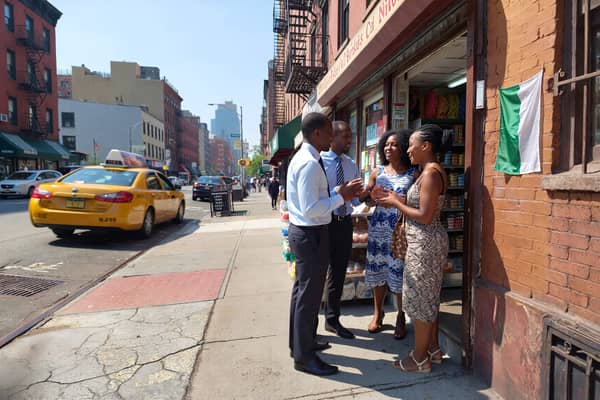
Welcome, friend. Pull up a seat whilst I share what I’ve learnt from months of research across New York’s five boroughs and years of experience studying Nigerian diaspora settlement patterns. Understanding where Nigerians live in NYC requires more than glancing at census data. It demands walking through neighbourhoods, attending owambe parties in church halls, and listening to stories from first-generation immigrants who’ve built thriving communities in the world’s most diverse city.
This article represents the culmination of extensive fieldwork documenting how Nigerian immigrants have shaped particular neighbourhoods across Brooklyn, Queens, and the Bronx, creating vibrant cultural enclaves that maintain ties to home whilst embracing American opportunity.
Where Do Most Nigerians Live in New York City?
Nigerians in New York primarily concentrate in three boroughs. The Bronx leads with over 70,000 African-born immigrants including substantial Nigerian populations, followed by Brooklyn with established communities in East Flatbush and Flatbush, and Queens with growing settlements in Jamaica and Queens Village.
The pattern isn’t random. Rather like water flowing downhill, Nigerian immigrants gravitate toward neighbourhoods where earlier settlers established churches, markets, and social networks. According to the Nigerians in Diaspora Commission, Houston Texas claims the title of America’s Nigerian capital, but New York’s 50,000 to 65,000 Nigerian residents create the most diverse Nigerian community in any single metropolitan area.
Brooklyn attracted early waves during the 1970s and 1980s. These pioneers established footholds in neighbourhoods like Crown Heights and Flatbush, creating networks that still draw newcomers today. I’ve watched families arrive at JFK with just addresses scribbled on paper, heading straight to Nigerian-owned boarding houses in East Flatbush where landlords speak their language and understand their needs.
The Bronx tells a different story. African immigrants represent 10 percent of all immigrants in this borough (compared to just four percent citywide). Neighbourhoods like Highbridge, Tremont, Morrisania, and Parkchester host thriving Nigerian communities alongside Ghanaians, Senegalese, and Malians. You’ll find Nigerian markets wedged between Dominican barbershops, Nigerian churches sharing spaces with Caribbean congregations, and the unmistakable aroma of suya wafting from restaurants along Tremont Avenue.
Queens rounds out the top three. Jamaica, Queens Village, and parts of southeastern Queens attract Nigerian professionals drawn by relatively affordable housing and excellent public transport connections to Manhattan’s financial district. The borough’s diversity appeals to Nigerians accustomed to multicultural environments. Nobody blinks when you speak Yoruba on the subway or wear traditional attire to Sunday service.
Finding Nigerian Communities: A Seven-Step Guide
Understanding where Nigerians congregate requires more than consulting maps. Let me walk you through the practical steps that actually work.
1. Follow the Churches
Nigerian churches serve as community anchors. Start with Redeemed Christian Church of God branches, Deeper Life Bible Church congregations, and Catholic parishes with large West African attendance. These institutions often operate Nigerian cultural centres, host marketplace events, and maintain community bulletin boards advertising housing, employment, and social services. Churches in the Bronx’s Parkchester neighbourhood and Brooklyn’s Flatbush area draw Nigerians from across the metropolitan area every Sunday.
2. Locate African Markets and Restaurants
Nigerian grocers cluster in specific neighbourhoods. In the Bronx, visit African markets in Mount Hope and Mott Haven selling stockfish, egusi, palm oil, and other staples. Brooklyn’s Flatbush Avenue features numerous West African shops. These aren’t just grocery stores; they’re informal community centres where newcomers gather information, make connections, and find housing leads. Restaurant owners often know which buildings have Nigerian landlords or which neighbourhoods welcome African immigrants.
3. Connect Through Professional Networks
The National Bureau of Statistics reports that Nigerian Americans achieve the highest educational attainment rates among African immigrant groups. Professional associations like Nigerian-American healthcare groups, engineering societies, and legal forums concentrate in specific neighbourhoods near members’ workplaces. Manhattan’s Nigerian professionals often reside in the Bronx or Brooklyn, commuting daily to jobs in Midtown, Wall Street, or hospital complexes.
4. Check Public Housing Clusters
Affordable housing availability shapes settlement patterns dramatically. New York City Housing Authority developments in the Bronx (particularly Morrisania and Highbridge), Brooklyn (East Flatbush), and Queens (Jamaica) house significant Nigerian populations. These developments offer below-market rents crucial for newly arrived immigrants building their American lives. I’ve interviewed engineers living in NYCHA apartments whilst saving for down payments, doctors completing residencies sharing two-bedroom flats with relatives, and entrepreneurs operating businesses from rent-stabilised units.
5. Follow Language Patterns
The Council on Foreign Relations mapped New York neighbourhoods by third most-common languages (after English and Spanish). Igbo and Yoruba speakers appear in north, central, and south Bronx neighbourhoods including Woodlawn, Eastchester, Mott Haven, and Hunts Point. This linguistic clustering creates comfort zones for newcomers who can conduct daily business in their mother tongues.
6. Track Chain Migration Routes
Nigerian immigration follows family networks. One person settles, then sponsors relatives through family reunification programmes. Over decades, this creates neighbourhood concentrations where entire extended families reside within blocks of each other. Prince George’s County, Maryland exemplifies this pattern (though outside NYC), but similar dynamics operate in specific Bronx and Brooklyn neighbourhoods where Yoruba families dominate certain apartment complexes or Igbo networks control particular streets.
7. Monitor Cultural Events and Festivals
Nigerian Independence Day celebrations, Yoruba cultural festivals, Igbo community gatherings, and Hausa-Fulani Islamic events reveal concentration patterns. These events rotate between neighbourhoods but consistently draw crowds to areas with sufficient Nigerian populations to support them. The Bronx Islamic Cultural Center, numerous Brooklyn churches, and Queens community centres host regular Nigerian cultural programmes that map community boundaries.
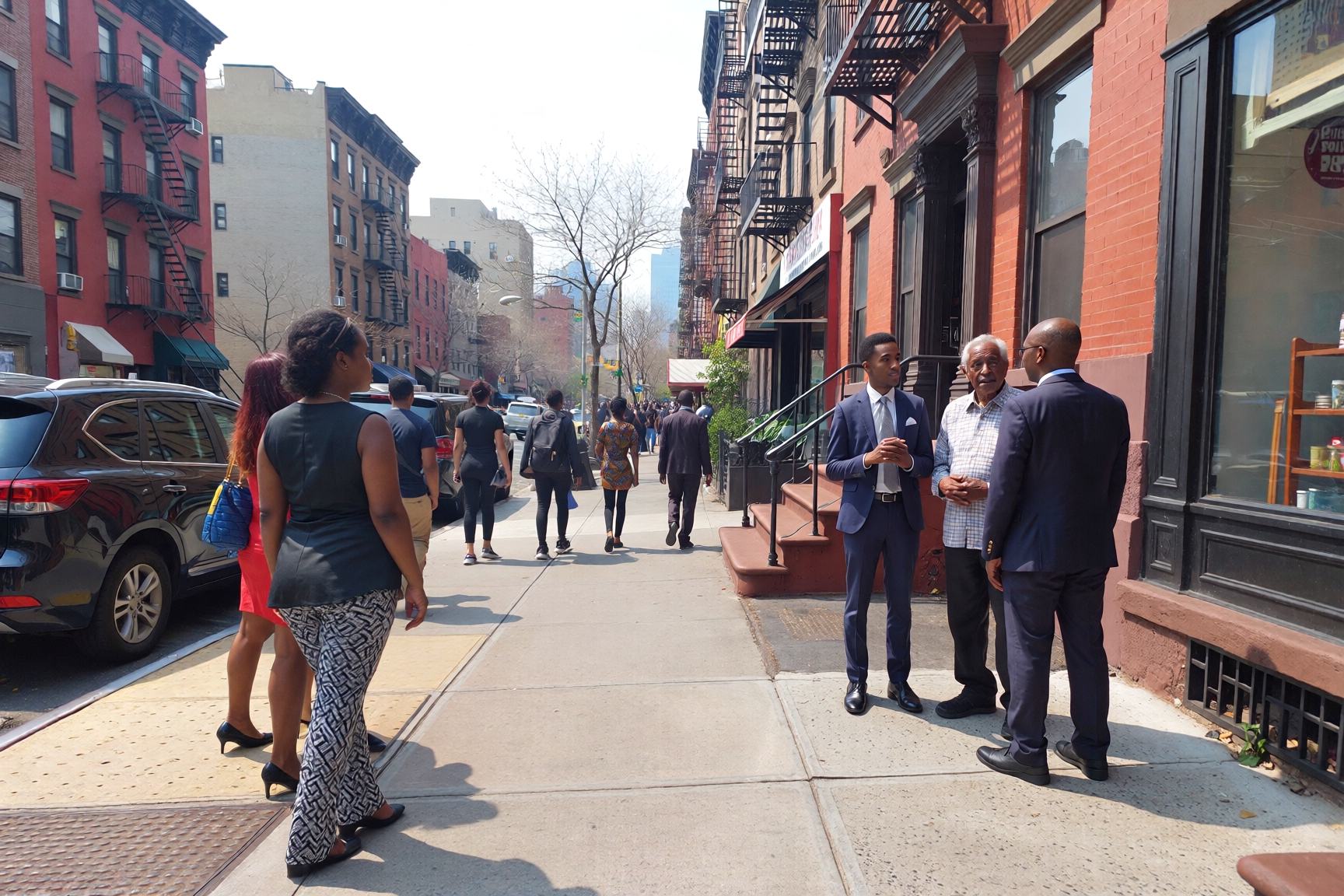
Understanding NYC’s Broader African Immigration Context
NYC’s Largest Immigrant Communities Overview
New York City hosts approximately 3 million foreign-born residents representing 36 percent of the total population. Where do Nigerians fit within this massive immigrant landscape?
The Dominican Republic claims the largest immigrant group with 391,500 residents concentrated in northern Manhattan and spreading throughout the Bronx. China follows with 342,100 immigrants establishing three distinct Chinatowns in Manhattan, Queens (Flushing), and Brooklyn. Jamaica ranks third with substantial populations in southeastern Queens, central Brooklyn, and northern Bronx neighbourhoods. Mexico and Ecuador complete the top five.
African immigrants represent approximately four percent of New York’s foreign-born population. But that modest percentage masks significant growth and geographic concentration. Whilst citywide African immigration remains relatively small, certain neighbourhoods transform into distinctly African spaces.
Nigerian immigrants contribute significantly to this African presence. Ethiopia technically claims more total US immigrants than Nigeria, but New York’s Nigerian community concentrates more densely in specific boroughs than Ethiopian immigrants disperse nationwide. Moreover, when counting total diaspora populations including descendants (not just foreign-born individuals), Nigeria’s numbers rival or exceed Ethiopia’s totals.
The National Population Commission works with diaspora organisations to accurately count Nigerians abroad. Their data suggests approximately 17 million documented Nigerians live in diaspora globally, with substantial American concentrations beyond just New York.
H3: NYC Borough Distribution of Nigerian Population
Understanding where Nigerians settle requires examining borough-specific data:
| Borough | Estimated Nigerian Population | Key Neighbourhoods | Primary Characteristics | Average Monthly Rent (1-Bedroom) |
|---|---|---|---|---|
| Bronx | 25,000-30,000 | Highbridge, Tremont, Morrisania, Parkchester, Mott Haven | Highest African immigrant concentration, extensive market networks, affordable housing | ₦350,000-₦550,000 ($800-$1,250) |
| Brooklyn | 15,000-20,000 | East Flatbush, Flatbush, Crown Heights | Established communities since 1970s-80s, Caribbean integration, cultural institutions | ₦550,000-₦900,000 ($1,250-$2,000) |
| Queens | 10,000-15,000 | Jamaica, Queens Village, Southeastern Queens | Professional families, suburban character, excellent transit | ₦500,000-₦800,000 ($1,100-$1,800) |
| Manhattan | 3,000-5,000 | Harlem, Washington Heights | Limited due to high costs, mostly professionals | ₦1,000,000-₦2,200,000 ($2,300-$5,000) |
| Staten Island | <1,000 | Scattered | Minimal presence, isolated families | ₦650,000-₦1,000,000 ($1,500-$2,300) |
This data reveals clear patterns. The Bronx’s combination of affordable housing, existing African infrastructure, and community support makes it Nigerian immigrants’ primary destination. Brooklyn’s higher rents reflect more established, middle-class Nigerian communities with property ownership and business investment. Queens attracts upwardly mobile Nigerian families seeking suburban characteristics whilst maintaining city access. Manhattan’s prohibitive costs limit Nigerian settlement to highly successful professionals and students at Columbia or other universities. Staten Island remains largely outside Nigerian settlement patterns due to geographic isolation and lack of community infrastructure.
Which US Cities Host the Most Nigerian Immigrants?
Understanding New York’s position requires national context. Houston, Texas claims the title of America’s “Nigerian capital” with approximately 35,000-45,000 Nigerian residents drawn by the energy sector’s petroleum engineering opportunities. The city’s Nigerian community developed such extensive infrastructure (churches, restaurants, cultural organisations, business networks) that newcomers can thrive without leaving Nigerian circles.
Maryland ranks second nationally, hosting 60,000-75,000 Nigerian immigrants concentrated in Prince George’s County and suburbs surrounding Washington, D.C. Federal government employment, international organisations, and professional services attract educated Nigerians. Rather like Houston’s energy sector creating sector-specific migration, D.C.’s government and diplomatic roles draw Nigerians into policy, international development, and civil service careers.
New York state claims third place with 50,000-65,000 Nigerian residents. However, New York’s Nigerian community differs fundamentally from Houston’s or Maryland’s. Whilst those metros concentrate Nigerians in specific industries or governmental sectors, New York’s Nigerians work across finance, healthcare, technology, education, retail, transportation, and countless other fields. This economic diversity creates a more varied community without single dominant employment sector.
California follows with 45,000-60,000 Nigerian immigrants primarily in Los Angeles, San Francisco, and San Diego. Silicon Valley attracts Nigerian engineers and entrepreneurs, whilst the state’s general economic diversity and established immigrant communities provide settlement support. Georgia rounds out the top five with 35,000-55,000 Nigerians concentrated in metropolitan Atlanta, drawn by the city’s Black American cultural prominence, business opportunities, lower cost of living compared to coastal cities, and growing Nigerian community.
According to Guardian Nigeria’s comprehensive analysis, approximately 460,000-500,000 Nigerian-born individuals reside in the United States, with total diaspora populations (including descendants) reaching 700,000-850,000 people. This makes Nigerian Americans one of the most successful and educated immigrant demographics in the country.
The Bronx: Nigerian Immigration’s New York Hub
Let me be direct. If you’re Nigerian and moving to New York, someone will tell you about the Bronx. Probably multiple someones.
The Bronx houses the city’s largest African immigrant concentration. Over 70,000 African-born residents call this borough home, significantly exceeding African populations in other boroughs. Nigerian immigrants represent a substantial portion of this community alongside Ghanaians, Senegalese, Malians, Guineans, and other West Africans.
Specific neighbourhoods dominate Nigerian settlement patterns. Highbridge, located in the western Bronx near Yankee Stadium, hosts numerous Nigerian families attracted by affordable housing in pre-war apartment buildings and proximity to Manhattan via the 4 train. The 2007 fire that killed 10 Malian immigrants (mostly children) in Highbridge revealed the density of West African settlement in specific buildings.
Tremont (particularly around Tremont Avenue) features African markets selling Nigerian groceries, restaurants serving jollof rice and suya, and hair-braiding salons owned by Nigerian women. You can walk Tremont Avenue conducting all your errands in Yoruba or Igbo. Morrisania, Morris Heights, and South Fordham similarly host thriving Nigerian communities with churches, Islamic centres, and businesses serving community needs.
Parkchester, a massive 1940s apartment complex in the eastern Bronx, attracts Nigerian professionals seeking affordable middle-class housing. The development’s 12,000 apartments house multiple generations of African immigrant families. I’ve interviewed Nigerian doctors, engineers, and entrepreneurs who raised American-born children in Parkchester whilst maintaining cultural connections through nearby churches and community organisations.
The Bronx Islamic Cultural Center serves as a community anchor for Nigerian Muslims alongside other West African Muslims. Christian Nigerians established numerous churches across the borough, creating parallel institutional networks that maintain cultural identity whilst facilitating American integration.
Why does the Bronx attract such large Nigerian populations? Economics drives the pattern. The borough offers the most affordable housing in New York City, crucial for immigrants building wealth to send remittances home, save for business ventures, or eventually purchase property. One-bedroom apartments rent for approximately ₦350,000-₦550,000 monthly (£800-£1,250), dramatically less than Brooklyn or Queens equivalents.
Brooklyn’s Established Nigerian Communities
Brooklyn represents Nigerian immigration’s mature phase in New York. Communities here trace back to the 1970s and 1980s when Caribbean and African immigrants began settling in historically Black neighbourhoods experiencing white flight.
Flatbush and East Flatbush form Brooklyn’s Nigerian heartland. These adjacent neighbourhoods stretch south from Prospect Park to the Brooklyn College area, bounded roughly by Flatbush Avenue and Utica Avenue. Walk down Flatbush Avenue and you’ll encounter Nigerian restaurants, Caribbean grocers selling Nigerian products, hair-braiding salons advertising Yoruba services, and churches with West African congregations.
The neighbourhood’s Caribbean character (particularly Trinidadian, Guyanese, and Jamaican) creates cultural synergies with Nigerian immigrants. Food traditions overlap, religious practices share commonalities, and Black immigrant experiences create solidarity despite different national origins. I’ve watched Nigerian families integrate seamlessly into historically Caribbean blocks, with children playing together and adults sharing resources.
Crown Heights, located north of Flatbush, hosts a smaller but significant Nigerian population integrated into this neighbourhood’s complex ethnic dynamics. The area’s mix of Caribbean immigrants, Orthodox Jews, and gentrifying white residents creates unique cultural juxtaposition. Nigerian families here often own brownstones purchased decades ago, building generational wealth through property appreciation.
Brooklyn’s Nigerian communities differ from the Bronx’s in crucial ways. More established, with longer residency histories, Brooklyn’s Nigerians demonstrate higher rates of homeownership, business ownership, and middle-class stability. You’ll find Nigerian doctors maintaining private practices, engineers working in established firms, and entrepreneurs operating restaurants, markets, and service businesses.
According to Guardian Nigeria’s coverage of Nigerian cultural spaces, establishments like Lagos Restaurant and Lounge in Manhattan demonstrate how Nigerian culture reaches beyond immigrant enclaves into mainstream New York, but Brooklyn remains the foundation where community institutions first established themselves.
Housing costs in Flatbush and East Flatbush run higher than Bronx equivalents but lower than Queens or Manhattan. One-bedroom apartments typically rent for ₦550,000-₦900,000 monthly (£1,250-£2,000), requiring solid middle-class incomes but remaining accessible for working professionals.
Queens: Where Nigerian Families Plant Roots
Queens represents upward mobility for many Nigerian families. Whilst the Bronx offers affordability and Brooklyn provides established community, Queens attracts Nigerians seeking suburban characteristics within city boundaries.
Jamaica and Queens Village in southeastern Queens host growing Nigerian populations. These neighbourhoods feature single-family homes, quieter streets, better-funded schools, and lower crime rates compared to denser Brooklyn and Bronx areas. Nigerian families with children often prioritise Queens specifically for educational opportunities and safer environments.
The borough’s diversity appeals to Nigerians accustomed to multicultural environments. Queens houses New York’s most ethnically diverse neighbourhoods, where dozens of nationalities coexist. Nigerian families here integrate into truly global communities rather than primarily Black immigrant areas.
Transportation access drives settlement patterns. The E train, J train, and Long Island Rail Road connect southeastern Queens to Manhattan’s financial district, midtown office towers, and hospital complexes where many Nigerian professionals work. Reasonable commute times (45-60 minutes) make Queens residency practical for Manhattan employment.
Housing costs in Queens fall between Brooklyn and Bronx prices. One-bedroom apartments rent for approximately ₦500,000-₦800,000 monthly (£1,100-£1,800), whilst single-family homes for purchase range from ₦150 million to ₦300 million (£350,000-£700,000). These prices attract established immigrant families with dual incomes and American credit histories.
Queens’ Nigerian community demonstrates higher rates of naturalisation and civic participation compared to newer immigrant concentrations. I’ve met Nigerian Americans here who vote in local elections, serve on community boards, and engage with American civic institutions whilst maintaining cultural identity.
Why These Patterns Matter: Understanding Where Nigerians Live in New York
Let me answer the primary question directly. Nigerians in NYC concentrate in three boroughs following distinct patterns shaped by economics, social networks, and community infrastructure.
The Bronx attracts newly arrived immigrants and working-class families seeking affordable housing near established African communities. Brooklyn houses more established Nigerian families with decades of residency, property ownership, and integrated Caribbean-African neighbourhoods. Queens draws upwardly mobile Nigerian professionals and families prioritising education, homeownership, and suburban characteristics.
Together, these three boroughs contain approximately 50,000-65,000 Nigerian residents creating vibrant communities that maintain cultural identity whilst pursuing American opportunity. Manhattan’s high costs limit Nigerian settlement to elite professionals and students, whilst Staten Island remains largely outside Nigerian migration patterns.
This geographic distribution reflects broader immigrant experiences. Rather like Italian immigrants once concentrated in specific neighbourhoods before dispersing, or Jewish immigrants clustered in the Lower East Side before moving to Brooklyn and Queens, Nigerian immigrants follow established patterns of initial concentration, community building, and gradual economic mobility.
Understanding these patterns helps newcomers, supports community organisations targeting services, and illuminates how immigrant groups shape urban landscapes. New York’s Nigerian communities aren’t random. They’re strategic, intentional, and remarkably effective at maintaining cultural identity whilst embracing American opportunity.
Practical Considerations: Finding Nigerian Communities in NYC
If you’re moving to New York and want to connect with Nigerian communities, start with these practical steps.
Research neighbourhoods before committing to housing. Visit during different times (weekends reveal community life better than weekdays). Attend Sunday services at Nigerian churches to meet residents and gather information. These congregations often maintain housing boards, employment networks, and social services specifically for Nigerian immigrants.
Budget realistically. The Bronx offers the most affordable entry point but requires accepting longer commutes and less polished infrastructure. Brooklyn costs more but provides established communities and better amenities. Queens demands the highest initial investment but offers the best long-term prospects for homeownership and children’s education.
Consider employment location carefully. Nigerian professionals working in Manhattan often find Bronx or Brooklyn residency most practical. Those employed in Queens, Long Island, or Brooklyn benefit from Queens residency. Staten Island and New Jersey suburbs remain options but isolate you from community networks.
Connect through professional associations before arrival. Nigerian healthcare workers, engineers, lawyers, and other professionals maintain active networks that provide job leads, housing information, and community connections. These associations often host monthly meetings, annual galas, and networking events that facilitate integration.
Expect chain migration to influence your experience. If relatives or village members already settled in specific neighbourhoods, you’ll likely join them regardless of objective factors favouring other areas. This isn’t weakness; it’s practical wisdom. Established networks provide crucial support during difficult adjustment periods.
Economic Realities: Affording Nigerian Communities in NYC
New York’s cost of living shocks most newcomers. Let me break down realistic budgets.
Housing consumes the largest expense. Bronx one-bedroom apartments renting for ₦350,000-₦550,000 monthly (£800-£1,250) require annual incomes of approximately ₦14.5 million-₦22 million (£33,000-£50,000) to meet standard “30 percent of income” guidelines. Brooklyn and Queens demand higher incomes proportionally.
Transportation adds ₦140,000-₦170,000 monthly (£320-£390) for unlimited MetroCards (£2.90 per ride). Groceries cost approximately ₦220,000-₦350,000 monthly (£500-£800) for Nigerian staples purchased from African markets. Utilities (electricity, gas, internet) average ₦65,000-₦110,000 monthly (£150-£250).
Healthcare represents a significant expense often underestimated by newcomers. Individual health insurance through employers costs approximately ₦85,000-₦220,000 monthly (£200-£500) in premiums, with additional deductibles and co-payments. Family coverage doubles or triples these costs.
The minimum viable income for single Nigerian immigrants living in the Bronx approximates ₦22 million-₦26 million annually (£50,000-£60,000) allowing basic lifestyle, modest remittances to Nigeria, and small savings. Brooklyn or Queens residency requires ₦30 million-₦35 million (£70,000-£80,000) for comparable security.
Dual-income professional families achieve comfortable middle-class lifestyles earning combined ₦44 million-₦65 million annually (£100,000-£150,000), allowing homeownership pursuit, children’s education funding, substantial remittances to Nigeria, and retirement savings.
These figures explain why Nigerian Americans achieve such high educational attainment. Economic necessity drives credential acquisition. Without advanced degrees or professional certifications, achieving stable middle-class status in New York remains difficult. According to the Nigerians in Diaspora Commission, Nigerian Americans maintain average household incomes of £94,030, significantly exceeding both general population averages and most other immigrant groups.
Cultural Institutions: The Foundation of Nigerian NYC Communities
Nigerian churches anchor community life across all three boroughs. Redeemed Christian Church of God operates dozens of parishes throughout New York, with substantial congregations in the Bronx, Brooklyn, and Queens. Deeper Life Bible Church, Winners Chapel, and numerous independent Nigerian-led churches provide worship, social services, and community networks.
These institutions extend far beyond Sunday services. Churches operate credit unions helping members access affordable loans, maintain housing boards advertising apartments with Nigerian landlords, run cultural programmes teaching Nigerian languages and traditions to American-born children, and organise social events that strengthen community bonds. I’ve watched churches mediate disputes between members, provide informal employment services connecting job seekers with Nigerian business owners, and mobilise resources to support members facing emergencies.
Islamic institutions serve Nigerian Muslims similarly. Mosques across the Bronx and Brooklyn host predominantly West African congregations including substantial Nigerian populations. These centres maintain separate but parallel functions to Christian churches, providing worship spaces, cultural programmes, community support, and identity preservation.
Cultural organisations beyond religious institutions include professional associations, hometown associations linking immigrants from specific Nigerian regions, alumni groups from Nigerian universities, and advocacy organisations addressing diaspora concerns. These networks create dense social fabrics supporting immigrants through adjustment challenges whilst maintaining connections to Nigeria.
Media institutions serve diaspora communities. Nigerian-owned newspapers, radio programmes, and increasingly, digital media platforms provide news from home, advertise community services, and discuss issues affecting Nigerian Americans. These outlets simultaneously maintain homeland connections and facilitate American integration.
Linking to Broader Nigerian American Experience
Understanding where Nigerians live in NYC connects to larger questions about Nigerian immigration to America. For deeper exploration of these patterns, consider my comprehensive analyses of which countries host the largest Nigerian populations globally and how many Nigerians live throughout the United States. These articles provide essential context for understanding New York’s Nigerian communities within broader diaspora patterns.
Final Thoughts: Where Nigerians Thrive in New York City
New York’s Nigerian communities represent success stories of immigrant determination, cultural preservation, and economic mobility. From the Bronx’s affordable entry points to Brooklyn’s established middle-class enclaves to Queens’ suburban family neighbourhoods, Nigerian immigrants have carved out spaces that honour heritage whilst pursuing American opportunity.
These communities didn’t emerge randomly. They reflect decades of chain migration, strategic settlement choices, community institution building, and economic calculation. Understanding where Nigerians live in NYC illuminates how immigrant groups transform urban landscapes, create thriving communities despite challenging circumstances, and maintain cultural identity across generations.
Whether you’re Nigerian considering New York migration, a researcher studying immigration patterns, or simply curious about how the world’s most diverse city accommodates newcomers, understanding Nigerian settlement patterns provides valuable insights. These communities continue growing, evolving, and strengthening their positions within New York’s complex ethnic landscape.
The Bronx, Brooklyn, and Queens will remain Nigerian New York’s foundation for decades to come. New neighbourhoods may emerge, economic mobility may shift settlement patterns, and second-generation Nigerian Americans may disperse more widely. But the communities established over the past fifty years have created permanent fixtures in New York’s cultural geography.
Key Takeaways: Understanding Nigerian Settlement in NYC
- The Bronx hosts New York’s largest Nigerian population (25,000-30,000 residents) concentrated in Highbridge, Tremont, Morrisania, and Parkchester, drawn by affordable housing and extensive African community infrastructure
- Brooklyn’s Flatbush and East Flatbush contain established Nigerian communities dating to the 1970s-80s with higher rates of property ownership, business ownership, and middle-class stability integrated alongside Caribbean immigrant populations
- Queens attracts upwardly mobile Nigerian families seeking suburban characteristics, better schools, and homeownership opportunities whilst maintaining access to Manhattan employment through excellent transit connections
Frequently Asked Questions About Where Nigerians Live in NYC
How many Nigerians live in New York City?
Current estimates suggest 50,000 to 65,000 Nigerian-born individuals reside in New York City, concentrated primarily in the Bronx (25,000-30,000), Brooklyn (15,000-20,000), and Queens (10,000-15,000). When including second-generation Nigerian Americans born in the United States, total diaspora numbers in the metropolitan area likely exceed 100,000 people.
Which New York borough has the most Nigerian immigrants?
The Bronx hosts the largest Nigerian population with approximately 25,000-30,000 residents, significantly exceeding Brooklyn’s 15,000-20,000 or Queens’ 10,000-15,000. The Bronx’s combination of affordable housing, established African immigrant infrastructure, and dense community networks makes it the primary destination for Nigerian newcomers to New York.
Why do so many Nigerians live in the Bronx?
Nigerians concentrate in the Bronx primarily due to housing affordability (monthly rents ₦350,000-₦550,000 or £800-£1,250 for one-bedroom apartments), existing African community infrastructure including churches and markets, and chain migration patterns where established residents help relatives settle nearby. The borough offers the most accessible entry point for newly arrived immigrants whilst maintaining proximity to Manhattan employment.
What are the main Nigerian neighbourhoods in Brooklyn?
Flatbush and East Flatbush contain Brooklyn’s largest Nigerian populations, with smaller concentrations in Crown Heights. These neighbourhoods developed as Nigerian settlement areas during the 1970s and 1980s when Caribbean and African immigrants began moving into historically Black neighbourhoods experiencing demographic transitions, creating integrated West Indian and West African communities.
Do Nigerians in Queens live in different types of housing than those in the Bronx?
Yes, Queens Nigerian residents demonstrate significantly higher rates of single-family homeownership compared to Bronx residents who predominantly rent apartments. Queens attracts upwardly mobile Nigerian families with established credit histories, dual incomes, and longer US residency seeking suburban characteristics, better schools, and property ownership opportunities despite higher costs.
Which US city actually has the most Nigerians?
Houston, Texas hosts America’s largest Nigerian population with approximately 35,000-45,000 residents, exceeding New York’s 50,000-65,000 when measuring city proper rather than metropolitan area. However, when including surrounding suburbs, the New York metropolitan area contains similar or potentially larger total Nigerian populations due to extensive settlement in New Jersey suburbs.
Are Nigerian communities in NYC growing or shrinking?
Nigerian communities in New York continue growing, particularly in the Bronx which saw a six percent increase in African immigrant populations between 2010 and 2023. However, growth rates have slowed compared to 1990s-2000s peaks as Canadian immigration policies attract more Nigerian professionals and housing costs limit New York’s accessibility for working-class immigrants.
What is the largest immigrant group in New York City?
Dominican immigrants constitute New York’s largest foreign-born population with 391,500 residents, followed by Chinese immigrants (342,100) and Jamaican immigrants. Nigerians rank significantly lower in absolute numbers but concentrate densely in specific neighbourhoods, creating visible community presence disproportionate to their overall metropolitan population share.
How do Nigerian communities in NYC differ from Nigerian communities in London?
London’s Peckham neighbourhood contains the world’s most concentrated Nigerian community outside Nigeria itself with fully developed Nigerian institutions, whilst New York’s Nigerian population disperses across three boroughs without single dominant enclave. London’s Nigerian immigrants maintain more distinct separate identity, whereas New York’s Nigerians integrate more extensively with broader African and Caribbean immigrant communities.
Can Nigerian immigrants afford Manhattan housing?
Very few Nigerian immigrants reside in Manhattan (approximately 3,000-5,000) due to prohibitive housing costs where one-bedroom apartments rent for ₦1,000,000-₦2,200,000 monthly (£2,300-£5,000). Only highly successful professionals, medical residents at Columbia Presbyterian or other Manhattan hospitals, and graduate students at Columbia or NYU can afford Manhattan residency, with most choosing more affordable Bronx, Brooklyn, or Queens alternatives.
Where do Nigerian students live when studying in New York?
Nigerian students attending New York universities typically reside in campus housing (Columbia, NYU, CUNY) or share apartments with fellow students in neighbourhoods surrounding their campuses. Graduate students and older undergraduates often join established Nigerian communities in the Bronx or Brooklyn, living with relatives or in affordable apartments whilst pursuing degrees.
Do second-generation Nigerian Americans still live in traditional Nigerian neighbourhoods?
Second-generation Nigerian Americans (born in the United States to Nigerian immigrant parents) increasingly disperse beyond traditional settlement areas, moving to suburban areas in Westchester County, Long Island, New Jersey, and Connecticut after completing education and establishing professional careers. However, many maintain connections to Brooklyn and Bronx communities through churches, cultural organisations, and family networks despite residing elsewhere.