
When official sources refuse to clarify matters, they leave room for the gossip mill to peddle insinuations. If left unverified over time, citizens are left to perceive causal conversation as true, since silence is taken as consent. The dangers are that the government and the governed are unable to operate on the same page, a situation that fuels distrust.
Citizens are often left to regard public officials as arrogant, in the manner they carry on as though they do not owe citizens explanation for what they do or fail to do. The Constitution makes it clear that the press shall uphold the responsibility and accountability of the government to the people. Citizens are entitled to express and receive information without interference as provided in Section 39 of the Constitution (1999).
But that never happens without a fight. Government is not willing to share information unless it determines to propagate. The Freedom of Information (FOI) Law provides a window, but that takes a process and time. That tardiness has not helped either government or the people.
There is now a feeling that the political class have captured the state and can do whatever they like. Instead of democracy, governance has tilted towards authoritarianism. There is a growing trust deficit between the people and the government as activities and process are shrouded in secrecy. That leaves a gap for the social media to thrive.
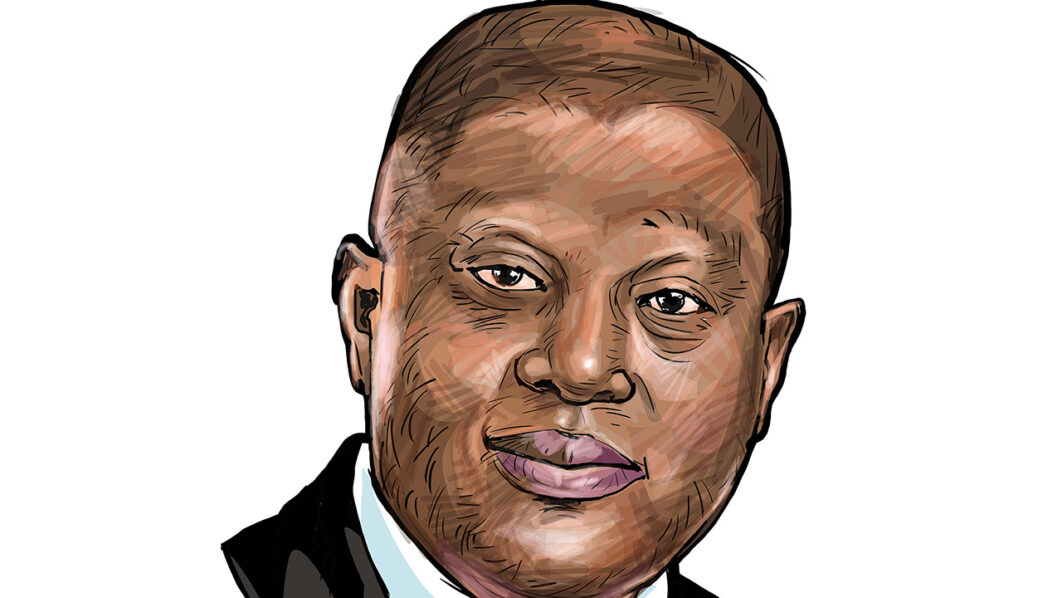
For three weeks, stories have been shared to the effect that the Governor of the Central Bank of Nigeria (CBN), Yemi Cardoso, allegedly hired three consultants without adhering to due process established by law as well as common sense. Two female consultants, Nkiru Balonwu and Daphne Dafinone are alleged to be hired by the governor outside the established rules and with no specific terms of reference and work schedule.
Both are alleged to respectively earn N50 million and N35 million monthly, sums said to be far higher than what directors take home. The N50 million is said to be higher than the governor and deputy governors’ salaries, and the combined monthly pay of 15 directors.
A third consultant, Shola Phillips, is not so much in the eye of the storm because the concerned CBN staff who raised the flag perceive her role as “less disruptive and contentious compared to her two colleagues,” as reported by a credible newspaper.
This story of three consultants was leaked by workers who were offended by action they consider an infraction. Apart from the consultants earning heavier packages, there were said to be enough competent hands to do the jobs they were hired to do. Despite not being part of the bank’s established structure, they reportedly issued directives, using official platforms. They have permanent offices and share the same floor as the governor, while deputy governors don’t enjoy such privilege.
Here is what some staff reportedly said on the matter: “These women are doing nothing. They’re not adding value to the bank. The governor is just enriching them because they are his friends. There are 29 experienced directors, 170 deputy directors, and over 400 PhD holders in CBN. There is no need to domicile consultants in the bank.”
These are weighty statements to be flagrantly paraded in the media. Some social media content makers have even developed the gossip further, letting it go viral in very captivating narrative. It’s a tempting piece of news to believe.
Reputed traditional media platforms have weighed in to separate the facts apart from the juicy sensation. But so far, it appears the CBN is not making an effort to deny the claims. The only condition that could instill such confidence is if the CBN is certain that the story is fake. Even at that, being a public institution, the CBN owes taxpayers the obligation to tell the whole truth. Feeling cocky about it and refusing to clear the air is not a show of valour.
Not comfortable with the open-source nature of the report, one made checks with business and finance reportorial crew, the go-to place for back-end stories from and on the CBN. They should have an idea of the background issues that led to the protest from within against hiring three female consultants. They too weren’t helpful. They agree that hiring consultants has become the norm at the CBN, despite the availability of hundreds of PhD holders as staff, who are knowledgeable in research, analyses and economic modeling.
Some who are familiar with events at the apex bank did not express surprise. They say every new governor comes with his own team to replace the former’s. The reason for this intervention is not to cast aspersion but to caution that this CBN must be prudent. We hear stories of mind boggling allowances in an economy where hundreds of civil servants are yet to earn the N70,000 minimum wage. Some state governments are unwilling to pay. Others don’t have the cadre of workers to earn minimum wage; they have tactfully frozen fresh employment.
Generally, the economy is struggling and this is not an era for extravagance. If there are still no lessons learned from the Emefiele years, then Nigeria is cooked. Let the CBN governor clear his name and save the institution from adverse consequences of undue processes. The consultants also deserve protection from inappropriate profiling. Let it be known that running an agency of government transparently is a constitutional duty.
Let there be no attempts to sweep the conversation under the carpet by any guise. In these days of social media, the Internet doesn’t forget and news hunters don’t give up. Last week, a leadership shakeup was reported at the CBN, as 16 new directors were appointed. Let’s pray it is what it is, not a staged distraction.
The Economic and Financial Crimes Commission (EFCC), in concert with the CBN had taken persons to court over currency abuse. Somebody was jailed for the offence of throwing bank notes in the air and spraying them. Another fellow entered plea bargain for the same offence and was allowed to pay his way out of jail. It doesn’t appear those convictions are sufficient to deter more offenders. There are scenes and videos of persons flagrantly flaunting currencies at social functions, with law authorities and regulators apparently not paying attention.
There is a particular video of the first lady of a Northwest state, who was shown spraying dollars at a social function. That video didn’t portray Nigeria, a country that is battling forex challenges in positive light. It only affirmed the confession by Cardoso that Politically Exposed Persons (PEPs) were and are still responsible for the woes that befall the naira.
It had been lamented that each time revenue was shared at FAAC, political managers take their surplus naira to the Bureau de Change market and convert the naira to dollar. They do not use the forex to import raw materials for productive ventures, they use it to show off at functions. This crime is repeated across the country, whereas that money could put many out-of-school children back to school or make primary healthcare centres more functional.
That video was shared by a senior media colleague who is very careful about social media posts that are not verified. A lot of such videos and posts turn out to be fake and innocent persons end up being wrongly portrayed. Another senior media colleague at PRNigeria took up the challenge to have the video fact-checked.
The text of the video had criticised the first lady for being insensitive to the struggles of citizens in a state plagued by terrorism, kidnapping and widespread begging. The checks confirmed the first lady did spray dollars at a sibling’s wedding on Saturday, January 25, 2025. This video and others are still available for the CBN and the EFCC to verify. The police that easily track social media activists who post anti-government rhetoric, should go after these PEPs who are saboteurs and ruiners of the economy.
In January 2024, when Beta Edu was suspended as Minister of Humanitarian Affairs, for allegedly diverting more than N585 million of public money into personal accounts, President Tinubu ordered an investigation and promised Nigerians that the Minister of Finance and Coordinating Minister of the Economy, Wale Edun, was to head the team. Till date, Nigerians have not been briefed on the findings.
The EFCC claimed monies were recovered from accounts, but the owners of those accounts remain unknown to Nigerians. This is institutionalised opacity that enables re-looting of supposedly recovered assets. In the absence of full disclosures, that is what you get.
What about Sadiya Farouq, also a former Minister of Humanitarian Affairs, who was quizzed for allegedly mishandling N37.1 billion under her ministry. In 2020, the ICPC reported the diversion of N2.67 billion meant for school feeding during the COVID-19 lockdown era, when schools remained closed. The court asked for details of beneficiaries of the disbursements but we are yet to see the list. Citizens are in the dark how far the EFCC has progressed with these cases. You cannot be accountable without being transparent. The EFCC should take note.
When an official of Binance Cryptocurrency, Tigran Gambaryan, was arrested in February 2024, the story was told of how activities of Binance plundered the naira, through fixing of rates, currency speculation and laundering of $35.4 million, that led to the freefall of the local currency, when the naira traded at close to N2,000 per dollar. Later, Gambaryan’s associate, Nadeem Anjarwalla arrived the scene and was detained. Anjarwalla later escaped from custody under the office of the National Security Adviser (NSA).
Later, and curiously, the charges against Binance were dropped, a waiver which the Foreign Affairs Minister, Yussuf Tugar, promised was in exchange for a seat at the UN Security Council and to secure a meeting between Tinubu and Joe Biden. Biden is long gone.
Now, freed Gambaryan has called out names of politicians who demanded bribes during his trial. The politicians have responded, yet it’s hard to sieve the truth from the gossip.