The Nigerian condition is a curious one. We possess an unparalleled talent for snatching profound discourse from the jaws of simple, unambiguous joy. Take, for instance, yesterday.
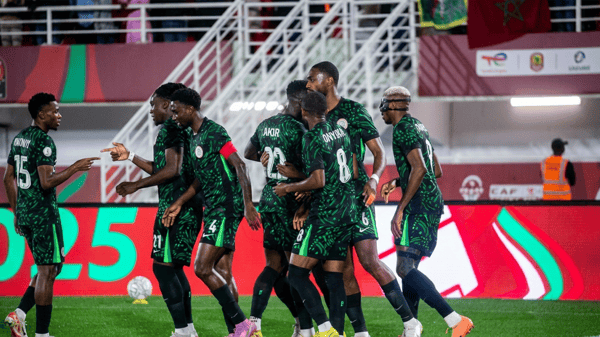
Our Super Eagles delivered a masterclass, a commanding 4–0 victory over Mozambique to soar into the AFCON quarter-finals. It was a performance of grit, flair, and decisive finishing. Yet, before the final whistle had finished echoing, the national conversation had been hijacked. The triumph was relegated to a sidebar.
What was the main event?
For Nigerians, it was a fleeting, fever-pitch spat between Victor Osimhen and Ademola Lookman.
Let us not mince words: Osimhen’s behaviour was poor. In the 63rd minute, with Nigeria already 3–0 up and himself on the cusp of a hat-trick, he felt Lookman should have squared the ball.
His reaction: a volcanic eruption of shouts and gestures, needing restraint from Wilfred Ndidi, his captain and even a Mozambican player, was the very picture of petulance. To publicly rebuke a teammate, to snipe and point, is conduct unbecoming of a star who carries the weight of the country on his shoulders. It creates a visual, a snippet of discord that feeds a ravenous media beast.
He followed it by asking to be substituted and sitting apart, a sulk that completed an immature picture. An apology to the squad is not up for debate; it is compulsory.
But herein lies the Nigerian paradox: our reaction to the wrongdoing has become a greater spectacle, and arguably a greater folly, than the act itself. We have spiralled from criticising a moment of hot-headed passion into a full-blown moral inquisition.
A government official felt compelled to label him a man of “big talent, but poor character,” a statement as profound as it is pointless. The court of public opinion has tried and sentenced him for crimes against team spirit.
This collective hand-wringing assumes the dressing room is in tatters, ignoring the most pertinent voices: those of the men who were actually on the pitch.
Consider Lookman, the supposed victim. He has shown more sense than a timeline full of pundits. When asked, he dismissed the drama with a shrug. “I don’t really think that’s really important, the team won 4–0,” he said, before calling Osimhen “our number one guy” and “my brother.” Captain Wilfred Ndidi called it a “competitive mindset.” The people in the arena have moved on. Why are we, in the bleachers, still holding a séance for a conflict that has already been buried?
Our obsession is rooted in a deep-seated, almost generational trauma. The conversation around it immediately spirals into a comparison with the silent, corrosive cancers of teams past.
We speak in hushed tones about the 1994 squad, where legends like Keshi were accused not of shouting, but of freezing teammates out — a quiet, brutal ostracisation that I believe cost us a World Cup quarter-final. This history makes us pathologically afraid of hidden divisions.
From my point of view, in a twisted way, Osimhen’s open fury is almost reassuring; it is a problem the coach can see and address. It’s the messy, public catharsis versus a silent, smiling poison. We are arguing about which kind of dysfunction we prefer, a debate that itself is a symptom of our anxiety.
The crux of the matter is this: we are punishing visible passion more severely than we ever would concealed malice. Osimhen’s crime is that his frustration, his desperate, all-consuming hunger to score and win, spilled out for the cameras to see.
This is the same fuel that, months ago, saw him publicly apologise to the country for a missed penalty, then redeem himself with a heroic extra-time brace. The fire that warms can also scorch. The real question is not about this one spark, but whether the hearth is still sound.
And the evidence suggests it is. Lookman provided two assists for Osimhen in the same match. They have celebrated goals in each other’s arms. This is the functional reality, the professional understanding that outweighs a momentary fraying of tempers. While we are busy composing think-pieces on leadership and ego, former players like the Headmaster, Mutiu Adepoju, are wisely focusing on the “dominant, improving form.”
The lesson from those who have worn the shirt is clear: win football matches. Resolve your issues behind closed doors. The trophy is the only discourse that matters.
Osimhen must apologise. He must channel that formidable fire with more wisdom. But Nigeria must also grow up. We must learn the difference between a storm in a teacup and a ship actually sinking.
Baba Eagles have just navigated their most convincing performance in years. Instead of feverishly scanning the decks for leaks, maybe we should just help them steer towards the title. Their job is to win. Ours, for once, should be just to let them.
Nwanze is a partner at SBM Intelligence