 Follow Us on Google News


 Follow Us on Google Discover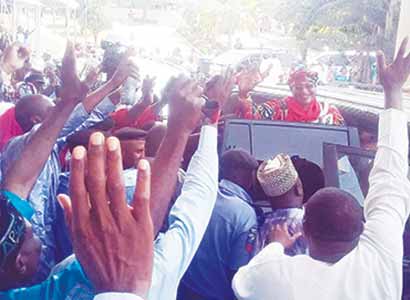

RECENT judgments from the various election petition tribunals threw up mixed reactions as to the fidelity of judges’ interpretation, analyses and syntheses of laws and facts relating to the elections as presented by the petitioners and their counsel. The common refrain was, is there corruption in the judiciary or has the sliding standard of education in Nigeria started taking its toll on the nation’s judiciary? Now, all eyes are turned to the Appellate Courts for answers through judicial review of the judgments.
Before various divisions of the Court of Appeal begin work on the appeals, it is necessary to examine how the jumble of tribunal judgments reflected the old bumps on Nigeria’s path to deepening democracy and the electoral process.
The rulings by Akwa Ibom and Rivers States governorship election petitions tribunals generated much public outcry. However, the judgment of the Taraba State Governorship Election Petition Tribunal raised the bar of general complaint against the decision of the panels.
By sacking the incumbent, Governor Darius Ishaku of the Peoples Democratic Party (PDP) and ordering that the All Progressives Congress (APC) candidate in the election, Senator Aisha Al-Hassan, be sworn into office, the tribunal attracted scathing comments.
Against the background of the unrelenting contest for political dominance of the country between the APC and PDP, many analysts speculated that the tribunal must have played a script. Though having a female governor in Nigeria is desirable, it should not be done in a manner that offends procedure, they say. In addition, some legal minds chewed on the declarative aspect of the Taraba panel ruling, disagreeing that it was not married to the stipulations of the Electoral Act of 2010 as amended.
Although the Taraba Governor became the first state chief executive to lose his exalted seat via tribunal ruling in the present dispensation, the ruling reminded of similar losses by such others like Dr. Olusegun Oni, (Ekiti State); Prince Olagunsoye Oyinlola, (Osun); Prof. Osarheimen Osunbor, (Edo) and of course, the celebrated case of Onwa, Chris Nwabueze Ngige of Anambra State.

But unlike the cases of those governors, the sack of Ishaku by the panel was based on a pre-election matter having to do with the nomination of the candidate. The Supreme Court had in earlier judgment declared that nomination of candidates being the exclusive and internal business of political parties, the Court has no business interfering, unless the process was faulted and complained of by a member of the party.
For instance, in the celebrated case of Rotimi Amaechi Vs Celestine Omehia, the apex court looked into the complaint of Amaechi that during the nomination process, he was precisely the duly elected candidate from the PDP primary, but was substituted with Omehia, by the party. But in the case of Ishaku and Al-Hassan, the tribunal not only descended into the arena, but bent over backwards to fault the PDP primary election that produced the governor as the flag bearer.
Some observers have praised the judgment as part of the change policy of the present federal ruling party, while others concluded that the judgment was nothing short of an expansionist political design of the APC to garner at least 30 states under its platform and diminish the clout of PDP to stand up as a consequential opposition party. But even at that, some legal luminaries thumb down the judgment as donating a relief that was not solicited by the petitioner.
Lawyers that belong to this school of thought contend that what the law says is that in the event that the candidate who won the election is found as not qualified to stand the election on the basis of Section 140 (2) of the Electoral Act, the much the tribunal can do is order for a fresh election. “In jurisprudence, declaring the next candidate with the highest number of vote as the winner amounts to authenticating the election even when one of the candidates have been credited with defects in his/her nomination,” they said.
The other leg of the Taraba Governorship Tribunal ruling relates to the holding of the PDP primary election in Abuja. Section 85 of the Electoral Act demands that prior to holding a primary election to select its candidates for an election, the political party should give the Independent national Electoral Commission (INEC) 21 days’ notice.
It is debatable whether the opinion of INEC confers on it the powers to invalidate the primary or provide legal bulwark for eventual corroboration should a member of the party challenge the process. Consequently, INEC’s opinion after the election had been won and lost loses creditability even if supplied to the party that lost. That argument flows from the intendment of the law that the issues concerning candidate selection borders on pre-election matters, which when overtaken like in the Taraba instance by the holding of the election, becomes an academic exercise. In the case of Amaechi Vs Omehia, Amaechi challenged the process that replaced him with his fellow party man in the same platform.
There is a school of thought that believes that the inconsistencies in Election Petition Tribunals’ judgment across the country reveal the invidious attempt by APC to politicize the judiciary and achieve some hegemony. This school of thought sees the Taraba development as an attempt to divert attention from the controversial rulings in Akwa Ibom and Rivers States. They also argue that the case between Governor Ajumobi of APC and Rashid Ladoja in Oyo reveals the uneven handed approach to election petitions involving APC incumbents.
It is left to conjecture why in Akwa Ibom, where elections in 18 local government councils out of 31 were nullified, the tribunal flinched from sacking the governor even when it was clear that the number of outlawed votes exceed the ones retained by Governor Emmanuel Odom. PDP claims that the Tribunal judgment stooped half way in the belief that the areas were bye-election is ordered happened to be the strong hold of Umana Umana.
In Ebonyi State, the Tribunal overlooked the complaints of Labour Party Governorship candidate, Dr. Edward Nkwegu against the election of Governor David Umahi, which border on non-compliance of the election with the INEC regulations and the Electoral Act. The tribunal declared: “We therefore agree with the respondent’s counsel that we cannot make ‘non-compliance with the guidelines and election manuals for electoral officers 2015’ an issue of determination because doing so will amount to expanding the ground stated by the petitioner and the provisions of section 138 (1) of the Electoral Act 2010, as amended… It is clear to us that the issue of non-compliance with the guidelines and Election manual for Electoral officers 2015 must be made a ground by the petitioner before it can be made an issue for determination.”
It is surprising how judges pick and choose what sections of the law they assign probative value on. Furthermore the pre-election matter against the PDP candidate by Prof. Onyebuchi Chukwu, the Federal High Court sitting in Abakaliki held that the nomination of Umahi did not conform to the stipulations of the Electoral Act. Knowing about the weight of these potential defects to his case, the PDP candidate was said to have reached out to the ruling party expressing his desire to join the party. Even during the recent PDP Rebranding conference, which the Ebonyi Governor shunned, he was quoted as justifying his absence on the premise that since he has a pending electoral case, he does not want to identify with PDP so as not to jeopardize his chances.
The variety of judgments by the governorship election tribunals feed the suspicion of the desperation by the ruling APC to take over Taraba, Akwa Ibom and Rivers States. What could the implication of snatching those states through the courts by the ruling party be? In the first place, it would confer the status of dominance and one party on APC. But the socio-political consequences could be far reaching and might mirror the strife similar takeover instigated in the past.
Former Ebonyi State Commissioner for Information and Orientation, Mr. Abia Onyike, said the rulings especially that of Rivers State, if not reversed at the Appellate or Supreme Courts, might lead to a possible political conflagration capable of threatening Nigeria’s democracy and creating unimaginable crisis.
Onyike told The Guardian that the relocation of the Tribunals for Rivers, Akwa Ibom and Taraba outside their state capitals was suspect, pointing out that President Muhammadu Buhari should be restrained from making the mistakes of past northern leaders that sought to expand their political territories outside the people’s mandate. He noted that coming at this time when the country is facing a vicious military campaign by a jihadist Islamic insurgency in the Northeast region; the president cannot afford to have another distraction on his table.
The attempt to reverse the electoral outcomes in Taraba, Akwa Ibom and Rivers and possibly take over Bayelsa state by force seems a rash and useless display of political jingoism, which may backfire and set the stage for irreversible cataclysm. President Buhari should be reminded that Nigerians expect him to break the jinx that has haunted Northern leaders under democratic governments since independence, he added. Onyike, who is also a former trade union leader recalled that “no northern civilian leader has ever run the country peacefully and successfully and handed over without a catastrophic exit”, adding that such tendency is caused by the inability of such northern leaders to play the democratic game by the rules.
His words: “The undue ambition to infiltrate or possibly decimate and take over the strongholds of rival political parties by all means is at the heart of the matter. That was what happened to Tafawa Balewa’s government. The north had used S.L.Akintola as a surrogate in the proxy war with Obafemi Awolowo in the West and the political fray led to the inevitable collapse of the first republic and the civil war.” Further, he recalled how in the Second Republic, the attempt by President Shehu Shagari’s NPN(National Party of Nigeria) to get a foothold in the South West, using Akin Omoboriowo to destabilise the UPN (Unity Party of Nigeria) in Ondo, caused bloodletting.
He added: “In the East, the defunct NPN using C.C. Onoh, tried to upstage Jim Nwobodo of NPP (Nigeria Peoples Party). The tension generated by these developments robbed the Shagari presidency of the legitimacy it required to continue in office as it was evicted barely three months after its second term inauguration.”
Now history is about repeating itself in the Niger Delta, where Chibuike Amaechi is playing Akintola as a willing tool of the ruling APC,” Onyike rationalized, saying that President Buhari should save Nigeria from unnecessary, impossible and unthinkable political experiments. He said the only northern president that could have broken the jinx was Umaru Yar’Adua but noted that despite his unfortunate death in office the country experienced some hiccups over whether his deputy should take over.
As superior courts begin the review of judgments of Election Petition Tribunals, the National Assembly, INEC and relevant bodies should strengthen and unify the country’s electoral laws to ensure that the final arbiters in election are the voters. Some practitioners have suggested that INEC should be sued in disputed elections, while the beneficiaries could only be joined. Similar suggestions and ideas should be evaluated to remove all possible areas for corruption from the nation’s polity.

