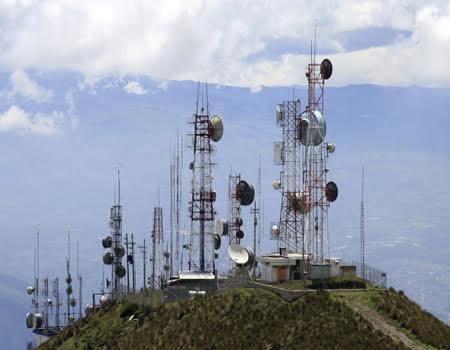
Billions of naira have been invested in fibre infrastructure to achieve the Digital Public Infrastructure (DPI) promise over the past decade. But real progress stalls at the last-mile – where billions of naira in investment fade into patchy connections, unserved communities and an Internet that still crawls to reach those who need it most to improve their living conditions, creating a digital divide that further widens income nationwide, ADEYEMI ADEPETUN reports.
For Yusuf Abdullahi, a yam farmer in a dusty hamlet just outside Birnin Gwari, Kaduna state, the global digital economy is a ruse.As early as 5.00 a.m., Abdullahi loads his harvest onto a rickety motorcycle, heading to the nearest market town, a journey of two hours on pot-holed roads.
He is driven by mere hope. He has no idea what the going rate for a tuber of yams is today. He cannot check prices on an app, nor does he receive a bank transfer from a wholesaler who travels up north from Lagos.
“Sometimes I get there only to find out the price has crashed,” Abdullahi said, wiping sweat from his brow.
“I have to sell at a loss because I cannot carry the yams back home. If I had the Internet, I would know when to go and whom to sell to.” Abdullahi has a smartphone, a cracked Android device his brother sent to him as a gift from Kano. He even has a National Identity Number (NIN), a foundational component of Nigeria’s DPI. But in his village, the phone mostly serves as a torchlight. The signal bars hover at zero, occasionally flickering to a weak ‘E’ (edge) signal that cannot load a WhatsApp message, let alone a bank application.
Healthcare without connectivity
WHILE Abdullahi’s challenge remained, roughly 230 kilometres from Nigeria’s capital, the digital gap took on a life-or-death dimension due to communication failure.
Aminat Hauwa (not real name), a community health extension worker at a primary healthcare centre (PHC) in a community, deep down, Plateau state, told The Guardian that the digital tools that could improve care are inaccessible.
Hauwa, trained in advanced diagnostics and emergency triage, claimed she uses her knowledge, but her resources are analogue. Her PHC is powered by a small solar panel but has no reliable Internet or mobile signal. During this interview with The Guardian, the call dropped about 15 times.
Without connectivity, referral calls, telemedicine support, digital patient records and real-time disease surveillance, key DPI-enabled health services remain out of reach.
Education at the edge of the network
THE cost of the last-mile disconnect is perhaps highest for the next generation.
In a dilapidated secondary school in a rural community in Jigawa, 15-year-old Amina dreams of being a nurse. The curriculum now requires computer literacy. But Amina’s school has no Wi-Fi. The few desktop computers gather dust under plastic covers, powered only when the generator is fuelled, which rarely happens.
DPI rails without tracks
THE experiences of Abdullahi, Hauwa, and Amina reflected a shared reality: last-mile digital infrastructure has become a critical constraint on development.
Nigeria is currently racing to build its DPI—the ‘rails’ of a modern digital society. These rails include digital identity (NIN), digital payments (like NIBSS), and data exchange platforms. Ideally, these tools should allow a farmer like Abdullahi to verify his identity, receive government fertiliser subsidies directly into a mobile wallet, and access credit without visiting a bank branch. This should also help Hauwa to deliver her job adequately at the PHC and ensure Amina’s education is not cut short.
Findings showed that DPI has a fundamental dependency: it runs on physical connectivity. Nigeria, with the help of telecom operators, is building a high-speed digital train, but the tracks stop at the city limits.
The last-mile that final connection from the main Internet backbone to the rural user’s home or village, is missing. While massive undersea cables like Google’s Equiano have landed in Lagos, bringing terabytes of capacity to the coast, getting that capacity to the hinterlands requires a web of fibre optic cables and base stations that simply do not exist in many areas.
4,834 communities unserved/underserved
AN estimated 21 million Nigerians across 4,834 communities, mostly in rural areas, lack access to basic mobile connectivity. The Minister of Communications, Innovation and Digital Economy, Bosun Tijani, stated this in February after the Federal Executive Council meeting.
In April, the Universal Service Provision Fund (USPF) reported that in 2013, the number of people living in unserved and underserved areas was 36.8 million and fell to 23 million by 2024.
Secretary of USPF, Yomi Arowosafe, said the 23 million unserved/underserved people are housed in over 3000 communities, predominantly in rural areas and still lack basic mobile connectivity.
Checks by The Guardian showed that these unserved and underserved communities are largely concentrated in the northern part of Nigeria. These communities face the most acute digital isolation, leaving many citizens disconnected. Large swathes of these communities have experienced government-mandated telecommunications shutdowns to curb banditry. Even when lifted, infrastructure remained damaged or unrepaired by telcos fearful of returning to the sites.
For instance, in Zamfara state, Local Government Areas (LGAs) including Shinkafi, Zurmi, Birnin Magaji, and Kaura Namoda are severely underserved. Other communities include Sardauna, Kurmi, Karim Lamido, Illela, Sabon Birni, Isa, Gudu, Birnin Gwari, Kachia, Kaura, Giwa, Kajuru, and Chikun, among others.
In the Southern part, unserved areas are largely in the riverine areas of Bayelsa, Delta, Ondo, among others. There are also border communities, where the population density is low, and the return on investment for telecom operators is minimal.
767 LGAs without active websites
TO clearly demonstrate that the challenge of last-mile connectivity is real in Nigeria, checks by The Guardian have shown that despite clear benefits, adopting digitalisation remains challenging, as many local government areas (LGAs) face increased skill and technology gaps, infrastructure deficits, socio-economic barriers, and governance issues.
The limited number of LGAs found to have active websites is often concentrated in major metropolitan areas, suggesting a correlation between economic activity and digital maturity.
The challenge may have constrained the reach of the important tier of government to restrict accessibility to individuals and groups with the means to travel to council secretariats.
Checks confirmed that only seven LGAs maintain active digital portals, a finding that the Independent Corrupt Practices and Other Related Offences Commission (ICPC) also verified.
The agency described the absence of online transparency across the third tier of government as a “serious accountability gap” undermining democratic governance.
For some LGAs, they rely heavily on the broader state government website and established local news platforms for their digital presence, despite being granted autonomy.
Ordinarily, a functional website, which is a minimal tool for modern governance, provides public access to budgetary information, procurement data and service delivery reports.
The absence not only widens the information gap but also stifles citizens’ ability to monitor key government programmes at the grassroots level, critique their expenditure, and hold leaders to account.
Out of the 774 constitutionally recognised LGAs, an overwhelming majority remain digitally invisible, conducting their affairs in an opaque manner.
Capacity exists, distribution does not
TODAY, Nigeria serves as a landing point for eight major submarine telecommunications cables, which carry over 95 per cent of the country’s international Internet and communication traffic.
The eight cables that land in Nigeria, primarily in Lagos but now also in other states, are: MainOne Cable, SAT-3/WASC (Owned by Natcom/ntel), GLO-1 (Globacom’s cable), GLO-2 (Globacom’s domestic coastal cable), Africa Coast to Europe Cable System (ACE), West Africa Cable System (WACS) (MTN is a major partner), Equiano (Google’s cable), 2Africa (Meta-led consortium, the world’s largest).
Already, plans spearheaded by Nigerian Communications Satellite Limited (NIGCOMSAT) are in full gear to replace the current satellite, NigComSat-1R, and launch two new communication satellites to further enhance national coverage and resilience.
A consultant, Tope Yosoof, stated that the two High-Throughput Satellites (HTS) will provide expanded coverage across West, Central, South, and parts of East Africa. With 77 transponders on multiple bands, the satellites will support broadband connectivity, national security, education, media, agriculture, offshore operations and smart city applications.
Yosoof explained that the project will run on a public-private partnership (PPP) model, with a request for proposal (RFP) already issued to attract global manufacturers and service providers.
Nigeria has also become a significant market for global satellite operators, particularly in the Low Earth Orbit (LEO) sector. For instance, Nigeria was the first African country where SpaceX’s Starlink (a LEO satellite constellation) began commercial operations, offering high-speed, low-latency Internet directly to consumers and businesses, posing a competitive shift in the market.
Why last-mile connectivity remains elusive
FINDINGS showed that the last-mile is heavily challenged due to a combination of infrastructure, economic, and regulatory hurdles that operators face despite their investments.
The chief challenges include insecurity. Many states in the northern part of Nigeria, including Zamfara, Borno, and Kaduna, have experienced periods of insecurity, during which base stations and fibre optic cables have been damaged but not replaced.
A telecom engineer, Raheem Lawson, said historically, the capital cost to build and equip a standard 2G/3G/4G base station in Nigeria was estimated to be around N40 million in 2016.
“But given the significant factors since then—most notably the depreciation of the Naira because most equipment is imported and global inflation, the current cost to build a new, fully equipped 4G/5G-ready site can easily range from N150 million to over N350 million (or approximately $100,000 to $250,000),” he stated. According to him, the cost of laying fibre optic cables, the backbone of high-speed last-mile connectivity, is a major barrier.
He said the cost of installing one kilometre can range from $5,000 to $15,000 in developing countries like Nigeria. He said these significant capital expenditures are exacerbated by regulatory hurdles and high right-of-way (RoW) fees imposed by state governments, which slow down deployment and increase operational costs for service providers.
Based on recent reports and official statements from the Nigerian Communications Commission (NCC) and the Ministry of Communications, Innovation, and Digital Economy, about 12 states have officially waived or committed to zero-cost RoW fees for telecom infrastructure deployment (like laying fibre optic cables). These states include Anambra, Adamawa, Bauchi, Benue, Enugu, Kaduna, Katsina, Kebbi, Nasarawa, Plateau and Zamfara. These states adhere to the N145/linear meter cap set by the Nigerian Governors’ Forum (NGF) in 2020, significantly reducing the financial burden.
While the sector hoped that the new planned tax regime, which kicks off (January 1, 2026), will bring relief to the sector, ALTON’s Chairman, Gbenga Adebayo, told The Guardian that the sector is plagued by about 54 different taxes and levies, which are fast eroding the gains of the industry.
Bridging the gap
AMID growing rural-urban drift, Nigeria is addressing the significant challenge of last-mile connectivity through a multi-pronged approach that combines massive government-led infrastructure projects, regulatory reforms, and the utilisation of universal access funding.
There is the Project Bridge, the flagship initiative to build a national fibre optic network. The goal is to lay an additional 90,000 kilometres of wholesale, open-access fibre network, bringing the total national fibre footprint to over 125,000 km. Phase 1 is expected to gulp about $2 billion, backed by the World Bank.
This network is designed to connect every LGA with a Point of Presence (PoP), which then links to administrative wards, prioritising schools and hospitals. These ward-level nodes act as the critical middle-mile extension that brings the fibre close enough for private operators to complete the final last-mile connection to homes and businesses using fibre or wireless technologies.
While FG has given the nod for the construction of 4000 BTS, by 2030, USPF is expected to have deployed another 1000 base stations, also in rural areas of the country.
There is also Project 774, spearheaded by the NIGCOMSAT, which is expected to wire all LGAs. The Executive Vice Chairman, NCC, Dr Aminu Maida, revealed that regulatory interventions have facilitated over $1 billion investments by MNOs to continuously expand their 4G LTE and deepen 5G deployment, which is often the most cost-effective last-mile solution in areas that already have a base station.
There is also the licensing of spectrum (like the 2.3GHz and 2.6GHz bands) for wholesale wireless services, enabling specialised wireless ISPs to offer last-mile broadband without the need to lay fibre.
Senior Manager, Corporate Affairs, NIGCOMSAT, Stephen Kwande, told The Guardian that Project 774 was officially launched in early 2024 by the Ministry of Communications, Innovation & Digital Economy.
He said under Phase 1, NIGCOMSAT reported coverage of 45 LGAs across eight states. According to him, the second phase has commenced with the procurement of the necessary VSAT, network accessories, and green power solutions, as well as the Identification of the local government. Kwande disclosed that the Second phase will cover about nine states, including Anambra, Bauchi, Enugu, Kaduna, Katsina, Nasarawa, Niger and Plateau.
This report is produced under the DPI Africa Journalism Fellowship Programme of the Media Foundation for West Africa and Co-Develop.
QUOTE: The absence not only widens the information gap but also stifles citizens’ ability to monitor key government programmes at the grassroots level, critique their expenditure, and hold leaders to account.