 Follow Us on Google News
 Follow Us on Google Discover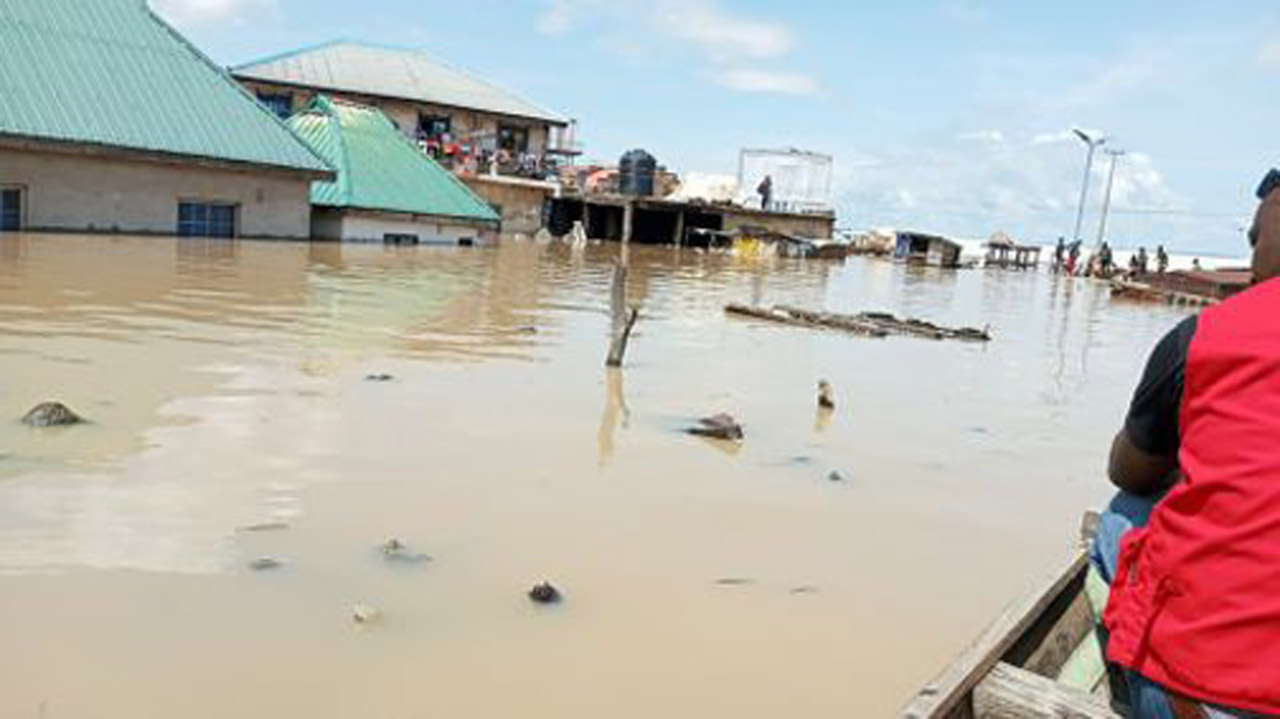

A new report by the National Bureau of Statistics (NBS), shows that only 1.5 per cent of households affected by the devastating 2022 floods received government’s assistance, despite the significant impact of the floods on livelihoods.
The report, ‘Nigeria Flood Impact, Recovery and Mitigation Assessment Report 2022-2023’, which is the outcome of a survey conducted by NBS, in collaboration with National Emergency Management Agency (NEMA) and the United Nations Development Programme (UNDP), covers six states: Anambra, Bayelsa, Delta, Jigawa, Kogi and Nasarawa, which account for a significant proportion of the total population affected by the floods.
[ad]
It says that 89.6 per cent of households affected did not receive support during the floods, adding that only 8.0 per cent received assistance, with family and friends being the most common source of support.
About 64 per cent of Nigerian households were said to have been affected by the disaster that swept across many states.
The flood caused extensive losses to lives and livelihood and disrupted essential services and economic activities.
The report says both agriculture and non-agricultural sectors were severely affected, leading to substantial income losses and undermining of food security and sources of income.

To mitigate future occurrence, the report recommends that the government adopts early warning systems and flood preparedness, especially through community engagement and targeted awareness campaigns for high-risk communities and infrastructure, and land-use planning including through coordination between federal and state-level disaster risk reduction ministries, departments and agencies.
According to the report, “some of the key recovery strategies recommended include flood risk financing and insurance, development of a post-disaster recovery and rehabilitation plan focusing on ensuring food security, safe evacuation, disease control, and livelihood support”.
[ad]

