 Follow Us on Google News
 Follow Us on Google Discover
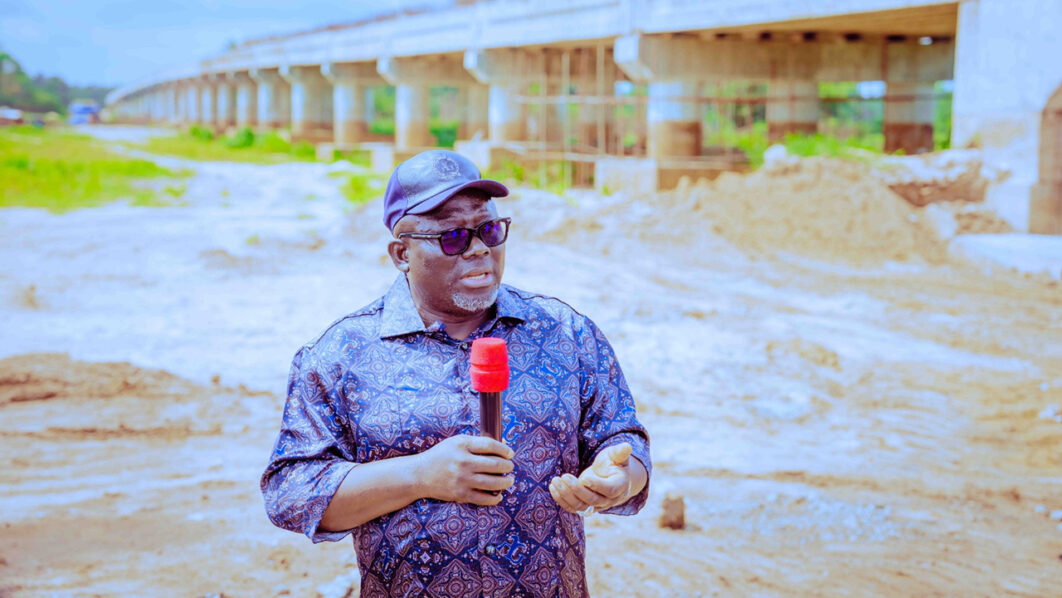
Delta State, one of Nigeria’s most ecologically diverse regions, faces persistent environmental challenges: flooding and gully erosion. These twin threats have long plagued communities, displacing thousands, destroying farmlands, and weakening infrastructure. However, under the leadership of Governor Sheriff Oborevwori, a renewed commitment to addressing these issues is evident.
Delta’s topography makes it highly susceptible to flooding, particularly in low-lying coastal areas such as Warri, Bomadi, Patani and others. Seasonal rainfall and rising sea levels exacerbate the problem, often leaving communities submerged for months.
Meanwhile, gully erosion in upland areas—including Agbor, Asaba, and Okpanam — has caused severe land degradation, threatening homes, roads, and farmlands .
[ad]
The combined impact of these environmental challenges has been devastating. Flooding disrupts economic activities, while erosion consumes arable land and critical infrastructure. The agricultural sector, a major source of livelihood for residents, has suffered significant setbacks as a result.
Since assuming office, Governor Oborevwori has prioritized environmental sustainability, recognizing the urgency of these challenges. His administration has launched and reinforced key policies and projects aimed at mitigating flooding and controlling gully erosion, demonstrating a proactive approach to protecting lives, property, and the state’s economy.
A major contributor to flooding in Delta State is the poor state of drainage systems, particularly in urban centres. To address this, the governor has prioritized the clearing and expansion of drainage channels in cities such as Asaba, Warri, Effurun, and Sapele. His administration has also invested in modern flood-control technologies, including underground drainage networks designed to redirect rainwater away from residential areas. Notable among these projects are the stormwater drainage projects in Warri, Effurun, Owa-Alero and Ugolo-Okpe.
To combat gully erosion, the state government has partnered with key agencies, including the World Bank-funded Nigeria Erosion and Watershed Management Project (NEWMAP) and the Federal Ministry of Environment. These collaborations have helped secure funding and technical expertise for effective erosion control, leading to the reclamation of degraded lands in vulnerable communities.

Recently, the governor fulfilled the conditions of the European Investment Bank-Assisted Project for the rehabilitation of gully erosion sites in Delta State, further demonstrating his administration’s commitment to environmental sustainability.
During the week, Oborevwori received a delegation from the Federal Project Management Unit (FPMU) of the Nigeria Erosion and Watershed Management Project (NEWMAP), led by the National Project Coordinator for Climate Change and Adaptation, Dr. Anda Ayuba. The visit aimed to assess the impact of soil erosion and land degradation at the Amachai/Ogbeozoma and Vanguard gully erosion sites in Oshimili North Local Council of the state.
Representing the governor, the Secretary to the State Government (SSG), Dr. Kingsley Emu, expressed appreciation to Dr. Ayuba and his team for their continued support.
Dr. Emu emphasized the urgency of addressing the erosion challenges and urged the expedited disbursement of funds to ensure project implementation begins before the onset of the rainy season. He stressed that timely intervention is crucial to mitigating further land degradation and protecting vulnerable communities.
In his remark, Dr. Ayuba commended Governor Oborevwori for his proactive approach to environmental restoration, particularly for providing the counterpart funding and facilitating key consultancies that enabled Delta State inclusion in the project. He acknowledged the governor’s commitment to sustainable development and resilience against erosion threats, affirming that NEWMAP-EIB remained dedicated to supporting the state’s environmental management efforts.
[ad]
Speaking at the project site, Mr. Yalaks, who was in company of the State Commissioner for Environment, Mr. Ejiro Tommy Jamani, and the State Project Coordinator of NEWMAP-EIB, Mr. Benedict Nwaokocha, described the two sites visited as “classical cases of active and aggressive sites that are really gullies and active in nature. If care is not taken and no solution provided before the end of this rainy season, we should be sure this building here will cave in,” said NEWMAP boss.
He noted that the active sites had met the major conditions for the selection of sites for intervention – for the threat posed to infrastructure investment; human and socio-economic lives of the people in the affected community.
According to him, the checklist and the field assessment of the Project in the state had made Delta State 100 percent disbursement ready to access the funds of the EIB project.
“So, as far as we are concerned, some of the major conditions for the selection of a site has to do with its activeness; it must affect infrastructural investment; threat to human life and effect on the socio-economic life of the affected community .
“You can see – there was a road; the road has been cut-off and so, this community has been separated; they have to take around to get across to their neighbours’ side. So, basically, these two sites have met all the conditions as regard to site selection”.
While assuring the residents of the project’s readiness for implementation, as April, 2025 has been earmarked for official launch of the project nationwide at Abuja by the Minister for Environment, Mr. Yalaks appreciated Governor Oborevwori for the payment of one billion naira (N1,000,000,000) counterpart funding and N300 million as consultancy fee that qualified the state to participate in the donor agency project.
The State Commissioner for Environment, Mr. Ejiro Jamani, said there was no denying the fact that the electioneering promises of Governor Sheriff Oborevwori, towards a sustainable environment for the people of Delta State was beginning to yield positive results. He said the governor had brought succour to Okpanam community for the prioritization of the two erosion sites through the payment of one billion naira (N1,000,000,000) counterpart funding of the projects and three hundred million naira (N300 million) for its engineering designs.
The Environment Commissioner, however, called on the people to support the MORE agenda mantra of the state government and cooperate with would-be contractors that would work in their domain.
[ad]
The State Project Coordinator of NEWMAP-EIB, Mr. Benedict Nwaokocha, expressed the readiness of Delta State towards the partnership project of the European Investment Bank to commence implementation as soon as the donor agency effected disbursement for the project.
The Assistant Secretary of Amachai Landlords Association, Bro. Israel Ohwevwo, said it was a good thing that hope was coming to Amachai/Ogbozoma residents in Okpanam, as Governor Sheriff Oborevwori was justifying the confidence reposed in him by Deltans during his electioneering campaigns.
Oborevwori’s administration has focused on constructing flood-resistant roads, particularly in flood-prone areas. Key road projects now incorporate advanced drainage designs that help prevent waterlogging. The Asaba-Ughelli dualization project, for example, includes features aimed at ensuring longevity despite heavy rains.
Efforts by the governor signal a transformative shift in how Delta State addresses its environmental challenges. His commitment to sustainable development and resilience-building is laying the foundation for a safer, more climate-resilient future.
As Delta State battles the twin threats of flooding and gully erosion, Oborevwori’s leadership provides a beacon of hope. With a proactive approach and strategic interventions, his administration is setting the stage for a greener and more secure future for the people of Delta.
[ad]

