 Follow Us on Google News


 Follow Us on Google Discover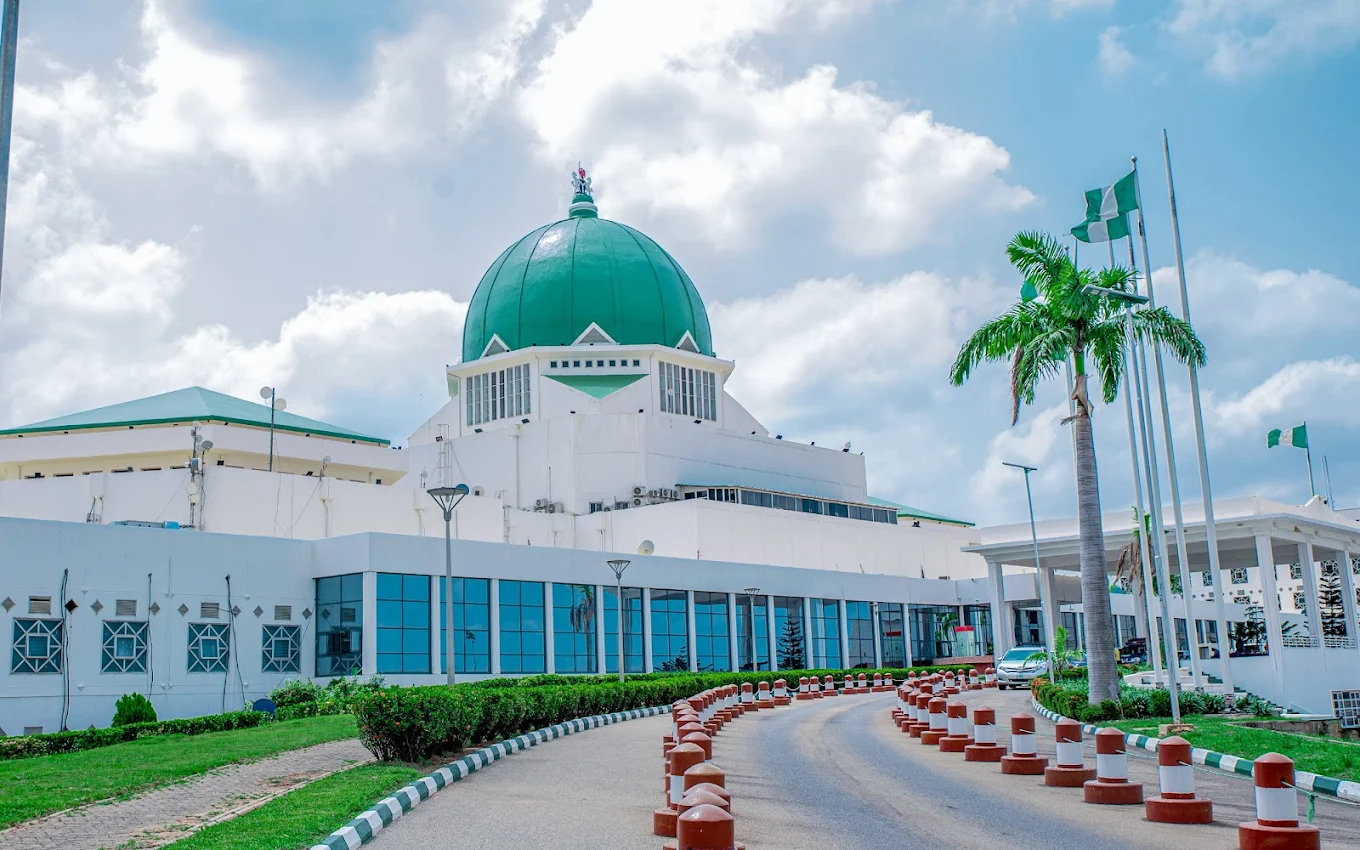
The accumulated N720 billion debts owed to local contractors by the Federal Government is not merely an administrative hitch but a scandalous indictment of the state’s fiscal irresponsibility, moral ineptitude, official dishonesty, and deepening contempt for private-sector partners who risk their capital to execute public projects.
Allowing the issue to snowball into disruption of official activities at the National Assembly and the Ministry of Finance suggests that either the government has a shallow understanding of the significance of contractual obligation in governance, or does not care about the consequences of broken promises on further engagement, and the enormous reputational damage such moral failure breeds.
Sadly, the country is already reaping the harvest of the broken promise. A few weeks ago, the Nigerian House of Representatives suspended its plenary sessions for a week in solidarity with local contractors who had protested outside the National Assembly over unpaid debts for projects allegedly executed since last year. Subsequently, the aggrieved contractors, acting as the All-Indigenous Contractors Association of Nigeria, disrupted official activities at the Ministry of Finance over the outstanding debt, which the media said could be as high as N2 trillion.
National Secretary of the association, Babatunde Seun-Oyeniyi, accused the Federal Government of repeatedly shifting its promise and failing to honour commitments made during earlier meetings with officials. Oyeniyi said the government’s failure to release funds after multiple assurances had forced contractors, who borrowed money at a near 40 per cent interest rate to execute public projects, to resume protests.
The association raised more worrisome allegations – that the Federal Government prioritises the payment of foreign contractors, many of whom are merely placeholders of the ruling class and their political associates. If nothing else, this should bother President Bola Tinubu and the Minister of Finance and Coordinating Minister of the Economy, Wale Edun.
It is unfortunate that the contractors are pushed to the point of organising mass protests to press home their demand for payment. It is more embarrassing that concerned officials, who have shunned all previous private entreaties, have not issued a definite statement to calm the rising tension.
An administration that sermonises about economic revival, job creation, infrastructure renewal and ease of doing business should not be seen to preside over one of the worst fiscal practices – an arbitrary and selective public contract payment practice. Such governance malpractice impoverishes contractors, robs the economy of the benefits of infrastructure delivery, and worsens the problem of abandoned projects. In many cases, construction workers who are owed salary arrears running into months and suppliers whose outstanding payments are often eroded by inflation are at the receiving end of the inhuman payment cycle, which the current administration must break.
For years, successive administrations have treated contractors as involuntary lenders — coerced into financing government projects without any guarantee of repayment. Local firms mobilise teams, incur equipment lease costs and borrow heavily from banks at double-digit interest rates to deliver public works. They do so on the promise of government integrity. That promise has been repeatedly shattered by self-serving politicians in public office.
Today, many of the participating companies in public infrastructure development are insolvent or on the verge of collapse. Some have laid off staff; others have shut down project sites, auctioned equipment or entered into painful, forced debt restructuring with banks. Behind each corporate distress story lies a chain of effects on transporters, artisans, suppliers, engineers and local communities that depend on these projects to make ends meet. So, the failure of the government to honour its obligations is not just strangling businesses but also destroying livelihoods while multiplying the debt burden it will transfer to subsequent administrations.
What makes the situation even more infuriating is the hypocritical posture of the government. A party that insists citizens and small businesses must comply with taxes, fees, levies, and other regulatory obligations should promptly meet its own contractual responsibilities. Failure to do so is a perverse double standard being normalised. The government cannot continue to deploy state machinery to punish defaulters but casually turns a blind eye to its own obligations. That would amount to building an unjust and dysfunctional society.
That government agencies continue to award fresh contracts despite the huge unpaid backlog amounts to fiscal recklessness masquerading as development. By pushing fresh contracts into a system that is suffocating under unpaid obligations, the government is manufacturing a future debt crisis while struggling to resolve past ones. That will be tantamount to building a new house while the old one is collapsing on one’s head.
The consequences of the arrears for the broader economy are profound. They will add to banks’ non-performing loan pressure. If this is allowed to continue, it would increase systemic risk in the sector. In response, banks may begin to re-price public infrastructure credit, which could increase the overall cost of delivering public infrastructure. But other sectors of the economy – small businesses, manufacturing and retail – could bear the ripple effect if the banks decide to tighten credit to the private sector. At a larger scale, the chronic fiscal failure could constrict growth and leave the economy worse off.
The opacity with which these debts are managed is worrisome. There are no known comprehensive public ledgers for managing contractual obligations. There are no transparent disclosures on the line items to ascertain how these add up to the national debt stock. Additionally, there are no enforceable sanctions for ministries, departments, and agencies (MDAs) that accumulate liabilities without adequate funding.
The introduction of Authority to Incur Expenditure (AIE), which mandates MDAs to obtain clearance from the Ministry of Finance before committing the government to a financial obligation through contract issuance, is commendable to this extent. But this should not be another paper policy; it should be operationalised as a working document for managing liquidity challenges at the federal level.
Corruption thrives in the shadows of unverified claims, duplicated projects, inflated certificates, and politically favoured contractors who get paid while others languish. Nigeria cannot continue to operate with a public finance culture trapped in the past — one that thrives on the absence of accountability. The debt to local contractors should be treated as a national emergency, not a routine inconvenience. And to stop this destructive cycle, the government must as a matter of policy publish a verified, transparent register of contractor debts, broken down by ministries, project statuses and years incurred, create a legally-binding payment guarantee mechanisms that ensure contractors are paid as and when due as well as stop MDAs from awarding new contracts without evidence of ring-fenced financing as contemplated by the AIE.
Government, at all levels, as a matter of urgency, should consider the possibility of automating its invoicing and payment. This is a growing practice in the private sector. For a system prone to favouritism and cronyism, automation is crucial for providing all vendors with an equal opportunity. A first-come-first-serve mechanism is important for reducing undue manipulation of the process and making the process predictable.
Nigeria’s development cannot rest on the backs of unpaid contractors. Their debts mirror a deeper dysfunction of the public finance architecture. The habit of shifting obligations to future administrations, budgets, and taxpayers is sabotaging sustainable development. A country that refuses to honour its contracts cannot credibly ask investors to trust it. Also, a government that forces local contractors into insolvency cannot claim to support job creation, while a system that treats arrears as routine practice betrays the very idea of economic development. The N720 billion owed to contractors is not just another number but the cost of a broken governance culture – one that the government can no longer afford to ignore or normalise.

