 Follow Us on Google News
 Follow Us on Google Discover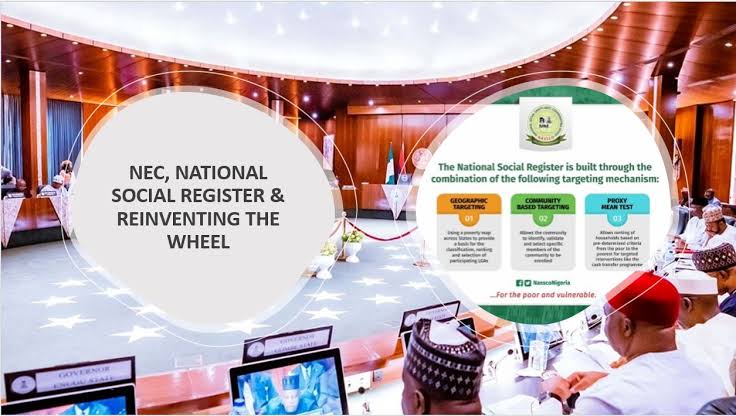
Stakeholders have emphasised the need for Nigeria to institutionalise and sustain the National Social Register (NSR) as a central tool for poverty reduction, arguing that deliberate government action and consistent updates to the database are crucial for achieving a long-term impact.
Speaking on the importance of the NSR, the United Nations Children’s Fund (UNICEF) Social Policy Manager, Muhammad Okorie, explained that the register serves as a national database of poor and vulnerable people identified through a rigorous three-step process. The approach, he noted, begins with mapping out poor and vulnerable local government areas, followed by community identification of poverty based on their own standards. This is then complemented by a proxy means test, after which those confirmed poor are compiled into the register.
According to him, the NSR ensures that poverty alleviation interventions are based on verifiable data, rather than assumptions, which identifies who the poor are, where they live, their household composition, and the level of deprivation they face. “This allows the government and partners to properly target those most in need,” he said.
On how the register can be sustained, Okorie emphasised that the government must take deliberate steps, including establishing a clear policy framework that mandates all poverty-related interventions to focus on beneficiaries listed in the register. He added that states should be required to create functional systems and agencies dedicated to continuously updating the database.
He further recommended that ministries, departments, agencies, and development partners involved in poverty reduction be mandated to source their beneficiaries from the register. To keep the tool relevant, he argued, direct budgetary allocations must be provided to ensure regular updates, since poverty is a dynamic condition with individuals moving in and out of it.
Reflecting on lessons learned from the NSR, the expert said evidence shows that where the register has been effectively implemented, targeting has become easier and more transparent. He cited the Ministry of Women Affairs, which has used the tool to deliver empowerment schemes directly to those identified as poor, thereby eliminating political influence or favouritism.


