 Follow Us on Google News
 Follow Us on Google Discover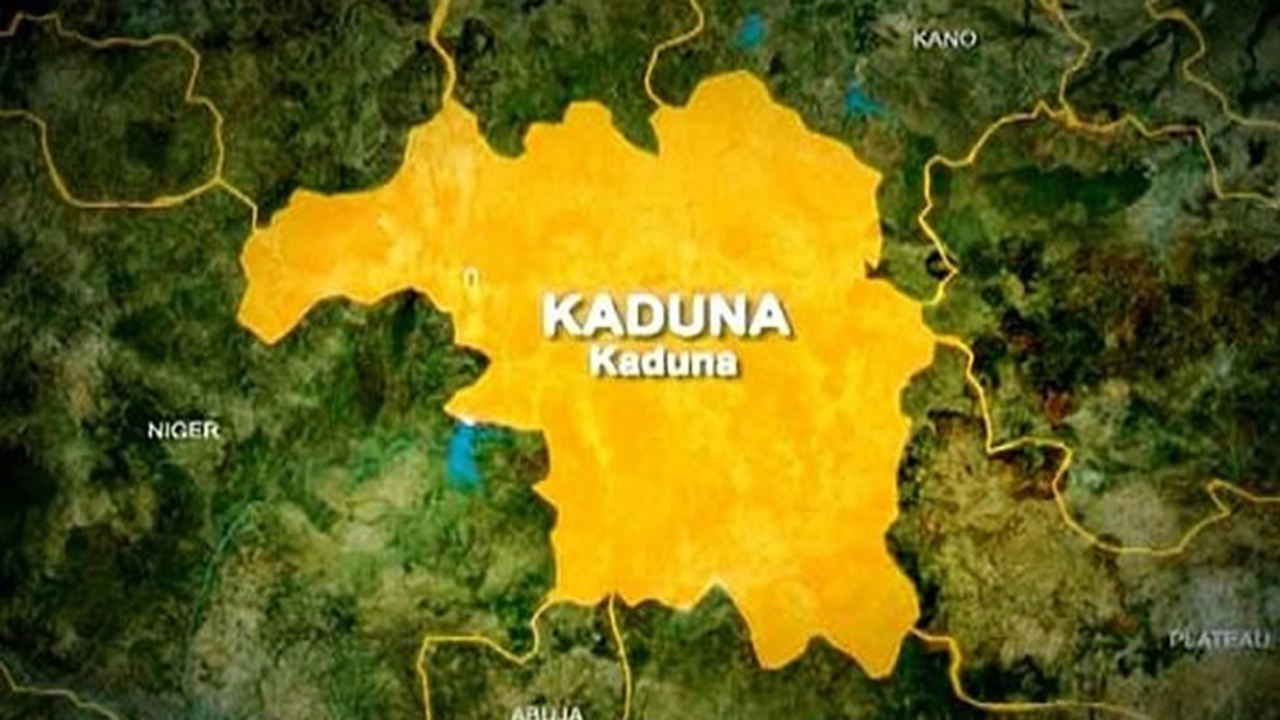
The governors of the 19 Northern States have expressed the need to reaffirm their support for the swift implementation of state policing reform as a critical and effective mechanism to tackle the present security challenges bedevilling the country.
The governors, who met with traditional rulers in Kaduna on Monday, called for a concerted effort to fight insecurity in the region, warning that citizens should desist from injecting religious and ethnic undertones into the security challenges.
In his opening address, the Chairman of the Northern Governors Forum (NGF), who is also Governor of Gombe State, Muhammadu Inuwa Yahaya, commended President Bola Tinubu and the international community for their efforts to defeat banditry and terrorism in Nigeria.
He said, “We must, however, commend the Federal Government under the leadership of President Bola Ahmed Tinubu, for leaving no stone unturned by ensuring the prompt release of some of the children.
“We remain resolute in our support of ongoing efforts to secure the safe return of those still held in captivity and their swift reunion with their families.”
Saying education is the bedrock “of our children’s future and the fulcrum on which socioeconomic development thrives”, he pointed out that “terrorists target our schools and farms because they seek to cripple the very tools that empower our youth and secure our collective progress”.

“An attack on education is a direct assault on our future. I urge us all to work with the Federal Government, security agencies, local and international stakeholders to ensure that all necessary measures are put in place to protect our schools and provide a safe and secure environment where our children can pursue their education, and the rest of the society can carry out their livelihood activities without fear of molestation”, he said.
“The security situation in Northern Nigeria has escalated from a localised challenge to a national and existential threat. It endangers the present and mortgages the future of our region. This menace spares no one; it consumes the poor and the rich, Muslims and Christians, the young and the old.”
“Now is not the time for politics; it is the time for a concerted action to ensure the very survival of the north and Nigeria at large. Let us be clear: without peace and security, there will be no politics to play, and no state or country to govern”, he added.
He further stated, “At this critical moment, we express our strong and unflinching support to President Bola Ahmed Tinubu. We commend the decisive efforts he is taking to secure our nation, especially in the face of heightened international pressure. While we welcome constructive international cooperation in tackling our security challenges, such help must be offered in a manner that preserves Nigeria’s territorial integrity, dignity and sovereignty, while acknowledging our complexities.”
“The security challenges we are facing are multifaceted. Our people, Muslims and Christians alike, continue to suffer from these acts of terror and criminality. Members of our armed forces, drawn from every tribe and faith, have paid the supreme price and are working tirelessly to defeat our common enemies and protect our communities. We must, therefore, resist the urge to promote simplistic, divisive, and one-sided narratives that undermine national cohesion, entrench divisions, and ultimately harm our collective efforts. The objective of our enemies is to sow discord and distrust amongst us; we must not allow them to win.”
He stressed: “While we confront these threats, we must acknowledge that they do not exist in a vacuum. As leaders, we must take full responsibility. The roots of these crises lie in the deep-seated problems of underdevelopment, illiteracy, crippling lack of opportunities, as well as the pressing challenges of climate change, environmental degradation, and poor resource management. These factors exacerbate existing tensions, fuel conflicts over dwindling resources, and deprive our rural communities of their very livelihoods.”
Yahaya stated that “to return Northern Nigeria to the path of stability and prosperity, we must work together, hand in hand, to confront these challenges by investing massively in human capital development, critical infrastructure, and socioeconomic opportunities.”
“It is in the light of this that we placed the issue of Almajiri and out-of-school children at the forefront of our agenda today. My dear colleagues, the reality of millions of our Northern children roaming the streets instead of being in classrooms is not only unacceptable but also a stain on our collective conscience.”
“We must move beyond rhetoric and take decisive and coordinated actions to put every child in school and equip them with the knowledge and skills required to achieve their God-given potential. We must also invest in critical transport and energy infrastructure by building roads, railways and power lines that unlock economic opportunities and open up our communities for trade and investment”, the NGF chairman added.
“Our challenges are local, and their solutions, to a large extent, lie in this hall (the political and traditional leaders of Northern Nigeria). I therefore call on all of us to engage in today’s discussions with the seriousness it demands. We must create local solutions to address our local problems. It is in this regard that our forum must reaffirm its support for the swift implementation of state policing reform as a critical and effective mechanism to tackle the present security challenges bedevilling our country”, he further stressed.
Achieving sustainable peace, he noted, “requires a collective and multi-faceted approach from every segment of our society. Our revered Traditional Rulers must continue to act as stabilisers in their domains, leading by example and leveraging their moral authority to foster social harmony and conflict resolution. In the same vein, our Religious Leaders have a sacred duty to be messengers of peace and love by shunning incitement of any kind and actively promoting tolerance and peaceful coexistence amongst our diverse communities”.
“We, the political leaders, must unequivocally be agents of development by refraining from exploiting our ethnic and religious divisions for political gain. We must campaign with decorum, govern with responsibility, and prioritise the common good above anything else”, he added.
Besides, Governor Yahaya called on “Security and law enforcement agencies to maintain proactive vigilance and demonstrate the capacity for swift and decisive interventions to keep our communities safe”.
He also said, “Our Judicial authorities have a critical role in creating effective mechanisms for the swift administration of criminal justice and ensuring that perpetrators of criminal activities are held accountable and that justice serves as a powerful deterrent against such crimes. On the whole, the general public must recognise that security is everyone’s business and every individual has a vital role to play to obtain it.”
“It is only through this spirit of collective ownership and shared responsibility that we can put Northern Nigeria on the irreversible path of sustainable peace, security and prosperity.”
Yahaya reminded the other Northern governors that “the issue before us is the stability, peace, and security of Northern Nigeria”, saying, “Future generations will remember us not just by the number of projects we commissioned, but on whether we bequeath to them a Northern Nigeria they can truly call home: a region where they can move freely without fear of attack and their security is guaranteed, safety assured, wellbeing safeguarded, and prosperity made possible.”
Meanwhile, the Governor of Kaduna State, Senator Uba Sani, and the Sultan of Sokoto, Alhaji Muhammadu Abubakar Said 111, urged Northern Leaders to be more committed in the fight against insecurity in the north.
While Sani advocated for the creation of State Police to fight all forms of crimes and banditry in the country, the Sultan of Sokoto said that both the governor’s and traditional leaders in the north should sit down together, and be serious in tackling the security challenges that have turned the region upside down.

