 Follow Us on Google News
 Follow Us on Google Discover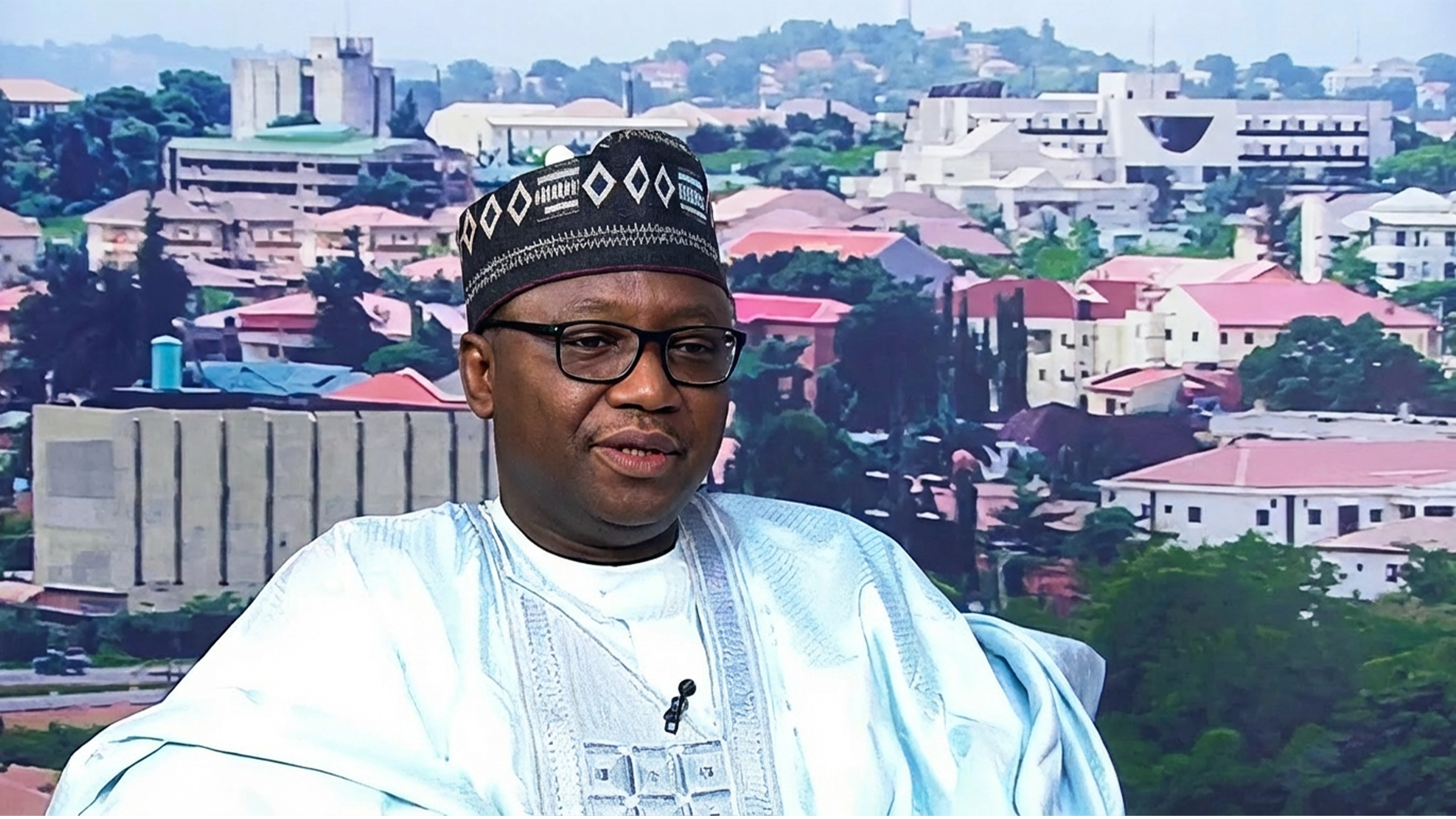
The Revenue Mobilisation Allocation and Fiscal Commission (RMAFC) has revealed that, between 2023 and October 2025, total gross inflows into the Federation Account amounted to N66.42 trillion.
The Chairman of RMAFC, Dr. Mohammed Bello Shehu, who disclosed this on Monday during his remarks at the opening of a two-day national stakeholders’ discourse on enhancing fiscal efficiency and revenue growth under the Nigeria Tax Act, organised by the Commission, stated that the steady increase in revenue inflows to the federation account reflects positive changes resulting from the economic reform programmes of the current administration.
He said a breakdown of the figure shows that in 2023, the Federation Account received a gross revenue of N11,930,865,030,521.50; in 2024, the figure increased significantly to N21,432,592,362,620.70.
“On the other hand, the 10 months accruals into the Federation Account in the period of January to October, 2025 were N23,058,248,707,725.50,” he said.
“The continued growth in the inflows is due to fiscal reforms, tracking and coordination among revenue agencies, stronger audits, digital tracking, and fiscal reforms.”
He said these measures strengthened fiscal discipline and expanded the revenue pool for allocation to Federal, State, and Local Governments.
He noted that the shift marks progress towards a more resilient, diversified, and sustainable public finance system with less dependence on oil earnings.
The RMAFC boss said that recent changes have improved the overall economic situation, even though many citizens have yet to feel the positive impacts.
He said, “Inflation rate has consecutively dropped in the last four months (July, 21.88; August, 20.21; September, 18.02 and October, 16.05 per cent).
“The exchange rate (Naira/USD) equally remains stable in the same period (July, N1,534; August, N1,528; September, N1,465 and October, N1,428).”
He said the GDP has also continued to grow, particularly from the services sector, which now accounts for more than half of total GDP.
“Oil still represents over 90 per cent of export earnings and a large part of government revenue, yet it contributes less than 10 per cent to the overall GDP, showing that the economy is moving away from relying solely on oil production,” he said.
Dr. Shehu said the commission took the decision to convene the National discourse at this time to bring all stakeholders, including the organised labour, to have a deep discussion and understanding of the implementation of the new tax Act.
“The commission, pursuant to its function to monitor the accruals to and disbursement of revenue from the Federation Account, will remain steadfast in safeguarding the federation’s revenue profile through enhanced monitoring of revenue collections, deployment of forensic audits, strengthening collaboration with Sub-National governments on non-oil revenue mobilisation and reforms to deepen transparency in revenue reporting,” he said.
He said every stakeholder has an obligation to respect the values of accountability, transparency, and compliance, insisting that a well-organised tax system is the foundation for national development.
In his keynote address, the Chairman of the Presidential Fiscal Policy and Tax Reforms Committee, Taiwo Oyedele, who advised Nigerians to accept the new tax laws as it is in their interest, noted that it is a false narrative that Nigerians are going to pay more tax when the new tax Act takes effect in January 2026.
He also revealed that about 85 per cent of Nigeria’s resources are assigned to states and local governments.
Oyedele said out of the eight revenue sources, five, including personal income tax, property tax, stamp duty, value added tax and land, belong 100 per cent to states and local governments, while the remaining three, corporate income tax, customs duty and petroleum and solid minerals revenues are shared by the three tiers of government.
He said that fiscal federalism should focus on optimising all revenue sources rather than reallocation or new taxes.
He said there is need to address the problem of multiple taxation in the country, noting that the power to regulate or control does not mean power to tax.
He also called for budgetary reforms, accountability and transparency. He said, “Responsibilities and revenue should march. There should be equitable sharing of revenue among all tiers of government and between states and local governments.”

