 Follow Us on Google News
 Follow Us on Google Discover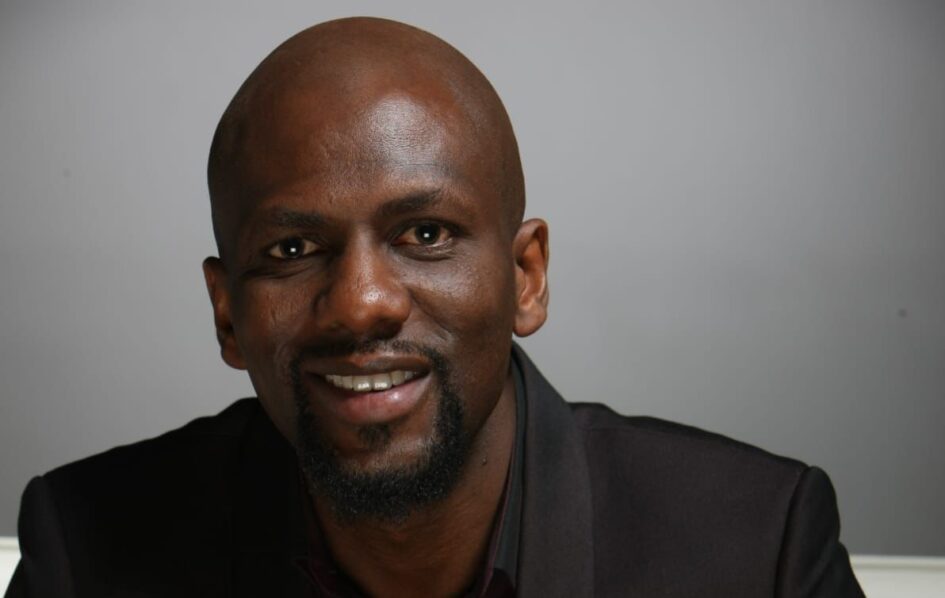
Consummate actor, writer, and filmmaker Fabian Adeoye Lojede has made a significant move in his arts and crafts with the launch of his new project, ‘The Afrotods,’ a multimedia initiative that is bringing African culture and values to kids through books, animation, and more.
In a chat with selected journalists in Lekki, Lagos, the actor famed for his role in the critically acclaimed TV series Jacob’s Cross stated that children often absorb the world around them through stories, and the characters they meet, the voices they hear, and the worlds they imagine quietly influence how they see themselves.
Driven by a long-standing concern—the lack of media that truly represents Black kids—Lojede explained that stepping into this formative space, using storytelling as a gentle but powerful tool to strengthen Black children’s connection to their cultural roots, will help them connect with their heritage and identity. Lojede stressed that the project was born out of a stark realisation that came with his fatherhood experience.
“As a filmmaker or storyteller, I’ve always been more on the adult side, but I’ve always been fascinated by cartoons and children’s stories generally, but then I realised that I have kids, and I don’t have anything online or any of my works that my children can watch because I’m either playing a killer or so. They are not of age to watch anything that I’ve made creatively. So that’s when I decided to do this because they appreciate creativity. Over and above, there’s a gap that I see personally,” he said, explaining his motivation.
Designed for Black children with a connection to African identity, the initiative, which starts with children’s books, aims to fill the gap in African kids’ content. It is designed to be a cultural touchstone for African children worldwide, addressing a lack of representation in contemporary kids’ media.
According to Lojede, the real issue is that there’s a serious shortage of content that truly speaks to young Black children and authentically reflects the lives and aspirations of their heritage or origin. “I’m a pan-Africanist and one of the key things that I see is that our children—Black kids—generally, there’s no content out there that talks to them.

“There are lots of contents that you might come by and done by Europeans or foreign channels, and one of the things I personally noticed is that some of the contents targeting Black kids, especially African kids, is that there’s almost a caricatureness in it, particularly in the way they speak,” the creative entrepreneur stated.
Determined to break away from traditional, often outdated representations of African life, the actor argues that today’s children are cosmopolitan and deserve content that mirrors their modern reality but represented in an African way.
“Many of our kids have never even seen a freaking lion; they are so cosmopolitan in their world. Even the ones in the villages, how many of them have seen elephants and giraffes?” he queries, stressing that “they watch all the foreign stuff, but at the same time there is nothing that is talking to them. So, there is that aspect of how do we talk to them in a manner in which they are used to.”
To avoid sounding preachy, Lojede further explained that with fast-eroding mother tongues and cultures, Afrotods is crafted in a way that its messages are subtle and value-based. This required speaking with parents to understand their concerns about the content their children consume. Many highlighted the disconnection in value systems, especially in how children in popular shows address adults, often in ways that are culturally alien.
“We never had to learn our culture,” he said. “Our culture wasn’t something that was an academic process; we lived it. But now we have to, in some instances, teach our kids their culture. It was unheard of to have Yoruba or Igbo teachers privately teach the kids the language in their own country. Now, that’s a thing.”
With ‘The Afrotods,’ Lojede hopes to gently shift that narrative. He stated the initiative is not necessarily about Africa in the true sense of the word. “It’s about anybody with African origin, so whether you are Jamaican, African-American; you have people of African origin in India, as far as even Iran and Iraq. So the idea is for any child or anyone that lays claim to some form of African identity to be able to see themselves in a very subtle way, not necessarily in a traditional cultural sense,” he enthused.
The filmmaker averred that he spent years observing his own children, refining his approach to ensure the content is relatable and competitive. “It took me about three years just observing them and asking them questions. I decided I wanted to do something subtle that could compete with other available brands, but with a certain amount of our own value.”
He noted that the series explores the lifestyle of inhabitants of Afroville, a “beautiful world filled with Afro-modern motifs, history, culture, music, and fun.” This fictional world, Lojede explains, is designed as a “fictional analogy for a modern Black, pro-Black, pro-identity world.”
On the intentionality of the character designs, which are subtly shaped like miniature maps of Africa, the author said: “What we are trying to do is subliminal messaging; your average child actually doesn’t know that it is the map of Africa,” he explained, emphasising the gentle, non-obvious cultural embedding.
According to Lojede, the vision for ‘The Afrotods’ extends far beyond the book. He confirmed the project is already diversifying into various formats to maximise reach and impact. “We have it as animation, we have a YouTube channel; we are also developing an app,” he shared.
Already digitised as an animated e-book, the creative entrepreneur affirmed that the team is prioritising translations into other languages. “We have done the English version; we are going to do the French version, and others,” stressing that the long-term aim is to also have “an indigenous language version” to support the crucial need to teach children their mother tongues—a necessity that was “unheard of” in previous generations.

