Follow Us on Google News
 Follow Us on Google Discover
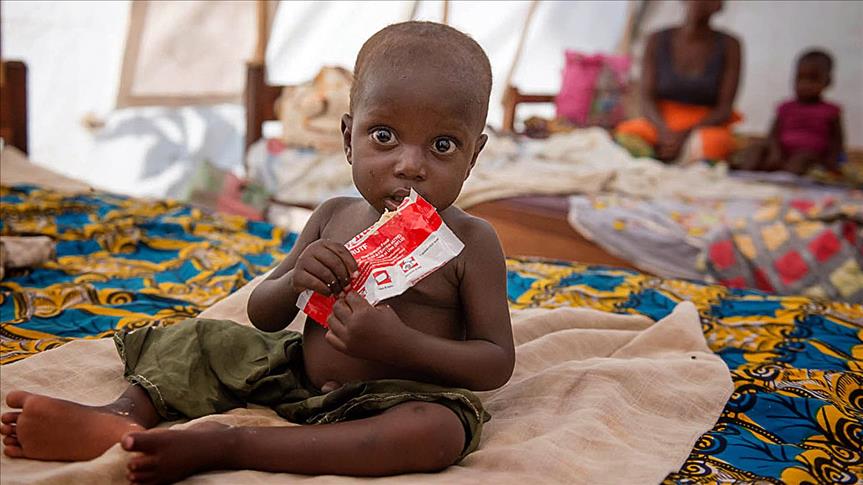
In the past week, two sobering warnings shook the global health community, warnings that Africa, in particular, cannot afford to ignore. On December 1, UNICEF projected that 1.8 million children could die annually by 2040 if current funding shortages and weak health systems are not urgently addressed.
Just days earlier, the World Health Organisation (WHO) and United Nations Programme on HIV/AIDS (UNAIDS) jointly called on African countries to renew political commitment to ending HIV, noting the dangerous slowdown in prevention, treatment and public health investment across the continent.
Taken together, these alerts paint an alarming picture of a continent edging perilously close to a health catastrophe, one that is both avoidable and deeply unjust. Africa is not lacking in the knowledge, science or technology to save its children and adolescents. What Is missing is sustained political will, strategic investment, and the prioritisation of human lives over short-term political considerations.
The UNICEF report is a stark, data-driven warning shaped by current trends The projection is especially troubling because the world had made remarkable progress in reducing child mortality over the past two decades. Vaccination coverage expanded, malaria deaths declined, and interventions for newborn and maternal health improved.
But these hard-won gains are now eroding. Funding for child health programmes has become erratic. Vaccine hesitancy, fueled by misinformation, is rising. Climate change is worsening malnutrition, disease outbreaks and displacement. Poverty is increasing in several regions as conflict, inflation and economic instability push families into deeper vulnerability.
Africa’s population is also growing rapidly, meaning more children will be born into systems that are already overstretched and underfunded. The combination is volatile, and the UNICEF projection is a signal that unless urgent action is taken, the continent risks reversing 20 years of progress.
The most tragic aspect of this forecast is that these deaths are preventable. The leading causes of child mortality, malaria, pneumonia, diarrhoea, malnutrition and birth complications have known solutions.
While the world’s attention has shifted to new global threats, Africa continues to shoulder the heaviest burden of HIV. According to WHO and UNAIDS, the global momentum toward eliminating HIV has stalled. Many African countries are now off-track to meet the 2030 target of ending AIDS as a public health threat.
For a continent that accounts for two-thirds of global new HIV infections, this is a dangerous trajectory. What makes the situation more frustrating is the wealth of evidence showing that progress is possible. The science is strong. Antiretroviral therapy (ART) works remarkably well. Prevention of mother-to-child transmission has been successful in multiple countries. Pre-exposure prophylaxis (PrEP) has proven effective.
At the heart of both crises lies a troubling pattern: declining global funding and insufficient domestic investment. Donor fatigue is becoming more pronounced. Conflicts in Europe and the Middle East, pandemics, and global economic instability have shifted international priorities. However, Africa cannot continue to depend on donors to protect the health of its children and future. The reminder from UNICEF, WHO and UNAIDS is clear: African leaders must own their health agenda.
Primary healthcare is the foundation of a resilient health system, yet it remains the weakest link in many African countries. Most rural communities lack accessible clinics. Many pregnant women give birth without skilled attendants. Nutrition programmes are inconsistent. Water and sanitation infrastructure in countless communities is inadequate. Routine immunization, arguably the simplest and most cost-effective public health intervention continues to face periodic disruptions.
These weaknesses are precisely what UNICEF warns will lead to millions of avoidable deaths. Strengthening primary healthcare does not require complex facilities or advanced technologies. It requires political commitment, trained community health workers, consistent medication supply chains, and predictable financing.
The health of children and the HIV epidemic are more closely linked than often acknowledged. Adolescents represent a growing share of new HIV infections. Children born to HIV-positive mothers, without adequate care, risk infection. Communities affected by HIV often face weakened familial and economic structures that place children at higher risk of malnutrition, neglect and disease. Thus, addressing HIV is not separate from protecting children; it is part of the same fight for stronger, more equitable health systems.
To prevent the grim future outlined by UNICEF and reverse the decline in HIV efforts highlighted by WHO and UNAIDS, African governments must take immediate, decisive steps. Nigeria and other countries should prioritise health in national budgets, meeting or exceeding the Abuja Declaration commitment of 15 per cent allocation to the health sector.
Also, strengthen primary healthcare access, ensuring that every community has functioning clinics, trained personnel and reliable supply chains; restore and expand HIV programmes, especially for young people, pregnant women, key populations and underserved communities.
Similarly, leverage technology, such as digital health tools, telemedicine, and real-time disease surveillance, to strengthen health systems; combat misinformation, especially around vaccines and HIV prevention, through coordinated public communication campaigns.
Likewise, improve water, sanitation and nutrition programmes, which are essential to child survival; integrate climate resilience into health policy, recognising the growing impact of climate change on disease patterns, displacement and food security, as well as embed accountability, ensuring that health investments translate into measurable outcomes.
The looming scenario of 1.8 million child deaths by 2040 is not just a humanitarian crisis, it is a threat to Africa’s future. No nation can develop when its children are dying of preventable diseases. No economy can grow when its workforce is weakened by chronic illness. No society can remain stable when its young population is denied basic health rights.
The call by WHO and UNAIDS is equally urgent. The HIV epidemic may no longer dominate global headlines, but it remains a reality in African homes, clinics and communities. Ending HIV is not just a health goal, it is a moral mandate and a prerequisite for sustainable development.
History will judge this generation of leaders by how they respond to these warnings. The choice before Africa is stark but clear either to act now, decisively and urgently, or condemn millions of children and families to unnecessary suffering. The time for rhetoric has long passed. What Africa needs today is action, bold, strategic and uncompromising in its defence of human life.
Preventing child-health catastrophe in Africa
Date: 20 December 2025 4:51am WAT