 Follow Us on Google News
 Follow Us on Google Discover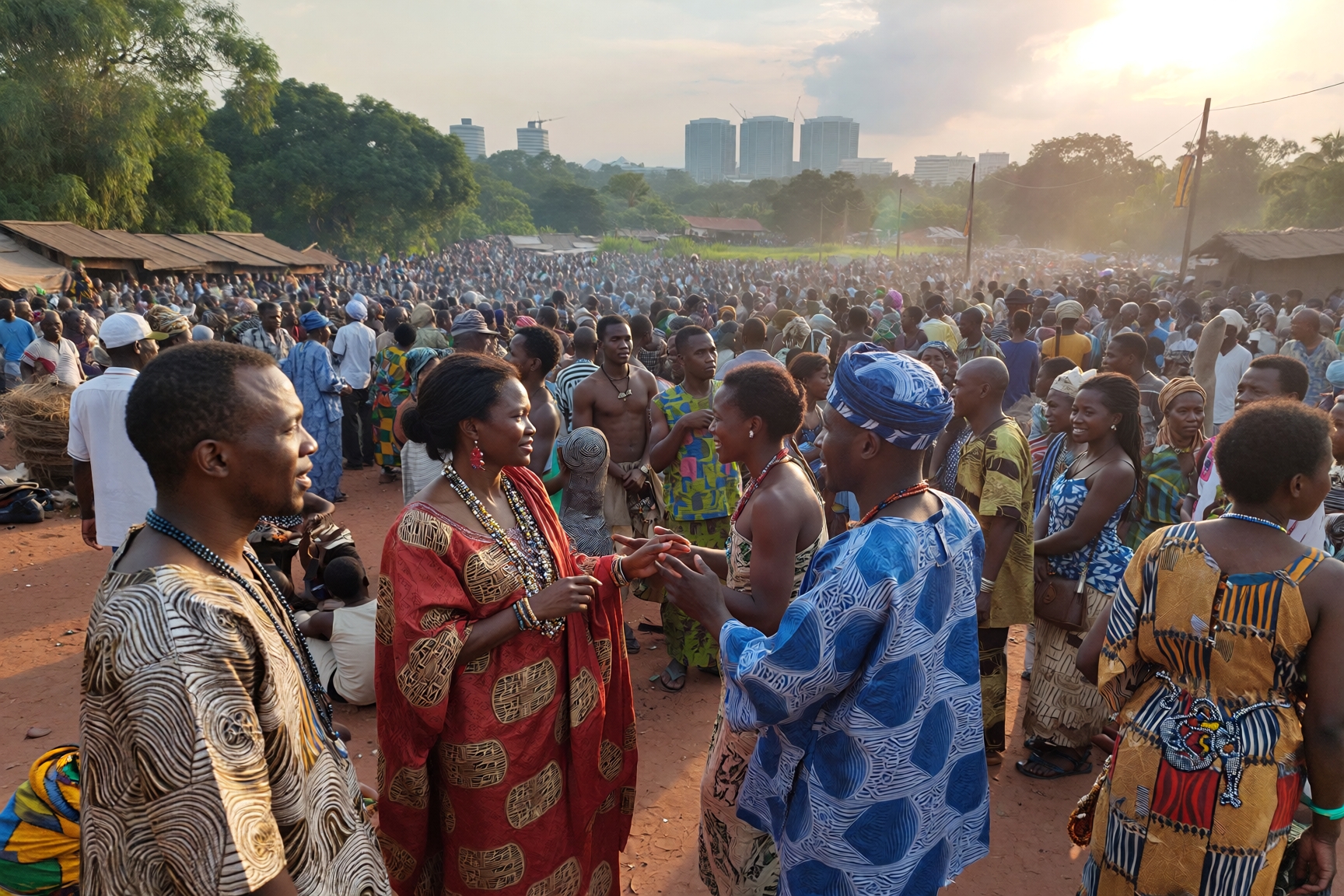
Hello there, friend. I need to share something with you that represents months of careful research and years of fascination with Nigeria’s incredible cultural tapestry. When people ask me about how many ethnic groups exist in Nigeria, they often expect a simple number. What they get instead is a glimpse into one of the world’s most extraordinary experiments in human diversity.
Nigeria is home to exactly 371 officially recognised ethnic groups, each with distinct languages, cultures, traditions, and historical identities that have evolved over millennia. This staggering diversity makes Nigeria one of the most ethnically varied nations on Earth, ranking third globally for cultural diversity after only Chad and Cameroon. I remember my first research trip through Nigeria’s Middle Belt region, where I encountered seven different ethnic groups within a single local government area. The linguistic shift happening every 20 kilometres was mind-blowing.
The sheer scale of this diversity challenges everything we think we know about nation-building.
What are the Major Ethnic Groups in Nigeria and Their Languages?
Let’s start with the big three, because they dominate most conversations about Nigerian ethnicity (and they’re impossible to ignore).
The Hausa-Fulani people represent about 29% of Nigeria’s population, predominantly occupying the northern states from Sokoto to Kano, Katsina to Kaduna. Their language, Hausa, is spoken by over 63 million people when you include second-language speakers, making it Nigeria’s most widely spoken indigenous tongue. The Hausa language belongs to the Afroasiatic family and serves as a lingua franca across much of West Africa, not just Nigeria.
I spent three weeks in Kano researching traditional governance systems, and the way Hausa facilitates trade, Islamic scholarship, and daily commerce across ethnic boundaries was remarkable. You’d hear a Yoruba trader negotiating in fluent Hausa with a Kanuri merchant, both code-switching to Nigerian Pidgin when joking around.

The Yoruba people make up approximately 21% of the population, centred in southwestern states like Lagos, Oyo, Ogun, Osun, Ondo, and Ekiti. Yoruba is a tonal Niger-Congo language with profound cultural significance, and the Yoruba culture is renowned for its rich artistic traditions, elaborate festivals, and sophisticated traditional governance through Oba (king) systems that predate colonial Nigeria by centuries.
The Igbo people represent about 18% of Nigeria’s population, primarily in southeastern states including Abia, Anambra, Ebonyi, Enugu, and Imo. The Igbo language also belongs to the Niger-Congo family and has numerous dialects that can differ significantly between communities separated by just 50 kilometres. Igbo culture emphasises individual achievement, democratic decision-making through traditional town hall systems, and strong entrepreneurial traditions that have spread Igbo communities across Nigeria and the world.
But here’s where it gets genuinely fascinating: beyond these three major groups, Nigeria hosts ten to fifteen medium-sized ethnic groups, each exceeding one million people.
The Ijaw people (approximately 10 million) inhabit the Niger Delta across Bayelsa, Delta, and Rivers states, with a distinct fishing and riverine culture shaped by the mangrove swamps and waterways they’ve called home for centuries. Their languages belong to the Niger-Congo family but differ markedly from Yoruba or Igbo.
The Kanuri (around 4 million) dominate Borno State in Nigeria’s northeast, speaking a Nilo-Saharan language that connects them culturally to communities across the Lake Chad Basin in neighbouring Chad, Niger, and Cameroon. Their historical Kanem-Bornu Empire was one of Africa’s longest-lasting states, existing from the 9th to the 19th century.
The Ibibio (approximately 5 million) occupy Akwa Ibom State in the south-south region, maintaining distinct cultural practices including elaborate masquerade traditions and unique culinary heritage that differs from their Igbo and Ijaw neighbours. The Tiv people (around 5 million) in Benue State speak a Bantoid language and maintain strong agricultural traditions centred on yam cultivation and distinctive musical practices using traditional instruments.
Additional medium-sized groups include the Edo people of Edo State (descendants of the ancient Benin Kingdom), the Nupe of Niger State, the Urhobo and Itsekiri of Delta State, the Fulani (semi-nomadic pastoralists spread across Nigeria’s northern and middle regions), the Igala of Kogi State, and the Idoma also of Benue State.
That’s just scratching the surface. The remaining 300-plus ethnic groups each contribute unique languages, traditions, and perspectives to Nigeria’s national identity.
Which State in Nigeria Has the Most Ethnic Groups?
This question always generates heated debates at academic conferences (and I’ve witnessed a few).
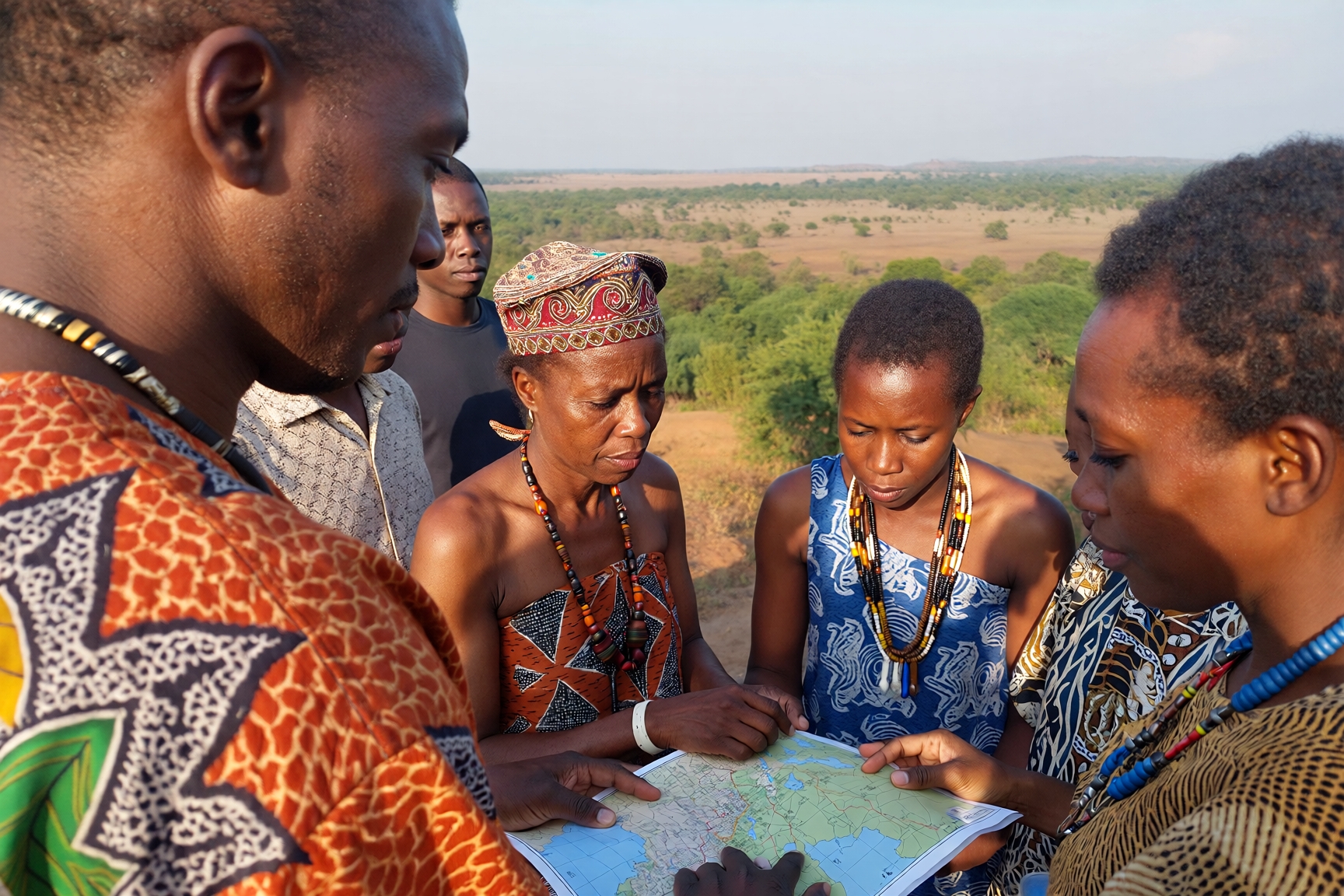
Taraba State holds the distinction of being Nigeria’s most ethnically diverse state, hosting approximately 80 different ethnic groups within its borders. This extraordinary concentration of diversity stems from Taraba’s geographical position in Nigeria’s Middle Belt, where the northern savanna meets the southern forest zone, creating diverse ecological niches that have historically supported distinct communities.
The Middle Belt generally (spanning states like Plateau, Benue, Nassarawa, Taraba, Adamawa, and parts of Kaduna and Niger) represents Nigeria’s area of greatest ethnic fragmentation, where dozens of smaller ethnic groups maintain distinct identities, languages, and cultural practices often within a few kilometres of each other.
Plateau State also demonstrates remarkable diversity, with over 50 ethnic groups including the Berom, Anaguta, Afizere, and dozens more, each maintaining distinct languages despite geographical proximity.
The reasons for this concentration fascinate anthropologists and historians. The Middle Belt’s rugged terrain (particularly the Jos Plateau and the Mambilla Plateau in Taraba) provided refuge for smaller groups fleeing larger empires and slave raids from both the northern Islamic states and southern coastal kingdoms. The varied ecology, from mountains to river valleys, allowed different groups to develop specialised economic niches (farming, fishing, iron-smelting, trading) that supported independent communities even in close proximity.
I visited Taraba’s capital, Jalingo, for fieldwork on language preservation, and within a 60-kilometre radius, I documented seven languages from three different language families. The linguistic diversity was staggering, and local government officials told me about regular challenges in providing services across such varied linguistic and cultural contexts.
Lagos State, whilst hosting Nigeria’s largest city and most diverse population in absolute terms, achieves this diversity through migration rather than indigenous variety. Lagos attracts people from all 371 ethnic groups who come seeking economic opportunities, creating a cosmopolitan melting pot rather than the indigenous ethnic mosaic found in Taraba or Plateau.
What Are Nigeria’s Four Main Ethnic Groups?
When people talk about Nigeria’s “four main ethnic groups,” they’re usually referring to the Hausa-Fulani, Yoruba, Igbo, and either Ijaw or Kanuri as the fourth (depending on who’s counting).
This framing has political and historical significance rather than just demographic accuracy.
The three largest groups (Hausa-Fulani, Yoruba, and Igbo) collectively represent roughly 60-68% of Nigeria’s population, leaving 32-40% distributed among the remaining 368 ethnic groups. This concentration of population in three groups has profoundly shaped Nigeria’s politics, with the concept of “federal character” (ensuring representation for all states and regions) written into the 1999 Constitution to prevent the big three from completely dominating governance.
The Hausa-Fulani designation itself represents a fusion of two originally distinct groups. The Hausa were settled agricultural communities and traders who built the Hausa city-states (Kano, Katsina, Zaria, etc.). The Fulani were originally semi-nomadic pastoralists who migrated into Hausaland and eventually led the early 19th-century Fulani Jihad that established the Sokoto Caliphate. Over two centuries, significant intermarriage and cultural blending created what’s now often termed Hausa-Fulani, though some Fulani groups maintain distinct identities and many Hausa people would distinguish themselves from Fulani heritage.
The Ijaw claim to being the fourth-largest group rests on their approximately 10 million population concentrated primarily in the oil-rich Niger Delta. Their historical marginalisation despite living atop Nigeria’s petroleum wealth has made Ijaw identity politically significant, particularly during the Niger Delta militancy of the 2000s.
The Kanuri’s claim comes from their historical importance as the ethnic group of the Kanem-Bornu Empire and their current concentration in Borno State, which has made them central to Nigeria’s security challenges in the northeast.
This “big four” framework, whilst useful for understanding broad patterns, can obscure the reality that Nigeria’s remaining 367 ethnic groups aren’t just demographic footnotes. Groups like the Tiv, Ibibio, and Edo each number in the millions and maintain vibrant cultural traditions, political influence within their states, and significant contributions to Nigerian national life.
Understanding Nigeria’s Ethnic Diversity: A Seven-Step Guide
If you’re trying to wrap your head around Nigeria’s ethnic complexity (and trust me, it’s a lot to process), here’s a systematic approach I’ve developed after years of research:
1. Start with the Big Three Historical Regions
Understand that pre-colonial and colonial Nigeria organised itself around three regions: Northern (Hausa-Fulani dominated), Western (Yoruba), and Eastern (Igbo). This tripartite structure still influences Nigerian politics, though the country now has 36 states plus the Federal Capital Territory. Grasping this historical framework helps explain why Nigerian politics often breaks down along these regional lines, even though each region contains dozens of minority ethnic groups whose interests don’t always align with the majority group.
2. Learn the Language Families
Nigeria’s ethnic groups fall into three major African language families: Niger-Congo (including Yoruba, Igbo, Ijaw, Edo, and many others), Afroasiatic (including Hausa and languages of the northeast), and Nilo-Saharan (primarily Kanuri). Understanding these linguistic connections helps you see patterns in how seemingly different groups actually share deep historical roots, whilst groups living side-by-side sometimes belong to completely different language families with no mutual intelligibility.
3. Recognise the Middle Belt Complexity
The Middle Belt (stretching across central Nigeria) defies the simple tripartite model. States like Plateau, Benue, Taraba, and Nasarawa host dozens of ethnic groups, none of which dominates numerically the way Hausa, Yoruba, or Igbo do in their regions. These groups often identify as “minorities” in national politics but maintain strong distinct identities locally. The Ministry of Information and National Orientation has worked to document and preserve these diverse cultural traditions.
4. Study the Niger Delta’s Unique Context
The Niger Delta (Bayelsa, Delta, Rivers, parts of Akwa Ibom, Cross River, Edo, and Ondo) hosts numerous ethnic groups (Ijaw, Urhobo, Itsekiri, Ikwere, Ogoni, Efik, and many more) whose cultures developed around fishing, trading, and navigating the region’s complex waterway systems. The discovery of oil in the 1950s transformed these communities’ economic and political significance whilst creating environmental and social challenges that persist today.
5. Appreciate Urban Migration Patterns
Major Nigerian cities (Lagos, Abuja, Port Harcourt, Kaduna, Ibadan) host members of all 371 ethnic groups, creating cosmopolitan environments where ethnic identity matters less than in rural areas and smaller towns. A young professional in Lagos might identify primarily as “Lagosian” in daily life whilst maintaining strong connections to their ethnic homeland for festivals, marriages, and family obligations. Understanding this dual identity helps explain modern Nigerian social dynamics.
6. Understand Religious Overlays
Religion crosscuts ethnicity in complex ways. The North is predominantly Muslim (though with significant Christian minorities in the Middle Belt and parts of Kaduna and Adamawa), whilst the South is predominantly Christian (though with significant Muslim populations in southwestern Yorubaland and parts of the Niger Delta). Some ethnic groups (particularly Yoruba) have roughly equal Muslim and Christian populations, whilst others (like Igbo) are overwhelmingly Christian. Traditional African religions still influence practices across all groups despite conversion to Christianity or Islam.
7. Follow Contemporary Politics and Representation
Nigeria’s “federal character” principle ensures that appointments to federal positions consider geographical spread and ethnic representation. Studying how this works in practice (presidential tickets typically balance North-South, Muslim-Christian, and major ethnic group representation) helps you understand how ethnic diversity shapes governance. The Nigerian Ministry of Foreign Affairs provides official demographic information that informs these representation calculations.
This seven-step framework won’t make you an expert overnight, but it provides a structure for understanding how 371 ethnic groups coexist within one nation. The process requires patience, cultural sensitivity, and genuine curiosity about how people different from yourself make sense of the world.
Nigeria’s Ethnic Groups: A Statistical Breakdown
Understanding Nigeria’s ethnic landscape requires looking at the numbers, though I should caution that demographic data about ethnic groups in Nigeria is politically sensitive and often contested. The last census to include questions about ethnicity was in 2006, and even those figures remain disputed. Here’s what we can reasonably establish:
| Ethnic Group Category | Number of Groups | Approximate Population | Percentage of Total | Primary Regions | Languages Spoken |
|---|---|---|---|---|---|
| Three Major Groups (Hausa-Fulani, Yoruba, Igbo) | 3 | 130-145 million | 60-68% | North, Southwest, Southeast | Hausa, Yoruba, Igbo, English |
| Medium-Sized Groups (1-10 million each) | 10-15 | 35-50 million | 16-23% | Delta, Middle Belt, Northeast | 10-15 major languages |
| Small Groups (100,000-1 million each) | 50-80 | 15-25 million | 7-12% | Scattered, concentrated in Middle Belt | 50-80 languages |
| Minority Groups (under 100,000 each) | 280-310 | 8-15 million | 3-7% | Primarily Middle Belt and Border areas | 280-310 languages |
This table represents conservative estimates based on the 2006 census data, projected forward to Nigeria’s estimated 2023 population of approximately 223 million. The actual numbers could vary significantly, particularly for smaller groups where census data quality declines.
What strikes me most about these figures is how the bottom three categories (representing 358 out of 371 ethnic groups) collectively account for roughly 26-42% of Nigeria’s population. That’s potentially 60-95 million people belonging to ethnic groups that most Nigerians have never heard of. Their cultures, languages, and traditions deserve recognition and preservation just as much as the more numerous groups.
How Many Ethnic Groups Originally Made Up the Area Now Known as Nigeria?
This question touches on something fundamental about Nigerian history that often gets glossed over in textbooks.
The honest answer? Nobody knows precisely, but it was definitely more than 371, and many have disappeared since the area became “Nigeria.”
Before the British created Nigeria through the 1914 amalgamation of the Northern and Southern Protectorates (which themselves resulted from decades of colonial conquest and administrative reorganisation), the territory encompassed hundreds of independent kingdoms, emirates, city-states, stateless societies, and semi-nomadic groups. Scholars estimate there were roughly 400-500 distinct ethnic and linguistic communities in the pre-colonial period, each with its own governance structures, territorial boundaries, and cultural identity.
The process of becoming Nigeria reduced this number through several mechanisms that historians have documented.
Ethnic consolidation occurred as smaller groups were administratively merged by colonial authorities who found it inconvenient to deal with dozens of distinct groups within a single province. Groups that shared linguistic similarities or geographical proximity were lumped together under umbrella identities that obscured real cultural differences. The Tiv people, for instance, represented a consolidation of numerous clan-based communities that the British administratively unified.
Assimilation happened as economically weaker or militarily defeated groups adopted the languages and identities of stronger neighbours for protection or economic opportunity. This process accelerated during the trans-Saharan slave trade, the Atlantic slave trade, and the various jihads and wars of the 18th and 19th centuries. Small groups caught between larger warring states often had little choice but to assimilate or face extinction.
Language death represents perhaps the saddest aspect of this consolidation. Recent research has documented that 29 Nigerian languages have gone completely extinct since independence, whilst another 29 are in danger of extinction. When a language dies, so does the distinct ethnic identity it carried. An elderly speaker in Taraba once told me she was the last fluent speaker of her mother tongue. When she passes, an entire worldview disappears with her.
Some historical ethnic groups have vanished so completely that we only know their names from early colonial records and oral histories. The Kororofa Kingdom (sometimes identified with the Jukun people) once controlled vast territories in the Middle Belt but declined dramatically after wars with the Sokoto Caliphate in the 19th century, with remnant populations absorbed into other ethnic groups.
The colonial creation of Nigeria also meant that ethnic groups got arbitrarily divided by international borders. The Yoruba extend into the Republic of Benin. The Hausa and Fulani stretch across Niger, Burkina Faso, and Cameroon. The Kanuri continue into Chad, Niger, and Cameroon. These same ethnic groups exist across borders, but only the Nigerian portion gets counted in Nigeria’s 371.
Understanding this history matters because it reminds us that ethnic identities aren’t ancient, unchanging categories but rather living, evolving social constructs that respond to political, economic, and demographic pressures. The 371 ethnic groups we count today represent a snapshot in an ongoing process of cultural change, preservation, and sometimes loss.
I’ve spent time with cultural preservation organisations trying to document endangered languages and traditions, and there’s an urgency to their work. Every year without comprehensive documentation means more knowledge disappearing. The Federal Ministry of Information’s cultural initiatives attempts to support this preservation work, though funding rarely matches the scope of the challenge.
How Nigeria’s Ethnic Diversity Shapes Daily Life
Let me tell you about something that happened to me in a Lagos market that perfectly captures the everyday reality of Nigerian ethnic diversity.
I was trying to buy fabric for a wedding outfit, and within a 15-minute interaction, I heard six different languages. The Yoruba fabric seller switched to Igbo when she recognised my companion’s accent, then to Hausa when a northern customer approached, before reverting to Nigerian Pidgin for general banter with other traders, all whilst sprinkling English throughout for technical terms about the fabric quality. The casual multilingualism was beautiful to witness.
This is the reality that statistics about 371 ethnic groups don’t fully capture. Most Nigerians navigate multiple ethnic identities daily, code-switching between languages depending on context, and maintaining complex identities that blend ethnic heritage with state of origin, current residence, religious affiliation, and professional network.
Nigerian food culture demonstrates this blending perfectly. You’ll find Hausa suya (spiced grilled meat) sold throughout the South, Yoruba amala and ewedu consumed enthusiastically in the East and North, and Igbo abacha (African salad) available in markets across the country. Understanding Nigeria’s diverse food culture requires appreciating how ethnic cuisines have become national treasures whilst maintaining their distinct regional identities.
The music industry shows similar patterns. Afrobeats artists routinely mix Yoruba, Igbo, Hausa, and Pidgin in single songs, creating sonic landscapes that celebrate Nigeria’s diversity rather than treating it as a problem to solve. Burna Boy, Wizkid, Davido, and other global Nigerian artists draw on multiple ethnic musical traditions, creating fusion sounds that feel authentically Nigerian precisely because they don’t limit themselves to a single ethnic identity.
Professional life in Nigeria’s major cities requires ethnic flexibility. A typical corporate office in Lagos might include Yoruba, Igbo, Hausa, Ijaw, Edo, Ibibio, and Tiv colleagues working together, communicating primarily in English but often sliding into ethnic languages for informal conversation or to exclude others from understanding (which happens more than people admit). Understanding workplace dynamics requires recognising when ethnic solidarity trumps professional hierarchy and when professional identity transcends ethnic considerations.
Marriage increasingly crosses ethnic lines, particularly in urban areas and among the educated middle class, though significant resistance persists in more traditional communities. When a Hausa woman marries an Igbo man, their children navigate complex identities, often claiming both ethnicities whilst primarily speaking English and Pidgin at home. These mixed-heritage Nigerians represent Nigeria’s future in many ways, embodying the possibility of national identity that incorporates rather than erases ethnic heritage.
Politics remains the domain where ethnic identity exercises its most powerful and problematic influence. Politicians cynically manipulate ethnic loyalties to secure votes, often positioning electoral contests as ethnic competitions rather than policy debates. The “zoning” of political positions (informal agreements to rotate offices between ethnic groups and regions) attempts to manage diversity but often reinforces ethnic thinking by making group membership more important than individual capability or policy positions.
Religious practice shows how ethnicity and faith interact in fascinating ways. A Yoruba Muslim maintains cultural practices (like naming ceremonies, traditional dress, and language use) that connect them to Yoruba Christian neighbours whilst sharing religious beliefs and practices with Hausa Muslim communities up north who don’t share Yoruba cultural norms. This crosscutting of ethnicity and religion creates both potential for conflict and opportunities for bridge-building that simplistic models of Nigerian society often miss.
The question isn’t whether ethnic diversity complicates Nigerian life (it absolutely does) but whether this complexity offers opportunities for richness and resilience that more homogeneous societies lack. I’d argue it does, though realising that potential requires conscious effort, political will, and cultural openness that Nigeria demonstrates inconsistently.
Connecting Ethnic Diversity to Broader Nigerian Realities
Understanding Nigeria’s 371 ethnic groups provides essential context for making sense of broader patterns in Nigerian society that might otherwise seem baffling to outsiders (and sometimes to Nigerians ourselves).
The question of why Nigeria is culturally diverse connects directly to ethnic diversity, with the same historical, geographical, and migratory factors that created 371 distinct ethnic identities also producing Nigeria’s ranking as the world’s third most culturally diverse nation. The linguistic variety, religious complexity, and regional differences that characterise Nigerian culture all flow from this fundamental ethnic multiplicity.
Similarly, exploring what languages Nigerians speak reveals how the 371 ethnic groups produce over 520 languages that make Nigeria one of the world’s most linguistically diverse nations, with three major languages (Hausa, Yoruba, Igbo) serving millions whilst hundreds of smaller languages face extinction pressures from English, Pidgin, and the big three indigenous languages. Language serves as the primary marker of ethnic identity for most groups, making language preservation efforts inseparable from ethnic identity preservation.
The economic realities reflected in discussions about Nigerian income levels and wealth distribution can’t be separated from ethnic considerations, though discussing this openly remains politically sensitive. Historical patterns of educational access, regional development priorities, and control of economic resources have created ethnic disparities in wealth that persist despite official policies promoting federal character and equitable development. Some ethnic groups benefited from early missionary education that provided pathways to colonial administration and modern professional careers, whilst others faced systematic exclusion from educational opportunities that created generational disadvantages still visible today.
Embracing Nigeria’s Ethnic Mosaic: Final Thoughts
After months of research across Nigeria and years of thinking about these questions, I’ve come to see Nigeria’s 371 ethnic groups as both the country’s greatest challenge and its most profound opportunity.
The challenge is obvious. Managing a nation where nearly 400 distinct groups claim allegiance to ethnic identities that often compete with national loyalty creates political complexity that sometimes threatens Nigeria’s very existence. The Biafran War (1967-1970), which killed perhaps 1-3 million people, emerged largely from ethnic tensions that the post-colonial Nigerian state failed to manage. Ongoing conflicts in the Middle Belt, kidnapping crises in the Northwest, and separatist agitations in the Southeast all carry ethnic dimensions that complicate resolution efforts.
But the opportunity is equally real. Nigeria’s ethnic diversity has produced unmatched cultural richness, from the leather craftsmanship of Hausa artisans to the bronze casting traditions of Benin City, from Igbo entrepreneurial networks that span continents to Yoruba artistic and literary achievements that influence African culture globally. No other African nation can claim such variety of cultural expression, such depth of artistic tradition, or such complexity of social organisation.
Making diversity work requires specific commitments that Nigeria has made inconsistently.
Constitutional protections for minority rights need genuine enforcement rather than just paper provisions. The federal character principle, whilst imperfect, represents an attempt to ensure all ethnic groups have stakes in national success rather than viewing the state as an ethnic competitor’s project. Strengthening this principle whilst reducing its cynical manipulation for political advantage could help.
Language preservation demands resources and priority that minority languages rarely receive. If current trends continue, Nigeria could lose another 50-100 languages within the next generation, impoverishing our collective cultural heritage. Government support for language documentation, mother-tongue education, and cultural preservation represents an investment in Nigerian diversity that pays dividends in community cohesion and cultural sustainability.
Education about ethnic groups other than one’s own could reduce prejudice and stereotyping that fuel ethnic tensions. Most Nigerians know little about ethnic groups beyond the big three plus their own, creating space for destructive stereotypes and dangerous ignorance. National curriculum requirements for studying Nigeria’s ethnic diversity could build understanding across group lines.
Media representation matters enormously. Nollywood films, radio programmes, and news coverage that showcase Nigeria’s ethnic diversity in respectful, accurate ways help build national identity that incorporates rather than erases ethnic heritage. Conversely, media that traffic in ethnic stereotypes or ignore minority groups entirely reinforce divisions and marginalisation.
Economic development that doesn’t privilege particular ethnic groups or regions reduces the grievances that fuel ethnic tensions. When oil wealth from Ijaw and Ogoni lands funds development in other regions whilst leaving Niger Delta communities impoverished and environmentally devastated, ethnic resentment becomes inevitable. Ensuring that resource-producing communities benefit materially from those resources could reduce ethnic economic competition.
Political leadership that rises above ethnic manipulation would transform Nigeria’s prospects. Too many Nigerian politicians win elections by inflaming ethnic fears rather than building inclusive visions of national development. Voters who demand policy substance over ethnic appeals could change this calculus, though asking voters to abandon ethnic loyalty when material benefits often flow through ethnic networks creates a difficult coordination problem.
After everything I’ve learned, I believe Nigeria’s 371 ethnic groups represent not a problem to solve but a reality to manage wisely. The goal isn’t to eliminate ethnic identity (which would be both impossible and undesirable) but to create political, economic, and social institutions that channel ethnic diversity toward national strength rather than fragmentation.
The 371 number itself will likely change. Some groups will merge as intermarriage and urbanisation blur boundaries. Others will split as internal divisions harden into distinct identities. Languages will die; new cultural fusions will emerge. The precise count matters less than Nigeria’s commitment to protecting the rights and dignity of all ethnic communities, regardless of size or political influence.
Key Takeaways:
- Nigeria’s 371 ethnic groups make it the world’s third-most culturally diverse nation, with each group contributing distinct languages, traditions, and perspectives that collectively define what it means to be Nigerian.
- The big three ethnic groups (Hausa-Fulani, Yoruba, Igbo) represent 60-68% of the population, but the remaining 368 groups (potentially 60-95 million people) deserve equal recognition, rights, and cultural preservation support.
- Managing ethnic diversity successfully requires constitutional protections, language preservation, equitable resource distribution, and political leadership that builds national identity while respecting ethnic heritage.
Frequently Asked Questions About Nigeria’s Ethnic Groups
How many ethnic groups are in Nigeria exactly?
Nigeria officially recognises 371 distinct ethnic groups, each with unique languages, cultural practices, traditional governance systems, and historical narratives. This extraordinary diversity makes Nigeria one of the most ethnically varied nations on Earth, ranking third globally for cultural diversity after Chad and Cameroon.
What percentage do the three major ethnic groups represent?
The Hausa-Fulani, Yoruba, and Igbo collectively represent approximately 60-68% of Nigeria’s estimated 223 million population, leaving 32-40% distributed among the remaining 368 ethnic groups. The three major groups (about 130-145 million people) dominate Nigerian politics, economy, and culture whilst smaller groups fight for representation and recognition.
Which Nigerian state has the most ethnic diversity?
Taraba State holds the distinction as Nigeria’s most ethnically diverse state, hosting approximately 80 different ethnic groups within its borders, followed closely by Plateau State with over 50 ethnic groups. The Middle Belt region generally demonstrates greater ethnic fragmentation than either the predominantly Hausa North or the Yoruba/Igbo South.
How many languages are spoken in Nigeria?
Nigeria hosts over 520 indigenous languages belonging to three major African language families: Niger-Congo, Afroasiatic, and Nilo-Saharan. This linguistic variety reflects the extraordinary ethnic diversity, though many smaller languages face extinction as speakers shift to Hausa, Yoruba, Igbo, English, or Nigerian Pidgin.
What are the four main ethnic groups in Nigeria?
The four main ethnic groups are typically listed as Hausa-Fulani (29% of population, northern Nigeria), Yoruba (21%, southwest), Igbo (18%, southeast), and either Ijaw (10 million, Niger Delta) or Kanuri (4 million, northeast), depending on classification priorities. Together, these four groups represent roughly 70-75% of Nigeria’s population.
Why does Nigeria have so many ethnic groups?
Nigeria’s ethnic diversity results from millennia of migration patterns, the country’s position as a West African crossroads, varied ecological zones supporting distinct communities, and the British colonial amalgamation in 1914 that combined hundreds of previously independent kingdoms, emirates, and stateless societies into one nation. Geography, history, and politics all contributed to creating and preserving this diversity.
Which ethnic groups speak similar languages?
Ethnic groups within the same language family share linguistic similarities: Yoruba, Igbo, Ijaw, Edo, Ibibio, and Urhobo all belong to the Niger-Congo family (though they’re not mutually intelligible), whilst Hausa and related northern languages belong to the Afroasiatic family. Kanuri belongs to the separate Nilo-Saharan family, showing no relationship to Nigeria’s other major languages.
Do Nigerian ethnic groups have traditional rulers?
Most Nigerian ethnic groups maintain traditional governance systems with kings, emirs, chiefs, or councils of elders, though political authority has largely shifted to elected officials since independence. Traditional rulers retain significant cultural influence and serve as custodians of ethnic heritage, mediating disputes and organising cultural festivals even without formal political power.
How does religion relate to ethnicity in Nigeria?
Religion crosscuts ethnicity in complex ways: the North is predominantly Muslim (though the Middle Belt has large Christian populations), the South is predominantly Christian (though southwestern Yorubaland has large Muslim populations), and some groups like Yoruba are roughly split between Christians and Muslims. Traditional African religions still influence practices across all groups despite widespread conversion.
What is federal character in Nigeria?
Federal character is a constitutional principle requiring that appointments to government positions, distribution of amenities, and access to opportunities reflect Nigeria’s geographical and ethnic diversity, preventing domination by any single ethnic group or region. Whilst imperfect in implementation, federal character represents Nigeria’s attempt to manage ethnic diversity through guaranteed representation.
Are smaller ethnic groups in Nigeria endangered?
Yes, many smaller ethnic groups face cultural assimilation pressures, language extinction, and loss of distinct identity as younger generations migrate to cities, intermarry with other groups, and adopt more widely spoken languages like English, Hausa, Yoruba, or Igbo. UNESCO studies show 29 Nigerian languages have gone extinct whilst another 29 face imminent extinction.
How do Nigerians identify ethnically in cities?
Urban Nigerians often maintain dual identities, identifying as “Lagosian” or “Port Harcourt resident” in daily life whilst maintaining strong connections to ethnic homelands for festivals, marriages, and family obligations. Major cities host members of all 371 ethnic groups, creating cosmopolitan environments where ethnic identity matters less than in rural areas, though ethnic networks still influence business relationships and political alignments.

