 Follow Us on Google News
 Follow Us on Google Discover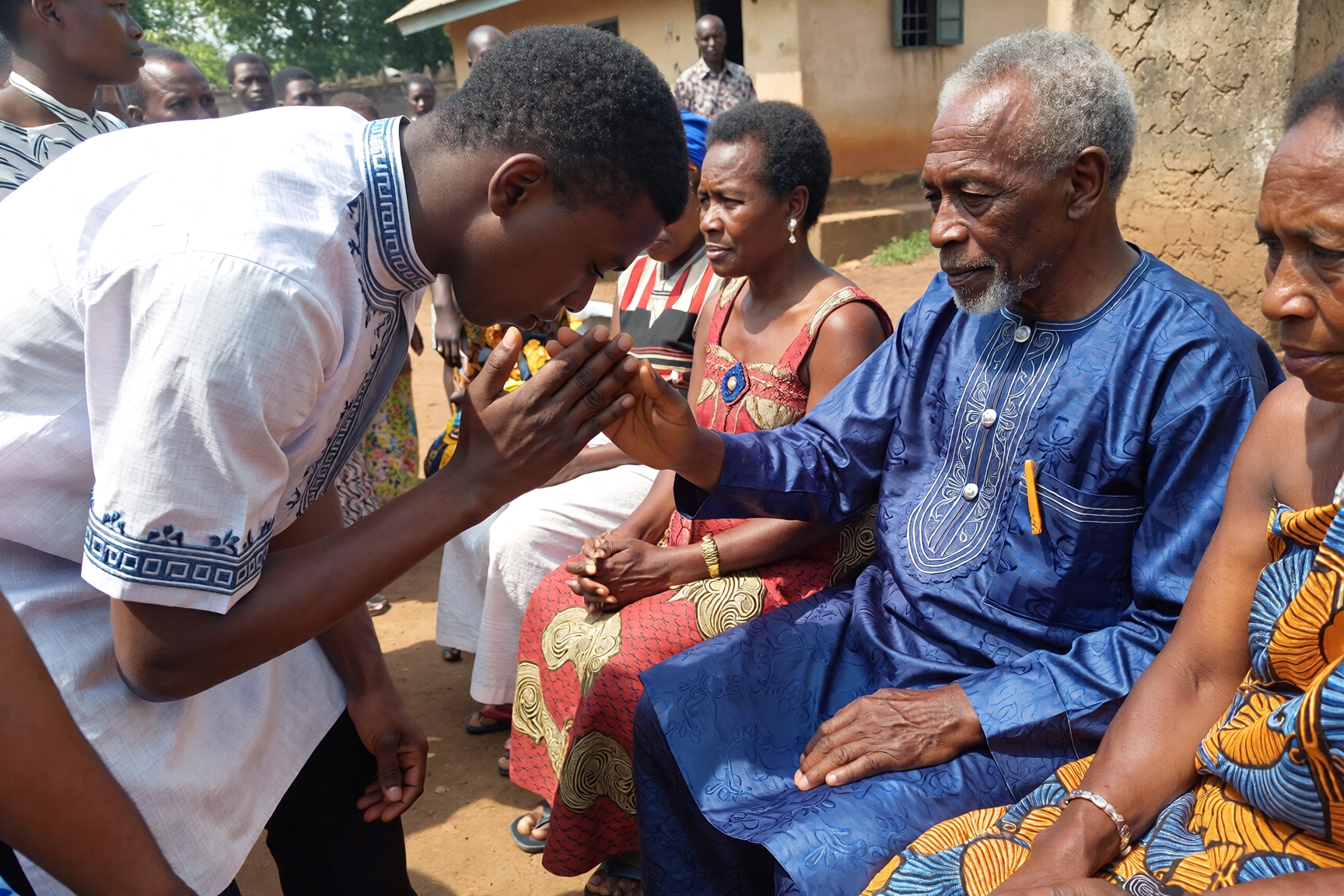
Hello, friend. I need to tell you something important right from the start: this article represents months of research into Nigerian cultural practices and years of observing how respect shapes every single interaction across this magnificently diverse nation. What fascinates me most about Nigerian respect culture isn’t just the visible gestures like prostrations or kneeling, but the intricate web of unspoken rules that govern everything from how you greet your neighbour to how you hold your body in the presence of elders.
Let me paint you a picture. Last month, I watched a young Igbo man in his twenties encounter his uncle unexpectedly at a Lagos market. The transformation was instant. His entire posture changed, his voice dropped several octaves, and he addressed his uncle with the Igbo honorific “Deede” whilst slightly bowing his head. That single interaction, lasting perhaps thirty seconds, demonstrated more about Nigerian respect culture than any textbook could explain. The young man’s respect wasn’t performative or reluctant, it was as natural as breathing, woven into the very fabric of who he is.
Nigerians show respect through elaborate greeting protocols that vary by ethnic group (including prostrations by Yoruba males, kneeling by females across cultures, and specific hand gestures in Igbo communities), the use of appropriate titles and honorifics when addressing elders or people in authority, body language that demonstrates deference (avoiding direct eye contact with elders, maintaining proper posture, speaking in measured tones), never using the left hand for eating or exchanging items, hospitality extended to guests regardless of personal convenience, observing speaking hierarchies where elders speak first and youngsters listen attentively, and removing shoes when entering homes or sacred spaces. According to the National Council for Arts and Culture, these respect protocols form the bedrock of Nigerian social cohesion, transcending ethnic boundaries whilst maintaining culturally specific expressions. The Federal Ministry of Information and National Orientation recognises respect for elders and authority figures as one of Nigeria’s seven core values, shaping social interactions across all 371 ethnic groups and influencing everything from family dynamics to business negotiations.
How You Demonstrate Respect Through Traditional Greetings
Nigerian greeting culture is rather like a complex dance where everyone knows the steps, but outsiders might stumble through the choreography. Each ethnic group has developed intricate greeting protocols that communicate respect through precise physical gestures combined with verbal salutations.
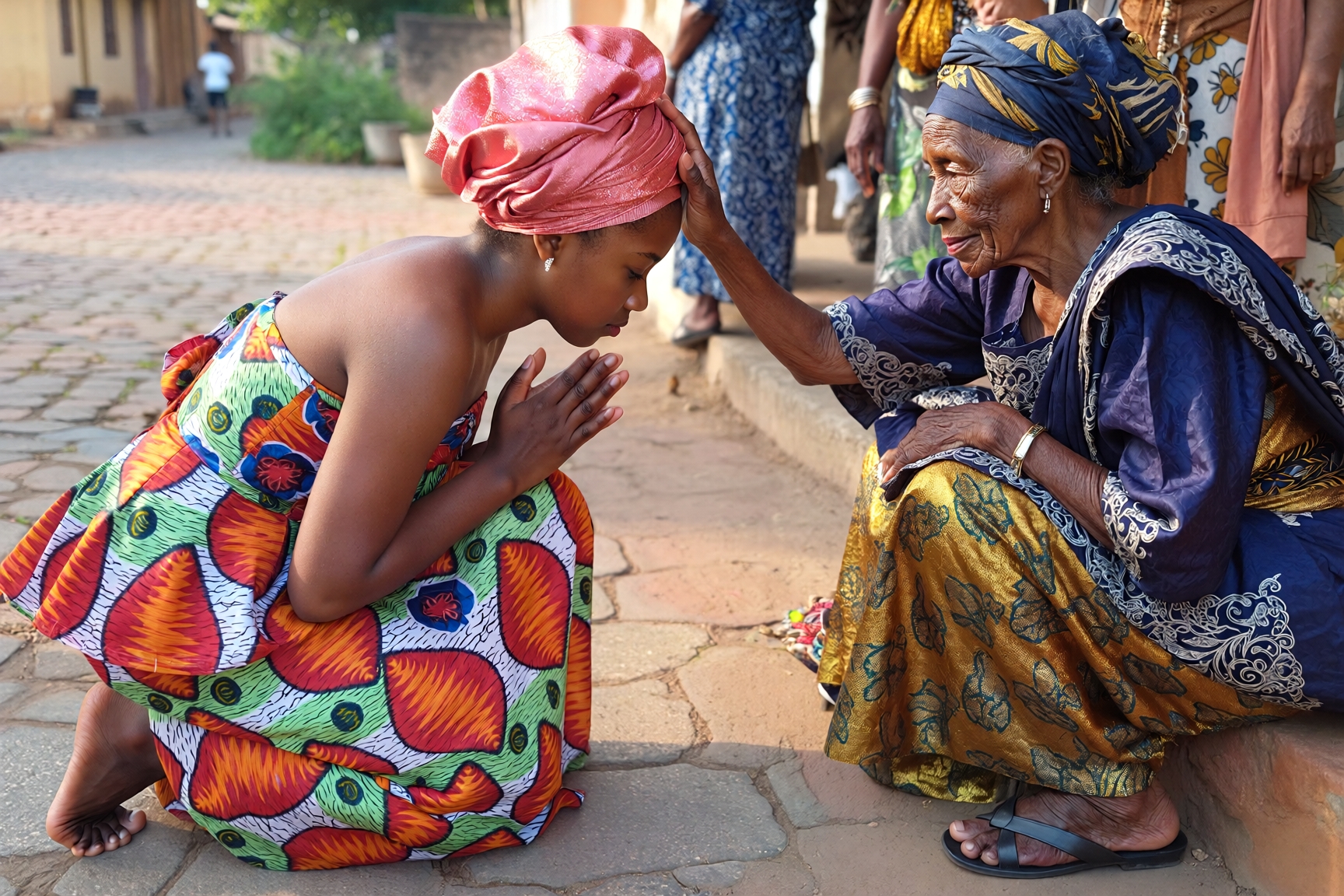
In Yoruba culture, young men prostrate fully on the ground when greeting elders, lying completely flat whilst saying “E ku ojo o” (good day) or the appropriate time-based greeting. This isn’t symbolic; it’s total physical submission demonstrating profound respect. Women kneel, bringing both knees to the ground whilst offering greetings. I’ve witnessed educated Yoruba professionals in expensive suits prostrate for elderly relatives at family gatherings, and the sincerity is palpable.
The Igbo approach differs.

Respect manifests through slight bows, specific hand positions, and elaborate verbal greetings. Young people often clasp their hands together or place one hand over the other whilst greeting elders. The greeting itself extends beyond simple “hello,” incorporating inquiries about the elder’s health, family, journey, and general wellbeing.
Among the Hausa-Fulani, respect shows through lowered voices, minimal eye contact with elders, and specific phrases like “Sannu da zuwa” (greetings upon arrival). Physical distance matters too; maintaining appropriate space demonstrates respect rather than familiarity. Women particularly observe conservative greeting protocols, often avoiding direct handshakes with unrelated men.
What strikes me most powerfully is how non-negotiable these greeting protocols remain. Research from the National Institute for Cultural Orientation confirms that proper greeting habits remain one of the primary ways Nigerians evaluate someone’s home training and moral character. Walking past an elder without greeting is considered one of the gravest disrespects imaginable, capable of damaging family reputations and social standing permanently.
The time investment alone demonstrates respect. Nigerians don’t rush greetings. A proper greeting exchange might last several minutes, involving multiple rounds of inquiries and responses. Rushing through greetings signals disrespect or self-importance, both serious social transgressions. When I’m running late for appointments, I’ve learned the hard way that skipping proper greetings actually delays you more than participating, because the offense created requires extensive damage control.
Understanding Regional Variations in Showing Respect
Nigeria’s 371 ethnic groups each bring distinct respect traditions, creating a fascinating tapestry of cultural expression. What demonstrates profound respect in one community might be completely neutral or even inappropriate in another, making cultural competency essential for navigating Nigerian society successfully.
Northern Nigeria’s predominantly Muslim regions incorporate Islamic principles into respect protocols. Age and religious scholarship command particular deference. When greeting Islamic scholars or elders, people often kneel regardless of their own status, and physical contact follows strict gender guidelines.
Southern regions blend traditional African customs with Christian influences and modern professional norms. The result? A complex system where people shift fluidly between traditional respect displays at family events and more contemporary professional courtesies in business settings.
Middle Belt communities like the Tiv, Idoma, and Igala maintain their own distinct traditions. The Tiv, for instance, have specific greeting protocols involving elaborate handshakes and verbal formulas that differ markedly from neighbouring groups. Demonstrating respect requires knowing these local variations.
Urban centres like Lagos, Abuja, and Port Harcourt present particular challenges. These cosmopolitan cities host people from every Nigerian ethnic group plus international residents. Showing respect here requires navigating multiple cultural codes simultaneously, often shifting approaches based on context and the person you’re addressing.
I’ve noticed that successful Nigerians develop what I call “cultural code-switching,” the ability to demonstrate respect appropriately across different cultural contexts. A Lagos businessman might greet his Yoruba father with full prostration on Sunday, shake hands Western-style with international clients on Monday, and perform Igbo respect gestures when visiting his Igbo wife’s family on Saturday. This fluidity isn’t hypocrisy but rather sophisticated cultural competency that honours diverse traditions.
Seven Steps for Understanding How Nigerians Show Respect
Understanding respect in Nigerian culture requires systematic observation and genuine cultural humility. These seven steps will help you navigate this complex social landscape with appropriate deference and cultural sensitivity.
- Learn proper greetings in the three major languages (Yoruba, Igbo, and Hausa) and understand which physical gestures accompany each greeting protocol, including when to prostrate, kneel, bow slightly, or maintain specific hand positions, recognising that greeting mistakes brand you as lacking home training regardless of your other qualifications.
- Master the title system by always addressing elders and authority figures with appropriate honorifics (never first names until explicitly invited), using titles like “Uncle,” “Aunty,” “Sir,” “Ma,” or professional titles combined with surnames, and understanding that even people barely older than you might expect respectful titles in formal contexts.
- Observe the left-hand taboo religiously by never eating, passing items, shaking hands, or pointing with your left hand, as this hand is considered unclean across most Nigerian cultures due to traditional hygiene practices, and violations cause genuine offense that damages relationships permanently.
- Practice attentive listening when elders speak by never interrupting, maintaining appropriate eye contact (which varies by culture but generally means looking respectfully without staring directly), waiting for natural pauses before contributing your own thoughts, and demonstrating that you’ve absorbed their wisdom through thoughtful responses.
- Demonstrate hospitality awareness by accepting offered food and drink graciously (taking at least a token amount even if not hungry), never rushing visits or checking your watch obviously, participating in communal meals according to proper etiquette (eating from your section of shared bowls, allowing elders to eat first), and expressing appreciation verbally for hospitality extended.
- Understand hierarchy in group settings by allowing elders to enter rooms first, waiting for senior people to be seated before sitting yourself, deferring to elders’ opinions in discussions (you can disagree later privately if needed), and recognising that age supersedes professional status in traditional contexts regardless of career achievements.
- Invest in proper attire for important occasions by budgeting ₦50,000 to ₦150,000 for quality traditional wear that demonstrates respect for cultural ceremonies, wearing modest clothing that covers appropriately (particularly for women in northern regions or religious contexts), and recognising that shabby or inappropriate dress communicates disrespect regardless of your words or gestures.
These steps require consistent practice and genuine cultural humility. The financial investment alone (traditional attire, transportation to family events, expected gifts for elders) can strain budgets, but Nigerians view these expenditures as non-negotiable investments in social capital and family harmony.
Five Traditional Examples That Demonstrate Nigerian Respect
Nigerian traditions encode respect through elaborate ceremonies, specific protocols, and cultural practices that have survived centuries whilst adapting to modern contexts. These five examples illuminate how deeply respect permeates traditional Nigerian life.
Traditional marriage ceremonies
Marriage negotiations exemplify respect protocols spectacularly. The groom’s family approaches the bride’s family with utmost deference, often sending emissaries multiple times before the actual introduction. During the ceremony itself, the groom and his family prostrate or kneel before the bride’s family, present extensive gifts (traditional items plus cash often exceeding ₦500,000 for middle-class families), and address every elder with elaborate honorifics. The bride demonstrates respect by kneeling throughout certain portions of the ceremony, wearing traditional attire that honours her culture, and publicly acknowledging her parents’ sacrifices.
I’ve attended traditional marriages where the groom’s family spent three hours kneeling or prostrating whilst bride price negotiations proceeded, never showing impatience or disrespect despite obvious physical discomfort. This isn’t theatre; it’s genuine demonstration that the families consider marriage a sacred covenant requiring profound mutual respect.
Title-taking ceremonies
When individuals receive traditional titles (chieftaincy titles, age-grade initiations, or cultural honours), the ceremonies overflow with respect protocols. Title candidates perform elaborate prostrations before traditional rulers and elders, present substantial gifts (costs ranging from ₦1 million to ₦50 million depending on title significance), undergo ritual purifications, and accept restrictions on their behaviour henceforth. The titles themselves (like Igwe, Eze, Lolo, Obi, or regional equivalents) command automatic respect from community members regardless of the holder’s wealth or education.
Naming ceremonies
When Nigerian families name newborn children, the ceremony demonstrates respect for family lineage, ancestors, and community. Elders receive seats of honour, speak first in blessing the child, receive choice portions of food and drink, and their words carry final authority on the child’s name (though this varies by ethnic group). The ceremony typically costs ₦100,000 to ₦500,000 for middle-class families, with substantial portions allocated to honouring elders through gifts and special food preparation.
Funeral rites
Death ceremonies perhaps show respect most elaborately. Funerals for elders often last several days, involve elaborate traditional rites that vary by ethnic group, require substantial financial investment (often ₦2 million to ₦20 million for prominent individuals), include specific dress codes honouring the deceased, and feature strict protocols about who speaks when and in what order. The level of respect demonstrated during funeral rites directly impacts family reputation.
Festival participation
Traditional festivals like the Osun-Osogbo Festival, Durbar celebrations, New Yam festivals, and countless regional observances encode respect through precise ritual adherence. Participants wear specific traditional attire (often costing ₦30,000 to ₦200,000), observe taboos meticulously, defer to traditional authorities, and maintain ceremonial protocols that have persisted for generations. These festivals aren’t tourist attractions but living traditions where respect maintains cultural continuity.
The Language of Respect in Nigerian Culture
Words matter profoundly in Nigerian respect culture. How you address people, the tone you employ, and the linguistic choices you make communicate your cultural competency and social awareness with devastating precision.
Respect Through Titles and Honorifics
Nigerian titles aren’t just decorative. They’re complex markers of social status, professional achievement, and family lineage that demand meticulous observation.
Never call elders by first names unless explicitly invited. Even then, exercise caution. I know Nigerian professionals in their forties who still address family friends twenty years older with “Uncle” or “Auntie” despite decades of relationship. First-name basis suggests peer equality, which age hierarchy doesn’t permit in traditional Nigerian contexts.
Professional titles carry particular weight. “Doctor,” “Engineer,” “Chief,” “Alhaji,” or “Pastor” aren’t optional courtesies but required acknowledgments of achievement and status. According to Guardian Nigeria’s coverage of traditional institutions, many Nigerian politicians actively seek chieftaincy titles to gain legitimacy and respect, demonstrating how seriously titles function in social hierarchies even among the elite.
Regional title variations matter too. In Yoruba culture, titles like “Baba” (father), “Mama” (mother), or “Egbon” (elder sibling) create precise relationship categories. Igbo culture uses “Dede” (uncle), “Nne” (mother), and age-specific honorifics. Hausa-Fulani communities employ Islamic honorifics like “Alhaji” and “Hajia” for pilgrims who’ve completed Hajj, plus traditional titles reflecting family lineage.
I remember committing a spectacular gaffe early in my Nigerian experience. I addressed a sixty-year-old businessman by his first name because he’d introduced himself casually. His younger colleagues visibly cringed. Later, someone tactfully explained that his casual introduction was testing my cultural awareness, not granting permission for informal address. The relationship never quite recovered. That single mistake cost me a valuable professional connection because I demonstrated ignorance of fundamental respect protocols.
How Africans Broadly Demonstrate Respect (Nigerian Context)
Nigerian respect customs reflect wider African cultural patterns whilst maintaining distinct characteristics that set Nigerian practices apart from other African nations. Understanding these broader African patterns helps contextualise Nigerian specificity.
Across Africa, elder respect remains non-negotiable. From Morocco to South Africa, from Senegal to Kenya, age commands automatic deference. However, the specific expressions vary dramatically. In some East African cultures, looking directly at elders shows respect; in many Nigerian cultures, it signals disrespect or challenge.
Physical prostration appears in several African cultures beyond Nigeria. The Zulu of South Africa practice forms of kneeling respect. The Swahili coastal communities of East Africa have elaborate greeting protocols involving lowered voices and specific postures. The Ethiopian respect for elders manifests through hand-kissing and specific verbal formulas. But Nigerian prostrations, particularly full-body Yoruba prostrations, represent perhaps the most physically dramatic elder respect gestures on the continent.
The left-hand taboo Nigerian cultures observe extends across much of Africa, rooted in similar hygiene practices. West African cultures particularly maintain strict left-hand prohibitions. East and Southern African communities share these practices, though perhaps less rigidly enforced in some urban contexts.
What distinguishes Nigerian respect culture from broader African patterns?
First, the multi-ethnic complexity. Most African nations have ethnic diversity, but Nigeria’s 371 ethnic groups create uniquely intricate respect protocol variations within a single nation. A Tanzanian can learn Swahili culture and broadly navigate the country; a Nigerian must master multiple, sometimes contradictory, respect systems depending on region and ethnic context.
Second, the urbanisation paradox. Nigerian cities maintain traditional respect protocols more rigorously than comparable African cities. Lagos businessmen still kneel to elders despite cosmopolitan lifestyles. Abuja professionals maintain elaborate greeting hierarchies. Compare this to Nairobi or Johannesburg where Western professional norms have displaced more traditional protocols in many contexts.
Third, the economic dimension. Nigerian respect culture incorporates substantial financial obligations in ways that differ from other African contexts. The expectation that successful individuals support extended family, sponsor community events, and contribute financially to elders’ needs creates a material respect dimension that intertwines social deference with economic obligation. A Yoruba friend once calculated he spends roughly ₦2 million annually on respect-related obligations (contributions to family ceremonies, gifts to elders, sponsoring community events), not including his direct family support.
Respect in African Contexts Shows Through Body Language
Body language communicates respect with devastating precision in Nigerian and broader African contexts. Every gesture, posture, and physical movement broadcasts your cultural competency and social awareness.
Posture and Physical Positioning
Stand or sit differently depending on who’s present. In the presence of elders, younger people adopt more formal postures, keeping backs straight, feet properly positioned, and avoiding casual slouching. Leaning back casually whilst elders speak signals disrespect.
Physical positioning in rooms matters too. Don’t sit in chairs clearly meant for elders. Don’t position yourself above elders if possible (for instance, standing whilst they sit can be problematic in some contexts, though cultural specifics vary).
Eye Contact Protocols
Western cultures teach that direct eye contact demonstrates honesty and respect. Nigerian cultures often hold the opposite view, particularly regarding elders. Sustained direct eye contact with someone significantly older can suggest challenge, defiance, or inappropriate equality assumptions.
Instead, respectful eye contact involves looking towards the person without staring directly, occasional glancing away, and maintaining awareness without confrontational directness. This isn’t evasiveness but culturally appropriate deference. I’ve watched Nigerian job candidates fail interviews despite strong qualifications because their Western-influenced eye contact habits signaled disrespect to traditional-minded interviewers.
Hand Gestures and Touch
How you use your hands broadcasts respect or its absence. Never point directly at elders with extended fingers; instead, gesture with entire hands or use verbal directions. When receiving items from elders, use both hands or your right hand whilst touching your left hand to your right elbow as additional respect.
Touch protocols vary by ethnic group and relationship. Some Northern Nigerian Muslim communities maintain strict gender touch boundaries, making handshakes between unrelated men and women inappropriate. Southern Christian communities might be more relaxed but still maintain elder-youth touch protocols.
Voice Modulation
Respect manifests audibly too. Lower your voice when addressing elders. Never shout across distances at someone older. If you need to gain an elder’s attention from afar, approach close enough for normal conversation before speaking.
Voice tone matters as much as volume. Argumentative tones, sarcasm, or obvious frustration when speaking with elders constitute serious disrespect regardless of your words’ content. I’ve witnessed family interventions where younger members were disciplined not for what they said but how they said it.
What Behaviour Nigerians Consider Disrespectful
Understanding respect requires knowing its inverse: the specific behaviours Nigerians find profoundly disrespectful. These transgressions damage reputations, relationships, and social standing sometimes irreparably.
H3: Regional Variations in Disrespectful Behaviour
| Region | Major Disrespect Violations | Cultural Context | Typical Consequence |
|---|---|---|---|
| Yoruba Southwest | Failure to prostrate (men) or kneel (women) when greeting elders; walking past elders without greeting; using left hand for giving/receiving | Greeting protocols fundamental to Yoruba cultural identity with elaborate hierarchies | Social ostracism, family shame, reputation damage, exclusion from family events |
| Igbo Southeast | Disrespecting elders through improper greetings, challenging elders publicly, failing to use appropriate titles | Age-grade systems and communal decision-making emphasize elder authority | Community sanctions, loss of social standing, potential exclusion from traditional ceremonies |
| Hausa-Fulani North | Inappropriate gender mixing, disrespecting Islamic scholars, failing to observe prayer times, immodest dress | Islamic cultural framework shapes respect protocols with religious dimensions | Religious sanctions, community disapproval, reputational damage affecting marriage prospects |
| Middle Belt | Violating specific ethnic protocols (Tiv, Idoma, Igala each have distinct rules), disrespecting traditional authorities | Diverse ethnic groups maintain distinct customs requiring local knowledge | Social exclusion, family intervention, strained community relationships |
| Urban Centres | Context-shifting failures (treating business settings like family gatherings or vice versa), disrespecting any ethnic group’s protocols | Cosmopolitan environments require navigating multiple cultural codes simultaneously | Professional consequences, social isolation, lost business opportunities |
| Rural Communities | Any deviation from strict traditional protocols, Western-influenced behaviour seen as cultural abandonment | Traditional protocols maintained more rigidly than urban areas | Severe social consequences, family shame, potential exclusion from inheritance or family positions |
Direct Contradiction of Elders
Publicly disagreeing with elders ranks among the gravest disrespects. Even when elders are factually wrong, Nigerian respect culture demands handling corrections delicately, preferably privately.
I’ve watched Nigerian families nearly fracture over younger members correcting elders publicly. The issue wasn’t accuracy but protocol violation. If you must disagree with an elder, do so privately, phrase it as seeking clarification rather than correction, and demonstrate that you’ve absorbed their wisdom before offering alternative perspectives.
Rushing Interactions
Time pressure doesn’t excuse respect protocol violations. Rushing greetings, checking watches obviously during elder conversations, or cutting visits short for non-emergency reasons communicates that you value efficiency over people, a fundamentally disrespectful position in communal Nigerian culture.
Inappropriate Dress
Dress communicates respect. Shabby clothing to important occasions, revealing attire in conservative contexts, or Western casualness where traditional dress is expected demonstrate disrespect regardless of intentions.
Northern Nigeria particularly demands conservative dress. Women wearing trousers, exposed shoulders, or short skirts in traditional Northern settings cause genuine offense. Even in cosmopolitan Lagos, certain family events demand traditional attire; appearing in jeans and t-shirts suggests you don’t take the occasion or people seriously.
Food Etiquette Violations
Refusing offered food without compelling reasons (health, dietary restrictions, genuine fullness) disrespects Nigerian hospitality. Even more serious: eating before elders begin, taking large portions when sharing communal meals, or eating with your left hand. These violations demonstrate ignorance of fundamental cultural values around food, community, and hierarchy.
Technology Rudeness
Modern disrespects include phone usage during important conversations, answering calls whilst elders are speaking to you, or prioritising digital communication over face-to-face interactions with people present. I’ve seen elderly Nigerians stop mid-sentence when younger people glance at phones, the message clear: you’ve chosen your device over their company, demonstrating profound disrespect.
Navigating Respect Culture as Cultural Understanding Deepens
Respect culture isn’t static; it evolves as individuals gain cultural competency, as Nigeria modernises, and as young Nigerians negotiate traditional obligations with contemporary realities. This final section explores how respect culture adapts whilst maintaining core principles.
Educated Nigerians particularly navigate complex tensions. They study abroad, work in Western-influenced corporations, engage with global ideas, yet maintain traditional respect obligations in family contexts. This duality isn’t hypocrisy but sophisticated cultural navigation that honours heritage whilst embracing change.
The diaspora experience intensifies these tensions. Nigerians living abroad often report difficulty maintaining traditional respect protocols when visiting Nigeria after years overseas. Their children, raised in Western contexts, struggle with protocols that seem archaic or oppressive. Yet family expectations don’t diminish; if anything, successful diaspora Nigerians face heightened respect obligations because their resources make them capable of more elaborate demonstrations.
Young Nigerians are subtly reshaping respect culture. They maintain core principles (elder deference, proper greetings, hierarchical awareness) whilst negotiating space for individual expression, questioning outdated practices, and adapting protocols to modern realities. This evolution proceeds cautiously because respect culture connects deeply to identity and communal belonging.
Economic pressures complicate respect demonstrations too. When greeting an uncle properly requires ₦50,000 cash as a gift, when attending a family ceremony costs ₦200,000 for transport and attire, when fulfilling respect obligations consumes significant portions of income, younger Nigerians face difficult choices. Some prioritise respect obligations despite financial strain; others reduce participation and face family criticism.
The gender dimension deserves attention. Women particularly navigate complex respect protocols that can feel oppressive. Kneeling for greetings, deferring to male relatives, accepting arranged introductions to potential husbands, maintaining modest presentation, all these requirements fall more heavily on women. Contemporary Nigerian women increasingly question these gendered protocols whilst still maintaining respect for genuine elder wisdom and family harmony.
The hospitality imperative Nigerians maintain demonstrates respect magnificently. Guests receive elaborate welcomes regardless of host circumstances. I’ve watched families of modest means prepare expensive meals for visitors, offer their best chairs, create comfortable sleeping arrangements despite cramped quarters. This isn’t performative; it’s genuine respect for guests and the communities they represent.
Yet hospitality comes with hidden costs. The financial burden of maintaining proper hospitality when relatives visit, when important guests arrive, when ceremonies require hosting dozens or hundreds of people can strain household budgets dramatically. A Lagos-based friend budgets ₦300,000 monthly just for potential guest-related expenses, separate from his family’s daily needs.
Bringing Nigerian Respect Culture Into Daily Practice
We’ve covered extensive ground exploring how Nigerians show respect across ethnic groups, regions, and contexts. Now let me offer practical guidance for actually implementing this cultural knowledge, whether you’re Nigerian yourself seeking deeper understanding of your heritage or an outsider wanting to navigate Nigerian society respectfully.
Start with humility. Acknowledge that you don’t know everything and won’t get protocols perfect immediately. Nigerians generally forgive honest mistakes made with good intentions, especially from those demonstrating genuine effort to learn. What they can’t forgive is arrogant assumption that respect culture doesn’t matter or stubborn refusal to adapt.
Invest financially in respect demonstrations. Budget for proper traditional attire (₦50,000 to ₦150,000 initially for quality pieces), contributions to family ceremonies (₦20,000 to ₦100,000 depending on the occasion), gifts for elders when visiting (₦5,000 to ₦30,000 as appropriate), and transportation to family events even when inconvenient. These aren’t optional courtesies but social necessities that maintain relationships and reputations.
Learn the language basics in major ethnic groups. Even rudimentary greetings in Yoruba, Igbo, and Hausa demonstrate respect and cultural awareness that pure English cannot convey. Elders particularly appreciate when younger people or outsiders make linguistic efforts, seeing this as honouring cultural heritage.
Observe before acting. When entering new Nigerian contexts, watch how others greet, sit, eat, and interact before jumping in with your own approach. This observation prevents embarrassing mistakes and demonstrates wisdom, which itself earns respect.
Build mentor relationships with culturally knowledgeable Nigerians willing to correct you privately when you transgress protocols. These mentors are invaluable for navigating the unwritten rules that govern Nigerian social interactions.
Remember that consistency matters more than perfection. Nigerians respect sustained effort to honour cultural protocols even with occasional mistakes more than technically perfect performance without genuine commitment.
As I’ve explored Nigerian customs and traditions through pieces on proper greetings and cultural etiquette and what distinguishes Nigerian culture, one truth stands clear: respect forms the foundation of everything. Without understanding respect culture, you cannot understand Nigerian society, business, family dynamics, or social hierarchies. Master respect protocols, and doors open. Ignore them, and you’ll remain perpetually outside regardless of your other qualifications.
Here are three immediate takeaways you can implement:
Master appropriate greetings in the three major languages (Yoruba prostration for men, kneeling for women; Igbo slight bows and hand gestures; Hausa lowered voices and Islamic honorifics), never use your left hand for eating, giving, or receiving items, always address elders with appropriate titles rather than first names, and budget ₦50,000 to ₦100,000 for quality traditional attire to wear at important family and cultural ceremonies.
Understand regional variations by researching specific ethnic group protocols before travelling to different Nigerian regions, recognising that Northern Islamic cultures demand more conservative dress and gender separation than Southern Christian communities, and knowing that urban centres require code-switching between traditional family contexts and more contemporary professional settings.
Demonstrate respect through consistent practice by never rushing interactions with elders even when time-pressured, accepting offered hospitality graciously (at least taking token amounts of food and drink), investing in relationship-building conversations that prioritise family inquiries before business discussions, and showing through actions rather than words that you value cultural protocols and the wisdom they encode.
Nigerian Respect Culture: Frequently Asked Questions
How do you show respect to Nigerian parents?
Show respect to Nigerian parents through elaborate greeting protocols (prostration or kneeling depending on ethnic group and gender), never calling them by first names but using “Mummy,” “Daddy,” or appropriate ethnic titles, seeking their blessing before major life decisions including marriage and career changes, providing financial support as your circumstances allow, visiting regularly with proper gifts, and maintaining communication that honours their role as family heads. Additionally, defend their reputation publicly, defer to their wishes in family matters even when you privately disagree, and ensure they receive proper care and dignity as they age.
What are 5 specific examples of Nigerian traditions showing respect?
Five examples include traditional marriage ceremonies where groom’s families prostrate and present elaborate gifts worth ₦500,000 or more to bride’s families demonstrating respect for family unions, title-taking ceremonies where individuals receive chieftaincy honours through days of ritual purification and substantial financial contributions ranging from ₦1 million to ₦50 million, naming ceremonies for newborns where elders receive seats of honour and speak first in blessing children, funeral rites lasting several days involving strict dress codes and spending ₦2 million to ₦20 million honouring deceased elders, and festival participation requiring specific traditional attire costing ₦30,000 to ₦200,000 whilst observing ancient protocols meticulously. Each tradition encodes respect through precise ritual adherence, financial investment, and community participation that honours cultural continuity.
Do Nigerians still prostrate to greet elders?
Yes, prostration remains common practice in Yoruba culture where young men lie completely flat when greeting significantly older people, particularly parents, grandparents, traditional rulers, and elderly community members. This practice continues even among highly educated, internationally exposed Nigerians when in traditional family contexts, though it’s becoming less common in purely professional settings and among younger urban Nigerians influenced by Western norms. Women kneel rather than prostrate, bringing both knees to the ground whilst offering greetings, and this practice also continues across generations and socioeconomic classes in Yoruba communities.
How do Igbo people show respect to elders?
Igbo people demonstrate respect through elaborate verbal greetings incorporating inquiries about health, family, and wellbeing, slight bows whilst greeting with specific hand positions (often clasping hands or placing one hand over the other), using appropriate titles like “Dede” (uncle) and “Nne” (mother) rather than first names, allowing elders to speak first in gatherings and waiting attentively for pauses before contributing, and presenting kola nut to elders first during ceremonies as traditional hospitality. Respect also manifests through financial contributions to family needs, participating actively in age-grade systems and community decision-making processes, seeking elder counsel before major life decisions, and observing communal protocols during traditional festivals and family gatherings.
Is it disrespectful to refuse food in Nigeria?
Yes, refusing offered food generally constitutes significant disrespect across Nigerian cultures because food represents hospitality, generosity, welcome, and the host’s regard for you as valued guest. Proper etiquette involves accepting at least a token portion even when genuinely not hungry, expressing appreciation verbally for the offering, and eating at least a small amount to demonstrate respect for the host’s effort. Acceptable exceptions include legitimate health restrictions, religious dietary requirements clearly explained, or genuine fullness, but even then you should receive the food graciously, explain your situation respectfully, and express regret at not being able to fully partake.
What titles do you use for Nigerian elders?
Use titles including “Uncle” and “Aunty” for any adult significantly older than you regardless of actual family relationship, “Sir” and “Ma” for professional or formal contexts, “Baba” and “Mama” (Yoruba for father/mother) for very elderly people, “Alhaji” and “Hajia” for Muslims who’ve completed Hajj pilgrimage, professional titles like “Doctor,” “Engineer,” “Chief,” or “Pastor” when applicable, and ethnic-specific honorifics like “Deede” (Igbo uncle) or regional traditional titles. Never use first names for elders unless explicitly invited after extended relationship development, and even then many Nigerians continue using respectful titles indefinitely to maintain proper social hierarchies that honour age and achievement.
Can foreigners participate in Nigerian greeting protocols?
Yes, foreigners can and should participate in Nigerian greeting protocols as demonstrations of cultural respect and awareness, though Nigerians generally show understanding for foreigners who don’t know proper protocols initially. Start by learning basic greetings in major languages, always addressing elders with appropriate titles rather than first names, using your right hand exclusively for eating and exchanging items, and asking culturally knowledgeable Nigerians for guidance when uncertain about proper behaviour. Nigerians genuinely appreciate foreigners who make sincere efforts to honour cultural protocols even with imperfect execution, whilst they’re often offended by foreigners who arrogantly dismiss respect culture as unnecessary or primitive.
How much should you spend on gifts for Nigerian elders?
Gift budgets depend on your relationship, occasion, and financial capacity, but general guidelines suggest ₦5,000 to ₦10,000 for informal visits to family friends or distant relatives, ₦10,000 to ₦30,000 for visiting close family elders or attending naming ceremonies, ₦20,000 to ₦100,000 for wedding contributions or important family celebrations, and ₦50,000 to several hundred thousand for major occasions like significant birthdays or traditional title ceremonies. Cash gifts wrapped respectfully are widely acceptable, though thoughtful items (quality fabrics, food items, drinks) also work well. Your capacity matters more than absolute amounts, but demonstrating effort and respect through appropriate giving maintains relationships and social standing within Nigerian contexts.
What happens if you disrespect a Nigerian elder?
Consequences include immediate social correction where the elder or witnesses address the transgression directly, family intervention where your parents or senior relatives are informed and expected to discipline you, reputational damage where community members judge you as having “no home training” affecting marriage prospects and social opportunities, social ostracism where you’re excluded from family gatherings or community events, and in severe cases, formal family sanctions or traditional curses in some communities. Professional relationships can also suffer as disrespecting elders suggests poor character that extends to business conduct. The severity of consequences depends on the transgression’s nature, whether you show genuine remorse, and your willingness to perform appropriate apology rituals.
Do urban Nigerians still follow traditional respect protocols?
Yes, most urban Nigerians maintain traditional respect protocols particularly in family and community contexts, though they may practice “code-switching” between traditional behaviour at home and more Western professional conduct at work. Lagos businessmen still prostrate to fathers despite cosmopolitan lifestyles, Abuja professionals maintain elaborate greeting hierarchies with family elders, and Port Harcourt entrepreneurs observe traditional respect protocols at family ceremonies whilst negotiating modern business relationships internationally. However, urban contexts create more flexibility in purely professional settings, with younger urban Nigerians sometimes adopting more relaxed protocols with peers whilst still maintaining strict elder respect, and some diaspora-influenced families moderating the most elaborate traditional practices.
How do Nigerian Muslims show respect differently than Christians?
Nigerian Muslims incorporate Islamic principles into respect protocols including gender separation where unrelated men and women avoid physical contact or close interaction, Friday Jummah prayer observance requiring schedule accommodation and respect for prayer times, Ramadan fasting period sensitivity where eating publicly during daylight hours in Muslim areas would be disrespectful, Islamic greetings like “As-salamu alaykum” taking precedence, and reverence for Islamic scholars and religious leaders similar to traditional elder respect. Christian Nigerians maintain traditional ethnic respect protocols whilst incorporating church hierarchies, respecting pastors and religious leaders, observing Sunday service importance, and potentially being less strict about gender mixing in professional contexts. Both groups maintain core Nigerian respect values around elder deference, proper greetings, and hierarchical awareness regardless of religious differences.
How has social media affected Nigerian respect culture?
Social media has created tensions by enabling younger Nigerians to publicly question traditional protocols, providing platforms for challenging elder authority in ways that would be impossible face-to-face, and exposing Nigerians to global perspectives that sometimes conflict with traditional values. However, it has also strengthened respect culture by documenting and celebrating traditional ceremonies including elaborate prostrations and greetings that younger generations might otherwise abandon, connecting diaspora Nigerians to cultural protocols they might forget abroad, and creating spaces for discussing how to maintain respect culture whilst adapting to modern realities. The net effect remains contested, with older Nigerians often lamenting social media’s perceived erosion of respect whilst younger Nigerians use these platforms to negotiate culturally authentic identities that honour tradition whilst embracing change.

