 Follow Us on Google News
 Follow Us on Google Discover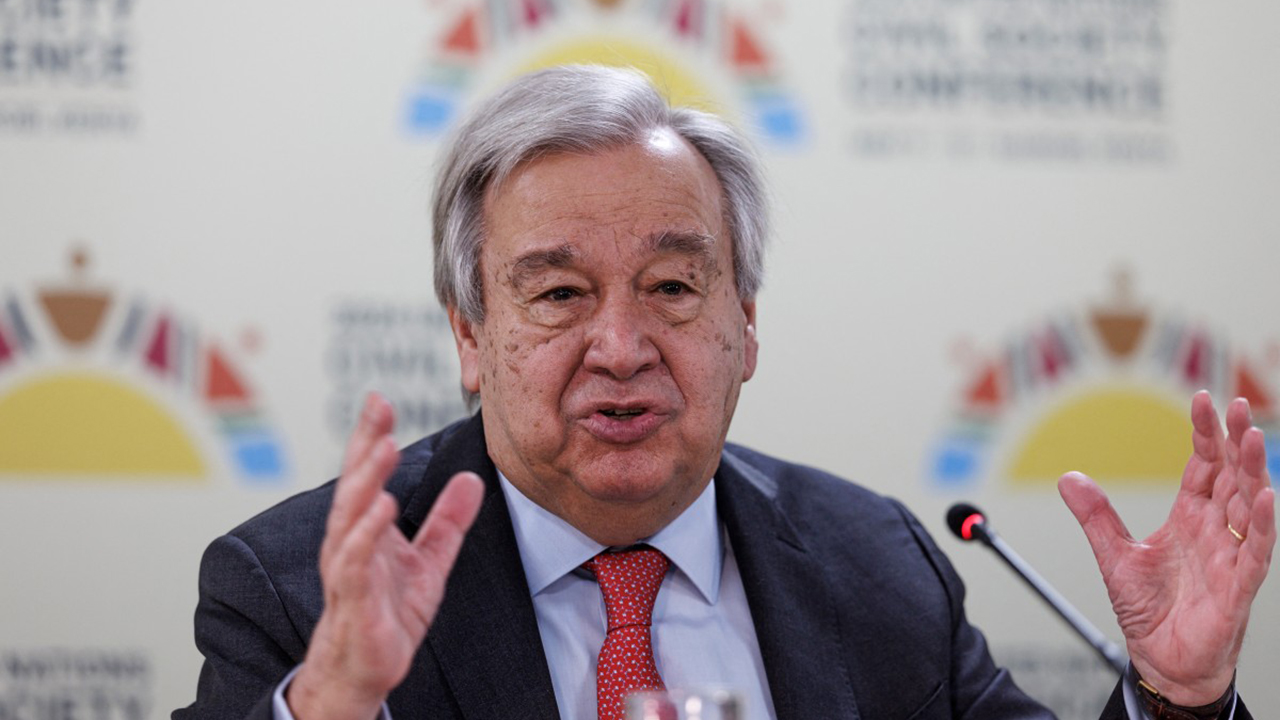
• UN chief tasks world leaders on priorities
The United States government has pledged an initial $2 billion for United Nations (UN) humanitarian aid in 2026. Although the figure is far less than it provided in recent years, it has, nevertheless, warned the agencies to “adapt, shrink or die.”
Meanwhile, UN Secretary-General, António Guterres, called on world leaders to get “priorities straight” and invest in development, not destruction. The $2 billion pledge was announced yesterday at the U.S. mission in Geneva.
According to the UN Aid Chief, Tom Fletcher, the U.S. is pursuing a dramatic overhaul of how it funds UN humanitarian activities. He added that rather than hand funds to individual agencies, “the U.S. would channel its contributions through the UN aid agency, UN Office for the Coordination of Humanitarian Affairs (OCHA), headed by Fletcher, which, earlier this year, launched a Humanitarian Reset to improve efficiency and accountability.
Accordingly, “the U.S. funds will then be distributed to more than a dozen selected countries, including the Democratic Republic of Congo (DRC), Myanmar and Sudan.
“It is an initial anchor commitment,” said the senior U.S. official for foreign assistance, humanitarian affairs and religious freedom, Jeremy Lewin. “There are other countries that we will add as we continue to get more funding into this mechanism.” He, therefore, challenged other countries to match or beat U.S. funding for UN aid.
Speaking through his X handle, the U.S. Secretary of State, Marco Rubio, said the new model would better share the burden of UN humanitarian work with other developed countries, and would require the UN to cut bloat, remove duplication and commit to powerful new impact, accountability and oversight mechanisms.
According to UN data, the U.S. remained the top humanitarian aid donor in the world in 2025, but the amount fell significantly to $2.7 billion, from around $11 billion in 2023 and 2024, and from over $14 billion in 2022.
GUTERRES, in a message for 2026 delivered by his spokesman, Stephane Dujarric, yesterday, stated: “It is clear the world has the resources to lift lives, heal the planet and secure a future of peace and justice.
“In 2026, I call on leaders everywhere: Get serious. Choose people and planet over pain. As we enter the new year, the world stands at a crossroads. Chaos and uncertainty surround us. People everywhere are asking: Are leaders even listening? Are they ready to act?” According to him, the scale of human suffering is staggering – over one-quarter of humanity lives in areas affected by conflict.
“More than 200 million persons globally need humanitarian assistance, and nearly 120 million people have been forcibly displaced, fleeing war, crises, disasters or persecution. As we turn the page on a turbulent year, one fact speaks louder than words: global military spending has soared to $2.7 trillion growing by almost 10 per cent.”
Yet, as humanitarian crises around the world intensify, global military spending is projected to more than double – from $2.7 trillion in 2024 to an astonishing $6.6 trillion by 2035 – if the trends persist.

