 Follow Us on Google News
 Follow Us on Google Discover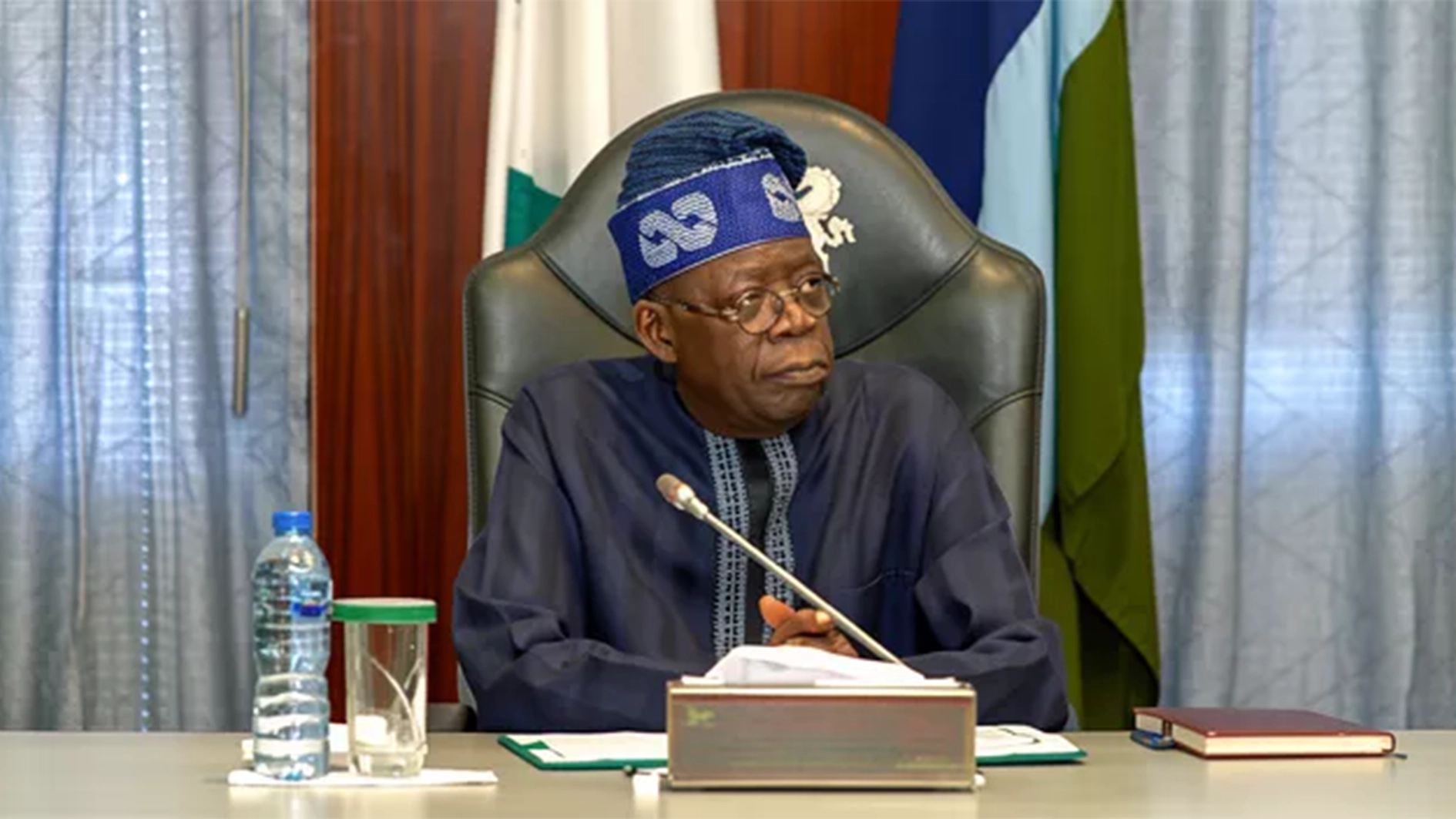
● BudgIT, CISLAC, others question legality of foreign strike, demand accountability
● Army confirms gains after U.S.-led airstrike on Lakurawa camps in Sokoto
● Gumi calls for schools, not bombs, for herders as Sani supports airstrikes
● Youth Party backs strikes, warns against religious framing of insecurity
● SDP chair urges U.S. to end unilateral action, seek deeper security cooperation
● U.S. lawmaker defends Trump, says strikes meant to bring peace
Civil society groups have raised the alarm over what they call a leadership vacuum, accusing President Bola Ahmed Tinubu of failing to explain the recent U.S. air strike, and warning that silence on foreign military action endangers sovereignty and fuels national tension.
In a joint statement titled ‘Where Is Nigeria’s President?’, the groups said the lack of official communication amounted to a leadership and security crisis, accusing the Federal Government of failing to provide transparency and accountability after the reported operation.
The coalition, comprising more than 80 organisations including Global Rights, CLEEN Foundation, Policy Alert and Accountability Lab, said the incident raised serious questions about national sovereignty, constitutional governance, civilian protection and democratic oversight.
They alleged that the President, as Commander-in-Chief of the Armed Forces, abdicated his constitutional responsibility by allowing a foreign power to intervene in what they described as an internal security matter. According to the statement, neither the President, the Service Chiefs, nor the leadership of the National Assembly had publicly addressed the reported strike, leaving the Minister of Foreign Affairs, Ambassador Yusuf Tuggar, as the only senior official to comment.
Citing Section 14(2)(b) of the 1999 Constitution, the groups stressed that the security and welfare of the people must remain the primary purpose of government and that any security operation involving foreign forces should be guided by transparency, civilian protection and legislative oversight.

The coalition also called for a review of Nigeria’s National Counter Terrorism Strategy and the National Action Plan for Preventing and Countering Violent Extremism to determine whether the alleged operation aligned with existing frameworks or exposed policy gaps.
They expressed concern about the lack of information on the legal basis, scope, rules of engagement, and civilian protection measures governing the reported collaboration with the United States, noting that Nigerians had not been told whether the National Assembly approved or oversaw the operation.
Referencing reports that debris from expended munitions allegedly fell on farmlands in Jabo, Tambuwal Local Council of Sokoto State, and near a hotel in Offa, Kwara State, the groups said there was still no official confirmation that any militant targets were hit.
While acknowledging the Nigerian Air Force’s inauguration of a Civilian Harm Mitigation and Response Board in July 2025, they said no specific civilian harm mitigation protocols had been publicly articulated in relation to the alleged strike.
The statement warned that poor handling of the incident could inflame religious and communal tensions and called for transparent investigations, public disclosure of findings and compensation where civilian harm is established. It was signed by dozens of organisations, including Amnesty International Nigeria, BudgIT, CISLAC, Media Rights Agenda, SBM Intelligence and Partners West Africa Nigeria.
Army confirms gains after U.S.-led airstrike on Lakurawa camps in Sokoto
THIS came as the Nigerian Army confirmed a major operational success following a United States-led airstrike on Lakurawa terrorist hideouts in Tangaza Local Council of Sokoto State.
In a statement issued yesterday, the Acting Director of Army Public Relations, Col Appolonia Anele, said the action formed part of ongoing operations within the 8 Division/Sector 2 Area of Responsibility under Operation Fansan Yamma.
According to Anele, troops of Combat Intelligence Battalion VII, acting on credible intelligence on terrorist movements along the Kaurau axis, coordinated with United States Africa Command to strike terrorist camps in the Bauni Forest, near Waria and Alkassim villages, on December 25.
She said follow-up patrols conducted on December 26 confirmed extensive destruction of the terrorist positions, significantly degrading the group’s operational capability.
“In a related operation, soldiers of 1 Brigade, Combat Team 12, deployed at Forward Operating Base Jabo in Kebbi State, recovered debris believed to be from unmanned aerial devices and missile components in Kajiji town, Tambuwal Local Government Area,” she said.
Anele added that preliminary assessments by the Army’s Electrical and Mechanical Engineers team identified some of the recovered items as fuel boosters from Tomahawk missiles. She explained that each booster weighs about 300 kilogrammes and can penetrate soft ground to a depth of about two metres.
The Army spokesperson said investigations were ongoing to recover any remaining missile components safely and urged members of the public to report suspicious objects to security agencies.
“The Nigerian Army assured the public that investigations are ongoing to safely recover remaining missile components and urged citizens to report any suspicious objects to security agencies,” she said.
Anele reaffirmed the Army’s commitment to sustaining pressure on terrorist groups while safeguarding lives and property across northern Nigeria, noting that operations would continue in line with established rules of engagement and civilian protection standards.
Gumi calls for schools, not bombs, for herders as Sani supports airstrikes
MEANWHILE, controversial Islamic cleric, Sheikh Ahmad Gumi, has challenged the United States government to invest in schools and basic amenities for herders rather than firing what he described as a “$2 million bomb”.
Gumi said herders needed “deliverance from ignorance”, reacting to a video showing a Fulani man who reportedly found the barrel of one of the missiles allegedly fired by the U.S. military in an open field. He said the man appeared unaware of the danger posed by unexploded ordnance. Posting on Facebook, the cleric wrote: “Most Herdsmen need deliverance from ignorance and themselves, not bombardment.
“He doesn’t even understand the basic creed of Islam and the danger of unexploded bombs.
“That’s why I built a school for them. Instead of dropping a $2m bomb that can build schools and amenities for them.”
However, former Kaduna Central senator, Shehu Sani, took a sharply opposing position, saying anyone who opposes U.S. airstrikes on terrorist groups in Nigeria should be sent to the Sambisa forest. Sani made the remarks in a post on his verified X handle yesterday, reacting to the Christmas Day strikes on terrorist enclaves in the North-West.
“Those who are opposed to striking those terrorist groups should be assembled and transported to the hinterlands of Zamfara and Sokoto.
“Those kinds of people should even be sent to the Sambisa forest so that they can preach or talk or negotiate with the terrorists so that they will stop murdering and kidnapping our people.
“When one is opposed to one thing, he should be able to do another,” the former lawmaker said.
Youth Party backs strike, warns against religious framing of insecurity
FOR its part, the Youth Party expressed cautious approval of the United States military strike against Islamic State (ISIS) elements operating in north-west Nigeria, while cautioning against framing the country’s deepening insecurity along religious lines.
In a statement issued by its Acting National Publicity Secretary, Sope Durodola, the party reacted to claims by Donald Trump that he ordered what he described as a “powerful and deadly strike” against ISIS fighters in Nigeria. The former U.S. president said the operation targeted terrorists in the north-west and later told Politico that he delayed the strike by a day so it would coincide with Christmas.
Responding, the Youth Party acknowledged the grave threat posed by ISIS-affiliated groups and other terrorist organisations whose activities have continued to destabilise communities and claim lives across several parts of the country. It said any credible international support aimed at degrading terrorist networks and protecting civilians was welcome, particularly given Nigeria’s prolonged struggle with insurgency, banditry and violent extremism.
However, the party warned that terrorism in Nigeria must not be portrayed as a religious conflict, arguing that such narratives risk deepening divisions in an already fragile and diverse nation. It stressed that extremist violence has affected Christians, Muslims and adherents of other faiths alike, describing terrorism as a crime against humanity rather than an attack on any single religion.
The Youth Party also raised concern about the symbolic timing of the reported strike, cautioning that linking military action to religious events could inflame tensions and undermine national unity. It said insecurity in Nigeria cuts across ethnic, regional and religious boundaries and insisted that any external intervention must respect the country’s sovereignty and be guided strictly by the protection of innocent lives.
Calling on the Federal Government to take full responsibility for the security situation, the party urged a more proactive, intelligence-driven and people-focused strategy to flush out terrorists and criminal gangs without harming law-abiding citizens. It warned against reactive responses after attacks and against counter-terrorism measures that violate human rights or alienate local communities.
The statement further argued that insecurity thrives amid poverty, exclusion, weak governance and limited opportunities, noting that military action alone cannot address the root causes of violence. It therefore called for urgent investment in education, youth employment, social welfare and inclusive governance, alongside international support focused on intelligence sharing, capacity building and humanitarian assistance, rather than actions that could polarise the population or externalise Nigeria’s internal challenges.
SDP chair urges U.S. to end unilateral action, seek deeper security cooperation
ALSO, the National Chairman of the Social Democratic Party, Shehu Musa Gabam, urged the United States to halt unilateral military actions in the region and instead deepen cooperation with Nigeria through intelligence sharing, technology transfer and unrestricted access to military hardware.
Gabam made the call during a televised interview on Nigeria’s worsening security challenges, where he argued that American airstrikes in parts of the Sahel, often justified as counter-terrorism measures, do little to strengthen Nigeria’s long-term security capacity and may undermine coordinated regional efforts.
“I strongly believe these U.S. airstrikes should stop,” he said. “What Nigeria needs is cooperation, not unilateral actions. We need access to equipment, technology and intelligence so we can handle our own security challenges effectively.”
He criticised what he described as longstanding restrictions on arms sales to Nigeria arising from U.S. approval requirements for weapons containing American components, saying such limitations weaken the country’s response at critical moments.
“Our challenge is not competence,” Gabam said. “Nigerian pilots fly precision aircraft, our troops are well trained and professional. The real problem is access to the right equipment at the right time, and those bottlenecks are largely external.”
The SDP chairman called on Washington to review its defence posture towards Nigeria, stressing that Africa’s most populous country should be treated as a strategic partner rather than a security risk.
He recalled that under former President Muhammadu Buhari, Nigeria was able to overcome similar barriers through direct engagement with then-U.S. President Donald Trump, leading to the acquisition of Super Tucano fighter aircraft.
“There is no reason why that level of understanding and cooperation cannot be restored,” Gabam said. “If the U.S. truly wants stability in West Africa, empowering Nigeria is not optional—it is essential.”
Beyond the United States, he urged Nigeria to diversify its security partnerships by engaging other technologically advanced countries, warning against overreliance on any single foreign power.
Gabam also linked Washington’s regional posture to growing instability in the Sahel, particularly following the exit of Burkina Faso, Mali and Niger from ECOWAS, which he said created security vacuums that have allowed armed groups and weapons to flow more freely into Nigeria.
U.S. lawmaker defends Trump, says strikes meant to bring peace
A United States congressman, Riley Moore, has defended President Donald Trump over recent U.S. airstrikes in Nigeria, saying the operation was intended to bring peace and security, not war, to the country.
Moore, in a post on X yesterday, said the strikes carried out on Christmas Day against ISIS elements were aimed at protecting thousands of Christians facing what he described as severe violence and threats to their lives. He said the joint military action had given Christians in Nigeria renewed hope.
“President Trump is not trying to bring war to Nigeria; he’s bringing peace and security to Nigeria and to the thousands of Christians who face horrific violence and death,” Moore said.
“The strikes against ISIS on Christmas, in coordination with the Nigerian government, have given hope to the Christians in Nigeria.” The U.S. military operation was earlier announced by Trump on Truth Social. It involved what he described as precision strikes on ISIS camps in Sokoto State, which reportedly resulted in multiple terrorist casualties, according to the United States Africa Command.
The Federal Government later confirmed the operation, describing it as a joint effort carried out as part of ongoing counter-terrorism cooperation between Nigeria and the United States.
However, the reported strikes have drawn criticism from some quarters, with concerns raised about Nigeria’s sovereignty and the potential risk to civilian lives.
Moore dismissed the criticisms, arguing that the military action was necessary to halt attacks on Christians. He said Trump had previously warned about what he described as the “slaughter” of Christians in parts of Nigeria.
The airstrikes followed Trump’s earlier designation of Nigeria as a “Country of Particular Concern” over religious violence and allegations of persecution of Christians, a move that has remained controversial among Nigerian officials and civil society groups.

