 Follow Us on Google News
 Follow Us on Google Discover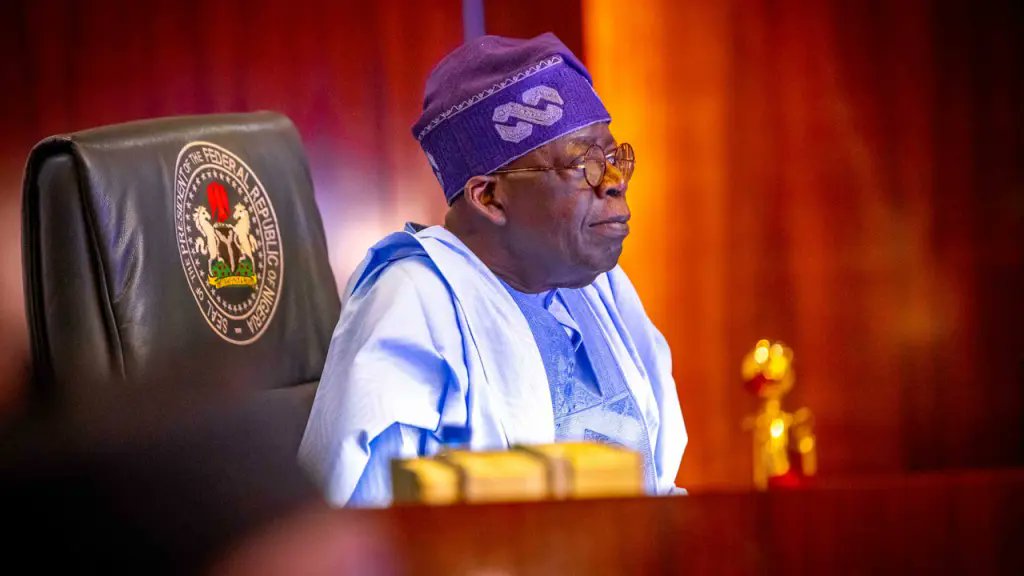
• PDP accuses President of prioritising tax revenue over Nigerians’ welfare
• Accountants urge withdrawal, re-gazetting of ‘altered’ tax laws
• Ezekwesili demands suspension, probe of alleged discrepancies
President Bola Tinubu yesterday reaffirmed that Nigeria’s new tax laws will commence on January 1, 2026, dismissing suspension rumours, even as the Peoples Democratic Party (PDP) and Association of National Accountants of Nigeria (ANAN) raised concerns over alleged alterations, legal validity and growing public unease over the reforms.

In a personally signed statement, President Tinubu said the tax reforms represent a once-in-a-generation opportunity to build a fairer, more competitive and resilient fiscal framework capable of supporting sustainable economic growth and strengthening the social contract between government and citizens.
He stressed that the new tax regime is not designed to impose higher taxes on Nigerians but to deliver a structural reset of the system through harmonisation, efficiency and equity, while protecting the dignity of citizens and businesses.
“These reforms are aimed at creating clarity, reducing multiplicity, and ensuring that the tax system works for both government and taxpayers,” the statement said, adding that the focus is on broadening compliance rather than increasing tax burdens.
The President urged all stakeholders, including the National Assembly, state governments, the private sector and civil society, to support the implementation phase of the reforms, noting that the process has now firmly entered the delivery stage.
Addressing public discourse around alleged alterations to some provisions of the recently enacted laws, Tinubu said no substantial issue had been established that would justify disrupting the reform timeline.
“Trust is built over time by making the right decisions, not through premature or reactive measures,” the statement noted, emphasising that stability and consistency are critical to the success of long-term fiscal reforms.
The President reaffirmed his commitment to due process and the sanctity of enacted laws, pledging continued collaboration with the National Assembly to resolve any concerns that may arise during implementation.
The President further assured Nigerians that the Federal Government would continue to act in the overriding public interest to deliver a modern tax system that promotes prosperity, shared responsibility and inclusive national development.
PDP accuses Tinubu of prioritising tax revenue over Nigerians’ welfare
HOWEVER, the Peoples Democratic Party (PDP) has accused the Presidency of placing revenue considerations above the welfare of Nigerians, calling on President Bola Tinubu to suspend the commencement of the recently enacted Tax Act over alleged discrepancies in the law.
In a statement issued yesterday by its National Publicity Secretary, Comrade Ini Ememobong, the opposition party reiterated its demand for the suspension of the take-off date of the Act, citing what it described as inconsistencies between the harmonised version passed by the National Assembly and the gazetted copy currently in circulation.
According to the PDP, Nigerians across different segments of society have expressed outrage over the alleged insertion of “dangerous provisions” that were earlier expunged by the legislature, calling for a thorough investigation into how the provisions resurfaced and those responsible.
The party faulted the Presidency for what it described as an attempt to downplay the controversy, while insisting that the commencement date of the Act must remain unchanged despite unresolved concerns.
“This disposition clearly shows where the priority of the government lies — between Nigerians and money,” the statement said. The PDP alleged that the Tinubu administration had, since assuming office in 2023, consistently prioritised fiscal considerations over the well-being of citizens.
It recalled the removal of fuel subsidy, arguing that the manner of its announcement and implementation inflicted severe economic hardship on ordinary Nigerians and disrupted the economy.
The opposition party further reminded the President that he was elected to serve the people and had a duty to listen to public concerns, particularly in view of what it described as the narrow margin of his electoral victory.
Drawing parallels with events in 2012, the PDP noted that a PDP-led Federal Government reviewed its decision on fuel subsidy removal after nationwide protests, adding that Tinubu, then in opposition, played a prominent role in the agitation.
According to the party, obedience to laws in a democracy is rooted in public confidence that such laws were properly debated and approved by elected representatives, stressing that even suspicion that unapproved provisions were smuggled into a law affecting all Nigerians was sufficient grounds to suspend its implementation.
The PDP urged President Tinubu to halt the commencement of the Tax Act pending the outcome of a comprehensive investigation, warning that failure to do so would reinforce the perception that “money, not the people, is the priority of this administration.”
Accountants urge withdrawal, re-gazetting of ‘altered’ tax laws
ALSO, the Association of National Accountants of Nigeria (ANAN) called for the withdrawal and re-gazetting of the recently published tax laws, insisting that only the accurate versions passed by the National Assembly should be in circulation.
In a statement signed by its President and Chairman of Council, Zuwairat Talatu Kishimi, the association expressed concern over discrepancies between the tax laws approved by the legislature and the versions later published in the official gazette.
ANAN warned that the inconsistencies pose a threat to the rule of law and fiscal stability, describing the situation as “a serious matter” that has created confusion among taxpayers, tax administrators and professionals.
“The Constitution vests legislative authority exclusively in the National Assembly, subject to presidential assent,” the statement said. “Once a bill has been passed and signed into law, any post-assent alteration, except through another legislative amendment, lacks constitutional validity.”
The body noted that gazetting is an administrative process meant only to formally notify the public of existing laws and must faithfully reproduce the text of legislation as enacted. Any deviation, it said, undermines legal certainty and exposes the law to possible judicial challenge.
ANAN said the existence of inconsistent versions of tax laws complicates compliance and enforcement, placing taxpayers and practitioners in an uncertain legal position.
“This ambiguity undermines voluntary compliance, increases disputes, and complicates tax administration,” the association said. It added that such irregularities could also erode investor confidence, stressing that predictable and stable tax laws are critical for economic planning.
“Perceived arbitrariness discourages investment and weakens institutional integrity,” it said. The association further called for an independent investigation into how the discrepancies arose and urged the establishment of a transparent mechanism for verifying and publishing authenticated laws.
“Restoring accuracy and transparency in the gazetting process is crucial to uphold the rule of law, protect taxpayers, and strengthen public finance management,” ANAN said.
Ezekwesili demands suspension, probe of alleged discrepancies
SIMILARLY, former minister and economic policy advocate, Obiageli Ezekwesili, has called for the immediate suspension of the Nigerian Tax Reform Act, warning that alleged discrepancies between the version passed by the National Assembly and the gazetted text have triggered a credibility and constitutional crisis.
In a public memorandum dated December 30, 2025, and addressed to President Bola Tinubu, the leadership of the National Assembly and federal lawmakers, Ezekwesili said the handling of the tax reform had undermined constitutional process, transparency and public legitimacy.
She said reports that a materially different version of the Act was gazetted raised “grave constitutional concerns”, stressing that legislative authority under the 1999 Constitution resides exclusively in the National Assembly and that the integrity of the lawmaking process is central to democratic governance and the rule of law.
Ezekwesili argued that any situation in which an inauthentic legislative text is published or treated as law, whether by error or intent, requires the immediate suspension of implementation and a transparent, independent inquiry.
She expressed concern over claims that the gazetted version contains provisions lacking clear legislative origin, expanding administrative discretion while weakening taxpayer protections, and raising federalism and legality issues.
The former minister urged both the Executive and Legislature to suspend implementation of any version of the Act currently in circulation, rescind actions already taken based on the disputed text, institute an independent inquiry into how the divergence occurred, and restart the legislative process from the public hearing stage.
According to her, a simple re-gazetting of the law without investigation would fall short of democratic accountability, insisting that a breakdown in the constitutional chain of custody of legislation demands review, investigation and full public disclosure.
Ezekwesili said Nigerians deserve clarity on whether the discrepancies resulted from administrative error or deliberate alteration, adding that any established wrongdoing should attract administrative and criminal liability.
She warned that a tax system cannot command voluntary compliance without legitimacy and that democracy cannot function without accountability, urging authorities to act decisively and in full fidelity to the Constitution.
“The proper and only thing that should commence on January 1, 2026 is an inquiry process that will inspire the confidence of Nigerians,” she said, calling for a reset of the tax reform process to ensure credibility and public ownership.

