 Follow Us on Google News
 Follow Us on Google Discover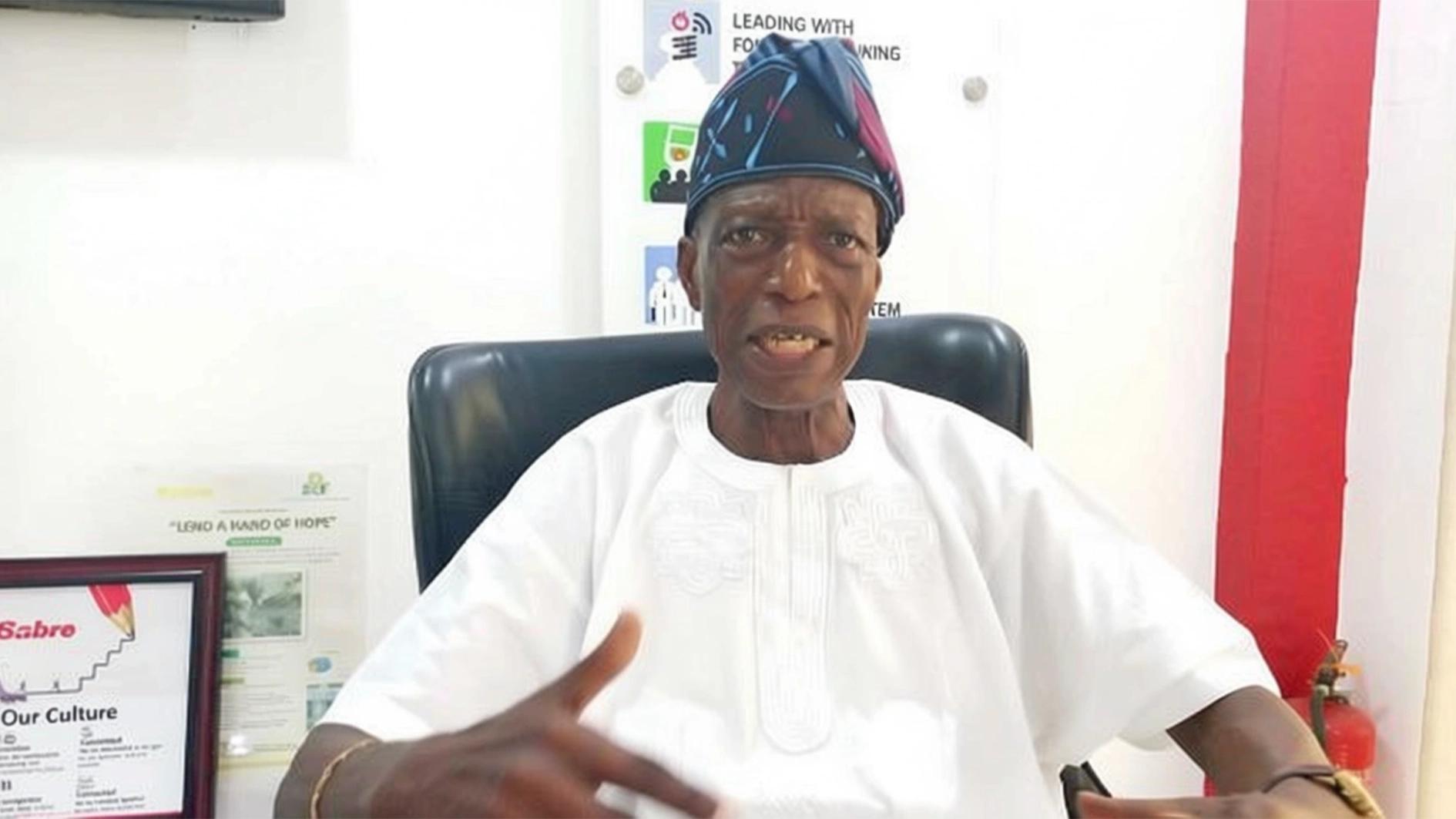
Olusoji Amusan, a former manager at the Lufthansa German Airlines and a former President of the National Association of Nigerian Travel Agencies (NANTA), speaks with OLUSEGUN KOIKI on the state of Nigerian airports, the reasons behind rising domestic airfare tickets, capacity challenges and the performance of the aviation sector in 2025.
Indigenous airlines have been accused of unnecessarily inflating airfares during festive periods. What is your take on this?
The fact is that airfares are high at this period, but they are not unnecessarily high. It is normal. There is a principle at work here: the law of supply and demand. This month, fares will drop because fewer people will be travelling. At the moment, more people are chasing very limited seats.
This situation is not peculiar to aviation. Look at the price of ram today and compare it with what it was in October. In addition, airlines are burdened with taxes, charges, and levies that they must pass on to passengers. What we are seeing is a normal cyclical, seasonal variation in prices.
Having said that, do Nigerian airlines have the capacity to cope with the current surge in traffic?
Capacity must be viewed holistically – both at the micro and macro levels. What a nation gains from travel depends on its ability to reciprocate and that is where the issue of a national carrier comes in. We need additional carriers to fill the gaps in the system.
Our local airlines simply do not have the required capacity. That is why the country needs a national carrier. Only the government can order 50 or 100 aircraft at once and get them delivered seamlessly. The government must initiate the project, bring in investors, and then hand off day-to-day management. It’s only the government that can have the financial muscle to compete with foreign carriers on our routes.
To compete effectively with foreign airlines, Nigeria needs scale and capacity, which our current operators lack. With a government-backed national carrier, investors such as Alhaji Aliko Dangote, Bayo Ogunlesi and others would be willing to participate.

There is growing concern about disorderliness at Nigerian airport terminals. What can be done to address this challenge?
We have talked about airport sanity for years, but we must start from what is achievable. Too often, we focus on problems instead of solutions. Sanity should begin from the check-in counters, arrival halls and departure areas.
Many people who have no business at the airport are freely roaming around, unchecked. Just because someone works with the Federal Airports Authority of Nigeria (FAAN), Nigeria Customs Service (NCS), the Nigeria Immigration Service (NIS) or another agency does not mean they should have unrestricted access at all times. Access to restricted areas should be based strictly on an On-Duty Card (ODC).
Take the baggage reclaim area, for instance. There is usually more of a crowd there than actual passengers. Everyone wants to “help” carry luggage, yet nobody helped the passenger at the point of departure. Access to such areas should be controlled, with supervisors coordinating activities.
Even outside the terminals, there is chaos. Responsibilities must be clearly defined. FAAN has its duties, while the Nigerian Civil Aviation Authority (NCAA) enforces standards on behalf of the International Civil Aviation Organisation (ICAO). If we get these basics right, within two or three months, the difference will be visible to all.
Sanity should begin at our five international airports, which serve as Nigeria’s gateways. These airports are recognised by ICAO and the International Air Transport Association (IATA), as shown by their international codes. We must act.
What is your assessment of the aviation industry in 2025?
The fact is that we have not done what we ought to do. We didn’t achieve much in the sector, but we achieved a few things. Nigerians are not nationalistic; rather, we preoccupy ourselves with what we can gain only from the system. Look at Air Peace, for instance, which is on international routes. How many Nigerians are supporting the airline? The majority agreed that the former Minister of Aviation, Sen. Hadi Sirika, messed us up, but what is happening to him today? Nothing.
In terms of growth, making our aviation tourist-friendly, we did not achieve much. Even in tourism, we have all the potential. There is incoming and outgoing tourism. Incoming tourists are the people who come here to spend their money. That is for us. But every tourist will want to take somebody out so that they can make more money. If you take people out, you make money in your pocket.
Having said that, the effort of the Minister of Aviation and Aerospace Development, Festus Keyamo in the actualisation of the Cape Town Convention is one of the greatest achievements that was sustained in 2025. You know the advantages of that, especially in giving confidence to lessors of aircraft to make them available to Nigerian airlines on favourable terms, which include dry lease terms and many other agreements.
What is your projection for 2026?
I expect that we should have sanity in the sector and the people and customers will see it. Then, they are talking about aerotropolis. What is aerotropolis? Aerotropolis is an airport city where you have banks, shopping complexes, factories and others. Where is the space now? All the spaces that we have there have been given out.
For us to have an aerotropolis, we need to take back the space and expand what we have. Then, we need to change our orientation toward the people we give tasks to perform.
Are you bothered that the staff of agencies working in critical areas of the airports don’t retire even when they are out of service? Most of them still find themselves back in service illegally. How can this be handled?
The answer is simple. It is because many of them can do whatever they want to do and get away with it. You dare not do that in the United Kingdom, Germany or any other major aviation country. Much of what we do is because of impunity. Regulations are not being followed up on by people.
For instance, I retired from Lufthansa Airlines over two decades ago and if you would like to know, since I left the airline, I’ve never set foot in the office of that carrier. What do I want there? So, because there’s no law, there’s no order. Whether you are retired or not, since you are not on duty, you should not just mill around the airport.
But here, anyone can just claim to be a staff member of the NCAA or any other agency. Many of them are working as agents for different people or organisations. There should be rules for everyone. But if there is any need to be at the restricted area of the airports in an emergency, you should get an ODC. There should be a working system. This is the role of the NCAA. The Director-General of Civil Aviation (DGCA) is an employee of Nigeria and also an employee of ICAO. The DGCA is both an employee of Nigeria and ICAO.

