 Follow Us on Google News


 Follow Us on Google Discover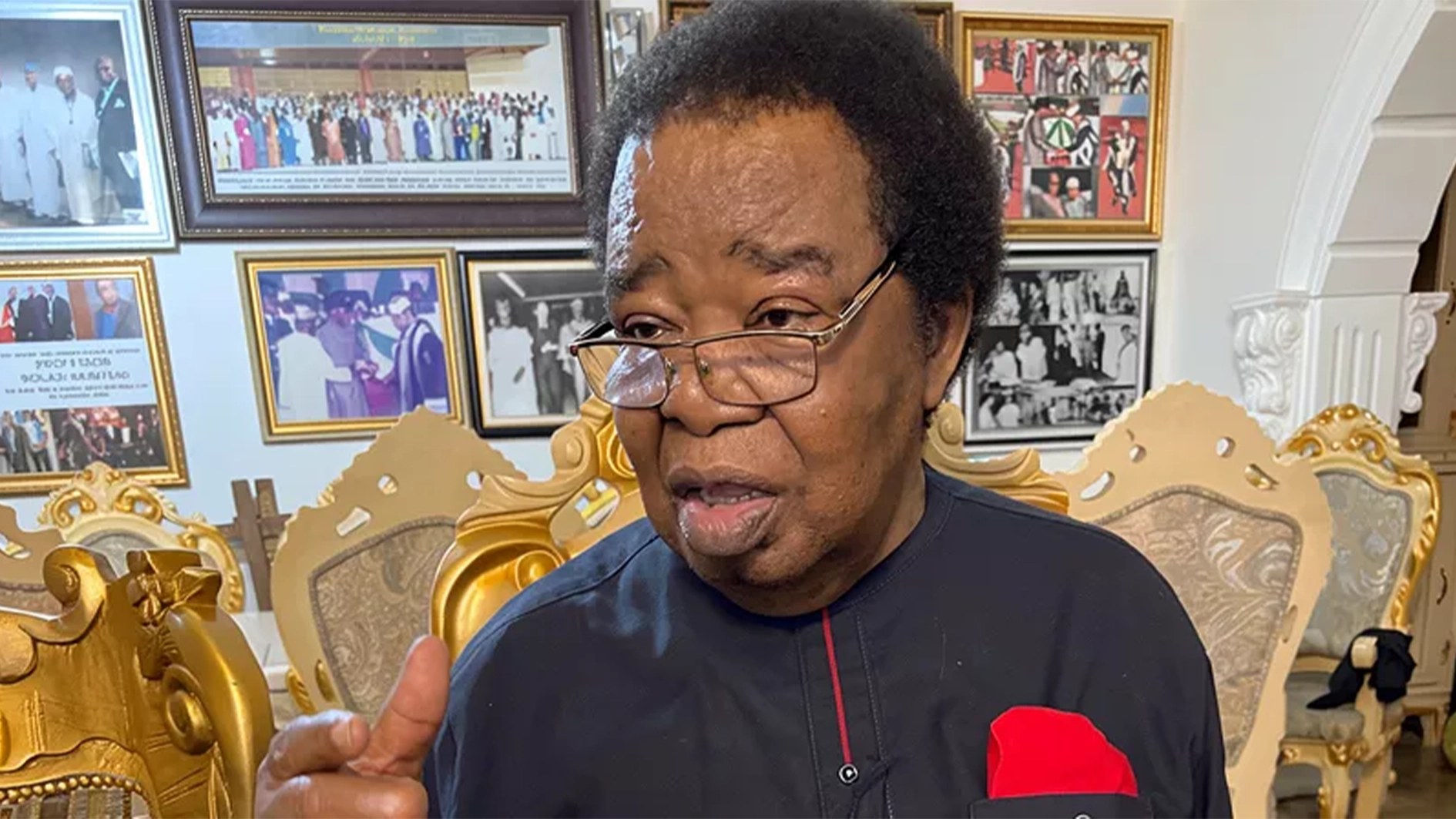
Professor Akinwande Bolaji Akinyemi clocks 84 on Sunday, January 4, 2026. The iconic figure of International Relations has been active in the public for decades. Born January 4, 1942 in Ilesa, Osun State, Akinyemi attended Igbobi College in Yaba from 1955 until 1959, before he moved to Christ’s School Ado Ekiti from 1960 to 1961. He had his university education at Temple University, Philadelphia, Pennsylvania, United States, from 1962 to 1964, Fletcher School of Law and Diplomacy, Tufts University, Medford, Massachusetts, US, 1964 to 1966, and Trinity College, Oxford, England, from 1966 until 1969. At different times, he was Regents Lecturer at the University of California, Los Angeles, US, in 1979, professor of political science at the University of Lagos, from 1983 until 1985, and visiting fellow, St John’s College, Cambridge, England in 1984. Professor Akinyemi was a lecturer at the University of Ibadan, Oyo State, for some years before he became the Director-General (DG) of the Nigerian Institute of International Affairs (NIIA) from 1975 to 1983. The NIIA focuses on Nigerian foreign policy. While he was director-general, it was involved in promoting Nigerian-Angolan relations, among other things. He originated the Technical Aid Corps (TAC), a programme, which sent Nigerian professionals overseas to engage in volunteer work. It was designed to “promote the country’s image and status as a major contributor to Third World and particularly African development”. He also came up with the concept of the “Concert of Medium Powers”. In his position as Minister of External Affairs, Akinyemi stated his support for Nigeria developing nuclear weapons. He referred to the proposal as the “black bomb,” and said that “Nigeria has a sacred responsibility to challenge the racial monopoly of nuclear weapons.” Since then, the professor of International Relations has been active in the public fora, including the 2014 National Conference by the government of former President Goodluck Jonathan, of which he was deputy chairman. During Nigeria’s short-lived Third Republic in 1993, Akinyemi called for the military to overthrow Ernest Shonekan’s administration. Sani Abacha, the Defense Minister at the time, subsequently took over the government, though Akinyemi later opposed Abacha’s regime. In August 2007, President Umaru Yar’Adua appointed him to the newly created Electoral Reform Panel. In January 2025, President Bola Tinubu appointed Akinyemi as the board chairman of the Nigerian Institute of International Affairs. In this encounter with GREGORY AUSTIN NWAKUNOR and GBENGA SALAU, the erudite scholar speaks on Nigeria’s political trajectory hoping that President Donald Trump’s recent intervention against Nigeria’s perennial insecurity will lead to positive development in the fight against terror in the country.
At 84, you must have seen so much. Can you attempt to describe the trajectory of Nigeria?
It’s often difficult for your generation to understand what mine has gone through here. Oh yes, I was born into colonial Nigeria, and grew up with the expectation, not something taught me by teachers, but the expectation was like inside of me: We are going somewhere. This is going to be a flying country, because we had experienced schools that were filled with visions. Obviously, some of our teachers were expatriates, and they were not going to teach you that Nigeria was not going to go anywhere. In fact, the question didn’t arise, you know, because if Nigeria was not going to go places, why are we being educated? And you’re educated with a positive vision. So, there we were thinking, yes, we were born into a present, and there’s going to be future. And yes, the future did arise. So, there was a trajectory, an upward moving trajectory. We came across Nigerians of the generations before us who had become doctors, who had become engineers, who had become pilots. Yes, we had foreign teachers, but then we also had graduates who were Nigerians. So, you know, I will say the first trajectory of my life in Nigeria was a positive one. Then problem started. But you know, you often think, Oh! This is like having a headache or having malaria, well, we will get over this. And then even when the military came in, it was like, well, we’ve gone into a hospital to be cured of a temporary malaise. And then the cure was taken too long. The care was taken too long. And then we now started thinking, My God, are we going to get over this?
At what point was this?
So, I will say that from the time Nigeria was created – let me put it that way, in 1914, that was a positive trajectory. Because we saw progress being made, more secondary schools being created, universities were now being set up. And the values, because we must give the devil his due, the values that the English civil servants were inculcating into Nigerian civil servants was building on even our own values. I don’t want to create an impression that it was the British who created the positive values. Example, we all know in every society that we had, even before the British came, when the farmers harvested their crops, they put it beside the road, and they put there an indication of how much, and they went away to do other things.
And you came, you bought whatever it is, you put the money there, and you went away. It never occurred to us that we could just pick up those things and run or under charge the farmers. No! So, we had a value, culture of honesty, and the British built on that when we were developing and that’s why you could go to a ministry, even up to the 1960s up to independence, you go to a ministry, you were well treated. You were well attended to. Let me give you an illustration. I came back to the country in 1970 to teach at the University of Ibadan. I went to clear my own goods myself. In fact, when they asked me, where’s your agent? Never heard of it in my life.
“I don’t have an agent. I’m bringing my books”. But the moment they heard that I was teaching in the university, nobody asked me for anything. The way I was received by the permanent secretary, because this was just after a civil war, and the things were still in place. The Civil War regulations were still in place.
To bring in a car, you must have a licence. Again, I didn’t know certain approach. So where will I get the licence, except from the Permanent Secretary Ministry of so and so. And they then directed me from the airport how to get to Ikoyi. So, I went there. At the gate, there was the gate man.

Of Course, there was no arrogance on my part. And I needed to explain my mission. I said yes sir to him, “Good morning, sir”. And the moment I showed respect, immediately, you could see, and he said, Good morning to me.
“What can I do for you, sir?”, I responded “I’m here to see the Permanent Secretary”. He, kind of, looked at me.
What for? I told him. The moment he heard I was a lecturer at the University, he opened the gate, and he told me, saying, the man has not come, but I could go to where to see him.
So, I went upstairs to where I was directed. I knocked on the door, saw his secretary, who looked at me, saying, he hasn’t come. But could I tell her what my mission was? Again, the moment she heard I was a lecturer at the University, her attitude towards me changed.
“Please sit down, sir. He will soon be here”, she said. Not long after that, the Permanent Secretary came in, said, Good morning to everybody and went inside, and she went in. He didn’t take two minutes before the door flew open and said, Dr Akinyemi, please the Permanent Secretary will receive you.
I went in and I told the Permanent Secretary what I wanted. He said, That’s why you came. I said, “Well, yes, sir. I don’t know what else to do”.
Immediately, he told her to bring the packet, filled out the form and everything, gave to me the license. Is there anything else he could do for me? I said, “No Sir”. “Thank you, sir”. He said if there’s anything he could do, I should just come. He told the secretary “If Dr. Akinyemi shows up, call me on the phone, wherever I am”.
This is 1970. So, in a way, even though, you know, by that time we had gone through a civil war, we had Operation Wetie and so on. It’s not as if it was all Glory hallelujah, but it was just like temporary things that will happen to us. Then after that, we expected an upward curve.
We were lucky to have had that upward curve. I will say so, in the sense that General Gowon and the military, even if they led us into the Civil War, we regarded it as an aberration. And people of my generation still were expecting Nigeria to aim for the moon. And then General Murtala came in 1975 and we thought, “Oh, well, good! This is the saviour we’ve been looking for, you know, to get us to where we should be”. And then what happened? He got killed, which was the first shock to our system.
Now I’m talking about my own generation, because it is possible that there had been a generation before us who also had experienced this, you know, up and down, up and down movement.
And that was perhaps the first lesson that maybe we’ve been taking things for granted. Murtala Mohammed, therefore, rekindled our faith in Nigeria. And then, he got killed and that we saw as a setback. And from then on, the government that we have had.
Well, I will say this, that yes, I was part of the government, not in the bedroom, in the corridor of power. But I think we were starting to feel something is basically wrong. There were people like Ambassador Dele Cole, who were colleagues. He was in the inner parade of government. I was in the corridor but again, we talked. But you could say that the enthusiasm with which we regarded Nigeria by the 70s going to the 80s have been diminished and so here we are now. I mean, I’m on the eighth floor, as we will put it, eight and a half floor. I don’t see Nigeria, I’m not looking at Nigeria with the eyes with which I was looking at Nigeria when I was 20.
Yeah. Yeah. Well, I mean, I wouldn’t say that we are paying a price. But obviously, with the death of Murtala, I would say hope, for my generation, was diminished. I won’t say loss, hope was diminished. In fact, there’s been no upward progression. You would think we are being punished for something. Each time we had this upward progression, something will happen. IBB was an upward progression. But then, look at what he did with June 12. That June 12 turned out to be like an albatross for him, and hope diminished. I mean, I was, by that time, I had come to the conclusion that I don’t take ideological positions. I don’t believe that military intervention in Nigeria will always be negative, will always have negative repercussions, because that’s taking an ideological position. I think it depends on whether the military that comes in for change, whether that military is a Buccaneering military, whether it is a mercantile military, they are just there to make money or whether that military is, well, shall we say, a visionary military. And if you ask me to give examples, I will. Some of us, and up till now, I regard Chukwuma Nzeogwu as a visionary military. Yes, there were shortcomings in the way that coup was executed. It was badly executed in Lagos, but in Kaduna, to me, the vision that was an attempt to cleanse the system was clear. In Lagos, the intervention got itself concealed by the evils they were supposed to deal with. And from time to time, it has been like that. The attempted Gideon Orka coup, to me, was a projection of the Nzeogwu coup. But each time that happens, the mercantile section of the Nigerian military managed to survive, to overcome, to derail it. But it depends upon the human beings who managed to succeed. So, now, here we are.
In which case, it’s not that. And it will not be an external influence. It will be a spiritual influence. Now, if Yar’Adua had not died, he also was a man with a vision. And if he was a man with the courage to confront the evils facing Nigeria, I was appointed into the Uwais Commission on Electoral Reform. And I will never forget what he said to us when he came to inaugurate the Uwais panel.
He said, I have no doubt in my mind that I did not win the election. They said I won. I didn’t win it. But I cannot reject, I cannot leave a vacuum by rejecting the result. And then what will happen? But I want to ensure that this election will be the last corrupt election in this country. And that’s why he’s setting up the Uwais Commission. And he said to me, I’m promising you, I will implement your report fully. So, don’t try to be realistic in accepting that there will always be corruption. No, you give me a blueprint for an honest election. And I said to myself, because I mean, I’ve been long enough in terms of my involvement. I’ve never had this before, where somebody in government will be pledging to implement a report he hasn’t read, a report we have not even sat down to start writing. Well, I hope he really means it. And he kept repeating, each time we interacted with him, he kept repeating it. And then what happened? Unfortunately, he took ill. Now, that was to me a spiritual intervention.
Is there any external force, so to say, intervening in Nigeria’s climb of the curve?
If you regard spiritual intervention as an external intervention, I would buy it. But I know what you mean. You’re talking about the neocolonial syndrome, the kind of thing that got rid of Nkrumah, that got rid of later on, Gaddafi. That’s what you’re talking about. But in the case of Yar’Adua, it was this ill health. But, and this is where we have to, bringing in Yar’Adua was a deliberate act by a human being who knew he was ill, and who thought he would exploit that illness to run Nigeria externally, that he would manipulate the system. That’s why he brought in Yar’Adua. And the same man, knowing how ill Yar’Adua is, also brought in Jonathan, in thinking that he also would be able to manipulate Jonathan’s government. It didn’t turn out to be that way. Jonathan had problems with the Americans, with Obama, who was determined that Jonathan would not come back, whether he won the election or not, that he will not come back. There’s no doubt that the Obama regime decided to support Buhari. And you see, this is now where, when, at times, when we use the cliche, times cliches have power, and often it is true. ‘What goes round, comes round.’ Why did I say that? Obama was sending John Kerry, his Secretary of State, to overfly Abuja, and go and land where? In Sokoto, and ask the northern governors to meet him in Sokoto. I mean, a signal to Nigeria that yes, whatever happens in Sokoto happens to Nigeria. Now that Trump decides to send a message to Nigeria, what did he do? He sends the message to Sokoto, he sends the message to Sokoto, but a different kind of a message. But message is message, different kind of message. But that, I guess, if we are going to teach the north a lesson, Sokoto is where the message will be delivered. The opposite, but using the same system of what Obama did. You know.
Intervention as positive or not, it still falls in line with my analysis, the cyclical syndrome of history. Obviously, we needed to put a stop to the influence of terrorists in Nigeria, the Jihadists- we need to put a stop to it. Trump, since he’s going to be the agent of change, I regard it as positive change because obviously, we, as Nigerians, have not been able to put a stop to the evil. I don’t want to go into ‘who started what’.
The thing is, we don’t learn the lessons of history and even when history is dropped on us like a bombshell, we listen, we hear, and then we move on.
But what will you say about various interpretations given to the Trump intervention?
Don’t talk like an illiterate farmer. Of course, if they tell our government that they’re going to do something, what did you expect our government to say? You can’t come in? Whether you want Trump to come in or not, he had told you from day one that the solution to the Nigerian security problem is American military intervention. The rest was what I will call ‘diplomatic gamesmanship’. So, whether our government wants it or not, the man is going to help us solve the security problem, and if we have to cover our face by allowing us to claim that we did it together, it makes no difference to Trump as long as he does what he wants to do, and he has said that the Sokoto episode is not going to be the last one. So, when he does the next one, don’t say you’re not warned or told.
What is the Implication of this intervention from diplomatic point of view?
Well, I hope that the intervention by Donald Trump will be a positive one in the sense that now, we will have a Nigeria of equity. All Nigerian groups will be regarded as having equal stakeholders. There will not be marginalisation and there will be no group that will be regarded as sacred. We will all be equal. Those of us who have served in government will know that there have always been elements in government that are regarded as sacred; untouchable. While you will be regarded as just somebody being tolerated. I mean, the number of times I was told when I was a minister that you don’t seem to recognise that fingers are not equal in Nigeria. You don’t seem to recognize that and that’s going to be the source of your problem. So, that’s what I mean by positive intervention that it will stop the internal colonialism.
How do you perceive the diplomatic engagements deployed by the Federal Government to change the narrative of ‘Christian Genocide’ upon which Trump is intervening in Nigeria?
Let me put it this way, you sent a mission to them, they sent two missions here, and obviously the report delivered by the different missions were different and so, Trump had the liberty to now pick which of the messages he would believe and act upon. And again, at times, I’m surprised that things surprise us because even the American delegates that came here never for once spoke with meat under their tongues. They kept saying, ‘we’ve seen what Christians have been subjected to in Nigeria’ they kept saying so, they didn’t deceive you. Some of the northern spokesmen were even complaining that the American delegations that came only met with Christians and didn’t meet with them, you know, that kind of arrogant interpretation of diplomacy. They still think they’re dealing with Nigeria as usual where you can bamboozle the foreign delegations. But the Americans are saying ‘we know what we came to look for and we’ve found it. Why should we now be taking to those perpetrating the problem when we’ve seen the evidence we’re looking for’. So, I was not surprised that Trump went ahead with what he promised he was going to do. That’s number one.
Number two, and now I’m repeating myself, having heard Trump say that the Sokoto intervention is not going to be the last one, I will then not be surprised when the next stage comes. If I were to advise the government, my advice would be, ‘you’re not interpreting Trump correctly’.
It is the Christians that are being persecuted, I would then look for Christian delegations that can go and say, ‘we’re not being persecuted’ if you can find such Christians but when you send a delegation made up of Muslims then what are you saying to Trump?
How do you assess Nigeria’s current diplomatic engagement? And what reforms are most needed to ensure the country remains influential on the global stage.
Nigeria has to regard itself as a medium power. The brightest brains you draw into diplomacy. Your intervention on the global stage. I don’t know why people don’t learn. The concept of medium power means you thick out your objectives, you determine the kind of principles that will underwrite those objectives and finally, the power that must underplay those objectives. You cannot achieve your objectives and this is one of the lessons which Trump is teaching the world. Power must underwrite your objectives. He continually tells you, America has the largest Navy, Air force, etc. Well, if you want to be taken seriously, Nigeria must have a military force that can ensure that the country cannot be overrun by any African country. So, you must know who you are competing with whether South Africa or Egypt. I’m not saying you must have an army that can defeat South Africa or that can defeat Egypt. No. You must have a military force that cannot be defeated by these people without them having to pay a heavy price for it. You know the concept of unacceptable sacrifice and unacceptable price. If I think all I need is a battalion to overrun X. And I think yeah, I may lose 600 men. That may be acceptable to me. But if I think I’m going to need a division to take on that and lose half of that, I may regard that as unacceptable. And that’s the way, in terms of assessment of a security engagement, what are going to be my losses? Even if I win this engagement. If my losses are unacceptable, then I’m not going to go into it. And it’s the same thing when you are now making an assessment of your power status. I must not be defeated by any African country. I mean surely Turkey cannot say it will defeat America or even that it can defeat Israel. No. But for Israel to defeat Turkey, what Israel will lose, Israel itself will regard it as unacceptable loss. So, this this is the thing. Now the United States can defeat China. But at what cost? Before, India used to think they could overrun Pakistan. And that’s why they’ve been having that war since independence. But now they both are nuclear powers. The equation has changed because Pakistan now has enough nuclear weapons to inflict unacceptable damage on India.
So, it means Nigeria must have a security apparatus that it can defend itself in Africa and it can inflict the kind of damage on an invader that that invader will think is not worth it. It doesn’t mean Nigeria can defeat America. No. It doesn’t mean Nigeria can defeat even Israel because America will not even allow it to happen. The moment Israel looks like it’s losing, America comes in. So, that’s why I said Nigeria must accept its destiny as a medium power and define the constituents of that.
It also means that the economy must be self-reliant. But the economy is implied. You must be able to manufacture your own weapons. I mean, after all, the Nigerian defense industry and the Brazil defense industry were created on the same day. Look at what Brazil has been able to produce. Do you think that Trump will be threatening Brazil the way it is threatening Venezuela? No! Because the air force that Brazil has, it’s not a question of buying those airplanes. It’s manufacturing the airplanes. The Navy that Brazil has, it’s producing that Navy itself. You think twice before you decide to attack Brazil. And that’s what Nigeria should be aiming for. Look at fellow medium powers in the world. And then it’s not rocket science. You don’t need to talk and ask your war college, just look at India and look at Pakistan. So, I’m not asking Nigeria to be like China. No. But it should try to be like Turkey in terms of economy and in terms of security forces.
What’s your take on the new world order where there’s only one policeman – US under Trump?
No, there is no one world order. There was before and that was when the Soviet Union disintegrated and it then became just Russia. That was the period of one world order. But now the rate at which China had come up really means we have a multipolar world now. Two days ago, China now said the integration of Taiwan is a matter of time. We’ve always known this, but no President of China has ever put it this way. And it’s a signal to the Americans that when we decide to take on Taiwan, you can’t stop us. It’s like what I was saying about acceptable or unacceptable losses. You have to decide whether in stopping us from incorporating Taiwan back into China, you will attack China itself and the reply China will be able to give you, can you accept?
Yes, Trump will make all the right noises, but he’s not going to say we can stop you. The moment a nuclear power cannot stop another nuclear power, you have parity. But it’s only a matter of time before China now overtakes the United States. And we now then get back again to nuclear balance. And then we start again talking about balance of power.
But 10 years ago, the United States could have told China to back off. And China would have also backed off. But the Chinese are very patient people. Extremely patient. So, it’s a multipolar world we have.
Can we illustrate this multipolar world order with what is happening in Russia and Ukraine and the intervention of US?
To understand the military crisis between Russia and Ukraine, you have to go into the mentality of Russia that has always regarded and with justification that Ukraine really is a part of Russia and that it is the Americans that put it into the head of some Ukrainians that they could be independent.
Russia was prepared to accept independence of Ukraine under certain conditions. And what are these conditions? One, you cannot be a member of NATO. Two, that there will have to be a limit to your military establishment. It must not be to the extent that it can pose a danger to Russia. And what do I mean by pose a danger? It must not be able to inflict that damage on Russia that Russia will now have to keep quiet. Ukraine will have to accept the overlordship of Russia. They made a mistake in surrendering all their nuclear weapons at the time they became independent. They signed an agreement and the guarantors of that agreement, the United States, Britain and even Russia itself that in surrendering its nuclear weapons, they will not be attacked by anybody.
So, the Americans at times behave childishly. And the woman most responsible for the crisis in Ukraine is Mrs. Clinton because all the agreements they had with Russia about how far NATO will expand, she broke it in Ukraine and she encouraged the Ukrainians, and that area, which is in the west that Russia now says it wants is mostly Russian speaking and not Ukrainian speaking. Russia said that they must have it. But you know, surprisingly, there is, at the Metropolitan Club, what is called the Wellness Center. When you go there, the people who work there are both Russians and Ukrainians. And you ask them, here you people are working together here and so on. And they will say don’t mind them. It is all politicians. They said, we are one and the same, but it’s who controls what? So don’t mind them we have no problem working with each other here.
I’ve often tried to illustrate within the similarities in Nigeria and if we are not careful, because we in the West here, the Yoruba, we have no problem in the sense that if I speak Yoruba and you will understand me but if I start to speak in Ijesha, you may not understand. But we have a common language. Now, if you go to the middle belt, the problem you are going to have, because from village to village, the language changes, so what is going to happen if we break up, so you have a republic of the middle belt, the problem between the Idoma and the Tiv, or the Midwest. There is hardly a year that goes by without the Itshekiri and the Urhobo fighting.
So, if you have the republic of the Midwest, who then controls it, what does that even mean within the context of independence? So, that is the problem between the Ukraine and Russia.

